Key Points :
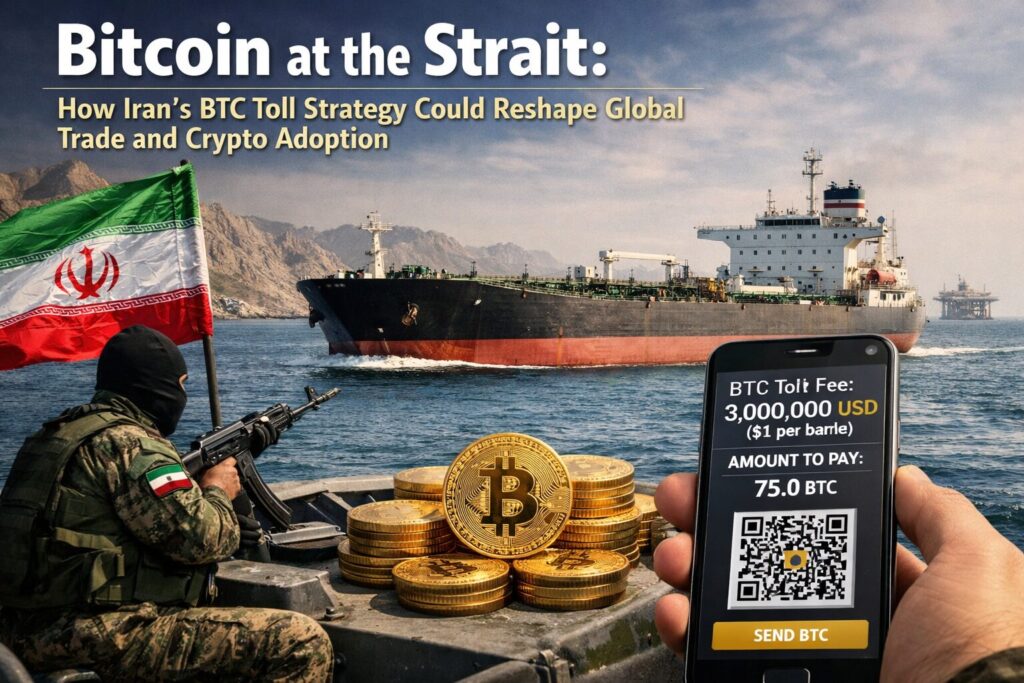
- Iran is reportedly requiring Bitcoin payments for oil tankers passing through the Strait of Hormuz.
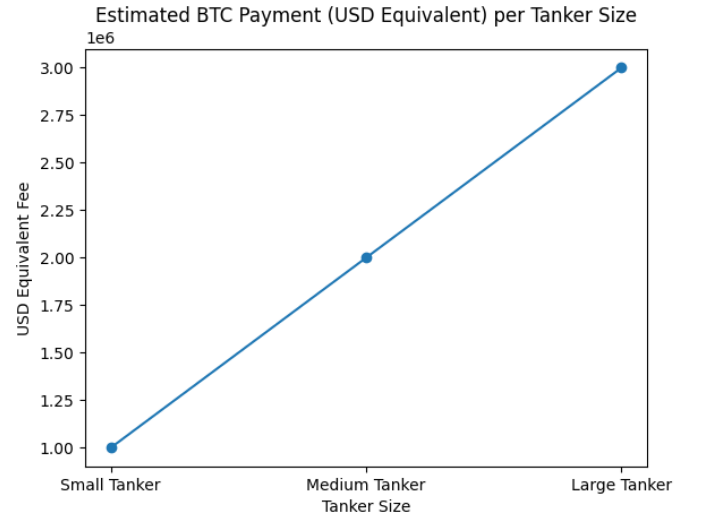
- The fee is set at $1 per barrel, meaning up to $3,000,000 per tanker in BTC.
- The move bypasses traditional financial systems and sanctions frameworks.
- This represents a real-world geopolitical use case of Bitcoin beyond speculation.
- It could accelerate adoption of crypto in global trade settlements and sanctions evasion strategies.
1. Introduction: A New Phase of Bitcoin in Geopolitics
The reported decision by Iran to demand Bitcoin payments from oil tankers passing through the Strait of Hormuz marks a turning point in the evolution of cryptocurrency. While Bitcoin has long been discussed as a hedge against inflation or a speculative asset, this development highlights a far more profound use case: state-level deployment of decentralized currency in strategic geopolitical operations.
The Strait of Hormuz is one of the most critical chokepoints in global energy logistics. Approximately 20% of the world’s oil supply passes through this narrow waterway. Any change in the rules governing its access has immediate implications for global markets.
By introducing Bitcoin as a mandatory toll payment mechanism, Iran is effectively integrating cryptocurrency into international maritime trade enforcement, a move that could redefine both financial sovereignty and compliance frameworks.
2. Structure of the BTC Payment System
According to reports, the system operates under a strict procedural framework:
- Tankers must submit cargo details in advance via email.
- Iranian authorities assess whether the cargo includes prohibited materials (e.g., weapons).
- A toll fee of $1 per barrel is calculated.
- Payment must be made in Bitcoin within seconds after approval.
- Unauthorized passage may result in military enforcement.
For a large tanker carrying approximately 3 million barrels, this results in:
- $3,000,000 equivalent in BTC per transit
This is not a trivial amount. It effectively transforms Bitcoin into a real-time settlement layer for high-value international logistics transactions.
3. Strategic Motivation: Why Bitcoin?
Iran’s choice of Bitcoin is not arbitrary. It reflects several strategic advantages:
3.1 Sanctions Resistance
Bitcoin transactions cannot be easily blocked by traditional financial institutions such as SWIFT-connected banks. This allows Iran to circumvent international sanctions.
3.2 Non-Sovereign Nature
Unlike fiat currencies, Bitcoin is not controlled by any single government. This aligns with Iran’s objective to avoid dependency on Western-controlled financial systems.
3.3 Seizure Resistance
Funds transferred via Bitcoin are significantly harder to freeze or confiscate compared to bank transfers.
3.4 Speed and Finality
Bitcoin allows relatively fast settlement without requiring intermediaries, which is critical in maritime operations where delays can cost millions.
4. Operational Constraints and Maritime Impact
The introduction of this system comes with strict controls:
- Mandatory pre-registration of vessel and cargo
- Identity verification procedures
- Designated navigation routes close to Iranian waters
- Final approval by Iran’s Supreme National Security Council
Additionally, maritime intelligence sources suggest:
- Only 10–15 vessels per day may be allowed to pass
This creates a supply bottleneck, which could lead to:
- Increased oil prices
- Shipping delays
- Higher insurance premiums
5. Broader Market Implications
5.1 Oil Market Volatility
Any restriction in the Strait of Hormuz directly impacts global oil prices. With Bitcoin now embedded in the process, crypto markets may become indirectly correlated with energy markets.
5.2 Institutional Crypto Adoption
This event signals to institutions that Bitcoin is not just an investment asset—it is becoming a settlement currency in critical infrastructure.
5.3 Emergence of “Crypto Trade Corridors”
If successful, similar mechanisms could emerge in:
- Russia (energy exports)
- Venezuela (oil settlements)
- Cross-border trade in sanctioned regions
6. Risks and Challenges
Despite its advantages, this system introduces significant risks:
6.1 Price Volatility
Bitcoin’s price fluctuations could complicate payment calculations.
6.2 Compliance Risks
Shipping companies must navigate:
- Sanctions laws
- AML requirements
- Insurance constraints
6.3 Technical Barriers
Not all shipping operators are equipped to handle large-scale crypto transactions securely.
7. Investment and Opportunity Perspective
For crypto-focused investors and builders, this development opens several opportunities:
- Crypto payment infrastructure for logistics
- Stablecoin alternatives for trade settlement
- Compliance tools for blockchain-based transactions
- On-chain escrow and verification systems
This aligns with a broader trend: Bitcoin evolving into a “neutral settlement layer” for contested economic zones.
8. Conclusion
Iran’s reported Bitcoin toll system is more than a geopolitical maneuver—it is a signal of transformation. Cryptocurrency is no longer confined to exchanges and wallets; it is entering the domain of statecraft, trade enforcement, and global infrastructure.
If this model proves sustainable, it could accelerate a shift toward decentralized financial rails in international commerce, particularly in regions seeking independence from traditional financial systems.
For investors, developers, and policymakers, the message is clear:
Bitcoin is no longer just an asset—it is becoming infrastructure.