

Key Points :
- The U.S. Securities and Exchange Commission (SEC) has officially shifted away from “regulation by enforcement.”
- Several high-profile crypto lawsuits involving Coinbase, Binance, and Kraken have been withdrawn.
- Enforcement focus is now concentrated on fraud, market manipulation, and investor harm.
- A new Cyber and Emerging Technologies Unit (CETU) has been established to target blockchain and AI-related fraud.
- Regulatory clarity—such as a potential “safe harbor” framework—may unlock innovation and new crypto investment opportunities.
- Institutional participation and compliant infrastructure are expected to accelerate as regulatory risk declines.
Introduction: A Defining Shift in Crypto Regulation
The global cryptocurrency industry has long operated under a cloud of regulatory uncertainty, particularly in the United States. For years, market participants—from startups to major exchanges—faced a regulatory environment shaped less by clear rules and more by enforcement actions. That paradigm is now changing.
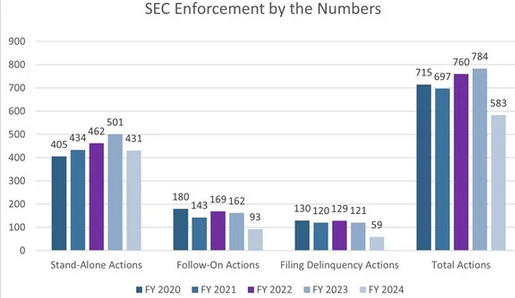
In a landmark announcement, the U.S. Securities and Exchange Commission (SEC) revealed its enforcement results for fiscal year 2025 and, more importantly, signaled a fundamental shift in regulatory philosophy. Under Chairman Paul Atkins, the agency is moving away from its previous reliance on enforcement-led regulation toward a more targeted, principle-driven approach focused on fraud, manipulation, and investor protection.
This shift is not merely administrative—it represents a structural transformation that could redefine how blockchain innovation, capital formation, and digital asset markets evolve globally.
SEC Enforcement Trend Shift (Conceptual Chart)
The End of “Regulation by Enforcement”
During the tenure of former SEC leadership, the agency adopted an aggressive enforcement posture toward the cryptocurrency sector. This approach—often described as “regulation by enforcement”—relied on lawsuits and penalties to define regulatory boundaries rather than issuing clear guidelines.
The consequences were significant:
- Exchanges operated under constant legal risk.
- Token issuers faced uncertainty regarding classification as securities.
- Innovation slowed due to compliance ambiguity.
The new SEC leadership has explicitly rejected this model. Chairman Atkins described previous enforcement priorities—such as off-channel communications violations and registration-related penalties—as a “misallocation of resources,” particularly when they did not directly result in investor harm.
In practical terms, this marks a transition from rule-by-litigation to rule-by-design, where policy clarity and structured frameworks replace reactive enforcement.
Withdrawal of Major Crypto Lawsuits: A Turning Point
Perhaps the most visible signal of this policy shift is the SEC’s decision to withdraw seven major cryptocurrency-related lawsuits initiated under prior leadership.
These included cases against:
- Coinbase
- Binance
- Kraken
These cases had become symbolic of regulatory overreach in the eyes of many industry participants. Their withdrawal suggests a recalibration of priorities and a willingness to engage with the industry rather than confront it through litigation.
Market Implications
This development has several immediate and long-term implications:
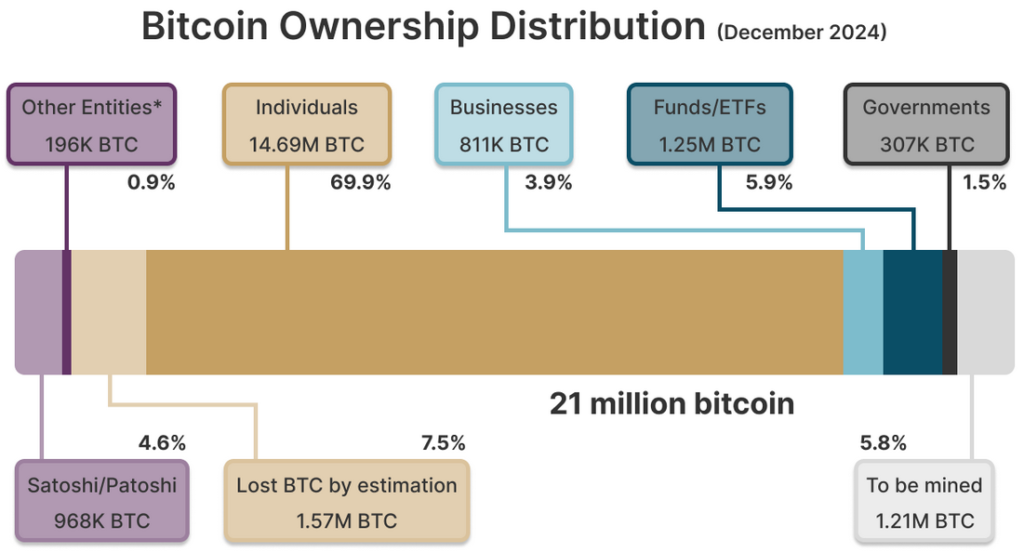
- Reduced Legal Overhang
Exchanges and platforms can now operate with greater confidence, potentially accelerating product development and expansion. - Institutional Re-entry
Traditional financial institutions, previously hesitant due to regulatory ambiguity, may re-enter the crypto space. - Capital Formation
Venture capital and institutional funding are likely to increase as regulatory risks diminish.
Crypto Market Confidence Recovery (Conceptual Diagram)
Refocusing Enforcement: Fraud, Manipulation, and Investor Protection
While the SEC is stepping back from broad enforcement actions, it is not reducing oversight. Instead, it is sharpening its focus on areas that directly harm investors.
Key enforcement priorities now include:
- Insider trading
- Ponzi schemes
- Cross-border fraud
- Market manipulation
- Misleading fundraising practices
Notable cases highlighted in the SEC’s report include:
- A $198 million crypto and forex fraud involving PGI Global founder Ramil Palafox
- Fraudulent fundraising activities linked to Unicoin and its executives
This targeted approach aligns with broader regulatory trends globally, where authorities aim to protect users without stifling innovation.
The Rise of CETU: Policing the Next Generation of Financial Crime
In February 2025, the SEC established the Cyber and Emerging Technologies Unit (CETU), a specialized division focused on detecting and prosecuting fraud involving:
- Blockchain technologies
- Artificial intelligence
- Cybersecurity vulnerabilities
This move reflects a recognition that financial crime is evolving alongside technology. Fraud is no longer confined to traditional schemes; it now includes:
- Smart contract exploits
- AI-driven scam campaigns
- Cross-chain laundering operations
By centralizing expertise within CETU, the SEC aims to stay ahead of these emerging threats while allowing legitimate innovation to flourish.
Safe Harbor Framework: Unlocking Innovation
One of the most anticipated developments accompanying this policy shift is the proposed “safe harbor” framework for crypto projects.
This initiative aims to:
- Provide temporary regulatory exemptions for early-stage projects
- Allow token networks to develop without immediate securities classification
- Encourage experimentation and decentralized innovation
For builders and investors, this could be transformative.
Why Safe Harbor Matters
- Reduces legal risk during early development
- Encourages open-source and decentralized ecosystems
- Attracts global talent and capital
If implemented effectively, the safe harbor could position the U.S. as a competitive hub for blockchain innovation—reversing years of regulatory-driven capital flight.
Global Context: Aligning with International Trends
The SEC’s pivot does not occur in isolation. It aligns with broader global regulatory developments:
- The European Union’s MiCA framework emphasizes clarity and licensing.
- Asian markets, including Japan and Singapore, are refining crypto regulations to balance innovation and risk.
- Institutional adoption—particularly through ETFs and tokenized assets—is accelerating worldwide.
This convergence suggests the emergence of a more harmonized global regulatory environment, reducing fragmentation and enabling cross-border crypto activity.
Opportunities for Investors and Builders
For readers seeking new crypto assets, revenue streams, and practical blockchain applications, this regulatory shift opens several opportunities:
1. Infrastructure Plays
Projects focused on compliance, custody, and on-chain transparency may see increased demand.
2. Tokenized Assets
Real-world asset (RWA) tokenization could accelerate under clearer regulatory frameworks.
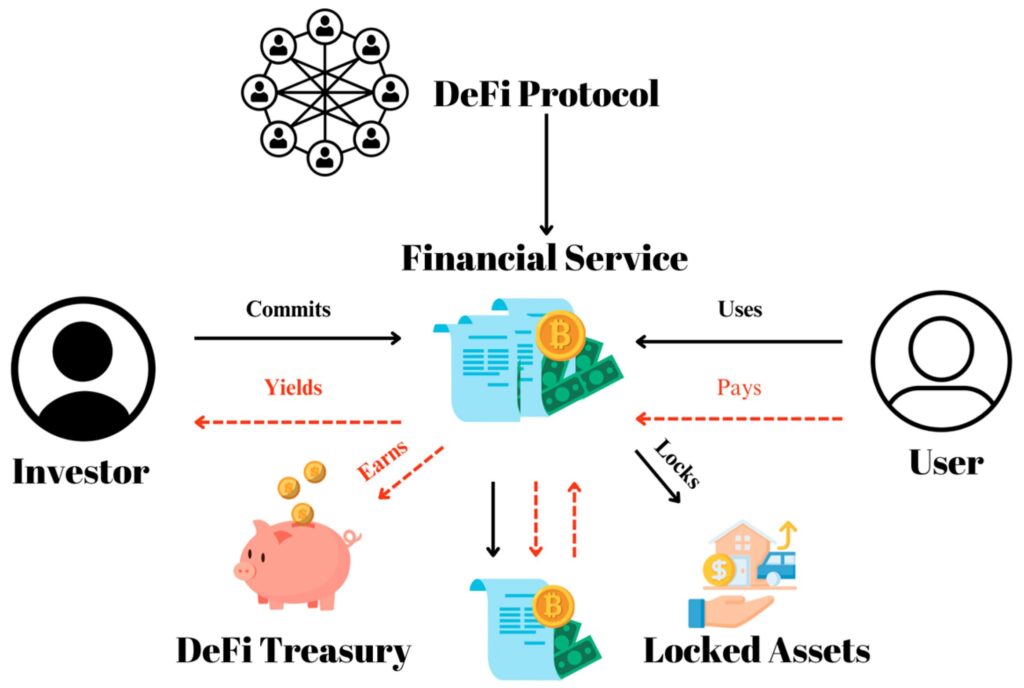
3. DeFi Integration with TradFi
Hybrid models combining decentralized execution with regulated interfaces—similar to your own XXI Network approach—are likely to gain traction.
4. Early-Stage Investments
Safe harbor provisions could enable participation in early-stage token ecosystems with reduced legal uncertainty.
Future Crypto Ecosystem Architecture
Conclusion: A New Era for Crypto Regulation
The SEC’s shift from enforcement-driven regulation to targeted oversight marks a pivotal moment for the cryptocurrency industry.
By withdrawing high-profile lawsuits, focusing on genuine investor harm, and introducing innovation-friendly frameworks such as safe harbor provisions, the agency is laying the groundwork for a more balanced and sustainable regulatory environment.
For investors, this signals reduced risk and increased opportunity.
For builders, it offers a clearer path to innovation.
For the industry as a whole, it represents a transition from uncertainty to structured growth.
This is not the end of regulation—it is the beginning of a more mature phase in the evolution of digital assets.



