
Key Points :
- The U.S. Department of Labor (DOL) has proposed new rules allowing 401(k) fiduciaries to include alternative assets such as crypto.
- The U.S. 401(k) market exceeds $10 trillion, representing a massive potential capital inflow into digital assets.
- Legal “safe harbor” protections could reduce fiduciary risk and accelerate institutional adoption.
- Practical barriers—custody, regulation, liquidity, and fees—remain significant.
- Crypto exposure is more likely to enter via ETFs (e.g., Bitcoin ETF) rather than direct holdings.
- Adoption will likely take years, with private credit and traditional alternatives leading before crypto.
1. A Structural Shift: Retirement Capital Meets Alternative Assets
U.S. 401(k) Market Size vs Crypto Market Capitalization
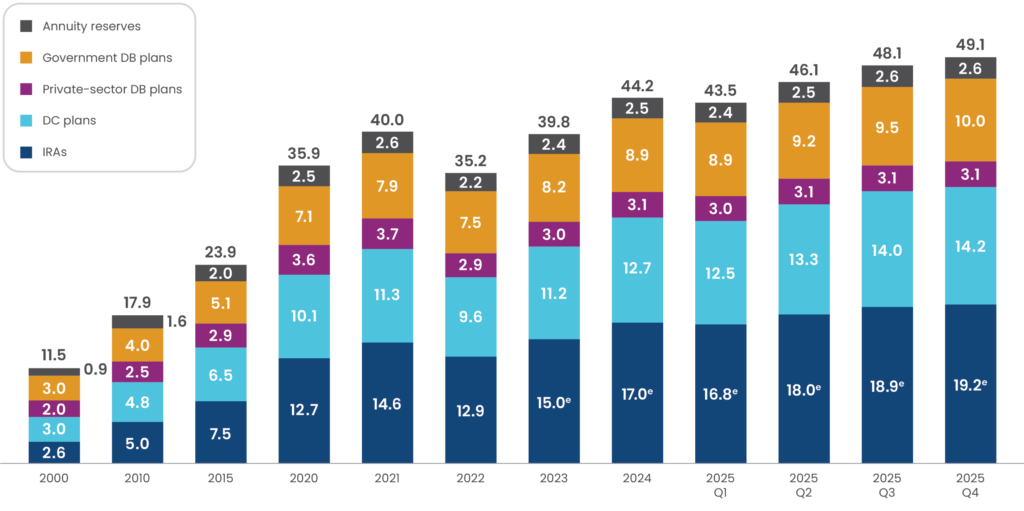
The proposal by the U.S. Department of Labor represents one of the most structurally important developments in the history of digital assets. At its core, it is not simply about allowing cryptocurrencies into retirement portfolios—it is about redefining what qualifies as a “prudent investment” in long-term savings vehicles.
The U.S. 401(k) system, valued at over $10 trillion, has historically been dominated by traditional financial instruments such as equities, bonds, and low-cost index funds. These instruments are deeply embedded within fiduciary frameworks designed to prioritize capital preservation, diversification, and predictable long-term growth.
However, the new proposal—rooted in an executive directive signed under Donald Trump in August 2025—signals a shift toward expanding access to alternative assets, including:
- Private equity
- Private credit
- Digital assets (cryptocurrencies)
This marks a turning point where blockchain-based assets are no longer treated as fringe instruments, but as potential components of institutional-grade portfolios.
2. Safe Harbor: The Regulatory Catalyst Institutions Needed
Fiduciary Decision Flow Under Safe Harbor
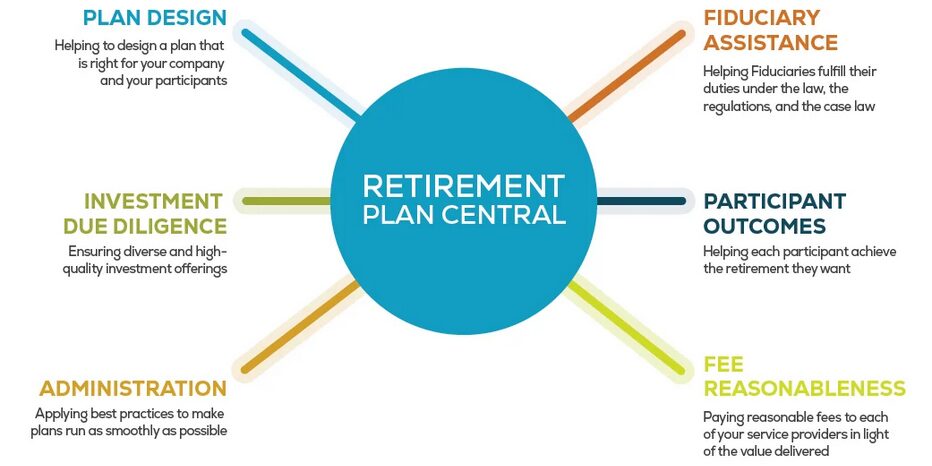
One of the most important elements of the proposed rule is the introduction of a “safe harbor” framework.
Historically, fiduciaries managing retirement plans have been reluctant to include cryptocurrencies due to legal exposure. If an investment underperforms or is deemed unsuitable, fiduciaries can face lawsuits for breaching their duty of care.
The safe harbor provision changes this dynamic by:
- Providing a clear compliance checklist
- Defining acceptable due diligence processes
- Offering legal protection when those processes are followed
This effectively lowers the psychological and legal barrier for institutional adoption. For the first time, fiduciaries may feel protected enough to explore crypto exposure without risking litigation.
However, this does not mean immediate adoption. Institutions are inherently conservative, and most will wait for:
- Precedent cases
- Industry benchmarks
- Third-party validation (consultants, auditors)
3. Why Crypto Won’t Be First: The Rise of Private Credit
Despite the excitement in crypto markets, experts widely agree that crypto will not be the first alternative asset adopted.
Instead, capital is expected to flow first into:
- Private credit
- Infrastructure investments
- Private equity funds
These asset classes have:
- Longer institutional track records
- Established valuation models
- Lower perceived volatility
In contrast, cryptocurrencies such as Bitcoin and Ethereum still face challenges in:
- Volatility management
- Regulatory clarity
- Custodial frameworks
This creates a sequencing effect: crypto adoption will likely follow once other alternatives normalize within 401(k) structures.
4. The Real Barriers: Fees, Liquidity, and System Mismatch
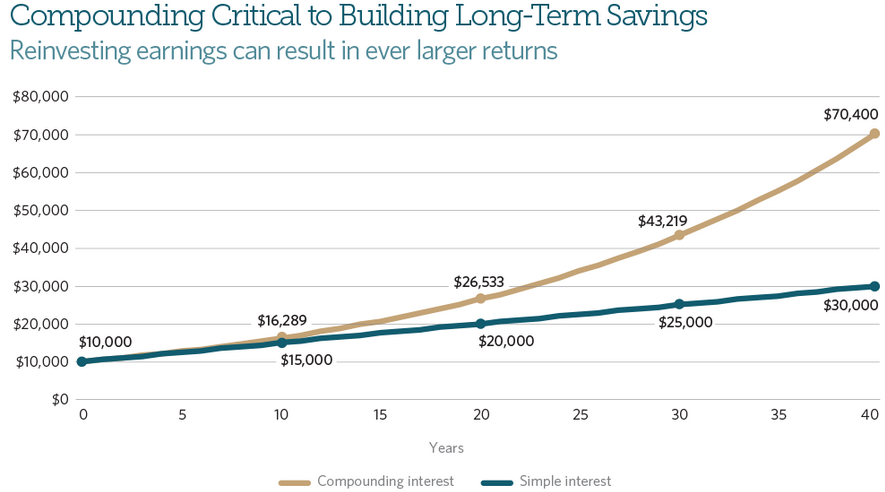
Fee Comparison: Index Funds vs Alternatives vs Crypto
While regulatory changes are critical, the real friction lies in economic and operational mismatches.
1. Fee Structure
- Index funds: ~0.05% annually
- Alternative assets: often 1.5%+
Over decades, this difference compounds dramatically, potentially eroding retirement savings.
2. Liquidity Constraints
401(k) systems are designed for:
- Daily valuation
- Immediate liquidity
But many alternative assets:
- Are valued quarterly
- Impose redemption restrictions
This creates a structural incompatibility between retirement system expectations and alternative asset mechanics.
3. Crypto-Specific Challenges
Digital assets introduce additional hurdles:
- Secure custody (cold storage, multi-sig)
- Regulatory classification uncertainty
- Market volatility
Compared to private credit, crypto still requires more infrastructure standardization before large-scale adoption.
5. The Most Likely Entry Point: ETFs, Not Direct Crypto
ETF-Based Crypto Exposure Flow

Rather than direct holdings of cryptocurrencies, the most realistic pathway into 401(k) plans is through exchange-traded funds (ETFs).
Products such as Bitcoin ETF provide:
- Familiar regulatory structures
- Simplified custody
- Integration with existing brokerage systems
For fiduciaries, ETFs solve multiple problems simultaneously:
- No need to manage private keys
- Clear pricing mechanisms
- Established compliance frameworks
This aligns with broader Wall Street strategies, where asset managers aim to capture retirement flows through regulated vehicles rather than direct crypto exposure.
6. Timeline Reality: A Multi-Year Transformation
Even with regulatory momentum, adoption will not be immediate.
Key constraints include:
- 60-day public comment period for the rule
- Implementation and interpretation phases
- Employer-level decision-making cycles
More importantly, employers tend to be risk-averse. Many will wait for:
- Legal precedents
- Peer adoption
- Consultant recommendations
As a result, the integration of crypto into 401(k) plans is likely to unfold over several years, not months.
7. Strategic Implications for Crypto Investors and Builders
This development is less about short-term price action and more about long-term structural demand.
For Investors
- Focus on assets likely to be institutionalized (e.g., Bitcoin, Ethereum)
- Monitor ETF inflows as leading indicators
- Understand fee compression trends
For Builders
- Custody infrastructure is critical
- Compliance-first design will win
- Integration with traditional finance systems is essential
For Financial Institutions
- Opportunity to capture retirement flows
- Need to balance innovation with fiduciary duty
- Strategic positioning around ETFs vs direct exposure
Conclusion: The Beginning of Institutional Normalization
The DOL’s proposal does not instantly unlock $10 trillion for crypto—but it legitimizes the pathway.
What we are witnessing is the early stage of a transition:
- From speculative asset → institutional allocation
- From retail-driven demand → retirement-driven demand
- From regulatory uncertainty → structured inclusion
Crypto’s integration into retirement systems will be gradual, cautious, and heavily intermediated. But once established, it represents one of the largest potential capital inflows in financial history.