Key Points :
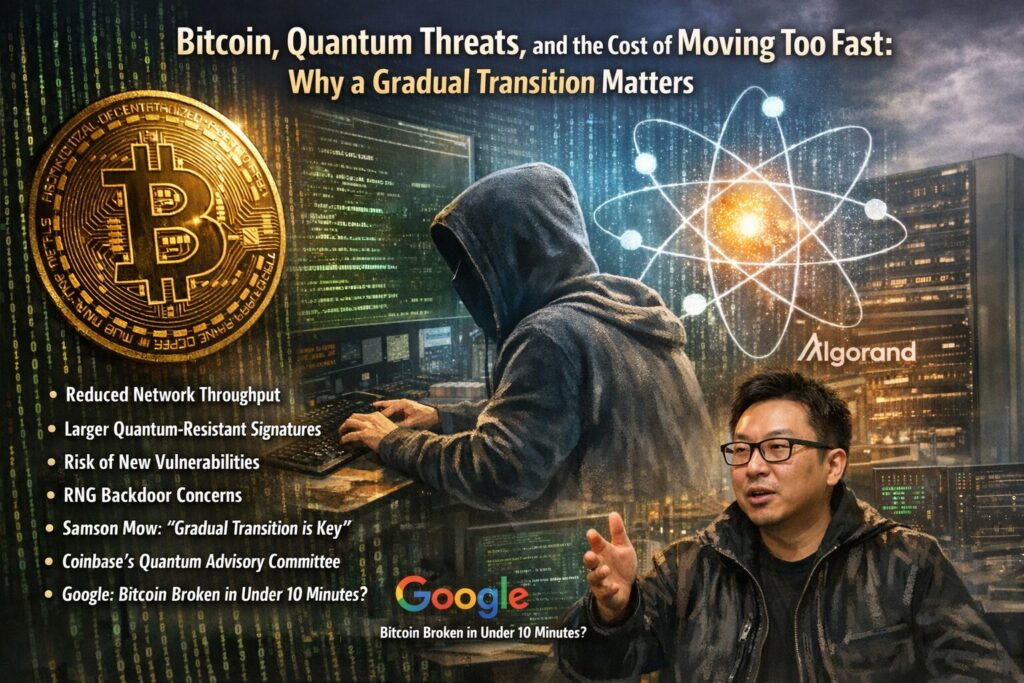
- Rapid migration to post-quantum cryptography could reduce Bitcoin network throughput significantly
- Quantum-resistant signatures may increase data size by 10x–125x
- Rushed implementation could introduce new vulnerabilities to classical computers
- Concerns raised about potential RNG backdoors, referencing historical NSA cases
- Samson Mow emphasizes gradual transition over urgency
- Coinbase has launched a Quantum Advisory Committee
- Google research suggests Bitcoin encryption could be broken in under 10 minutes in the future
- Quantum-resistant crypto projects like Algorand are gaining market attention
Introduction: A New Era of Threat or Opportunity?
The cryptocurrency industry is once again facing a fundamental question that could reshape its future: how should Bitcoin respond to the rise of quantum computing?
A recent statement by Samson Mow has sparked renewed debate. While acknowledging the importance of preparing for quantum threats, he strongly cautions against rushing into a full-scale transition to post-quantum cryptography (PQC). His warning is clear: moving too fast could be more dangerous than moving too slow.
At the same time, major industry players like Coinbase and Google are accelerating discussions, research, and institutional coordination around quantum risks.
This article explores the implications of these developments, combining the original report with broader industry trends, and analyzes what this means for investors, builders, and financial institutions exploring blockchain applications.
Section 1: The Core Concern — Throughput Collapse and Network Efficiency
Why Post-Quantum Signatures Are Problematic
At the heart of Mow’s concern lies a technical reality: post-quantum cryptographic signatures are significantly larger than current ones.
Bitcoin currently relies on:
- ECDSA
- Schnorr signatures
These systems are efficient, compact, and battle-tested. However, PQ signatures could increase data sizes by 10 to 125 times.
Signature Size Comparison Chart
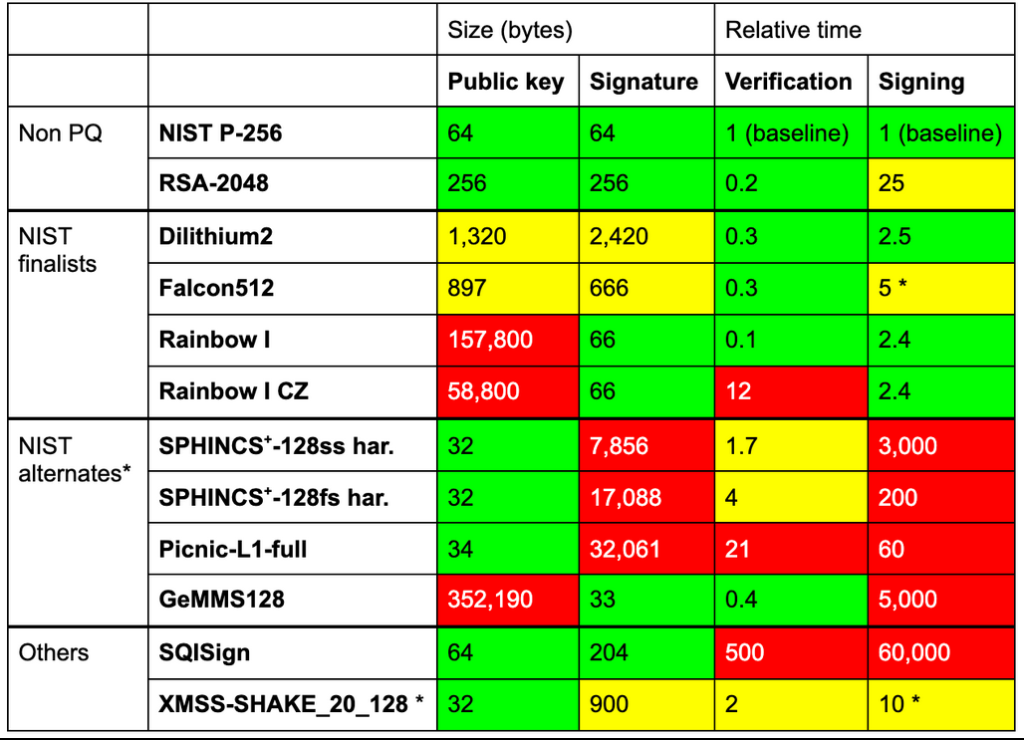
(Generated image showing ECDSA vs PQ signature sizes and block capacity impact)
Impact on Bitcoin
- Larger signatures → fewer transactions per block
- Reduced throughput → higher fees (in $ terms)
- Increased node storage requirements
For example:
| Metric | Current Bitcoin | PQ Scenario |
|---|---|---|
| Avg Tx Size | ~250 bytes | 2,500–30,000 bytes |
| TPS | ~7 | Potentially <1 |
| Fee Pressure | Moderate | High ($5–$50+ possible range depending on congestion) |
A premature transition could therefore recreate scalability crises similar to the 2017 block size debates.
Section 2: Security Paradox — Fixing One Risk, Creating Another
Quantum vs Classical Vulnerabilities
Mow highlights a critical paradox:
In attempting to secure Bitcoin against quantum computers, we may inadvertently weaken it against classical attacks.
This is not theoretical. Many PQ algorithms:
- Are newer and less battle-tested
- Have more complex implementations
- May rely on random number generators (RNGs)
The RNG Backdoor Risk
Historical precedent exists. Intelligence agencies, including the NSA, have been linked to cryptographic backdoors through manipulated RNG standards—later exposed by Edward Snowden.
If similar vulnerabilities exist in PQ systems:
- Wallet security could be compromised
- Key generation could be predictable
- Entire ecosystems could face systemic risk
This makes careful audit and gradual rollout essential.
Section 3: The Real Timeline — Are We Actually in Danger Yet?
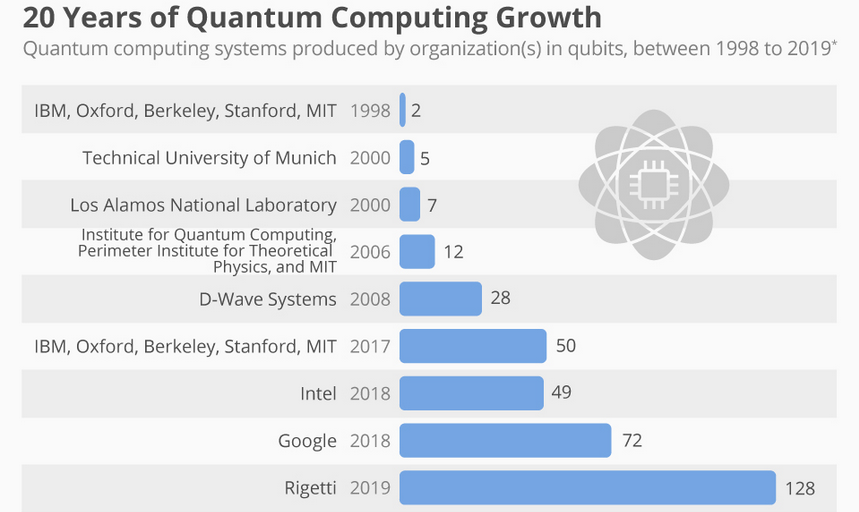
Despite the urgency in headlines, Mow estimates:
- Practical quantum attacks on Bitcoin are 10–20 years away
This aligns with broader industry consensus:
- Current quantum computers are still limited in qubit stability
- Error correction remains a major barrier
However, recent research by Google suggests that:
- Once mature, quantum machines could break Bitcoin cryptography in under 10 minutes
Quantum Timeline Projection
This creates a strategic dilemma:
- Too early → unnecessary disruption
- Too late → catastrophic risk
Section 4: Industry Response — Coinbase Takes the Lead
Brian Armstrong has publicly committed to addressing the issue.
Key Developments
- Formation of a Quantum Advisory Committee
- Collaboration with Bitcoin Core developers
- Planning industry-wide working groups
This signals a shift:
- From theoretical concern → institutional action
- From isolated research → coordinated strategy
For financial institutions and VASPs:
- Quantum readiness may soon become a compliance expectation
Section 5: Market Reaction — The Rise of Quantum-Native Crypto
One of the most interesting outcomes is market behavior.
Following quantum-related discussions:
- Algorand surged over 40% in a week
Why Algorand?
- Early integration of quantum-resistant cryptography concepts
- Recognized in research (including Google references)
- Positioned as “future-proof” infrastructure
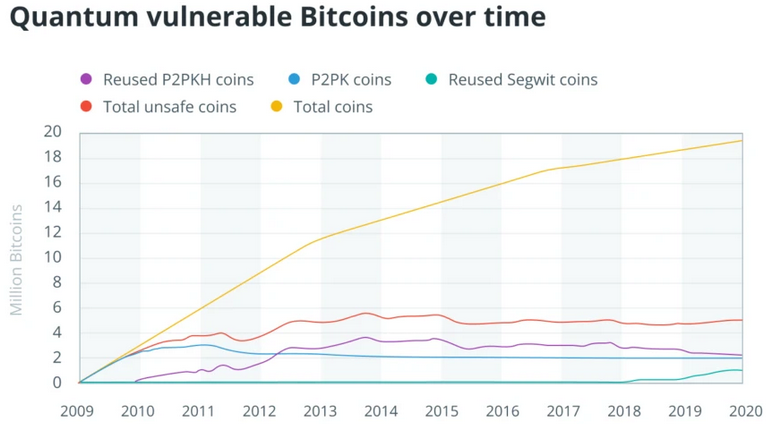
ALGO Price Surge
Emerging Trend
Quantum resistance is becoming:
- A new narrative driver
- A capital rotation theme
Similar to:
- DeFi (2020)
- NFTs (2021)
- AI tokens (2023–2025)
Section 6: Practical Implications for Builders and Investors
For Developers
- Avoid immediate migration to PQ signatures
- Focus on:
- Address reuse elimination
- Key rotation mechanisms
- Hybrid cryptographic models
For Financial Institutions
- Begin risk assessment frameworks
- Monitor:
- Wallet infrastructure exposure
- Custody vulnerabilities
- Consider gradual upgrade paths
For Investors
Opportunities may emerge in:
- Quantum-resistant blockchain protocols
- Infrastructure providers
- Cryptographic tooling startups
But caution is required:
- Many “quantum-safe” claims are marketing-driven
Section 7: The Shadow of the Block Size Wars
Mow warns of a familiar risk:
A rushed transition could reignite Bitcoin’s most divisive conflict — the block size war.
Increased data requirements from PQ signatures could force:
- Larger blocks
- Hard forks
- Community fragmentation
This is not just technical — it is political and economic.
Conclusion: The Case for Strategic Patience
The quantum threat is real—but it is not immediate.
The real danger lies in mismanaging the transition.
Samson Mow’s argument ultimately comes down to one principle:
Move deliberately, not reactively.
The future of Bitcoin—and potentially the entire crypto ecosystem—depends on striking the right balance between:
- Security and efficiency
- Innovation and stability
- Urgency and discipline
For those seeking the next opportunity in crypto, quantum resistance may indeed become a defining theme. But as history has shown, the biggest gains often come not from following hype—but from understanding timing.