Key Points :
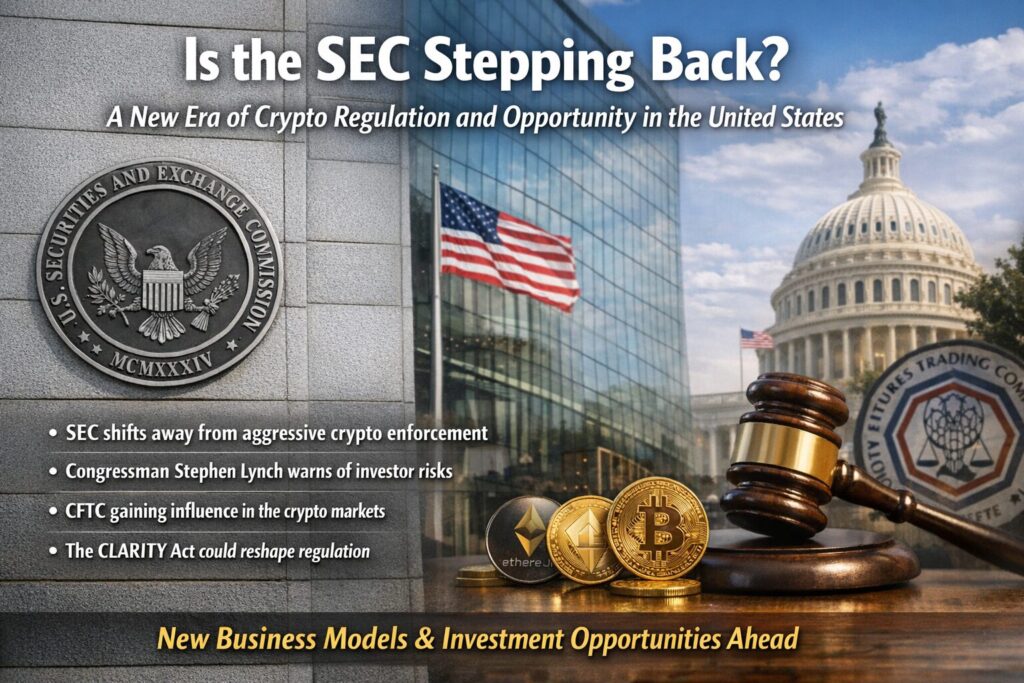
- The U.S. Securities and Exchange Commission (SEC) is shifting away from aggressive enforcement in crypto
- Congressional leaders like Stephen Lynch warn of reduced oversight and investor risk
- The Commodity Futures Trading Commission (CFTC) is gaining influence in crypto markets
- The proposed CLARITY Act may redefine crypto regulation and market structure
- This transition could unlock new business models, investment opportunities, and institutional adoption
Introduction: A Regulatory Turning Point
The regulatory landscape for digital assets in the United States is undergoing a profound transformation. Once regarded as the primary enforcer—or the “cop on the beat”—the U.S. Securities and Exchange Commission (SEC) is now facing criticism for stepping back from its traditionally aggressive stance on cryptocurrency enforcement. This shift has sparked debate across Congress, financial institutions, and the broader crypto ecosystem.
At the center of this debate is a growing tension: how to balance innovation and investor protection in a rapidly evolving technological environment. As lawmakers reconsider the structure of crypto regulation, new opportunities are emerging—not only for investors seeking the next high-growth asset, but also for companies building the future of financial infrastructure.
Section 1: “No Cop on the Beat” — Congressional Concerns
Subheading: The Warning from Capitol Hill
During a recent hearing of the House Financial Services Committee, Congressman Stephen Lynch expressed concern that the SEC is no longer acting as an effective watchdog in the crypto space. While acknowledging the transformative potential of blockchain technology, Lynch warned that recent regulatory changes could expose investors to fraud and misconduct.
He pointed to the dismantling of specialized enforcement teams and the closure of FinHub, a division that previously focused on fintech and digital asset expertise. According to Lynch, these moves have significantly weakened the SEC’s ability to oversee a rapidly growing and increasingly complex market.
The phrase “no cop on the beat” encapsulates a broader fear: that regulatory retreat may embolden bad actors at a time when retail participation in crypto remains high.
Section 2: Enforcement Retreat or Strategic Reset?
Subheading: Dropped Cases and Policy Shifts
Under the evolving regulatory environment, the SEC has reportedly scaled back enforcement actions against several major crypto firms, including Ripple Labs and Coinbase. These developments mark a significant departure from the aggressive enforcement approach seen in previous years.
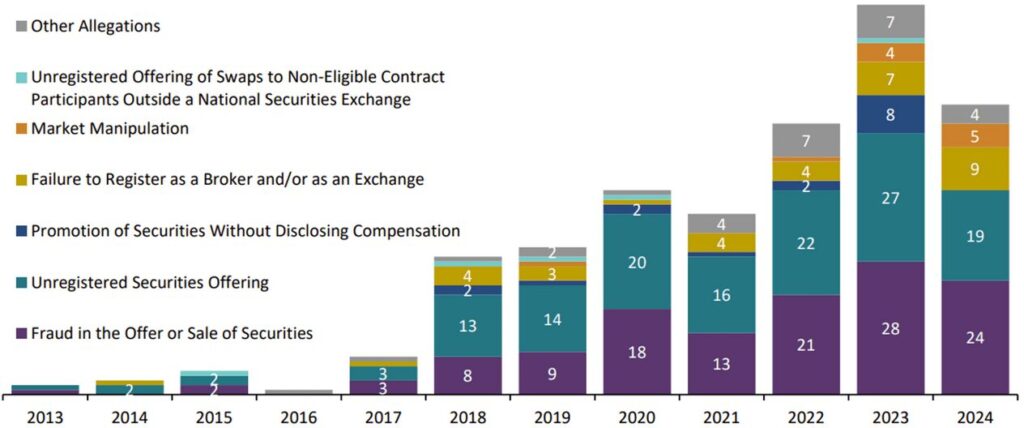
Critics argue that this retreat risks undermining market integrity. However, proponents suggest that it may represent a strategic reset—an acknowledgment that enforcement alone cannot provide the clarity needed for long-term industry growth.
This shift coincides with leadership changes within the SEC, including the appointment of Paul Atkins as chair following the departure of Gary Gensler. Atkins is widely viewed as more industry-friendly, signaling a potential pivot toward regulatory frameworks that emphasize clarity and collaboration over litigation.
Section 3: The Rise of the CFTC and Inter-Agency Coordination
Subheading: A New Regulatory Balance
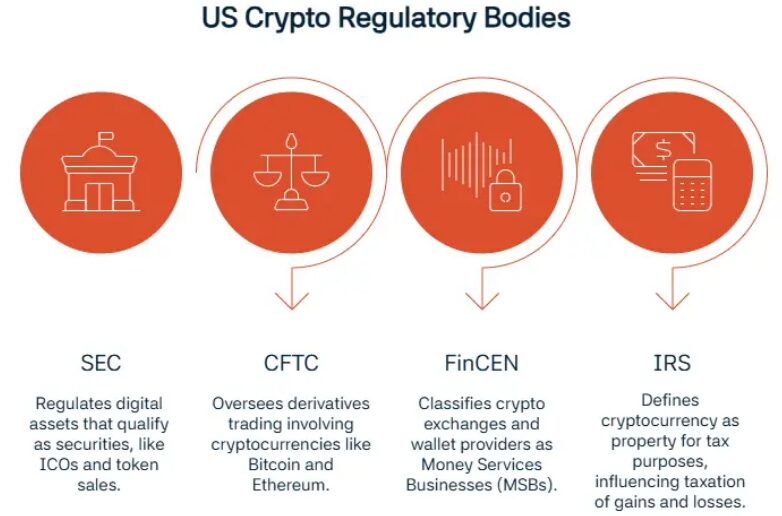
In the absence of a clear market structure law, regulatory agencies are increasingly collaborating to fill the gap. The U.S. Securities and Exchange Commission and the Commodity Futures Trading Commission recently signed a memorandum of understanding (MOU) to coordinate oversight of digital assets.
This partnership reflects a broader trend: the growing role of the CFTC in crypto regulation. Traditionally responsible for derivatives markets, the CFTC is seen by many as better suited to oversee decentralized assets like Bitcoin and Ethereum, which may not fit neatly into existing securities laws.
The proposed CLARITY Act would formalize this shift, granting the CFTC expanded authority over digital asset markets. While the legislation remains under debate, its implications are significant: a clearer division of responsibilities could reduce regulatory uncertainty and encourage institutional participation.
Section 4: Market Structure and the CLARITY Act
Subheading: Bridging the Regulatory Gap
SEC Chair Paul Atkins has described the agency’s current approach as a “bridge” toward a more comprehensive regulatory framework. This interim strategy includes issuing interpretive guidance on how existing securities laws apply to digital assets.
The CLARITY Act aims to go further by establishing a unified market structure for crypto. Key objectives include:
- Defining which assets are securities versus commodities
- Assigning regulatory authority between the SEC and CFTC
- Creating standardized rules for exchanges, custodians, and issuers
For developers, exchanges, and institutional investors, such clarity could be transformative. It would reduce compliance risk, streamline operations, and open the door to new financial products.
Section 5: Opportunities Emerging from Regulatory Evolution

Subheading: Where Investors and Builders Should Focus
For readers seeking new crypto assets and revenue opportunities, this regulatory transition presents several key themes:
1. Infrastructure Plays
As regulation becomes clearer, demand for compliant infrastructure—custody solutions, compliance tools, and on-chain analytics—will grow.
2. Institutional Adoption
Clearer rules could accelerate entry by banks, asset managers, and payment providers, driving liquidity and stability in the market.
3. Tokenization of Real-World Assets
A defined regulatory framework may unlock the tokenization of assets such as real estate, bonds, and commodities, bridging traditional finance and blockchain.
4. Cross-Border Payments
Projects focused on remittances and stablecoins could benefit from reduced regulatory friction, particularly in emerging markets.
5. Developer Ecosystems
With less fear of enforcement, developers may be more willing to build innovative applications, particularly in DeFi and Web3.
Section 6: Risks and Unresolved Questions
Subheading: The Cost of Reduced Oversight
While the shift toward regulatory clarity is promising, it is not without risks. Reduced enforcement could lead to:
- Increased fraud and market manipulation
- Lower investor confidence
- Fragmentation if legislation fails to pass
Moreover, the transition period itself may create uncertainty, as market participants navigate evolving rules and overlapping jurisdictions.
Conclusion: A Defining Moment for Crypto Regulation
The United States stands at a pivotal moment in the evolution of digital asset regulation. The perceived retreat of the U.S. Securities and Exchange Commission from its enforcement-heavy approach signals not just a change in policy, but a broader rethinking of how to govern emerging technologies.
Whether this shift leads to a more vibrant and innovative crypto ecosystem—or exposes the market to new risks—will depend on the success of legislative efforts like the CLARITY Act and the ability of regulators to adapt to a decentralized future.
For investors and builders alike, the message is clear: the rules of the game are changing. Those who understand and anticipate these changes will be best positioned to capture the next wave of opportunity in the digital asset space.