
Key Takeaways :
- Over 33.1% of Ethereum’s total supply is now locked in staking
- Exchange balances have fallen to multi-year lows, tightening tradable supply
- Validator queues show strong and sustained demand for staking participation
- Structural illiquidity is forming a potential long-term price floor for ETH
- Reduced sell pressure increases price sensitivity to demand shocks
1. A Structural Shift in Ethereum’s Supply Dynamics
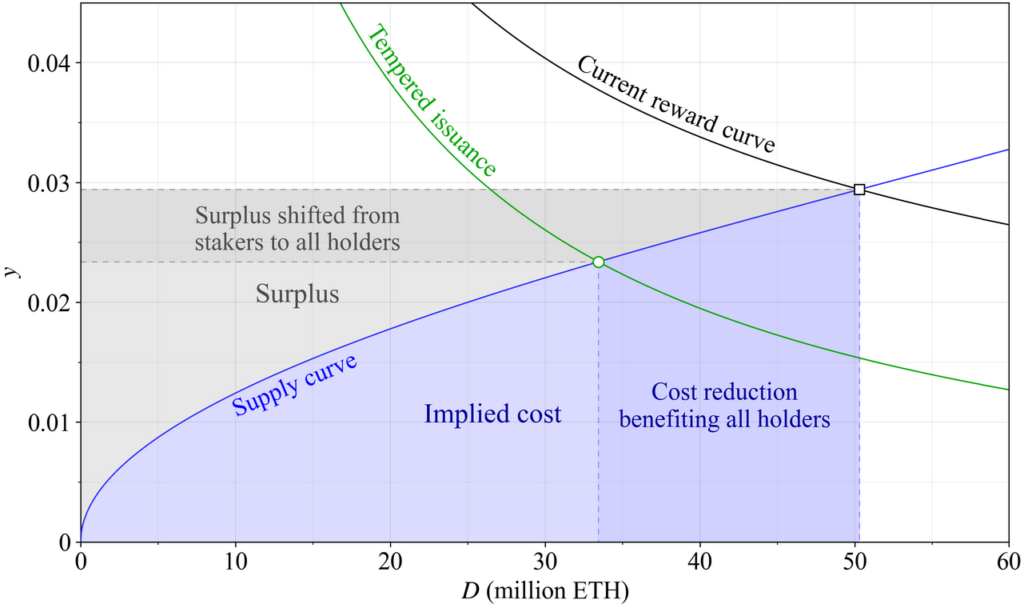
Ethereum is undergoing a profound transformation in its supply structure—one that could redefine how investors interpret its long-term valuation. Unlike previous cycles driven primarily by speculative inflows and macro liquidity, the current phase is characterized by a gradual but persistent contraction in liquid supply.
At the heart of this shift is the increasing share of ETH being removed from active circulation. Tokens are moving away from exchanges and into staking contracts, cold storage, and long-term holdings. This effectively reduces the number of coins available for immediate buying and selling, tightening the market.
This phenomenon mirrors dynamics observed in commodities markets, where supply constraints often precede sustained price appreciation. However, in Ethereum’s case, the mechanism is not physical scarcity but programmable illiquidity, driven by protocol incentives and validator economics.
The implication is significant: Ethereum is no longer just a transactional asset—it is increasingly behaving like a yield-bearing reserve asset, similar to digital bonds or staked capital instruments.
2. Staking Expansion: Locking Away One-Third of ETH
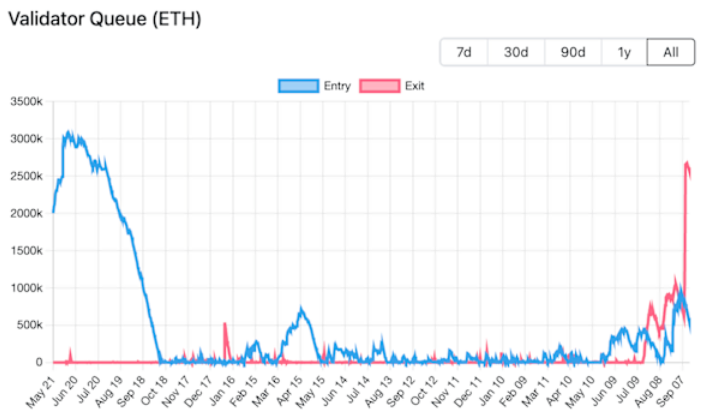
As of the latest data, approximately 38.1 million ETH—equivalent to 33.1% of total supply—is locked in staking.
This represents an all-time high and reflects growing confidence in Ethereum’s proof-of-stake model following the transition from proof-of-work. Infrastructure providers like Everstake have highlighted that this trend signals a shift from liquid trading assets toward long-term yield-generating positions.
The validator pipeline further reinforces this narrative. Over 2.87 million ETH are currently waiting in the activation queue, with delays reaching around 50 days. This backlog indicates not only sustained interest but also capacity constraints within the network’s validator onboarding process.
On the other hand, exit queues remain minimal, with only around 40,000 ETH pending withdrawal and waiting times under 17 hours. This asymmetry—strong inflows and weak outflows—suggests that participants are not merely experimenting with staking but are committing capital for extended durations.
Additionally, Ethereum’s validator churn limits (e.g., capped validator entry/exit rates per epoch) ensure that even if sentiment changes abruptly, the return of staked ETH to the market will be gradual rather than immediate. This creates a built-in dampening mechanism against sudden supply shocks.
3. Exchange Outflows and the Decline of Liquid Supply
Parallel to staking growth, Ethereum is experiencing significant outflows from centralized exchanges.
For instance, large withdrawals—such as approximately $1.67 billion worth of ETH from OKX and multiple $300+ million outflows from Binance—highlight a broader trend: ETH is increasingly being moved into self-custody or long-term storage.
According to on-chain analytics firms like CryptoQuant, total ETH held on exchanges has dropped to its lowest level since 2016. Binance alone now holds around 3.3 million ETH, marking a significant decline from previous years.
This matters because exchange-held ETH represents the most immediately tradable supply. When these balances shrink, the market becomes more sensitive to demand fluctuations. Even modest increases in buying pressure can result in disproportionately large price movements due to limited available supply.
4. The Emergence of a Price Floor Mechanism
The combination of staking lockups and exchange outflows is producing a powerful effect: the emergence of a structural price floor.
Historically, crypto markets have been highly volatile, with sharp drawdowns driven by rapid sell-offs. However, the current environment introduces friction into the supply side. With a significant portion of ETH locked and another portion held off exchanges, the effective float—the amount of ETH readily available for trading—is shrinking.
This reduced float has two key implications:
- Lower Sell Pressure
Fewer coins available on exchanges means fewer immediate sellers, especially during market downturns. - Higher Price Elasticity
Prices become more responsive to incremental demand, amplifying upward movements when buying interest returns.
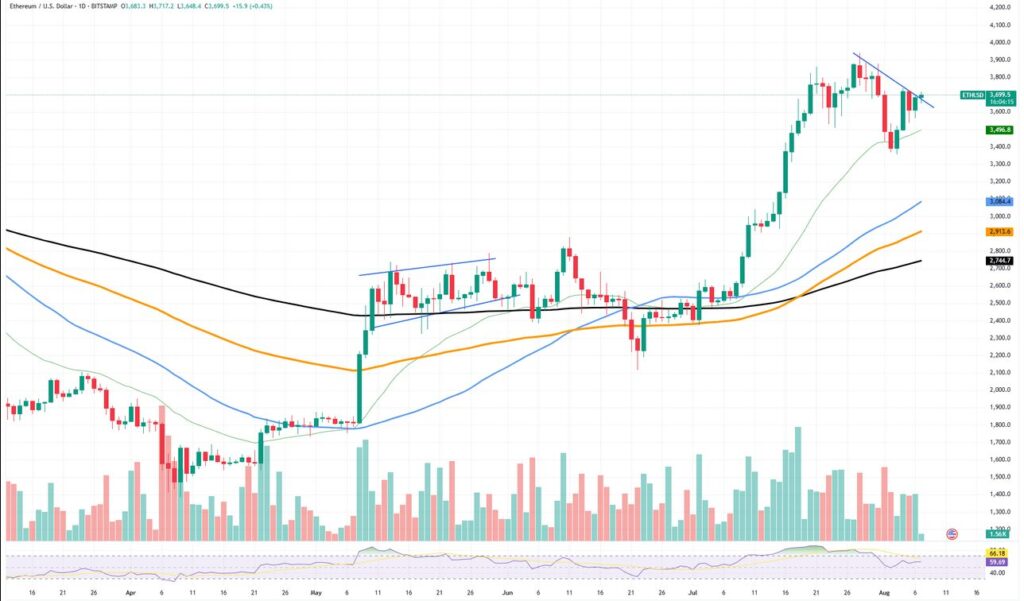
In practical terms, this dynamic could support ETH within a range such as $2,000–$2,200, acting as a base for future rallies. If macro conditions improve or institutional demand accelerates, the constrained supply could enable a breakout above this range.
5. Ethereum in the Context of Broader Market Trends
Beyond the immediate data, Ethereum’s supply tightening aligns with several broader industry developments:
- Institutional Adoption: Increasing interest in staking-as-a-service and ETH-based yield products
- Layer-2 Expansion: Rollups like Arbitrum and Optimism are increasing ETH utility while reducing mainnet congestion
- Tokenization and Real-World Assets (RWA): Ethereum remains the dominant platform for tokenized assets, further anchoring demand
Moreover, compared to other major cryptocurrencies, Ethereum’s monetary policy is increasingly favorable. With mechanisms like EIP-1559 burning transaction fees and staking locking supply, ETH is evolving into a quasi-deflationary asset under certain network conditions.
This contrasts with assets that rely solely on fixed supply narratives without active mechanisms reducing circulating liquidity.
6. Risks and Counterarguments
While the supply squeeze narrative is compelling, it is not without risks:
- Liquidity Risk: Reduced liquidity can increase volatility in both directions
- Unstaking Events: If large holders decide to exit staking, supply could re-enter the market (albeit gradually)
- Regulatory Pressure: Changes in staking regulations could impact participation rates
- Layer-2 Value Capture: Some argue that L2 scaling could divert value away from ETH itself
Additionally, macroeconomic conditions—such as interest rate changes or global risk sentiment—continue to play a crucial role in determining crypto market direction.
7. Strategic Implications for Investors and Builders
For investors seeking new opportunities, Ethereum’s current dynamics offer several strategic insights:
- Accumulation Phases May Be Less Visible
Supply tightening can mask accumulation, as price movements lag underlying fundamentals. - Yield Becomes Central
Staking rewards position ETH as an income-generating asset, competing with traditional yield instruments. - Liquidity Premium Matters
Assets with lower liquidity may command higher premiums during bull cycles.
For builders and developers, the trend emphasizes the importance of designing applications that align with Ethereum’s evolving role as a settlement and yield layer, rather than purely a transactional network.
Conclusion: A New Phase for Ethereum’s Market Structure
Ethereum is entering what could be described as a structural supply-constrained phase. The convergence of staking expansion, exchange outflows, and reduced liquid supply is reshaping its market behavior.
Rather than relying solely on speculative demand, ETH now benefits from embedded mechanisms that restrict supply and enhance price stability. While short-term volatility remains inevitable, the long-term trajectory appears increasingly supported by structural factors.
If these trends persist, Ethereum may not only sustain higher price floors but also redefine its role in the digital asset ecosystem—from a volatile utility token to a core financial primitive underpinning decentralized finance and beyond.