Key Points :
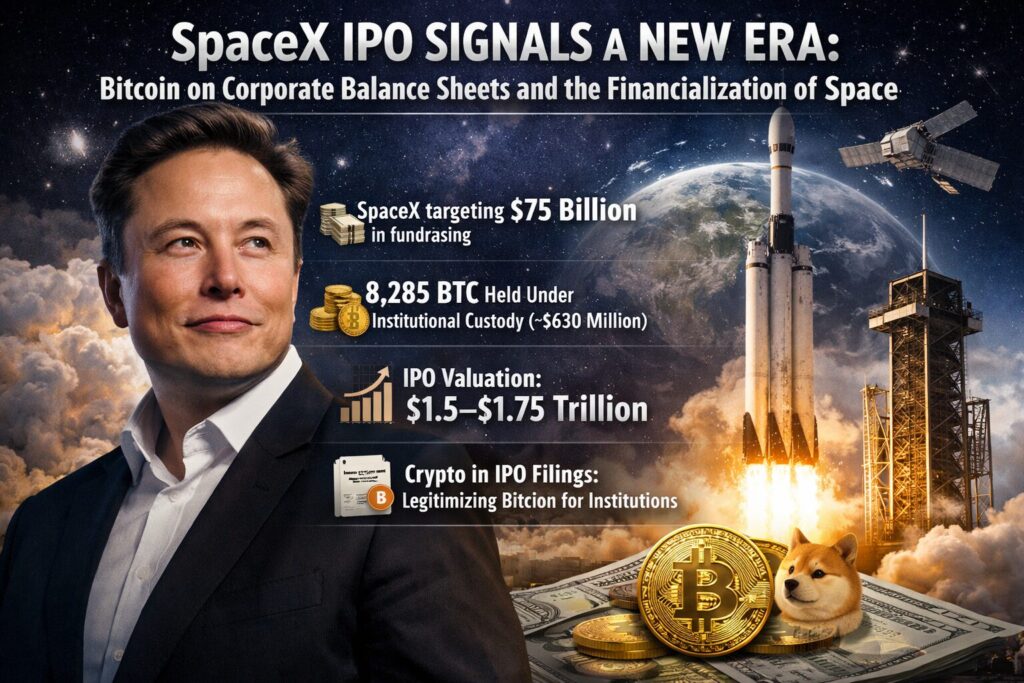
- Elon Musk’s SpaceX is preparing to file its IPO prospectus, targeting $75 billion in fundraising
- The company reportedly holds 8,285 BTC (~$630 million) under institutional custody
- IPO valuation could reach $1.5–1.75 trillion, making it potentially the largest IPO in history
- Crypto disclosure in IPO filings may legitimize Bitcoin for institutional investors
- Deep ties to Dogecoin highlight crossover between space tech and crypto culture
Introduction: When Space Meets Crypto Capital Markets
The anticipated initial public offering (IPO) of SpaceX represents more than a milestone in aerospace innovation—it marks a convergence of frontier technologies, capital markets, and digital assets. Reports from major financial media indicate that the company, led by Elon Musk, is set to submit its IPO prospectus imminently, aiming to raise approximately $75 billion. If successful, the listing could occur as early as mid-2026, with a valuation that may exceed $1.5 trillion, positioning it among the largest IPOs ever.
However, beyond the scale of fundraising, a more subtle but arguably more transformative narrative is emerging: the formal integration of Bitcoin into one of the world’s most advanced private companies.
A Historic IPO with Strategic Depth
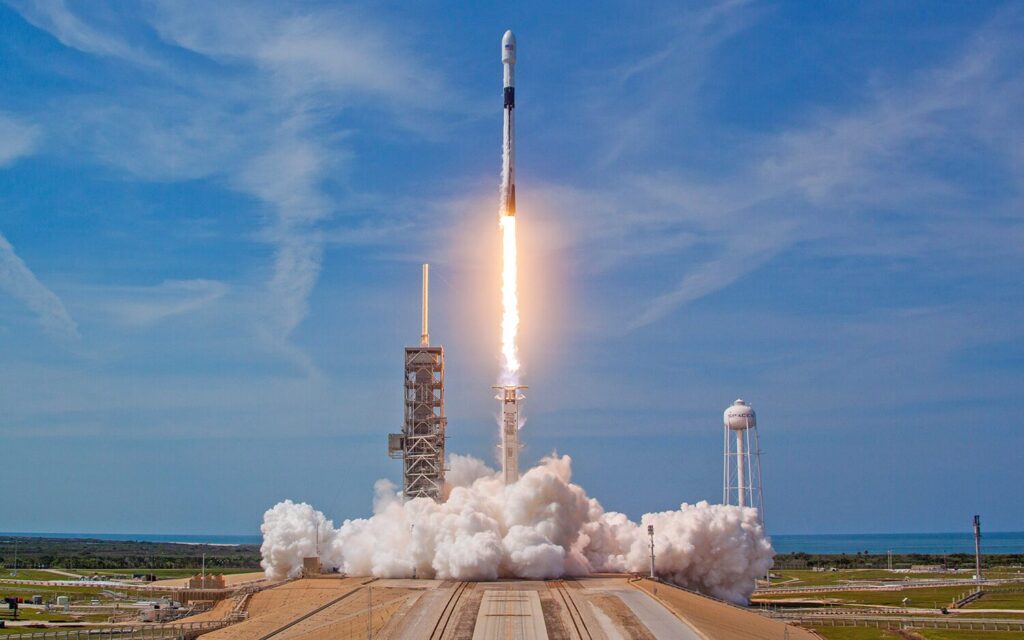
Unlike earlier speculation that Starlink might be spun off independently, the current IPO is expected to encompass the entire SpaceX business, including launch services, satellite infrastructure, and deep-space missions. This integrated approach reflects a broader strategic vision: positioning SpaceX not merely as a launch provider but as a global infrastructure platform spanning Earth orbit and beyond.
The projected valuation—between $1.5 trillion and $1.75 trillion—would rival or exceed that of the largest publicly traded technology firms. For investors, this raises important questions about revenue streams, capital intensity, and long-term scalability. Yet, it is precisely this scale that allows SpaceX to experiment with unconventional treasury strategies, including cryptocurrency holdings.
Bitcoin on the Balance Sheet: Institutional Validation
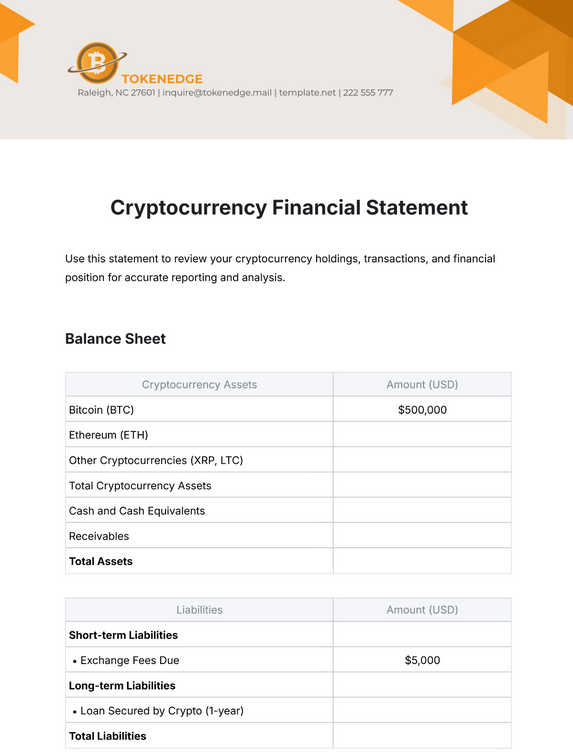
One of the most closely watched aspects of the IPO filing will be the disclosure of SpaceX’s Bitcoin holdings. Current estimates suggest the company owns approximately 8,285 BTC, equivalent to roughly $630 million at prevailing market prices.
These assets are reportedly held under institutional custody, likely through Coinbase Prime, indicating a high level of operational and regulatory sophistication.
This disclosure is significant for several reasons:
1. Transparency of Acquisition Strategy
The IPO prospectus will likely reveal:
- Average acquisition cost (cost basis)
- Holding periods
- Accounting treatment
Such transparency has historically been limited to companies like Tesla and MicroStrategy. SpaceX’s entry adds a new tier of credibility, given its technological stature and government partnerships.
2. Reinforcing Bitcoin as a Treasury Asset
Bitcoin’s evolution from speculative asset to corporate treasury reserve has been gradual. With SpaceX joining the ranks, institutional investors may increasingly view BTC as:
- A hedge against fiat debasement
- A non-correlated asset
- A long-term store of value
This aligns with broader trends in asset defense strategies, where Bitcoin is positioned alongside or even above traditional safe havens like gold.
Dogecoin and the Cultural Layer of Crypto

Beyond Bitcoin, SpaceX maintains a unique relationship with Dogecoin, a cryptocurrency that originated as a meme but has since gained substantial market traction.
The planned DOGE-1 lunar mission, funded in Dogecoin, symbolizes an experimental intersection of:
- Payment innovation
- Marketing strategy
- Community-driven finance
Although delays have pushed the mission timeline toward 2026–2027, the conceptual significance remains intact. Musk has even suggested delivering a physical Dogecoin token to the Moon, reinforcing the narrative that value in the digital age is as much cultural as it is financial.
Market Implications: A Turning Point for Crypto Adoption
The implications of SpaceX’s IPO extend far beyond its own capitalization:
Institutional Confidence
Public disclosure of crypto holdings in a regulated filing may:
- Reduce perceived risk among institutional investors
- Encourage portfolio allocation to digital assets
- Accelerate the development of crypto-related financial products
Regulatory Signaling
As SpaceX files with U.S. regulators, its treatment of Bitcoin will set precedents in:
- Accounting standards
- Risk disclosure frameworks
- Custody compliance
Capital Market Integration
The IPO represents a fusion of traditional equity markets and decentralized finance narratives, potentially paving the way for:
- Tokenized equities
- Blockchain-based settlement systems
- Hybrid financial instruments
Broader Trends: The Financialization of Innovation
SpaceX’s move comes amid a broader wave of convergence:
- Tech giants increasingly hold digital assets
- Financial institutions are building crypto infrastructure
- Governments are exploring CBDCs and regulatory frameworks
In this context, SpaceX is not an outlier but a leading indicator. Its actions suggest that the next phase of innovation will not be siloed—space, AI, blockchain, and finance will evolve as an interconnected ecosystem.
Conclusion: A Defining Moment for Crypto and Capital Markets
The upcoming IPO of SpaceX is poised to be a landmark event—not only for the aerospace industry but for the global financial system. By combining unprecedented fundraising ambitions with transparent cryptocurrency holdings, the company is effectively bridging two worlds: the physical frontier of space exploration and the digital frontier of decentralized finance.
For investors, developers, and policymakers alike, this signals a clear direction of travel. Bitcoin is no longer on the fringes of corporate finance—it is becoming embedded within it. And as companies like SpaceX lead the way, the question is no longer whether crypto will integrate into mainstream finance, but how quickly and at what scale.