Main Points :
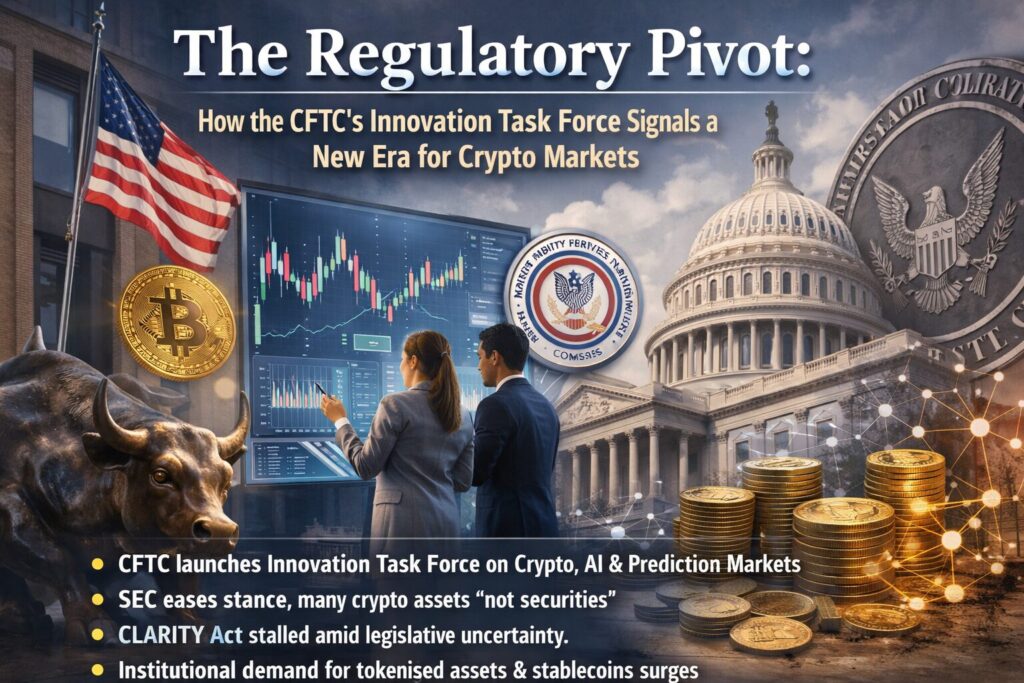
- The CFTC has launched a new Innovation Task Force focused on crypto, AI, and prediction markets
- This reflects a broader U.S. regulatory shift toward innovation-friendly frameworks
- The SEC is simultaneously softening its stance, suggesting many crypto assets are not securities
- Legislative uncertainty persists as the CLARITY Act stalls in the Senate
- Institutional demand for tokenized assets, stablecoins, and compliant infrastructure is accelerating
1. Introduction: A Turning Point in U.S. Crypto Regulation
The launch of the CFTC’s Innovation Task Force marks a pivotal shift in how the United States approaches cryptocurrency regulation. For years, the regulatory environment has been characterized by fragmentation, uncertainty, and enforcement-driven policy. Now, however, a new paradigm is emerging—one that seeks to integrate innovation directly into the regulatory process itself.
This initiative, led under the direction of Chairman Michael Selig, aims to create a collaborative environment where builders, developers, and institutions can engage directly with regulators. Unlike previous approaches that relied heavily on enforcement actions, this task force signals a transition toward proactive rule-making.
From an investor and builder perspective, this shift is highly significant. Regulatory clarity has long been one of the biggest barriers to institutional adoption. With both the CFTC and SEC now moving toward structured frameworks, the market is entering a phase where compliance and growth can coexist.
2. What the Innovation Task Force Actually Means
The Innovation Task Force is not just a symbolic move—it represents a structural redesign of how financial regulation interacts with emerging technologies.
Its scope covers three critical verticals:
- Cryptocurrency markets
- Artificial intelligence in finance
- Prediction markets
These sectors are increasingly converging. For example, AI is now being used to optimize trading strategies, while prediction markets are leveraging blockchain infrastructure for transparency and decentralization.
The task force will work alongside the CFTC’s Innovation Advisory Committee, forming a hybrid model where industry participants can directly contribute to regulatory design.
This is a fundamental change. Instead of regulators acting as external overseers, they are becoming embedded participants in the innovation cycle.
3. The SEC’s Parallel Shift: A Softening Stance
At the same time, the SEC has begun signaling a more flexible approach to digital assets.
Recent guidance suggests that most crypto assets may not be classified as securities under federal law. This represents a major departure from previous enforcement-heavy policies under former leadership.
The SEC has described this guidance as a “bridge” toward a comprehensive framework. In other words, regulators are acknowledging that the absence of legislation cannot justify continued uncertainty.
Key Implication
This creates a dual-agency convergence:
- The CFTC is building innovation-driven frameworks
- The SEC is reducing legal ambiguity
Together, they are forming the foundation for a more coherent U.S. crypto regulatory environment.
4. Legislative Gridlock: The CLARITY Act Stalemate
Despite these regulatory advances, legislative progress remains stalled.
The CLARITY Act, which aims to define market structure for digital assets, has passed the House but remains stuck in the Senate.
Key Issues Under Debate
- Stablecoin revenue models
- Ethical considerations in tokenized finance
- Classification of tokenized equities
- Jurisdictional boundaries between agencies
This delay creates a paradox:
- Regulators are moving forward
- Lawmakers are lagging behind
In practice, this means that regulatory agencies are effectively shaping policy in the absence of formal legislation.
5. Institutional Demand Is Driving the Shift
Behind these regulatory changes lies a powerful force: institutional demand.
Major financial institutions are increasingly entering the crypto space, particularly in areas such as:
- Stablecoins
- Tokenized real-world assets (RWA)
- Blockchain-based settlement systems
Institutional Capital Flow into Crypto Infrastructure (Insert Below)
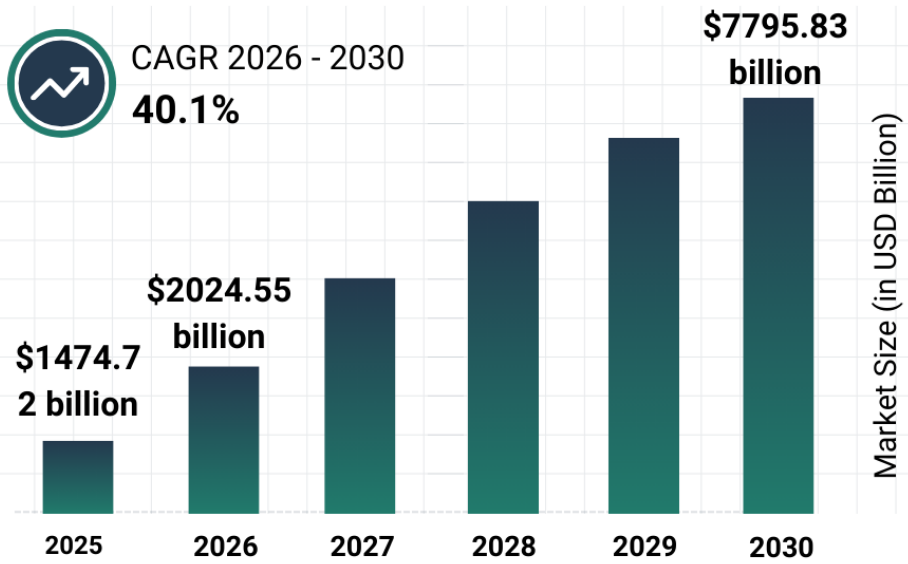
This trend is not speculative—it is structural. Financial giants are building long-term infrastructure, not chasing short-term gains.
For investors, this signals a shift from retail-driven cycles to institutionally anchored growth.
6. The Rise of Tokenization and Real-World Assets
One of the most important developments in the current cycle is the rise of tokenized assets.
Tokenization allows traditional financial instruments—such as bonds, equities, and real estate—to be represented on blockchain networks.
Benefits
- Increased liquidity
- Fractional ownership
- Global accessibility
- Faster settlement
Tokenization Ecosystem Structure (Insert Below)
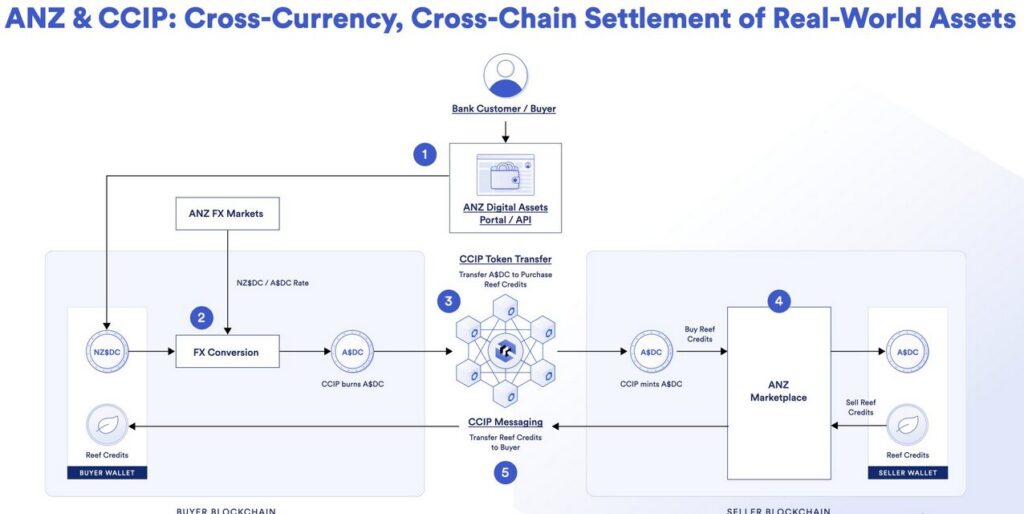
Regulators are now recognizing that these innovations cannot be ignored. Instead, they must be integrated into the financial system.
7. AI + Crypto + Prediction Markets: The New Convergence
A particularly forward-looking aspect of the CFTC initiative is its inclusion of AI and prediction markets.
This reflects a broader convergence:
- AI enables automated financial decision-making
- Blockchain provides transparency and settlement
- Prediction markets aggregate real-time information
Together, these technologies form the foundation of what can be called autonomous financial systems.
This aligns closely with emerging trends where:
- Smart contracts execute trades
- AI models optimize strategies
- Markets operate continuously without human intervention
8. Market Outlook: What This Means for Investors
From an investment perspective, the implications are profound.
Short-Term
- Increased volatility due to regulatory transitions
- Continued uncertainty around legislation
Mid-Term
- Growth in compliant infrastructure projects
- Expansion of institutional participation
Long-Term
- Emergence of fully integrated digital financial systems
- Decline of regulatory arbitrage strategies
Crypto Market Evolution Phases (Insert Below)
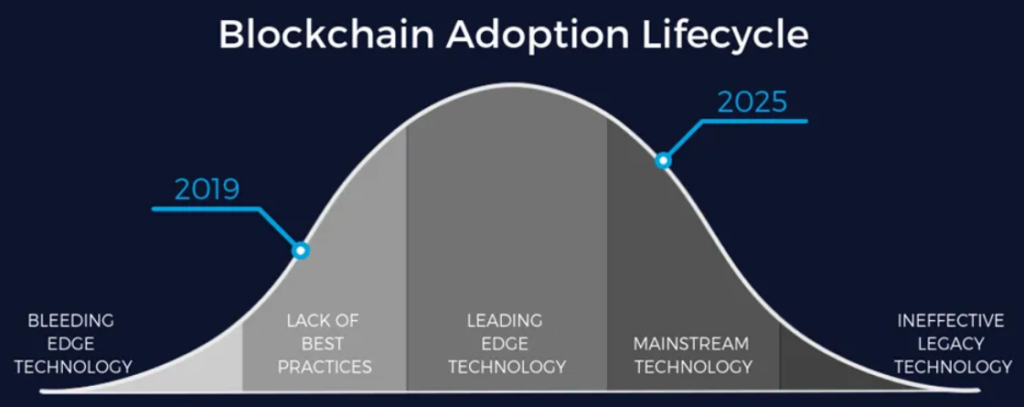
For investors seeking new opportunities, the key is to focus on projects that align with regulatory trends rather than those attempting to avoid them.
9. Strategic Takeaways for Builders and Investors
The current environment favors:
- Infrastructure providers
- Compliance-first platforms
- Tokenization protocols
- Cross-border payment solutions
Conversely, purely speculative tokens without clear utility are likely to face increasing pressure.
The era of “regulation-resistant crypto” is ending. The next phase will be defined by regulated innovation.
10. Conclusion: From Chaos to Structured Growth
The launch of the CFTC’s Innovation Task Force represents more than a policy update—it is a signal that the crypto industry is entering a new phase of maturity.
For years, the market operated in a gray zone, driven by experimentation and speculation. Now, it is transitioning into a structured ecosystem supported by regulators, institutions, and technological convergence.
This does not mean innovation will slow down. On the contrary, it may accelerate.
By providing clearer rules and collaborative frameworks, regulators are reducing uncertainty—the single greatest barrier to large-scale adoption.
For investors, developers, and institutions alike, the message is clear:
The future of crypto will not be built outside the system—it will be built alongside it.