Main Points :
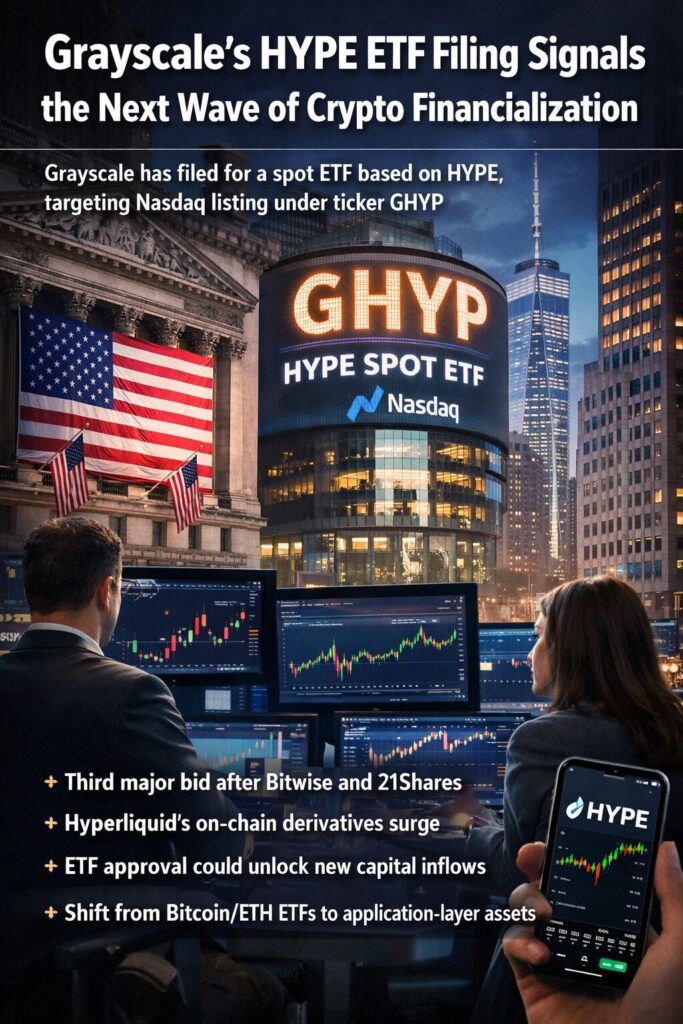
- Grayscale has filed for a spot ETF based on HYPE, targeting Nasdaq listing under ticker GHYP
- This marks the third major institutional attempt after Bitwise and 21Shares
- Hyperliquid’s explosive growth in on-chain derivatives positions HYPE as a serious institutional asset
- ETF approval could unlock new capital inflows into decentralized derivatives ecosystems
- The broader trend shows a shift from Bitcoin/ETH ETFs toward application-layer crypto assets
1. Grayscale Expands the ETF Battlefield Beyond Bitcoin and Ethereum
Grayscale Investments has taken a decisive step in expanding the scope of crypto-based exchange-traded funds by filing an S-1 registration with the U.S. Securities and Exchange Commission (SEC) for a spot ETF tracking the HYPE token, the native asset of the decentralized derivatives exchange Hyperliquid. If approved, the ETF will trade under the ticker GHYP on Nasdaq.
This move is significant not merely because it introduces a new asset into the ETF pipeline, but because it reflects a deeper shift in institutional crypto strategy. Until recently, ETFs have largely focused on store-of-value assets like Bitcoin or smart contract platforms like Ethereum. By contrast, HYPE represents an entirely different category: infrastructure for decentralized trading, specifically perpetual futures and derivatives.
The proposed ETF is structured as a passive investment vehicle, meaning it will directly hold HYPE tokens rather than using derivatives or leverage. Coinbase Custody is designated as the custodian, while pricing will rely on CoinDesk Benchmark indices. Notably, staking is currently excluded, though provisions exist to enable it if regulatory approval is granted in the future.
This cautious yet flexible design reflects a broader institutional approach: enter early, comply strictly, and expand functionality later.
2. The Emerging Competition: Bitwise, 21Shares, and Grayscale
Grayscale is not alone in recognizing the potential of HYPE. The race to launch a HYPE-based ETF is already underway:
- Bitwise filed its application in September 2025 and later amended it under ticker BHYP
- 21Shares submitted its own filing in October 2025
- Grayscale now becomes the third major contender
This competition mirrors earlier battles over Bitcoin ETFs, where multiple issuers raced to secure first-mover advantage. However, the stakes may be even higher this time.
Unlike Bitcoin, which already had broad recognition and liquidity, HYPE represents a new frontier asset class. The first approved ETF could effectively define how institutional capital enters decentralized derivatives markets.
3. Hyperliquid: The Infrastructure Behind HYPE’s Value
To understand why institutional players are targeting HYPE, one must examine the underlying platform: Hyperliquid.

Hyperliquid has rapidly emerged as a dominant force in the on-chain derivatives sector, recording approximately $2.6 trillion in trading volume in 2025. This places it at the top of decentralized derivatives exchanges, rivaling even centralized platforms in certain metrics.
Several factors explain this growth:
- High-performance matching engine optimized for low latency
- On-chain transparency combined with centralized exchange-like UX
- Capital efficiency mechanisms, including cross-margining
- Strong appeal to professional traders seeking decentralized alternatives
HYPE, as the native token, captures value through ecosystem incentives, governance, and potential fee structures. As such, it behaves more like an exchange equity proxy than a simple utility token.
4. Why Institutional Capital Is Moving Toward Application Tokens
The HYPE ETF filings signal a broader trend: institutional investors are beginning to look beyond foundational crypto assets.
Historically, crypto exposure followed a predictable hierarchy:
- Bitcoin (digital gold narrative)
- Ethereum (smart contract infrastructure)
- Layer-1 alternatives (Solana, Avalanche, etc.)
Now, a fourth category is emerging:
- Application-layer tokens tied to revenue-generating platforms
This shift is driven by several factors:
- Search for yield in a low-growth macro environment
- Increased confidence in DeFi infrastructure
- Maturation of regulatory frameworks
- Demand for assets with cash-flow-like characteristics
HYPE fits this narrative well. As decentralized derivatives trading grows, the token may benefit from increased usage, liquidity, and potential fee capture.
5. ETF Structure: Conservative Design with Future Optionality
Grayscale’s proposed ETF adopts a conservative approach, likely to improve its chances of regulatory approval:
- No leverage
- No derivatives
- Direct spot exposure
- Institutional-grade custody
- Transparent pricing benchmarks
However, the inclusion of a future staking provision is particularly noteworthy. This suggests that asset managers are preparing for a regulatory environment where yield-generating features could be integrated into ETFs.
If staking is eventually allowed, ETFs could evolve into hybrid instruments combining price exposure and yield, fundamentally changing their role in portfolios.
6. Market Implications: A New Capital Pipeline for DeFi
The approval of a HYPE ETF would have several far-reaching implications:
1. Institutional Access to DeFi
Traditional investors could gain exposure to decentralized derivatives without interacting with wallets or smart contracts.
2. Liquidity Expansion
ETF inflows would likely increase demand for HYPE, improving liquidity and potentially stabilizing price volatility.
3. Validation of On-Chain Markets
Regulatory approval would signal that decentralized trading platforms are becoming legitimate components of the financial system.
4. Competitive Pressure on Centralized Exchanges
As capital flows into decentralized platforms, centralized exchanges may face increasing competition.
7. Risks and Uncertainties
Despite the optimism, several risks remain:
- Regulatory uncertainty: SEC approval is not guaranteed
- Market volatility: HYPE is still a relatively new asset
- Platform risk: Dependence on Hyperliquid’s continued success
- Token economics: Long-term value capture mechanisms are still evolving
Investors should recognize that while the upside is significant, the asset class remains in an early stage.
8. Visual Analysis (Insert Below)
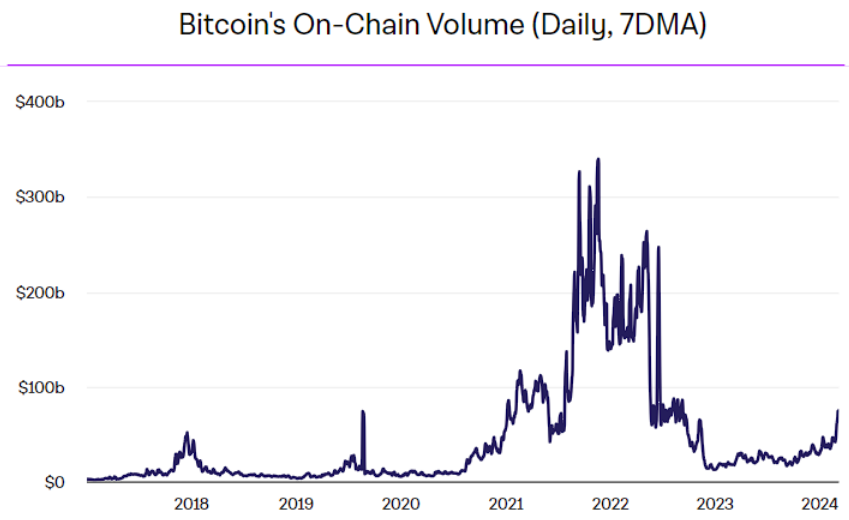
[Insert Chart 1 Here: Growth of On-Chain Derivatives Volume]
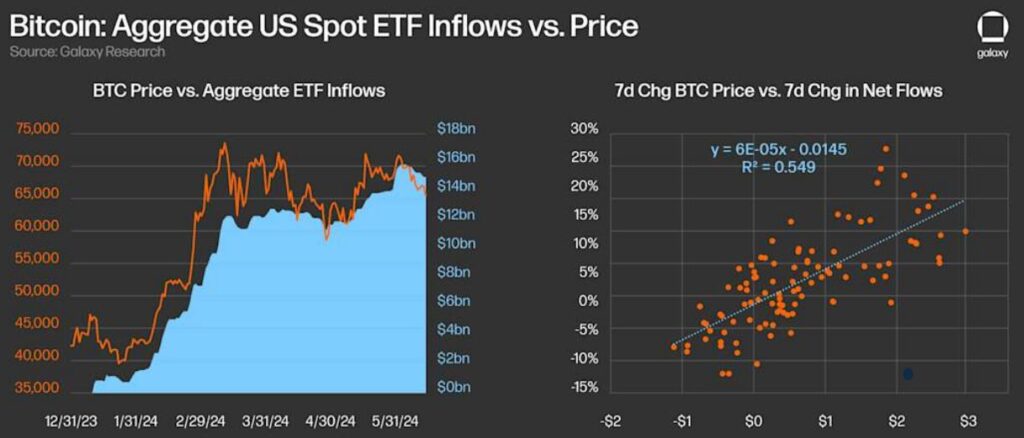
[Insert Chart 2 Here: ETF Capital Flow Comparison (BTC vs New Assets)]
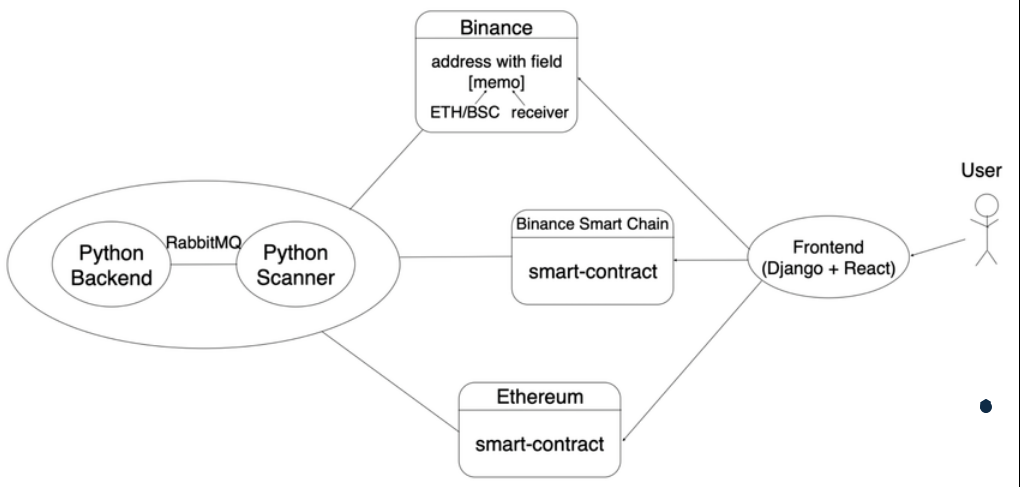
[Insert Diagram 3 Here: HYPE Ecosystem Value Flow]
9. Conclusion: From Assets to Financial Systems
Grayscale’s HYPE ETF filing represents more than just another product launch—it marks a turning point in how institutional capital engages with crypto.
The transition is clear:
- From assets → ecosystems
- From holding → participation
- From store of value → financial infrastructure exposure
If approved, the HYPE ETF could become a gateway for institutional investors to enter one of the most dynamic sectors in crypto: decentralized derivatives.
For readers seeking new income opportunities and practical blockchain applications, this development signals a critical shift. The next generation of crypto investments may not be about holding coins—but about owning pieces of the financial systems those coins power.