Key Points :
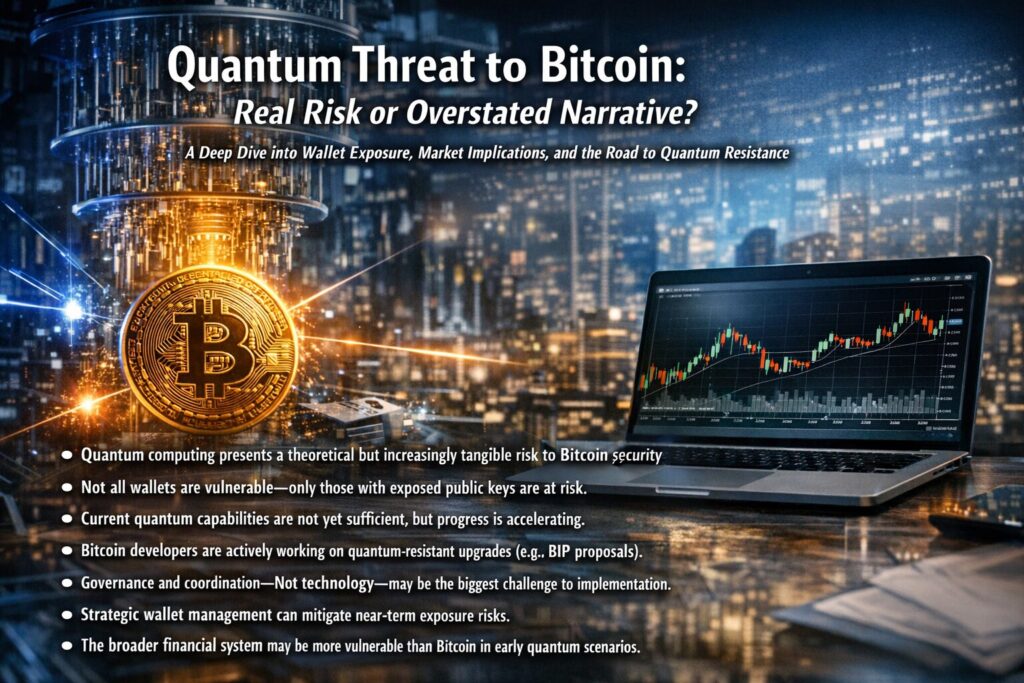
- Quantum computing presents a theoretical but increasingly tangible risk to Bitcoin security
- Not all wallets are vulnerable—only those with exposed public keys are at risk
- Current quantum capabilities are not yet sufficient, but progress is accelerating
- Bitcoin developers are actively working on quantum-resistant upgrades (e.g., BIP proposals)
- Governance and coordination—not technology—may be the biggest challenge to implementation
- Strategic wallet management (e.g., SegWit usage) can mitigate near-term exposure risks
- The broader financial system may be more vulnerable than Bitcoin in early quantum scenarios
1. Introduction: From Theoretical Risk to Strategic Consideration
The discussion surrounding quantum computing and its potential impact on Bitcoin has long been confined to academic circles and speculative debates. However, recent analysis by Galaxy Digital has brought renewed urgency to the topic, framing quantum risk not as a distant hypothetical but as a credible long-term strategic concern.
According to research analyst Will Owens, quantum computers—once sufficiently advanced—could theoretically derive private keys from public keys. This would allow attackers to impersonate wallet owners, forge digital signatures, and ultimately steal Bitcoin funds.
Yet, the situation is more nuanced than alarmist headlines suggest. The risk is real—but not uniformly distributed across the Bitcoin ecosystem.
2. Where the Real Risk Lies: Wallet Exposure Matters
A critical insight from the Galaxy Digital report is that Bitcoin’s vulnerability to quantum attacks depends heavily on wallet design and usage patterns.
Two Key Exposure Scenarios
- Public Key Already Revealed On-Chain
- Some older or reused Bitcoin addresses expose their public keys permanently
- These are the most vulnerable targets
- Public Key Revealed During Transaction
- In standard Bitcoin transactions, public keys are revealed when funds are spent
- This creates a temporary attack window
The majority of modern wallets, however, use public key hash mechanisms (P2PKH, P2WPKH), which conceal the public key until the moment of spending. As a result, most Bitcoin holdings today are not immediately vulnerable.
Bitcoin Wallet Vulnerability Breakdown
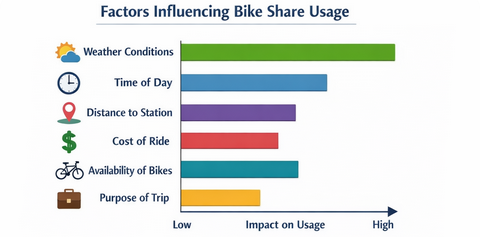
Description: Pie chart showing:
- Protected wallets (public key hidden): ~80–90%
- Temporarily exposed (during transaction): ~5–10%
- Permanently exposed (legacy/reused): ~5%
3. Understanding the Quantum Threat Mechanism
Bitcoin relies on elliptic curve cryptography (ECC), specifically the secp256k1 curve, to secure private keys. Classical computers cannot feasibly reverse this process.
However, quantum computers leveraging Shor’s Algorithm could theoretically:
- Break ECC
- Derive private keys from public keys
- Compromise digital signatures
The challenge lies in scale and stability. To break Bitcoin encryption, a quantum computer would need:
- Millions of stable qubits
- Low error rates
- Sustained coherence
As of 2026, even leading players like IBM and Google are still far from achieving this threshold.
4. Industry Perspective: Overestimated or Underestimated?
There are two dominant narratives in the market:
View 1: The Threat is Overhyped
- Practical quantum computers may be decades away
- Banks and governments are more immediate targets
- Migration to quantum-resistant cryptography will occur gradually
View 2: The Threat is Underpriced
- Breakthroughs could arrive unexpectedly
- “Harvest now, decrypt later” attacks are already plausible
- Crypto markets may not fully reflect this risk
The truth likely lies in between. Quantum risk is not immediate—but it is inevitable in the long arc of technological progress.
5. Active Development: Bitcoin is Not Standing Still
Contrary to claims that Bitcoin developers are ignoring quantum risks, Owens emphasizes that development activity has accelerated significantly since late 2025.
One notable direction involves proposals such as:
- Quantum-resistant signature schemes
- Soft fork upgrades (e.g., BIP proposals like BIP-360 discussions)
These proposals aim to introduce post-quantum cryptographic algorithms, such as:
- Lattice-based cryptography
- Hash-based signatures
Evolution Path to Quantum-Resistant Bitcoin
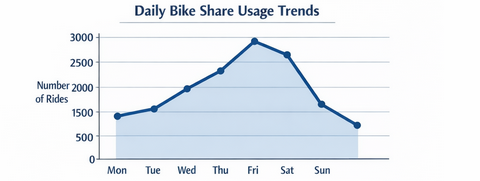
Description: Flow diagram:
Current ECC → Hybrid cryptography → Full post-quantum signatures → Network-wide migration
6. Practical Risk Mitigation for Investors
Bitcoin analyst Willy Woo suggests that users can already take practical steps to reduce risk exposure:
Recommended Actions
- Use SegWit (P2WPKH) wallets
- Avoid address reuse
- Move funds to fresh addresses regularly
- Monitor developments in quantum-safe upgrades
These measures significantly reduce the likelihood of exposure even in a future quantum scenario.
7. The Governance Challenge: Bitcoin’s Double-Edged Sword
Even if a quantum-resistant solution is technically ready, deployment is not guaranteed.
Bitcoin lacks:
- A central authority
- A CEO or board
- A mechanism to enforce upgrades
This decentralization—Bitcoin’s greatest strength—becomes a coordination challenge.
However, Owens highlights a crucial difference:
Quantum risk is an external, system-wide threat, aligning incentives across all stakeholders.
Miners, exchanges, developers, and holders all share a common interest: preserving network security.
8. Broader Implications: Beyond Bitcoin
Interestingly, the report suggests that traditional financial systems may be more vulnerable in early quantum scenarios.
Banks rely on:
- RSA encryption
- Legacy infrastructure
- Centralized attack surfaces
This creates a paradox:
Bitcoin, often criticized as risky, may actually be more adaptable to quantum threats than traditional finance.
Comparative Quantum Vulnerability
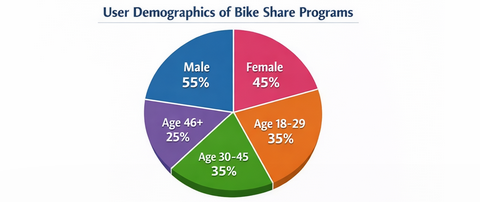
Description: Bar chart comparing:
- Bitcoin (adaptive, decentralized)
- Banks (centralized, legacy systems)
- Government systems
9. Market Impact: Pricing the Quantum Narrative
From an investment perspective, quantum risk introduces:
- Tail risk scenarios (low probability, high impact)
- Potential black swan events
- Long-term protocol upgrade opportunities
For forward-looking investors, this creates asymmetric opportunities:
- Early positioning in quantum-resistant crypto projects
- Infrastructure plays (wallets, custody, cryptography layers)
- Strategic asset allocation shifts
10. Conclusion: A Known Risk, A Manageable Future
The key takeaway from Galaxy Digital’s analysis is clear:
- Quantum risk is real but not imminent
- Most Bitcoin wallets are currently safe
- The ecosystem is actively preparing
- Governance—not technology—is the primary challenge
For investors and builders alike, the message is not one of fear—but of preparedness.
Bitcoin has survived multiple existential challenges—from exchange collapses to regulatory crackdowns. Quantum computing represents the next frontier.
And once again, the network is already evolving to meet it.