
Key Takeaways :
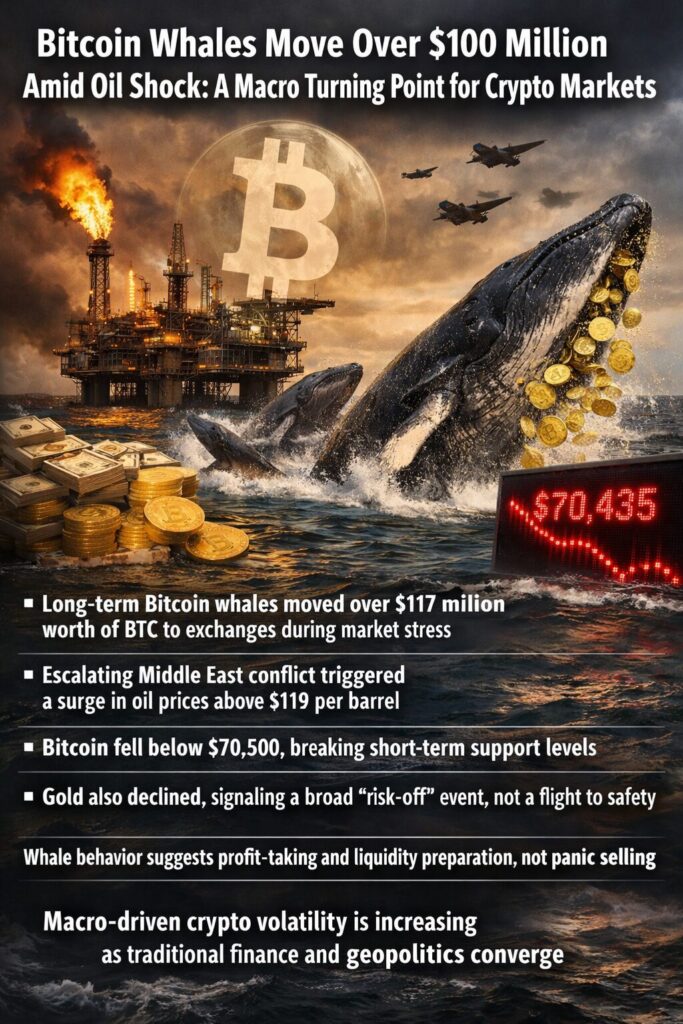
- Long-term Bitcoin whales moved over $117 million worth of BTC to exchanges during market stress
- Escalating Middle East conflict triggered a surge in oil prices above $119 per barrel
- Bitcoin fell below $70,500, breaking short-term support levels
- Gold also declined, signaling a broad “risk-off” event, not a flight to safety
- Whale behavior suggests profit-taking and liquidity preparation, not panic selling
- Macro-driven crypto volatility is increasing as traditional finance and geopolitics converge
1. A Sudden Whale Awakening: $100M+ Moves Signal Strategic Intent
In a market often driven by sentiment and speculation, the movements of long-dormant Bitcoin whales carry exceptional weight. Recently, blockchain analytics platforms such as Arkham and Lookonchain detected a series of large transfers totaling more than $117 million in Bitcoin flowing into major exchanges like Binance and Kraken.
One notable wallet, identified as “bc1ql,” transferred approximately 1,000 BTC (around $71 million) to Binance. What makes this movement particularly significant is the age of the holdings. The wallet reportedly accumulated around 5,000 BTC over 13 years ago, meaning the owner has held through multiple full market cycles, including Bitcoin’s rise from under $100 to over $70,000.
Another early adopter, Owen Gunden, transferred 650 BTC (~$46 million) to Kraken. This marks his first major movement since a massive liquidation event five months earlier, when he sold 11,000 BTC (~$1.12 billion).
These actions are not random. Historically, whale transfers to exchanges are interpreted as potential sell signals. However, in this case, the timing suggests a more nuanced strategy—one tied closely to global macroeconomic developments rather than purely crypto-native factors.
2. The Oil Shock: Geopolitics Re-enters the Crypto Equation
The catalyst for this sudden activity appears to be a rapidly escalating geopolitical crisis in the Middle East. Reports indicate that attacks on critical energy infrastructure—including Iran’s South Pars gas field and Qatar’s Ras Laffan complex—have intensified tensions between Iran, Israel, and the United States.
As a result, global energy markets reacted violently:
- Brent crude surged above $119 per barrel
- WTI crude briefly hit $100, stabilizing near $96.59
- European natural gas prices spiked significantly
These price movements represent more than just energy market volatility—they signal a broader systemic shock affecting global liquidity, inflation expectations, and investor risk appetite.
Oil Price Surge (Brent & WTI) After Middle East Escalation
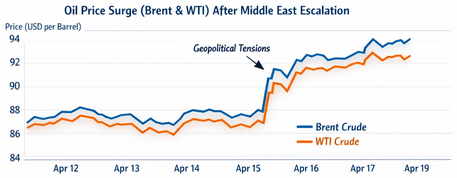
(Line chart showing Brent and WTI spike from ~$90 to ~$119) For crypto markets, this marks an important shift. Bitcoin has long been described as “digital gold” or a hedge against geopolitical instability. However, recent data suggests that in moments of acute crisis, Bitcoin behaves more like a risk asset, correlating with equities rather than safe havens.
3. Bitcoin and Gold Fall Together: The Rise of “True Risk-Off”
Perhaps the most telling signal from this event is not Bitcoin’s decline—but the fact that gold also fell simultaneously.
- Bitcoin dropped approximately 5% to $70,439
- Gold declined 4.2% to around $4,686 per ounce
This dual decline challenges a long-standing narrative. Traditionally, gold rises during geopolitical turmoil, acting as a safe haven. Bitcoin, too, has been positioned as an alternative store of value.
However, when both assets fall together, it indicates a different dynamic: a system-wide liquidity contraction.
According to Bitget Wallet COO Alvin Kan, this reflects a broad “risk-off” environment, where investors are not reallocating into safe assets—but instead reducing exposure across all markets.
This behavior is consistent with:
- Margin calls in leveraged positions
- Institutional de-risking
- Flight to cash or short-term liquidity instruments
BTC vs Gold Price Movement (Last 7 Days)
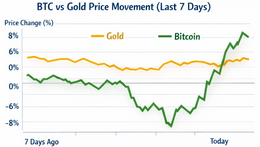
(Dual-axis chart showing both declining simultaneously)
4. Whale Psychology: Profit-Taking or Preemptive Hedging?
Understanding whale behavior is critical for interpreting market direction.
In this case, several factors suggest that these movements are not panic-driven:
A. Long-Term Holders Still Deeply in Profit
The bc1ql wallet, for example, likely acquired BTC at prices below $1,000. Even after the recent decline, the holder remains massively profitable.
B. Timing Aligns with Macro Shock
The transfers occurred immediately following geopolitical escalation and energy price spikes—indicating strategic timing rather than random liquidation.
C. Exchange Transfers ≠ Immediate Selling
While sending BTC to exchanges often precedes selling, it can also indicate:
- Preparation for derivatives hedging
- Collateralization for borrowing
- Liquidity positioning for opportunistic trades
This suggests whales may be preparing for increased volatility, rather than simply exiting the market.
5. Technical Outlook: Key Levels to Watch
From a technical perspective, Bitcoin’s failure to hold the $70,000–$71,000 support range is significant.
According to Nansen analyst Aurelie Barthere:
- If BTC fails to reclaim this range, it could return to the previous consolidation zone between
$60,000 and $71,000
This aligns with broader market structure:
- $71K–$73K: Resistance zone
- $60K–$65K: Strong support cluster
- Below $60K: Potential panic zone
BTC/USD Key Support & Resistance Levels
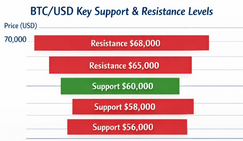
(Annotated chart with zones: $60K–$71K range) For traders and operators, this means:
- Short-term volatility will remain elevated
- Liquidity pockets around $60K could attract buyers
- Whale activity may amplify price swings
6. A New Era: Crypto as a Macro Asset Class
This event underscores a broader transformation in the crypto market.
Bitcoin is no longer isolated. It is increasingly integrated into:
- Global liquidity cycles
- Institutional portfolios
- Macro risk frameworks
Key trends reinforcing this shift include:
Institutional Adoption
Major financial institutions continue to enter crypto markets through ETFs, custody services, and derivatives products.
Correlation with Traditional Markets
Bitcoin’s correlation with equities and macro indicators has increased, particularly during periods of stress.
Geopolitical Sensitivity
Events like war, sanctions, and energy crises now directly impact crypto pricing.
This means that crypto investors must now monitor:
- Oil prices
- Interest rates
- Geopolitical tensions
—not just blockchain metrics.
7. Strategic Implications for Investors and Builders
For your audience—those seeking new crypto opportunities and practical blockchain applications—this moment offers several key lessons:
1. Macro Awareness is No Longer Optional
Crypto is now a macro-driven asset class. Ignoring global events is a critical mistake.
2. Whale Behavior Provides Early Signals
Monitoring on-chain data can reveal shifts before they appear in price charts.
3. Liquidity is King
In risk-off environments, access to liquidity determines survival and opportunity.
4. Build for Volatility
Projects and platforms must design systems that can withstand rapid market swings.
5. Opportunity in Dislocation
Periods of panic often create the best entry points for long-term investors.
Conclusion: A Stress Test for the Crypto Narrative
The recent movement of over $100 million in Bitcoin by long-term whales is not merely a market event—it is a signal of a deeper transformation.
Crypto is entering a phase where it is no longer insulated from the global financial system. Instead, it is becoming a core component of it.
The simultaneous decline of Bitcoin and gold, combined with rising oil prices and geopolitical instability, paints a clear picture: we are witnessing a true macro-driven risk-off environment.
For investors, this means adapting strategies.
For builders, it means designing resilient systems.
For the market as a whole, it signals maturity.
And for those paying close attention, it also signals opportunity.




