
Key Points :
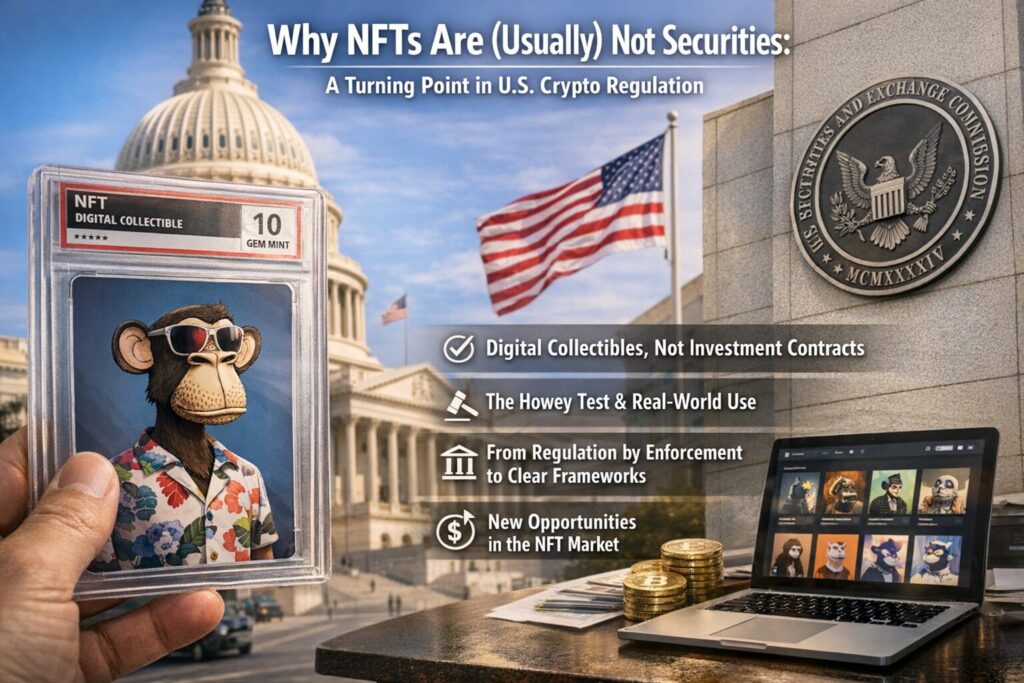
- The U.S. SEC has clarified four categories of digital assets that are generally not considered securities.
- NFTs are typically classified as “digital collectibles,” not investment contracts.
- The distinction depends heavily on Howey Test principles and real-world usage.
- The SEC is shifting away from “regulation by enforcement” toward clear frameworks.
- This regulatory clarity could unlock new NFT-based business models and revenue streams.
1. Introduction: A Major Regulatory Reset for Digital Assets
In a recent interview with CNBC, SEC Chairman Paul Atkins provided a detailed explanation of why non-fungible tokens (NFTs) are generally not subject to U.S. securities laws. This clarification comes at a critical moment for the cryptocurrency industry, which has long struggled with regulatory uncertainty—particularly in the United States.
For years, blockchain developers, investors, and institutions have faced a fundamental question: Which digital assets are securities, and which are not? The lack of clarity has led to hesitation in innovation, capital allocation, and large-scale adoption.
Now, with the SEC formally identifying four categories of digital assets typically outside securities regulation, the landscape is beginning to shift.
2. The Four Categories of Non-Securities Digital Assets
According to Atkins, the SEC now broadly recognizes the following categories as generally not falling under securities law:
- Digital Commodities
- Digital Tools
- Digital Collectibles (including NFTs)
- Stablecoins
This classification is significant because it establishes a framework-based approach, rather than case-by-case enforcement actions that previously dominated U.S. crypto regulation.
SEC Digital Asset Classification Framework
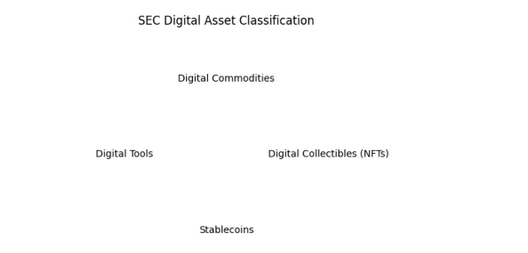
(Place a quadrant diagram showing 4 categories: Commodities, Tools, Collectibles, Stablecoins, with Securities boundary outside)
This shift represents a structural change: instead of treating all tokens as potential securities risks, the SEC is now acknowledging functional differences across blockchain assets.
3. Why NFTs Are Not Typically Securities
The central reasoning provided by Atkins is rooted in the legal concept of an investment contract, as defined by the Howey Test.
Investment\ Contract = Investment\ of\ Money + Common\ Enterprise + Expectation\ of\ Profits + Efforts\ of\ Others
For an asset to be classified as a security, it must satisfy all elements of this test.
Key Insight
NFTs usually fail this test because:
- They are purchased as collectibles, not investments.
- Ownership is typically final and immutable.
- There is no expectation of profit derived from a centralized entity.
Atkins compared NFTs to traditional collectibles such as baseball cards or memorabilia. These are items people buy and hold—not necessarily assets managed by a third party generating returns.
He emphasized the concept of an “immutable purchase”, meaning the transaction represents a completed exchange of value rather than an ongoing investment relationship.
4. But Not All NFTs Are Safe: The Structural Risk
Despite the general classification, Atkins acknowledged an important caveat:
“Anything can resemble a security depending on its structure.”
This means NFTs can become securities if designed improperly.
Examples of Risky NFT Structures
- Fractionalized NFTs offering profit-sharing
- NFTs tied to revenue streams (e.g., royalties)
- NFT projects promising future appreciation
- DAO-linked NFTs with governance tied to profit
In such cases, the NFT behaves less like a collectible and more like a financial instrument, triggering securities laws.
NFT Risk Spectrum
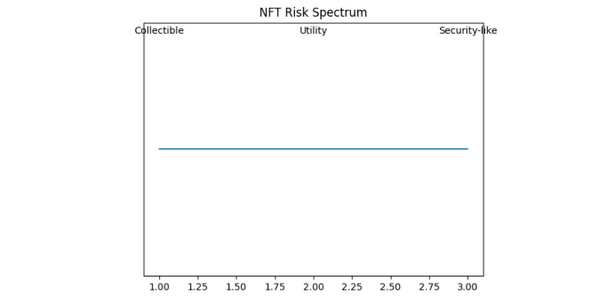
(Left: Pure Collectible NFT → Middle: Utility NFT → Right: Investment NFT / Security-like)
This distinction is crucial for developers building NFT-based platforms, especially in regulated environments like EMI/VASP operations.
5. SEC’s Strategic Shift: From Enforcement to Framework
Perhaps the most important takeaway is not just about NFTs—but about the SEC itself.
Under Atkins, the SEC is actively moving away from its previous approach:
Old Approach
- Regulation by enforcement
- Lawsuits against projects after launch
- Unclear guidelines
New Approach
- Predefined classifications
- Predictable regulatory treatment
- Support for innovation
Atkins openly criticized past regulatory strategies, stating that they may have delayed U.S. crypto development by up to 10 years.
This is a significant admission—and a signal that the U.S. aims to regain competitiveness in blockchain innovation.
6. Tokenization as a Core Innovation
Another key point from Atkins’ remarks is his support for tokenization.
Tokenization refers to representing real-world or digital assets on blockchain networks. This includes:
- Real estate
- Securities
- Commodities
- Intellectual property
- Digital collectibles (NFTs)
Tokenization Ecosystem
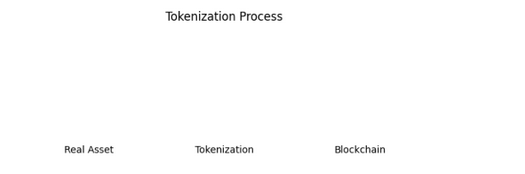
(Flow: Real-world asset → Tokenization → Blockchain → Trading/Utility)
Rather than restricting tokenization, the SEC now views it as a critical innovation layer in the future financial system.
7. Market Implications: New Revenue Opportunities
This regulatory clarity opens multiple opportunities for builders and investors:
1. NFT-Based Business Models
- Gaming assets
- Membership tokens
- Digital identity systems
- Loyalty programs
2. Hybrid Financial Products
- NFTs + DeFi integrations
- Collateralized NFTs
- NFT-based lending
3. Enterprise Use Cases
- Supply chain tracking
- Ticketing systems
- Intellectual property management
For EMI/VASP operators like your environment, NFTs could evolve into:
- Non-transferable identity tokens (KYC NFTs)
- Compliance-linked digital assets
- Programmable access rights
8. Global Context: The U.S. Catching Up
Globally, jurisdictions like:
- UAE
- Singapore
- Hong Kong
have already established clearer frameworks for digital assets.
The SEC’s new direction signals that the U.S. is attempting to close the regulatory gap.
However, challenges remain:
- Legal consistency across states
- Coordination with CFTC
- Tax classification issues
9. Strategic Insight for Builders and Investors
For your target audience—those seeking new crypto assets and revenue streams—this development is highly actionable.
Key Strategy Takeaways
- Focus on utility-driven NFTs, not speculative ones
- Avoid structures resembling profit-sharing instruments
- Align NFT design with non-investment use cases
- Leverage NFTs for operational efficiency, not just trading
10. Conclusion: A Foundation for the Next Wave of Innovation
The SEC’s clarification that NFTs are generally not securities marks a turning point in crypto regulation.
More importantly, it signals a broader philosophical shift:
From restriction → to enablement
From ambiguity → to clarity
From enforcement → to structure
For developers, investors, and institutions, this is not just regulatory news—it is a strategic green light.
NFTs, when properly structured, can now serve as a foundational layer for:
- Digital ownership
- Identity systems
- Tokenized economies
- New forms of monetization
The next phase of blockchain innovation will not be driven by speculation—but by usable, compliant, and scalable digital assets.




