

Key Points :
- Long-term Bitcoin whale sells 3,500 BTC, realizing massive profits after a 13-year hold
- Ethereum whales re-enter the market, acquiring over 50,000 ETH after months of inactivity
- Diverging strategies highlight a transition phase in the crypto market cycle
- Regulatory clarity in the U.S. may be fueling institutional confidence in Ethereum
- Whale accumulation trends suggest continued long-term conviction despite bearish sentiment
1. A 13-Year Bitcoin Bet Comes to Fruition
The cryptocurrency market is once again being shaped by the movements of large-scale investors, commonly referred to as “whales.” In a recent development, a long-term Bitcoin holder—who initially accumulated 5,000 BTC in November 2013 at an average price of approximately $332 per BTC—has continued a systematic profit-taking strategy that began in late 2024.
On March 19, 2026, this whale transferred an additional 1,000 BTC (approximately $75–90 million depending on price fluctuation) to the exchange Binance. This transaction forms part of a broader liquidation plan, in which a total of 3,500 BTC has already been sold at an average price of roughly $94,786 per BTC, resulting in realized profits exceeding $350 million.
Even after these sales, the whale retains approximately 1,500 BTC, indicating that while profit-taking is underway, the investor still maintains significant exposure to Bitcoin. When viewed from a long-term perspective, the initial investment of roughly $1.66 million has grown over 200-fold, highlighting the extraordinary returns possible in early-stage crypto investments.
This behavior reflects a classic market cycle phenomenon: early adopters gradually reducing exposure as assets mature and valuations increase. It also introduces liquidity into the market, which can temporarily suppress upward price momentum.
2. Ethereum Whales Signal a Strategic Reversal
In stark contrast to Bitcoin’s profit-taking narrative, Ethereum is witnessing a resurgence of whale accumulation. According to on-chain analytics, a previously dormant whale re-entered the market after seven months, deploying approximately $120 million USDT to acquire 50,706 ETH at an average price of $2,201 per ETH.
Notably, this same entity had sold 28,683 ETH one year earlier at an average price of $3,892, converting holdings into stablecoins. The current buyback suggests a calculated re-entry at significantly lower prices, effectively increasing ETH holdings while maintaining capital efficiency.
Additional whale activity reinforces this trend. Another large investor reportedly sold 12,886 ETH at around $3,324 last year, only to repurchase 23,393 ETH recently using approximately $55 million USDT. These movements indicate a broader institutional or high-net-worth strategy: exiting at peaks and accumulating during downturns.
Such behavior is often interpreted as “smart money” positioning, where experienced investors capitalize on volatility rather than reacting emotionally to it.
3. Visualizing Whale Strategy Divergence
[BTC vs ETH Whale Activity Comparison Chart]
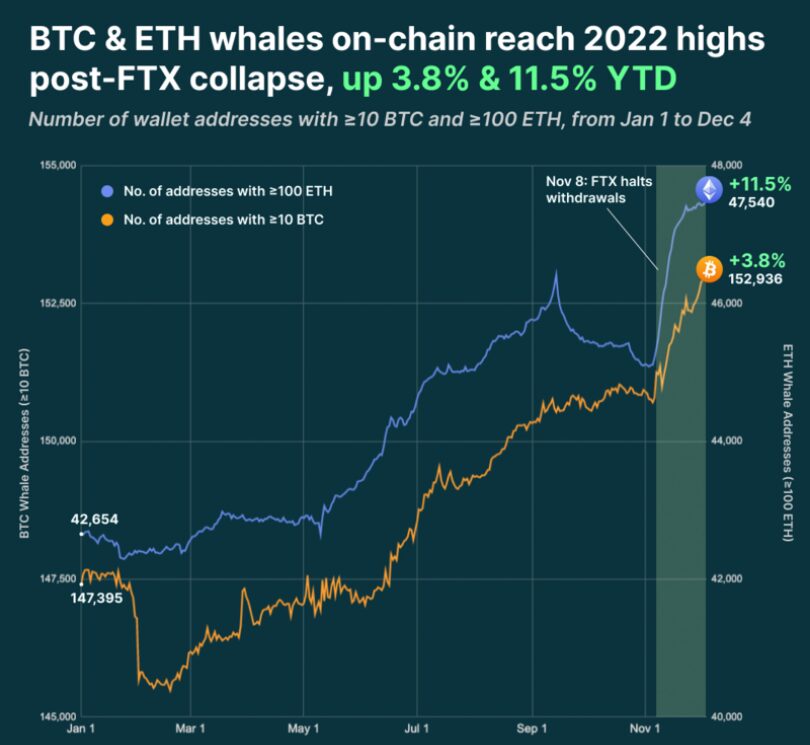
(Description: A dual-line chart showing BTC whale selling volume vs ETH whale buying volume over time.)
The divergence between Bitcoin and Ethereum whale strategies is not merely anecdotal—it reflects deeper structural differences in market positioning and expectations.
Bitcoin, often regarded as “digital gold,” has seen substantial price appreciation over the past decade. For early adopters, current price levels represent an opportunity to lock in generational wealth.
Ethereum, on the other hand, is increasingly viewed as a technology platform rather than just a store of value. Its role in decentralized finance (DeFi), NFTs, tokenization, and real-world asset (RWA) integration makes it more akin to a growth asset—one that whales may consider undervalued after recent price corrections.
4. Regulatory Tailwinds and Institutional Repositioning
Another key driver behind Ethereum accumulation may be evolving regulatory clarity in the United States. Recent interpretive guidance from the U.S. Securities and Exchange Commission suggests that the majority of cryptocurrencies may not qualify as securities.
This shift reduces legal uncertainty for institutional investors, particularly those interested in Ethereum’s ecosystem. Compared to Bitcoin, which already enjoys relatively clear regulatory status, Ethereum stands to benefit more from this clarification due to its broader application layer.
Institutional players—ranging from hedge funds to asset managers—are increasingly exploring Ethereum-based opportunities such as staking, yield generation, and tokenized assets. These developments strengthen the case for ETH as a long-term investment.
5. Whale Accumulation Trends Amid a Bearish Market
Despite ongoing bearish sentiment in parts of the crypto market, on-chain data reveals a surprising trend: accumulation by large holders continues.
According to analytics platforms, the number of wallets holding 100 BTC or more has reached an all-time high of over 20,000 wallets. This indicates that even as some whales take profits, others are accumulating, potentially redistributing supply rather than exiting the market entirely.
[BTC Wallet Distribution Growth]
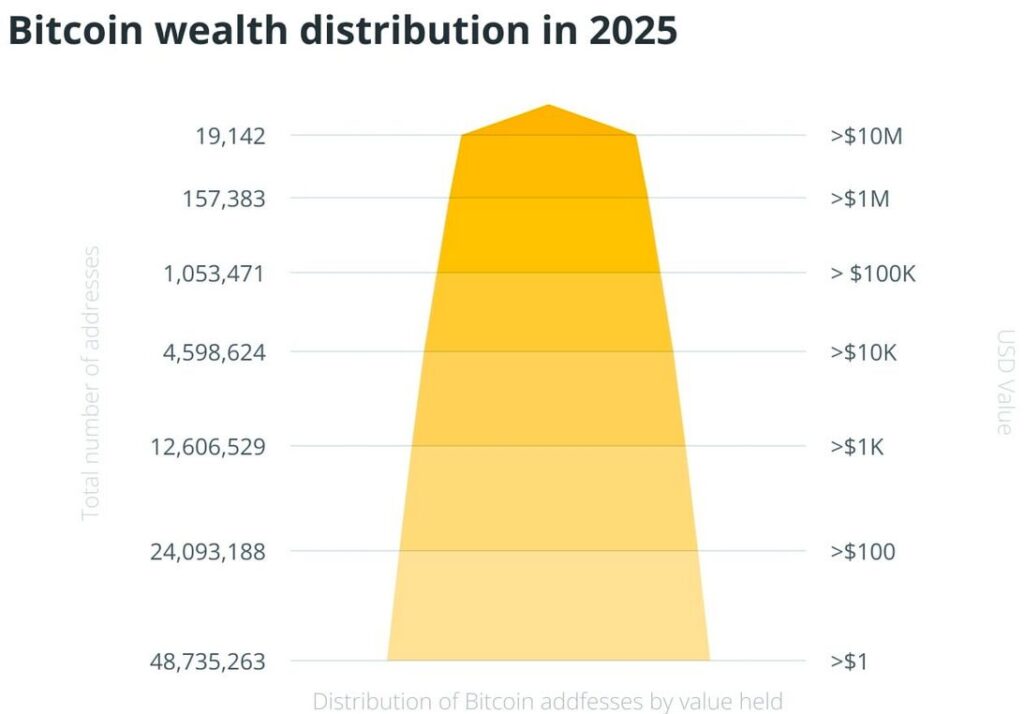
(Description: Bar chart showing growth in number of wallets holding 100+ BTC over time.)
This dual dynamic—profit-taking by early adopters and accumulation by new entrants—suggests a healthy market transition phase rather than a structural decline.
6. Strategic Implications for Investors and Builders
For readers seeking new crypto assets, revenue streams, or practical blockchain applications, the implications of these whale movements are significant.
First, Bitcoin’s role as a store of value remains intact, but its upside may be increasingly tied to macroeconomic factors such as inflation, interest rates, and institutional adoption. Profit-taking by early whales does not necessarily signal weakness but rather maturation.
Second, Ethereum’s accumulation phase points to renewed confidence in its long-term utility. Developers and entrepreneurs should pay close attention to ecosystem growth areas such as:
- Layer 2 scaling solutions
- Real-world asset tokenization
- Decentralized identity and compliance tools
- Institutional DeFi infrastructure
These sectors are likely to attract both capital and innovation in the coming years.
7. Visualizing Market Rotation
[Here – Capital Rotation from BTC to ETH]
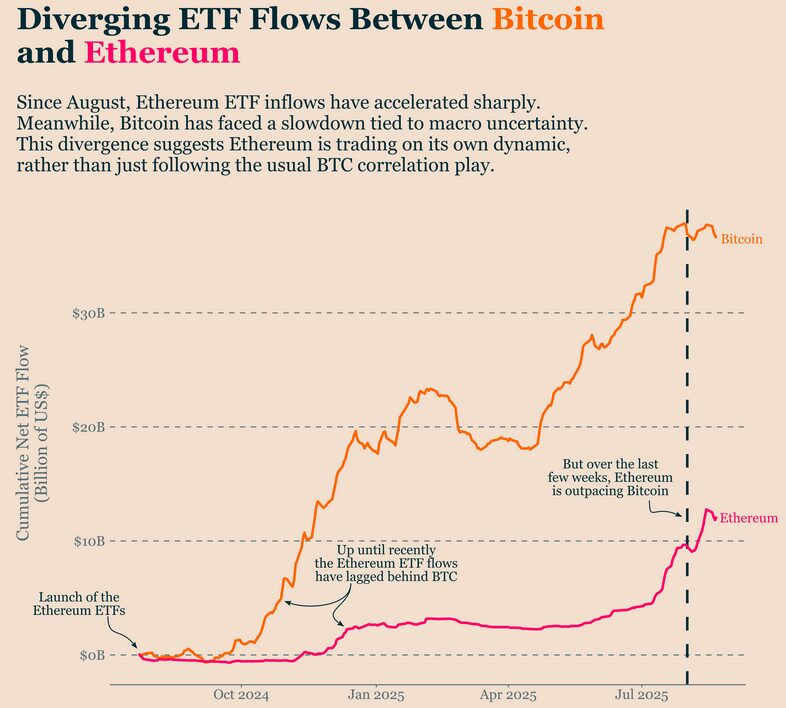
(Description: Flow diagram showing capital shifting from BTC profit-taking into ETH accumulation.)
The concept of capital rotation is not new in financial markets, but its manifestation in crypto is particularly transparent due to blockchain data. The current environment suggests that capital is not leaving the crypto ecosystem—it is being reallocated.
Conclusion: A Market in Transition, Not Decline
The simultaneous selling of Bitcoin by long-term holders and accumulation of Ethereum by whales illustrates a critical moment in the evolution of the crypto market.
Rather than signaling a bearish collapse, these movements reflect:
- Profit realization from early Bitcoin investors
- Strategic reallocation into undervalued or high-growth assets
- Increasing sophistication among institutional participants
- A gradual shift from speculative trading to utility-driven investment
For forward-looking investors and builders, the message is clear: follow the smart money, but understand the underlying thesis. Bitcoin remains a cornerstone asset, while Ethereum—and potentially other emerging ecosystems—represents the next frontier of blockchain innovation and revenue generation.




