

Ethereum’s Next Step Toward True Decentralization : Vitalik Buterin’s Plan to Simplify Nodes and Empower Everyday Users
Main Points :
- Ethereum co-founder Vitalik Buterin has proposed simplifying Ethereum node software by merging the consensus layer and execution layer programs into a unified codebase.
- The proposal aims to dramatically reduce the operational complexity of running an Ethereum node, making it accessible to individuals rather than only professional operators.
- Buterin also promotes “partially stateless nodes,” which reduce storage requirements by allowing nodes to store only relevant blockchain data.
- These changes are designed to strengthen decentralization and reduce dependence on centralized RPC providers such as Infura or Alchemy.
- The proposal comes amid broader Ethereum ecosystem developments, including funding for privacy technology, open hardware, and verifiable software infrastructure.
1. Ethereum’s Node Problem: Complexity Threatens Decentralization
Ethereum has long positioned itself as a decentralized global computing platform, yet running the infrastructure that powers this network has become increasingly complex. Today, an Ethereum validator—or even a basic node operator—must typically run two separate software clients.
These include:
- A consensus layer client, responsible for validating blocks and participating in Ethereum’s proof-of-stake network through the Beacon Chain.
- An execution layer client, which processes transactions and executes smart contracts.
Each program must be installed, configured, and synchronized separately. Furthermore, the two clients must communicate continuously to coordinate blockchain data.
For professional operators or institutional validators, this setup is manageable. But for individual users or hobbyists, the technical burden can be overwhelming.
Vitalik Buterin recently highlighted this issue in a public proposal and social media posts, stating that the Ethereum ecosystem has implicitly accepted a flawed assumption: that node operation should be handled only by DevOps professionals.
According to Buterin, this mindset undermines Ethereum’s core principles.
“Running your own Ethereum infrastructure should be a fundamental right for every individual and household,” he argued.
The current system has effectively created a barrier where running a node requires:
- Significant DevOps knowledge
- High-performance hardware
- Substantial time for configuration and maintenance
This has resulted in an ecosystem where many applications rely heavily on centralized Remote Procedure Call (RPC) providers, such as Infura, Alchemy, or QuickNode.
While convenient, these services introduce centralization risks. If a small number of providers control access to blockchain data, they can theoretically censor transactions or restrict access to specific regions.
In fact, several RPC providers have already blocked access from certain countries due to regulatory pressure.
Such developments raise an uncomfortable question: Can Ethereum remain decentralized if most users depend on centralized infrastructure to access it?
2. The Unified Node Proposal: Merging Two Layers into One
To address this challenge, Buterin proposed a significant architectural simplification.
Instead of requiring node operators to run two independent programs, the new design would merge the consensus client and execution client into a unified software structure.
This would fundamentally change how Ethereum nodes are deployed.
Currently, a node setup requires:
Execution Client (GETH, Nethermind, Erigon)+Consensus Client (Lighthouse, Prysm, Teku, Nimbus)
Under Buterin’s proposal, these components would operate within a single integrated node client, simplifying deployment and synchronization.
[Node Architecture Diagram]
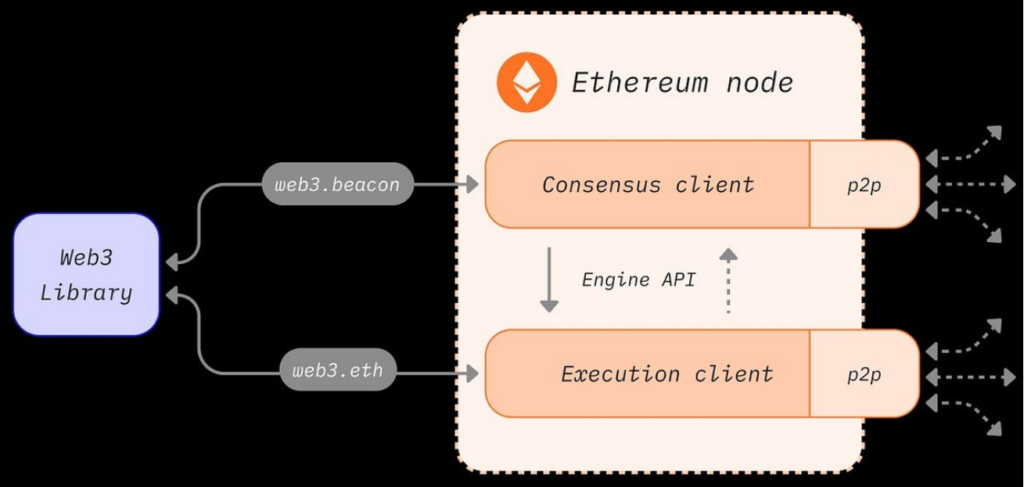
The diagram illustrates how today’s Ethereum nodes require separate execution and consensus clients communicating through APIs.
[Unified Node Diagram]
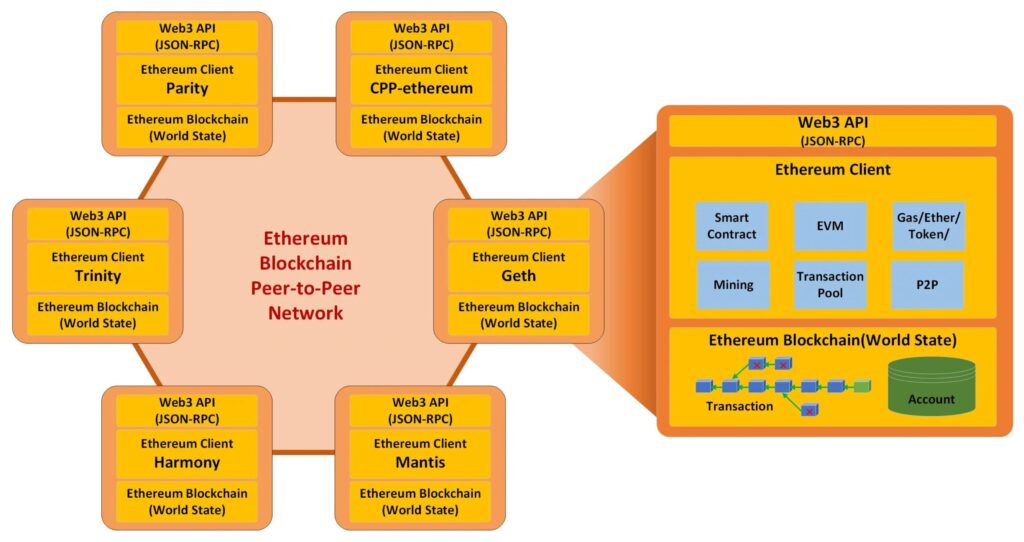
The proposed design merges both layers into one streamlined client, reducing configuration complexity. The advantages of this approach include:
- Simpler installation process
- Reduced synchronization overhead
- Lower operational maintenance
- Improved accessibility for non-technical users
The ultimate goal is to make running an Ethereum node closer to running a standard application rather than a complex server infrastructure.
For households, researchers, and developers, this shift could dramatically increase the number of independently operated nodes across the network.
3. The Storage Challenge: Blockchain Data Is Growing Too Fast
Another major obstacle to decentralization is storage requirements.
Ethereum generates an enormous amount of data because every smart contract interaction produces blockchain state changes.
Over time, this data accumulates into hundreds of gigabytes and continues to grow.
According to developers of Go-Ethereum (GETH), disk storage is often the biggest bottleneck for node operators.
Running a full Ethereum node currently requires:
- Over 1 TB of storage for archival nodes
- Hundreds of gigabytes even for standard nodes
- High-speed SSD drives to maintain synchronization
This requirement discourages ordinary users from operating nodes on consumer hardware.
Buterin believes this must change if Ethereum wants to maintain a truly decentralized ecosystem.
4. Partially Stateless Nodes: A Radical Approach to Storage Efficiency
In addition to simplifying node software, Buterin has proposed a second major concept: partially stateless nodes.
This idea builds on earlier research into stateless blockchain designs.
Instead of storing the entire historical state of the blockchain, partially stateless nodes would only store relevant pieces of data necessary for specific operations.
[Stateless Node Illustration]
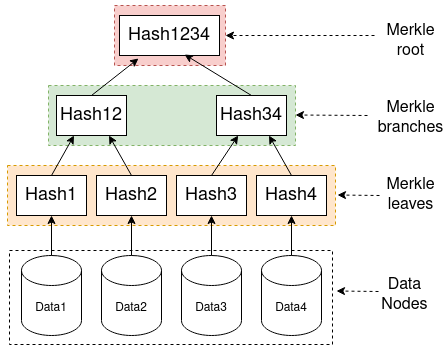
This diagram shows how nodes could keep only required data segments rather than the full global state. Under this model:
- Nodes store only selected portions of blockchain state.
- Data needed for verification can be obtained through cryptographic proofs rather than local storage.
- Hardware requirements become significantly lower.
For users who simply want to:
- broadcast transactions
- verify balances
- interact with decentralized applications
a partially stateless node could provide sufficient functionality without the cost of full blockchain storage.
This would reduce the entry barrier for operating nodes on:
- personal computers
- home servers
- small cloud instances
5. The RPC Centralization Risk
One of the strongest motivations behind Buterin’s proposals is the growing dominance of RPC service providers.
Most Ethereum wallets and applications do not run their own nodes. Instead, they query blockchain data through RPC endpoints operated by infrastructure companies.
While efficient, this model creates a potential centralization point.
If only a handful of providers dominate the market, they effectively become gatekeepers of blockchain access.
Buterin warned that this structure could expose users to censorship pressure, particularly from regulatory authorities.
He noted that some providers have already blocked access to entire countries, demonstrating how centralized infrastructure can undermine Ethereum’s censorship-resistant vision.
Encouraging more users to run their own nodes would reduce this risk.
6. Funding Privacy and Infrastructure Development
Buterin’s node proposal is not an isolated initiative. It forms part of a broader push to strengthen Ethereum’s foundational infrastructure.
Earlier this year, he announced that approximately 16,384 ETH—worth around $45 million—had been allocated to support several key areas of development.
These include:
- Privacy technologies
- Open hardware
- Secure and verifiable software systems
This funding effort reflects a long-term vision where Ethereum is not only a blockchain network but also a decentralized digital infrastructure stack.
At the same time, the Ethereum Foundation has reportedly entered a period of “moderate fiscal tightening.”
Despite tighter budgets, the foundation intends to continue advancing its technical roadmap over the coming years.
7. Broader Ethereum Ecosystem Trends
Buterin’s proposal arrives at a time when Ethereum is undergoing several major transformations.
Key developments include:
Layer-2 Expansion
Rollup networks such as:
- Arbitrum
- Optimism
- Base
- zkSync
have significantly reduced transaction costs and increased scalability.
Proto-Danksharding (EIP-4844)
The introduction of blob transactions has dramatically lowered data costs for rollups, making Ethereum more efficient as a settlement layer.
Stateless Ethereum Research
Researchers continue exploring stateless architecture to reduce the computational and storage burdens of full nodes.
Competition from Alternative Chains
Blockchains such as Solana, Avalanche, and Sui have emphasized high performance and simpler infrastructure, putting pressure on Ethereum to improve usability.
Buterin’s node simplification proposal may therefore be seen as part of Ethereum’s broader strategy to remain competitive while preserving decentralization.
8. Why This Matters for the Future of Crypto Infrastructure
For investors and builders looking at the future of blockchain technology, node accessibility is a crucial factor.
The strength of a decentralized network depends not only on market capitalization or developer activity, but also on how widely the infrastructure is distributed.
If only a few institutions operate nodes, the system becomes vulnerable to regulatory capture and systemic risk.
By lowering technical barriers, Ethereum could enable:
- more independent validators
- more geographically distributed infrastructure
- stronger censorship resistance
- healthier network security
This shift may also open opportunities for new industries around:
- home-node hardware
- decentralized infrastructure services
- privacy-preserving blockchain applications
Conclusion: A Simpler Ethereum Could Be a Stronger Ethereum
Vitalik Buterin’s proposal to simplify Ethereum node software represents more than a technical adjustment—it reflects a philosophical commitment to decentralization.
Over time, the operational complexity of blockchain infrastructure has quietly increased. While this trend has enabled powerful applications and sophisticated networks, it has also created barriers for ordinary participants.
By merging execution and consensus clients and promoting partially stateless nodes, Ethereum could significantly lower the entry threshold for running nodes.
If successful, these changes would:
- expand network participation
- reduce reliance on centralized RPC providers
- reinforce Ethereum’s censorship-resistant architecture
In the long run, the success of decentralized networks may depend not only on speed or scalability but on whether ordinary users can realistically participate in operating them.
If Buterin’s vision materializes, Ethereum may move closer to a world where running a blockchain node becomes as common as running a home server—bringing decentralization back to the people.



