Main Points :
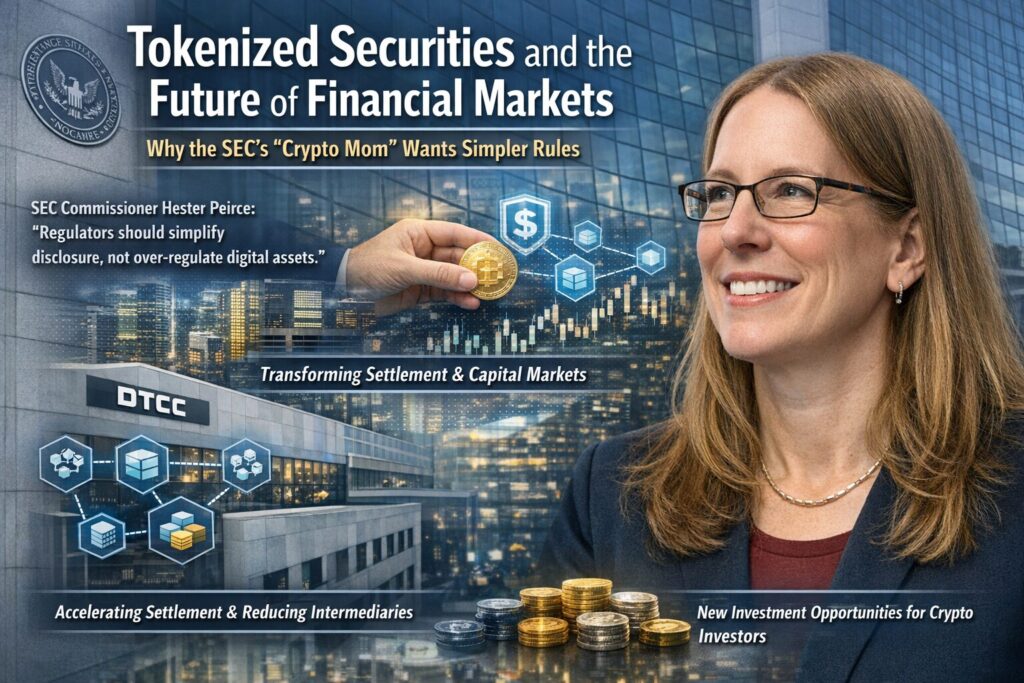
- SEC Commissioner Hester Peirce (“Crypto Mom”) argues regulators should simplify disclosure rules rather than over-regulate digital assets.
- Tokenized securities are gaining attention as a major financial innovation, potentially transforming settlement and capital markets.
- The SEC is exploring an “innovation exemption” allowing limited experiments with blockchain-based securities.
- Traditional financial infrastructure providers like DTCC are already testing blockchain settlement systems.
- Tokenization could reduce intermediaries, accelerate settlement, and create new investment opportunities for crypto investors and institutions.
Introduction – The Growing Debate Around Tokenized Securities
The digital asset industry has entered a new phase in which the conversation is shifting from speculative cryptocurrencies toward tokenized financial assets and blockchain-based capital markets. In the United States, this debate has reached the highest levels of regulatory discussion.
At the center of this conversation is Hester Peirce, a commissioner at the U.S. Securities and Exchange Commission (SEC) widely known in the crypto industry as “Crypto Mom” for her generally supportive stance toward blockchain innovation.
In a recent speech to the SEC Investor Advisory Committee, Peirce argued that regulators should avoid excessive intervention in financial markets and should instead focus on simplifying disclosure requirements. According to her, overly prescriptive rules risk distorting capital allocation and could slow the development of new financial infrastructure.
Her remarks come at a time when tokenized securities—digital representations of traditional financial instruments such as stocks, bonds, or funds recorded on blockchain networks—are increasingly seen as one of the most important innovations in finance.
For investors searching for the next generation of blockchain-based opportunities, the policy debate unfolding in Washington could shape how digital finance evolves over the coming decade.
Section 1 – Why Hester Peirce Wants Simpler Disclosure Rules
In her speech, Commissioner Peirce criticized the complexity of current disclosure requirements imposed on publicly listed companies in the United States.
Many firms, she noted, spend enormous amounts of time preparing regulatory filings. These filings are intended to help investors understand the financial condition of companies, but the documents often become so long and complicated that they obscure rather than clarify information.
Peirce suggested that the SEC should reconsider whether its current approach truly benefits investors.
She referenced Adam Smith, the 18th-century economist widely considered the father of modern economics, arguing that regulators should exercise restraint when shaping market outcomes. Excessive regulation can unintentionally distort the flow of capital and limit innovation.
In the context of blockchain technology, this concern becomes particularly important. Emerging financial systems built on decentralized infrastructure operate differently from traditional markets, meaning regulatory frameworks designed decades ago may not always apply effectively.
Peirce’s proposal does not necessarily call for deregulation but instead emphasizes efficient disclosure—rules that provide investors with clear and relevant information without imposing unnecessary burdens on companies experimenting with new financial technologies.
For crypto entrepreneurs and blockchain developers, this approach could make it easier to launch tokenized financial products while still maintaining investor protection.
Section 2 – The Rise of Tokenized Securities
Tokenization refers to the process of converting ownership of real-world assets into digital tokens recorded on a blockchain.
These tokens can represent:
- Equity in companies
- Government or corporate bonds
- Real estate ownership
- Commodities or funds
- Even intellectual property rights
In traditional finance, trading these assets typically involves multiple intermediaries such as brokers, clearinghouses, custodians, and settlement systems.
Blockchain technology allows many of these processes to occur automatically through smart contracts and distributed ledgers, potentially reducing costs and improving efficiency.
One of the most significant benefits of tokenized securities is faster settlement. Traditional securities markets often operate on a T+2 settlement cycle, meaning transactions take two business days to finalize.
Blockchain systems could enable near-instant settlement, dramatically reducing counterparty risk and freeing up capital.
Another potential advantage is programmable compliance. Regulatory rules can be embedded directly into tokens, automatically restricting transfers to eligible investors or jurisdictions.
For investors seeking new crypto-based opportunities, tokenized securities could represent a bridge between traditional finance and decentralized finance (DeFi).
Major financial institutions are already exploring the concept. Banks such as JPMorgan, Goldman Sachs, and Citigroup have conducted pilot projects involving tokenized bonds and tokenized funds.
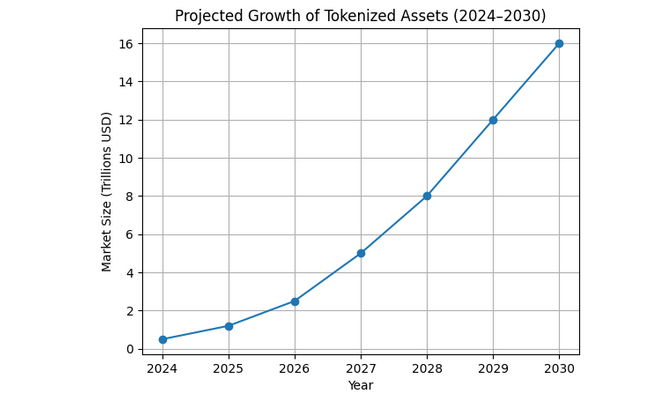
The consulting firm Boston Consulting Group (BCG) has estimated that the tokenized asset market could reach $16 trillion by 2030, representing approximately 10% of global GDP.
Projected Growth of Tokenized Assets (2024–2030)
Suggested visualization:
- X-axis: Year (2024–2030)
- Y-axis: Market Size ($ Trillions)
- Growth curve rising from ~$0.5T to ~$16T
Section 3 – The SEC’s “Innovation Exemption” Proposal
One of the most intriguing elements of Peirce’s speech was her discussion of a possible “innovation exemption.”
This concept would allow companies to conduct limited experiments with tokenized securities while regulators evaluate how existing securities laws apply to blockchain-based markets.
Under such a framework:
- Firms could launch small-scale tokenized products.
- Regulators could observe real-world outcomes.
- Policymakers could adjust rules based on actual market behavior.
This approach resembles regulatory sandboxes used in countries such as the United Kingdom, Singapore, and the United Arab Emirates, where fintech companies can test new technologies under controlled conditions.
For blockchain startups, the ability to experiment legally could be transformative. Many crypto companies currently face uncertainty over whether their tokens will be classified as securities.
An innovation exemption could provide a temporary safe harbor, allowing developers to explore new financial models without immediate enforcement risk.
Section 4 – DTCC and the Institutional Push Toward Blockchain Settlement
The debate around tokenization is not limited to policymakers. Major financial infrastructure providers are already exploring blockchain solutions.
One key development occurred when the SEC issued a “no-action letter” to the Depository Trust & Clearing Corporation (DTCC).
The DTCC is one of the most important institutions in global finance. It processes trillions of dollars in securities transactions every day and provides clearing and settlement services for U.S. capital markets.
The SEC’s letter effectively stated that regulators would not recommend enforcement action if DTCC pursued certain blockchain-related tokenization activities.
This regulatory signal opened the door for the organization to explore blockchain-based settlement systems for traditional securities.
If implemented at scale, such systems could dramatically transform financial infrastructure.
Instead of relying on multiple intermediaries and legacy systems, securities could move across blockchain networks with real-time transparency and automated reconciliation.
For crypto investors, this development signals something important: tokenization is no longer just a startup concept—it is becoming a core focus of institutional finance.
Traditional Securities Settlement vs Blockchain Settlement
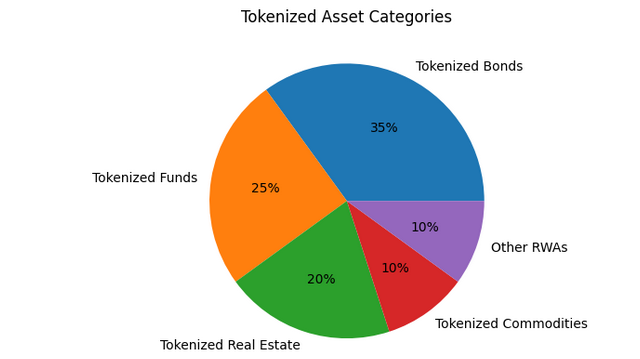
Traditional System:
Investor → Broker → Exchange → Clearinghouse → Custodian → Settlement (T+2)
Blockchain System:
Investor → Blockchain Network → Instant Settlement
Section 5 – How Tokenization Could Reshape Global Finance
Tokenization has the potential to transform multiple aspects of the financial system.
1. Increased Market Accessibility
Blockchain networks operate globally and can support fractional ownership. This means assets that were historically restricted to institutional investors—such as private equity or real estate—could become accessible to a broader audience.
2. Lower Costs
By removing layers of intermediaries, tokenized systems can significantly reduce transaction costs.
3. 24/7 Trading
Traditional stock markets operate during limited hours, but blockchain networks can facilitate continuous trading.
4. Enhanced Transparency
All transactions recorded on blockchain networks are verifiable and auditable.
5. Integration with DeFi
Tokenized assets can potentially interact with decentralized finance protocols, enabling new forms of lending, collateralization, and liquidity provision.
These features create entirely new possibilities for investors searching for yield opportunities and alternative asset exposure.
Section 6 – The Political and Regulatory Context in Washington
The SEC debate is unfolding alongside broader legislative discussions in Washington regarding digital asset regulation.
U.S. lawmakers are currently considering market structure legislation for cryptocurrency, which could clarify how different regulators oversee digital assets.
The outcome of these debates will influence:
- Whether tokens are regulated as securities or commodities
- How exchanges operate in the U.S.
- Whether institutions can issue tokenized assets at scale
Some policymakers view blockchain as a strategic technology that could enhance the competitiveness of U.S. financial markets.
Others remain cautious, emphasizing the need for strong investor protection and financial stability safeguards.
Peirce’s comments suggest that at least some regulators believe the United States should encourage innovation rather than restrict it.
Section 7 – Investment Implications for Crypto Markets
For crypto investors and entrepreneurs, the rise of tokenization could open several new avenues.
1. Tokenized Real-World Assets (RWA)
One of the fastest-growing sectors in crypto is the tokenization of real-world assets such as treasury bonds, commodities, and real estate.
Platforms like Ondo Finance and MakerDAO have already launched tokenized treasury products offering yields derived from traditional financial markets.
2. Institutional Blockchain Infrastructure
Companies developing blockchain settlement infrastructure could become critical components of future financial markets.
3. Hybrid Financial Systems
The future may involve hybrid systems combining traditional finance with decentralized networks.
For example:
- Tokenized securities issued on public blockchains
- Institutional custody integrated with DeFi protocols
- Stablecoins used for settlement
These developments suggest that the next wave of blockchain innovation may focus less on speculative tokens and more on practical financial infrastructure.
Tokenized Asset Categories
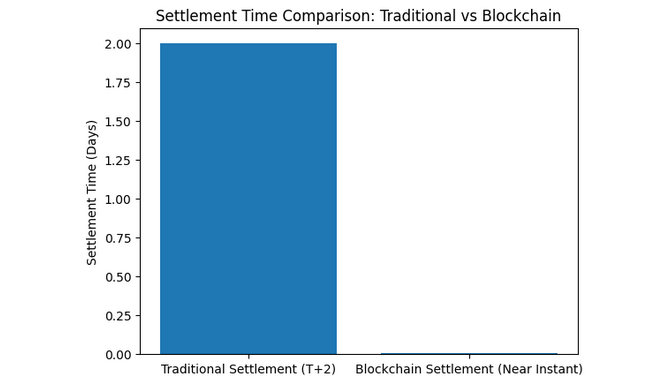
Pie chart categories:
- Tokenized Bonds – 35%
- Tokenized Funds – 25%
- Tokenized Real Estate – 20%
- Tokenized Commodities – 10%
- Other RWAs – 10%
Conclusion – A Turning Point for Blockchain Finance
The remarks by SEC Commissioner Hester Peirce highlight a crucial moment in the evolution of digital finance.
As blockchain technology matures, the focus of innovation is shifting from purely digital currencies toward tokenized representations of real-world financial assets.
If regulators adopt a more flexible approach—such as simplifying disclosure requirements and allowing experimental frameworks like innovation exemptions—the development of tokenized markets could accelerate rapidly.
For investors and entrepreneurs searching for the next major opportunity in the blockchain ecosystem, tokenization represents one of the most promising frontiers.
The convergence of traditional financial infrastructure, blockchain networks, and supportive regulatory frameworks could reshape capital markets over the next decade.
Rather than replacing existing financial systems entirely, tokenization may ultimately create a hybrid global financial architecture—one where digital and traditional assets coexist on programmable, transparent, and highly efficient blockchain platforms.