Key Points :
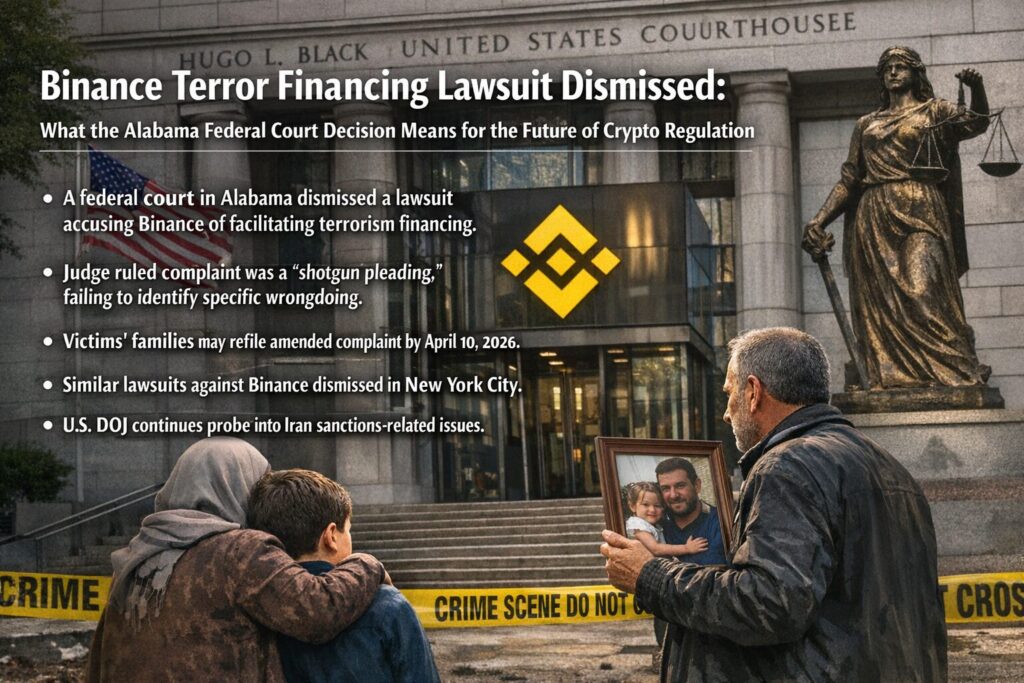
- A federal court in Alabama dismissed a lawsuit accusing Binance of facilitating terrorism financing.
- The judge ruled the complaint was a “shotgun pleading,” failing to identify specific wrongdoing by individual defendants.
- Plaintiffs (families of victims of the 2023 Hamas Attack on Israel) may refile an amended complaint by April 10, 2026.
- Similar lawsuits against Binance have already been dismissed in New York City.
- Meanwhile, scrutiny continues as the U.S. Department of Justice reportedly investigates sanctions-related issues involving Iran.
Introduction: A Landmark Court Decision in the Crypto Legal Landscape
The global cryptocurrency industry has entered a new era in which legal accountability, regulatory enforcement, and geopolitical tensions increasingly intersect. Over the past several years, digital asset platforms have faced lawsuits and regulatory scrutiny regarding compliance with anti-money-laundering laws, sanctions enforcement, and the prevention of illicit financing.
In this context, a recent decision by the U.S. District Court for the Middle District of Alabama represents a significant development. The court dismissed a lawsuit accusing the world’s largest cryptocurrency exchange, Binance, of facilitating terrorist financing linked to the October 2023 Hamas attack on Israel.
While the dismissal does not fully resolve the legal controversy, it raises important questions about how courts interpret liability for digital asset platforms and how regulators and plaintiffs must frame accusations related to crypto-enabled financial crime.
For investors, entrepreneurs, and developers exploring new blockchain opportunities, the ruling highlights a broader trend: the legal infrastructure surrounding cryptocurrency is rapidly evolving, and the outcome of such cases will shape the industry’s future.
The Case Against Binance: Allegations of Terror Financing
The lawsuit was filed by families of victims of the 2023 Hamas attack on Israel, who alleged that Binance and related entities indirectly enabled terrorist financing.
According to the plaintiffs, Binance allowed sanctioned individuals or organizations associated with Hamas to access financial infrastructure through cryptocurrency services. They argued that this access allowed the militant group to move funds, potentially contributing to the financing of terrorist operations.
The lawsuit relied on provisions related to anti-terrorism laws, including the U.S. Anti-Terrorism Act (ATA), which allows victims of terrorist acts to seek damages from entities accused of materially supporting terrorism.
Such legal strategies have increasingly targeted financial intermediaries—banks, payment processors, and now crypto exchanges—on the theory that providing financial services to sanctioned entities could constitute indirect support for terrorism.
However, proving such claims requires detailed evidence demonstrating a clear causal link between the defendant’s actions and the harm suffered by plaintiffs.
Why the Court Dismissed the Case
The ruling by Federal Judge Chad W. Bryan focused primarily on the structure and clarity of the complaint itself.
The court determined that the lawsuit constituted what is legally known as a “shotgun pleading.”
This term refers to a complaint that:
- bundles multiple allegations together without separating claims clearly
- fails to specify which defendant committed which action
- does not clearly explain how specific actions caused specific damages
In this case, the judge concluded that the plaintiffs had failed to identify which specific actions by Binance or other defendants directly contributed to the alleged terrorist financing.
The complaint grouped multiple defendants and factual claims together without distinguishing responsibility. As a result, the court found it impossible to determine whether any individual defendant could be held legally liable.
Therefore, the court dismissed the case.
However, the dismissal was issued without prejudice, meaning the plaintiffs still have the opportunity to revise and resubmit the complaint.
The court set April 10, 2026 as the deadline for filing an amended complaint that clearly specifies:
- the actions taken by each defendant
- the connection between those actions and the alleged damages
A Pattern of Dismissals in Similar Crypto Lawsuits
This ruling is not an isolated incident. Courts have previously dismissed similar lawsuits against Binance and other cryptocurrency companies.
Notably, a federal court in New York dismissed another lawsuit accusing Binance of facilitating terrorism financing.
These dismissals reflect a broader legal challenge: demonstrating direct causation between crypto platforms and specific terrorist activities is extremely difficult.
Unlike traditional banking systems, blockchain transactions often involve decentralized infrastructure and pseudonymous wallet addresses. While exchanges may serve as entry and exit points for fiat currency, the actual movement of funds across blockchain networks involves many intermediaries beyond the exchange’s control.
This complexity makes it harder for plaintiffs to prove that an exchange directly enabled a specific terrorist transaction.
As courts demand increasingly precise evidence, future lawsuits will likely need to rely on detailed blockchain analytics, transaction tracing, and forensic financial investigations.
Binance’s Broader Legal and Regulatory Challenges
Although the Alabama lawsuit was dismissed, Binance continues to face intense regulatory scrutiny worldwide.
The company has been involved in multiple high-profile legal actions over the past several years.
One of the most significant developments occurred in 2023 when Binance reached a multi-billion-dollar settlement with U.S. authorities, resolving allegations related to anti-money-laundering violations and sanctions compliance.
The settlement resulted in major leadership changes and new compliance commitments.
At the same time, reports indicate that the U.S. Department of Justice has launched additional investigations into whether Binance facilitated sanctions evasion involving Iran.
If confirmed, such investigations could potentially lead to further enforcement actions.
For the crypto industry, these ongoing cases demonstrate that even the largest exchanges must continuously adapt to evolving regulatory expectations.
The Expanding Global Focus on Crypto and Illicit Finance
The Binance lawsuit also highlights a broader global policy shift: governments are increasingly focused on preventing illicit financial activity within cryptocurrency markets.
Several international regulatory initiatives illustrate this trend.
For example:
- The Financial Action Task Force (FATF) has implemented stricter Travel Rule requirements for virtual asset service providers (VASPs).
- The European Union has adopted the MiCA (Markets in Crypto-Assets) regulation, introducing new compliance frameworks.
- The United States has expanded sanctions enforcement and anti-money-laundering monitoring for crypto platforms.
These policies reflect growing concern among policymakers that digital assets could be used for:
- terrorism financing
- sanctions evasion
- money laundering
- cybercrime
However, blockchain transparency also provides powerful tools for financial surveillance.
Unlike traditional banking systems, blockchain transactions are permanently recorded and can be analyzed using specialized forensic software.
Companies such as Chainalysis and TRM Labs have demonstrated that law enforcement agencies can track illicit transactions across blockchain networks with increasing accuracy.
Global Crypto Compliance Trend (Insert after this paragraph)
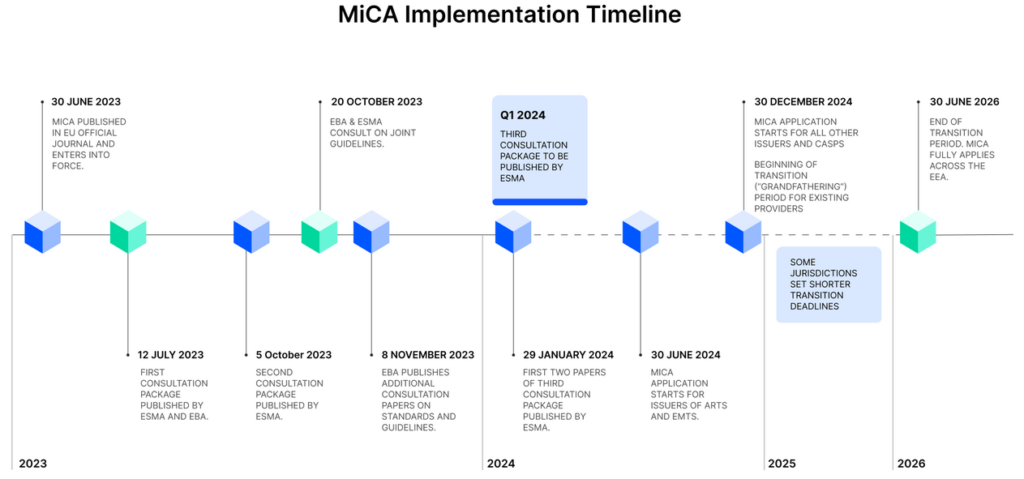
Illustration: The global expansion of regulatory oversight and compliance frameworks in cryptocurrency markets.
How the Decision May Influence Future Litigation
The Alabama court decision may influence how future crypto-related lawsuits are structured.
Legal experts suggest that plaintiffs will need to present more precise allegations when suing digital asset platforms.
Future cases may include:
- blockchain transaction tracing
- identification of specific wallet addresses
- evidence linking exchanges to particular transactions
- documentation of compliance failures
Without such evidence, courts may continue dismissing lawsuits that rely on broad or generalized accusations.
This requirement could significantly raise the bar for litigation against cryptocurrency companies.
Implications for Crypto Investors and Builders
For readers interested in new crypto assets, revenue opportunities, and real-world blockchain applications, the case offers several important insights.
First, the legal environment surrounding crypto is maturing rapidly.
Early years of the industry were characterized by regulatory uncertainty and inconsistent enforcement. Today, courts, regulators, and lawmakers are increasingly building a structured legal framework.
Second, compliance infrastructure is becoming a competitive advantage.
Exchanges and blockchain companies that invest heavily in compliance systems—such as KYC, transaction monitoring, and sanctions screening—are more likely to survive regulatory scrutiny.
Third, legal clarity can ultimately benefit the industry.
As courts define clearer standards for liability, companies gain a better understanding of how to operate within the law.
This clarity can encourage institutional adoption and new financial innovation.
How Crypto Transaction Monitoring Works (Insert after this paragraph)
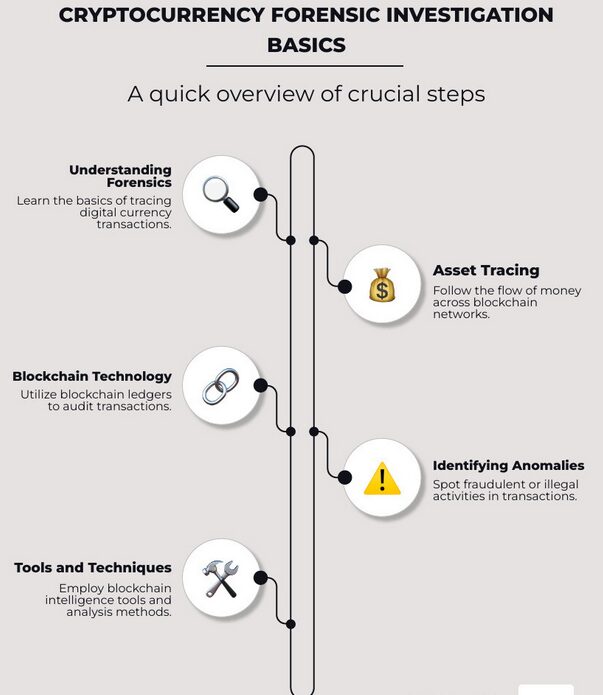
Illustration: Example structure of blockchain transaction monitoring used for AML and sanctions compliance.
The Future of Crypto Compliance and Regulation
Looking forward, the intersection of cryptocurrency and global security concerns will likely remain a major regulatory focus.
Several trends are already emerging:
- Stronger exchange compliance programs
- Mandatory blockchain analytics monitoring
- International coordination among regulators
- More sophisticated legal claims involving blockchain evidence
At the same time, the rapid expansion of decentralized finance (DeFi) and self-custodial wallets raises new regulatory challenges.
Unlike centralized exchanges, DeFi protocols often operate without identifiable corporate entities, complicating enforcement efforts.
This dynamic suggests that regulators may increasingly focus on centralized gateways—such as exchanges and custodians—where they can enforce compliance requirements.
Centralized vs Decentralized Crypto Ecosystems (Insert after this paragraph)
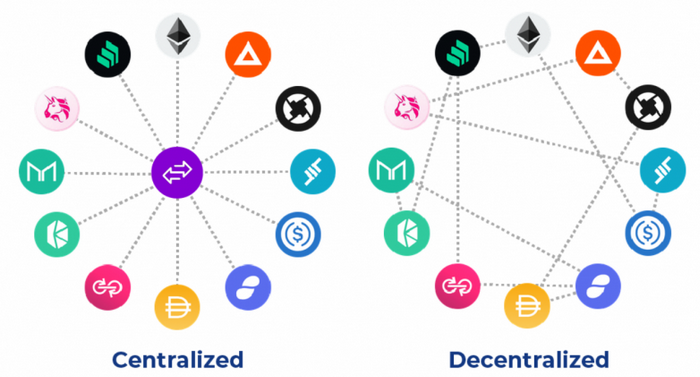
Illustration: Relationship between centralized exchanges and decentralized finance ecosystems.
Conclusion: A Turning Point in Crypto Legal Accountability
The dismissal of the terrorism-financing lawsuit against Binance by the Alabama federal court represents an important moment in the legal evolution of the cryptocurrency industry.
While the ruling does not absolve the exchange of all scrutiny, it underscores a key principle: courts require precise evidence linking a platform’s actions to specific harm.
For plaintiffs seeking to hold crypto platforms accountable, the bar for proof is rising.
For exchanges and blockchain companies, the message is equally clear—robust compliance frameworks, transparent operations, and proactive regulatory engagement are no longer optional.
As cryptocurrency markets continue to grow and integrate with global financial systems, legal clarity will play a central role in shaping the industry’s trajectory.
In the long run, decisions like this may contribute to a more mature digital asset ecosystem—one where innovation, compliance, and investor protection coexist.