
Main Points :
- A Nasdaq-listed Chinese EV company plans to acquire 10,000 BTC (approximately $1 billion) through a stock exchange agreement.
- The move reflects a broader Digital Asset Treasury (DAT) strategy among corporations accumulating crypto even during market downturns.
- Several companies pursuing similar strategies are currently holding large unrealized losses, but continue buying.
- The acquisition could significantly diversify the company’s balance sheet and enable cross-border crypto payments and liquidity infrastructure.
The Rise of Corporate Bitcoin Treasuries Beyond Tech Firms
The corporate adoption of Bitcoin as a treasury reserve asset has gradually expanded beyond technology companies and crypto-native firms. In early March 2026, Jiuzi Holdings, a Nasdaq-listed Chinese electric vehicle (EV) and charging infrastructure company, announced an ambitious strategic agreement to acquire 10,000 Bitcoin, worth roughly $1 billion at current prices.
The acquisition is structured as a stock-for-Bitcoin transaction with global digital asset investors. Instead of purchasing Bitcoin entirely with cash, the company intends to exchange newly issued shares valued at approximately $1 billion for BTC holdings from strategic partners.
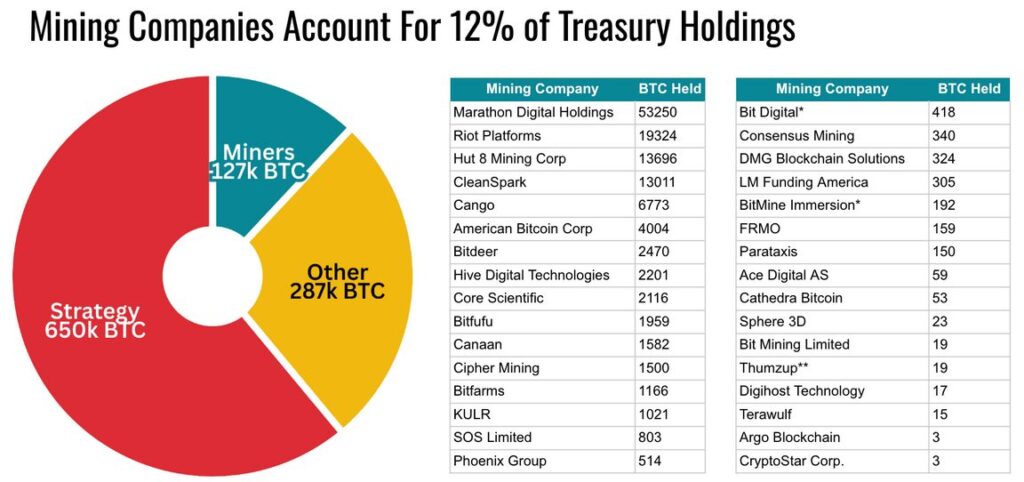
If the deal is completed, the move would place Jiuzi among a growing group of publicly listed companies adopting Digital Asset Treasury (DAT) strategies, where Bitcoin or other cryptocurrencies are held as long-term strategic reserves.
The announcement has drawn considerable attention because it highlights a key trend in the cryptocurrency ecosystem: corporations increasingly treating Bitcoin as a treasury asset similar to gold or strategic reserves.
Background: Jiuzi Holdings and Its Strategic Pivot
Jiuzi Holdings was founded in 2019 and is headquartered in Hangzhou, China. The company initially focused on selling electric vehicles and building charging infrastructure in China’s third- and fourth-tier cities, which are regional markets with moderate economic development.
These markets are often underserved compared to major metropolitan areas, making them attractive for EV adoption growth.
However, Jiuzi has struggled with declining revenues over the past five years, and it remains categorized as a micro-cap company. Facing financial pressures and limited growth prospects in its original business, the company has increasingly pivoted toward financial innovation and digital asset strategies.
In February 2026, Jiuzi completed a $60 million private placement, later announcing plans to expand the capital raise to $300 million. These funds were partly intended to support its digital asset treasury strategy.
The proposed acquisition of 10,000 BTC represents a major step in that transition.
What Is the Digital Asset Treasury (DAT) Strategy?
The Digital Asset Treasury strategy refers to companies holding cryptocurrencies—primarily Bitcoin—as part of their corporate reserves.
This concept was pioneered by several publicly listed companies earlier in the decade and has evolved into a recognized financial strategy.
Companies adopt DAT strategies for several reasons:
- Inflation hedge against fiat currency debasement
- Store of value similar to gold
- Exposure to the digital asset economy
- Strategic positioning in blockchain infrastructure
Bitcoin is particularly attractive because of its fixed supply of 21 million coins, decentralized nature, and global liquidity.
For companies operating internationally, holding Bitcoin can also facilitate cross-border settlement and treasury mobility.
Corporate Bitcoin Accumulation Continues Despite Market Downturn
Interestingly, Jiuzi’s announcement comes at a time when Bitcoin prices have declined roughly 17% year-to-date.
Many DAT-strategy companies are currently holding significant unrealized losses due to this market downturn.
For example:
- Strategy Inc., one of the most well-known corporate Bitcoin holders, recently purchased 3,015 BTC for about $204 million.
- Another digital asset treasury company, BitMine, reportedly holds Ethereum with unrealized losses approaching $7 billion, yet continues to accumulate.
These companies appear to follow a long-term accumulation strategy, treating price declines as buying opportunities rather than risks.
This approach mirrors the behavior of institutional investors accumulating gold during periods of economic uncertainty.
Potential Impact of Jiuzi’s 10,000 BTC Acquisition
If Jiuzi successfully acquires 10,000 BTC, it would significantly transform the company’s balance sheet.
The impact could include:
1. Balance Sheet Diversification
Holding Bitcoin alongside traditional assets introduces diversification into corporate financial structures.
Bitcoin behaves differently from traditional equities and bonds, which can reduce certain financial risks when managed properly.
2. Entry Into the Global Crypto Ecosystem
Jiuzi’s announcement also indicates plans to collaborate with strategic investors on:
- Cross-border cryptocurrency payments
- Liquidity management
- Blockchain infrastructure development
This suggests the company aims to become more than just a passive holder of Bitcoin.
Instead, it may attempt to integrate crypto infrastructure into its financial operations.
3. Investor Attention and Market Visibility
Public companies adopting crypto treasury strategies often gain attention from investors interested in digital assets.
This has historically resulted in stock price volatility but also increased liquidity and trading interest.
Corporate Bitcoin Holdings Landscape
The number of companies holding Bitcoin on their balance sheets has grown steadily over the past several years.
Below is a simplified representation of corporate Bitcoin adoption trends.
[Corporate Bitcoin Treasury Growth]
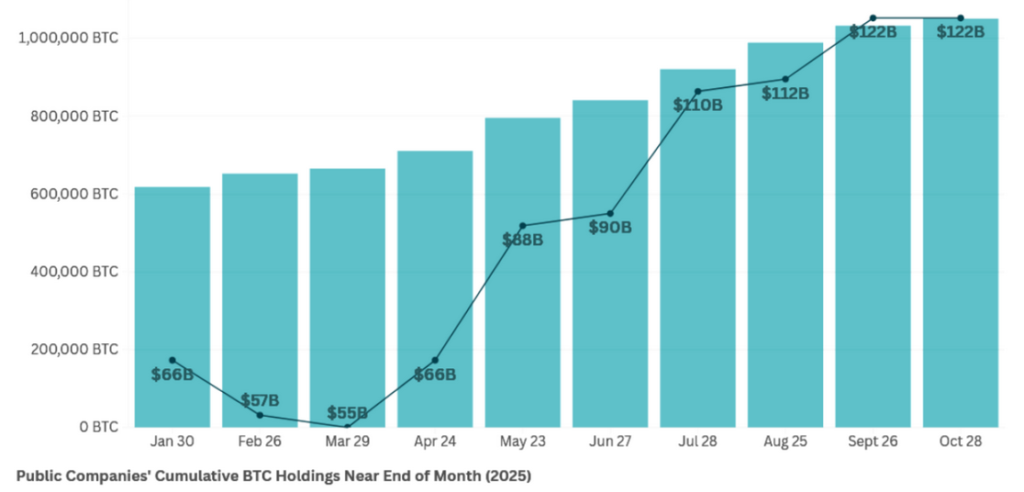
Corporate Bitcoin Holdings (2019–2026)
Year | Estimated Corporate BTC Holdings
2019 | 20,000 BTC
2020 | 100,000 BTC
2021 | 200,000 BTC
2023 | 350,000 BTC
2025 | 500,000 BTC
2026 | 650,000+ BTC
This growth illustrates how Bitcoin is gradually evolving into a corporate reserve asset class.
Strategic Advantages of Bitcoin Treasuries
The growing interest in Bitcoin treasury strategies reflects several structural advantages.
Global Liquidity
Bitcoin trades 24/7 across global markets, providing a level of liquidity unmatched by most traditional assets.
Borderless Settlement
Transactions can settle globally within minutes without relying on traditional banking systems.
Institutional Acceptance
Bitcoin is increasingly recognized by institutional investors, with the rise of:
- Bitcoin ETFs
- Custody services
- Regulated trading infrastructure
These developments have made it easier for corporations to hold and manage crypto assets securely.
Risks and Concerns
Despite its potential advantages, corporate crypto adoption also carries significant risks.
Price Volatility
Bitcoin prices can fluctuate dramatically within short periods.
For companies with large BTC reserves, this volatility can impact financial statements and investor sentiment.
Regulatory Uncertainty
Regulation remains inconsistent across jurisdictions.
For a Chinese company listed in the United States, regulatory scrutiny from both governments could affect the transaction.
Execution Risk
Jiuzi emphasized that the acquisition agreement remains conditional.
The transaction still requires:
- Formal contract signing
- Satisfaction of closing conditions
- Regulatory approvals
The company also stated that additional disclosures will follow SEC reporting requirements.
The Bigger Picture: Convergence of Traditional Industry and Crypto
Jiuzi’s announcement highlights a broader trend: the merging of traditional industries with digital asset strategies.
Companies from sectors such as:
- Energy
- Automotive
- Financial services
- Technology
are exploring blockchain and crypto treasury models.
This convergence suggests that digital assets are no longer confined to fintech startups but are becoming integrated into global corporate finance.
Visualizing the Strategy
[Corporate Bitcoin Treasury Model]
Corporate Treasury Model
Traditional Treasury
→ Cash
→ Bonds
→ Gold
Emerging Hybrid Treasury
→ Cash
→ Bonds
→ Gold
→ Bitcoin
→ Tokenized assets
This hybrid treasury model is increasingly being explored by multinational companies.
Conclusion
Jiuzi Holdings’ plan to acquire 10,000 BTC worth approximately $1 billion represents one of the latest examples of companies embracing the Digital Asset Treasury strategy.
While the company faces financial challenges and the deal remains conditional, the announcement reflects a powerful trend within the cryptocurrency industry.
Even amid falling Bitcoin prices and significant unrealized losses among corporate holders, companies continue to accumulate digital assets.
This persistence suggests that many executives and investors view Bitcoin not merely as a speculative asset but as a long-term strategic reserve for the digital economy.
If the transaction is finalized, Jiuzi could become a notable case study in how traditional industries—such as electric vehicle infrastructure—are integrating cryptocurrency into their financial architecture.
As global corporations increasingly explore blockchain and digital assets, the concept of a crypto-enabled corporate treasury may become a defining feature of the next generation of financial strategy.