
Main Points :
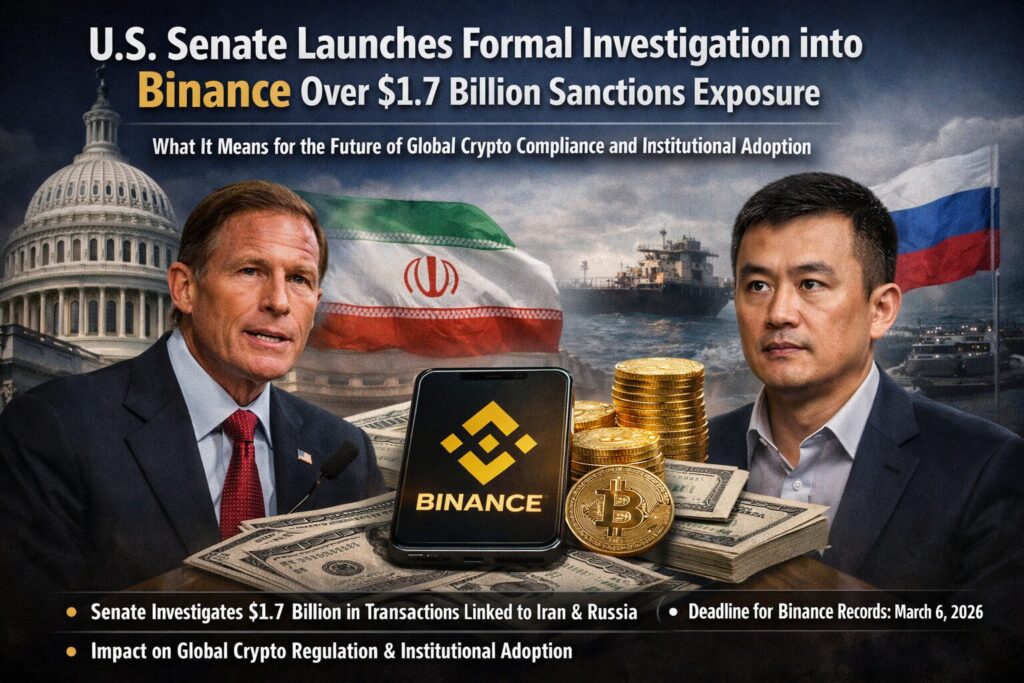
- The U.S. Senate Permanent Subcommittee on Investigations has formally launched an inquiry into Binance over allegations of processing approximately $1.7 billion in transactions linked to sanctioned Iranian and Russian entities.
- Senator Richard Blumenthal has demanded internal compliance records, communications, and account documentation from CEO Richard Teng, with a submission deadline of March 6, 2026.
- Alleged intermediaries include Hexa Whale and Blessed Trust, reportedly linked to Iranian state actors, the IRGC, Houthi-affiliated entities, and Russia’s shadow oil fleet.
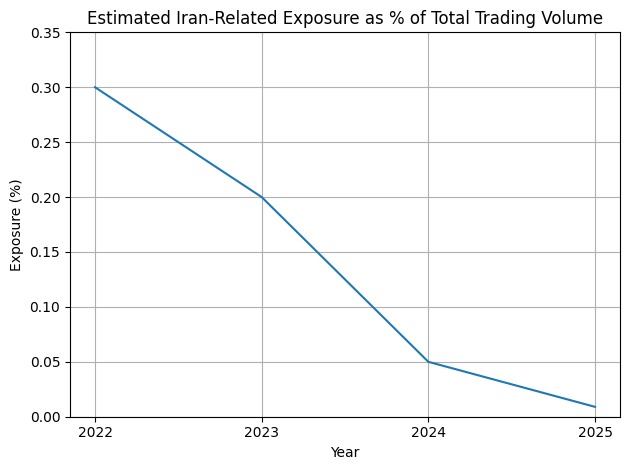
- Binance denies wrongdoing and states that it has reduced Iran-related exposure by 97% since January 2024, now accounting for only 0.009% of total trading volume.
- The investigation reopens scrutiny following Binance’s 2023 $4.3 billion settlement with U.S. regulators and the resignation of founder Zhao Changpeng (CZ).
- The outcome may significantly influence global crypto regulation, compliance standards, and institutional capital flows into digital assets.
A New Chapter in U.S. Oversight of Crypto Exchanges
The U.S. Senate has officially opened an investigation into Binance, the world’s largest cryptocurrency exchange by trading volume, over allegations that it processed roughly $1.7 billion in transactions linked to sanctioned entities in Iran and Russia.
The inquiry was initiated by Senator Richard Blumenthal, senior member of the Senate Permanent Subcommittee on Investigations. In a formal letter addressed to Binance CEO Richard Teng, the senator requested extensive internal documentation relating to sanctions compliance, anti-money laundering (AML) controls, communications regarding flagged accounts, and internal audit reports.
The deadline for submission has been set for March 6, 2026.
For readers seeking new crypto assets, revenue streams, and practical blockchain applications, this development is more than regulatory drama. It marks a structural turning point in how global capital will interact with centralized exchanges (CEXs), decentralized finance (DeFi), and compliance-oriented blockchain infrastructure.
The Allegations: $1.7 Billion in Sanction-Linked Transactions
At the center of the investigation are allegations that Binance processed approximately $1.7 billion in transactions tied to sanctioned Iranian and Russian entities.
The focus includes two entities reportedly connected to Binance’s ecosystem:
- Hexa Whale
- Blessed Trust
These intermediaries allegedly facilitated transactions involving:
- Iranian government-linked organizations
- The IRGC (Islamic Revolutionary Guard Corps)
- Houthi-affiliated networks
- Russia’s shadow oil tanker fleet
Investigators are reportedly examining whether Binance maintained roughly 2,000 Iran-linked accounts and permitted nearly $2.0 billion in transfers despite internal warnings.
Additionally, blockchain analytics reportedly traced transfers to wallets connected to IRGC-related addresses and payments to crews operating tankers involved in circumventing Russian oil sanctions.
If substantiated, these findings would represent severe breaches of U.S. sanctions regimes and AML standards.
Congressional Demands: Compliance Under the Microscope
Senator Blumenthal’s request reportedly includes:
- Internal compliance reports
- Communications related to sanctioned accounts
- Risk assessment documentation
- Records regarding compliance staff suspensions or terminations
- Policies implemented after Binance’s prior settlement
This is particularly significant because Binance already reached a historic settlement with U.S. authorities in 2023, agreeing to pay approximately $4.3 billion in penalties.
That settlement involved:
- Violations of AML laws
- Sanctions compliance failures
- Inadequate transaction monitoring
Founder Zhao Changpeng (CZ) stepped down as CEO as part of the agreement, and Binance pledged to overhaul its compliance infrastructure under independent monitoring.
The current investigation tests whether those reforms are functioning effectively.
Binance’s Response: Exposure Reduced by 97%
Binance has denied the allegations.
The company states that:
- It proactively identifies and reports suspicious activities to authorities.
- Iranian users are banned from accessing the platform.
- Since January 2024, exposure to Iran-related activity has been reduced by 97%.
- Sanctions-related transactions now account for approximately 0.009% of total trading volume.
CEO Richard Teng has characterized certain reports as defamatory.
If Binance can substantiate its claims with detailed audit trails and monitoring logs, it could strengthen its institutional credibility. If not, the reputational and regulatory consequences could be severe.
Why This Matters for Crypto Investors and Builders
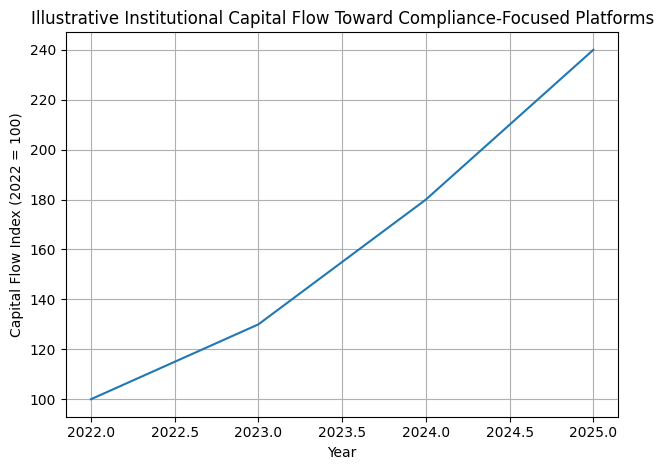
For those exploring new digital assets or blockchain-based revenue models, this investigation highlights three structural realities:
1. Compliance is Becoming Alpha
Regulatory arbitrage is narrowing. The next generation of exchanges and token projects will need:
- Real-time blockchain monitoring
- Travel Rule compliance systems
- Enhanced sanctions screening
- Risk-based KYC frameworks
Projects integrating compliance-first architecture may attract institutional capital faster than purely permissionless platforms.
2. Institutional Money Requires Clean Infrastructure
Since the approval of spot Bitcoin ETFs in the United States and other jurisdictions, institutional participation has surged. Major asset managers require counterparties with robust AML and sanctions controls.
If centralized exchanges fail to demonstrate resilience, capital may shift toward:
- Regulated custodians
- On-chain compliance protocols
- Tokenized real-world asset platforms
- Permissioned DeFi ecosystems
3. Geopolitical Risk Is Now a Core Crypto Variable
Crypto is no longer isolated from geopolitics. Sanctions enforcement, energy markets, and sovereign conflicts increasingly intersect with blockchain analytics.
This environment creates opportunity:
- Compliance-as-a-service startups
- Sanctions-screening AI
- Cross-border payment rails aligned with legal frameworks
- Tokenized commodities and transparent supply-chain platforms
The Broader Regulatory Climate
The Binance investigation does not occur in isolation.
Globally, regulators are tightening oversight:
- The EU’s MiCA framework is being implemented.
- The U.S. continues enforcement-driven policy shaping.
- Asian jurisdictions are strengthening exchange licensing requirements.
- The Middle East is positioning itself as a regulated crypto hub.
In this context, Binance serves as a bellwether. Its compliance evolution may shape global standards for centralized exchanges.
Market Impact and Forward Scenarios
Three potential outcomes emerge:
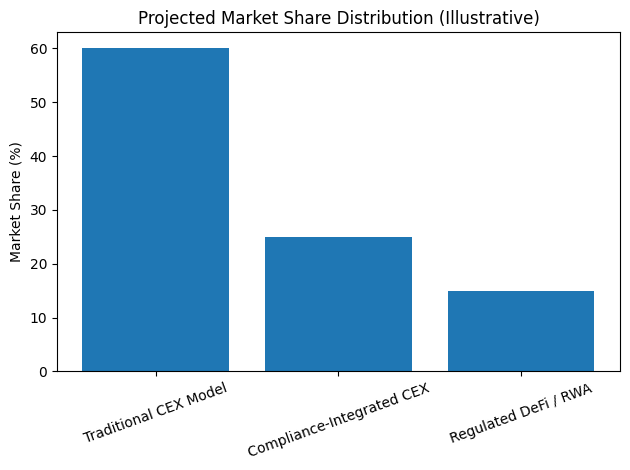
Scenario 1: Binance Provides Strong Documentation
If documentation confirms effective reforms, Binance could emerge stronger, positioning itself as a compliance-hardened global exchange.
Scenario 2: Partial Violations Found
Penalties or operational restrictions may follow, potentially accelerating market share redistribution toward competitors.
Scenario 3: Major Systemic Failures Revealed
This could trigger:
- Stricter global enforcement
- Accelerated shift to regulated exchanges
- Institutional reallocation toward compliant DeFi
Strategic Implications for New Revenue Seekers
For investors and builders:
- Monitor compliance infrastructure projects.
- Explore tokenized RWA platforms.
- Evaluate exchanges with transparent audit frameworks.
- Consider blockchain analytics providers as growth plays.
The regulatory phase of crypto does not signal contraction—it signals maturation.
Conclusion: From Wild West to Regulated Frontier
The U.S. Senate’s investigation into Binance represents a defining moment in crypto’s institutional era.
If the industry wishes to capture sovereign wealth funds, pension capital, and corporate treasury allocations, compliance cannot remain an afterthought.
Whether Binance ultimately withstands scrutiny or faces further penalties, one outcome is certain:
The next wave of crypto growth will belong to platforms that integrate transparency, sanctions compliance, and robust governance directly into their architecture.
For those seeking the next digital asset opportunity, the frontier is shifting—not away from blockchain—but toward regulated, scalable, globally interoperable financial infrastructure.



