

Main Points :
- ESMA warns that crypto “perpetual futures” offering leveraged exposure may qualify as CFDs under EU law.
- If classified as CFDs, strict rules apply: leverage caps, margin close-out, negative balance protection, risk warnings, and ban on incentives.
- The warning signals intensified scrutiny of leveraged crypto derivatives in Europe.
- Exchanges such as Kraken are launching perpetual products globally — but avoiding EU retail customers.
- Investors and crypto businesses must reassess governance, compliance, and product design under MiCA and existing CFD frameworks.
- The decision reshapes risk, revenue models, and competitive dynamics in the global crypto derivatives market.
1. ESMA’s Warning: When “Perpetual Futures” Look Like CFDs
The European Securities and Markets Authority (ESMA), the European Union’s financial markets supervisor, has issued a clear and consequential notice: crypto derivatives marketed as “perpetual futures” or “perpetual contracts” that provide leveraged exposure to assets such as Bitcoin and Ethereum may fall within the legal definition of Contracts for Difference (CFDs).
This is not a minor technical clarification. It is a structural regulatory signal.
Under EU rules, CFDs are subject to strict product intervention measures designed to protect retail investors. ESMA emphasized that if a crypto derivative meets the functional definition of a CFD — regardless of branding — the regulatory framework applies.
In other words, calling a product a “perpetual future” does not exempt it from CFD treatment if its economic substance is identical.
This is a familiar principle in financial regulation: substance over form. For crypto companies accustomed to regulatory arbitrage across jurisdictions, this message is unmistakable.
2. What Happens If Crypto Perpetuals Are Classified as CFDs?
If crypto perpetual derivatives are treated as CFDs under EU law, they must comply with product intervention measures including:
- Leverage limits
- Mandatory standardized risk warnings
- Margin close-out rules (forced liquidation at prescribed thresholds)
- Negative balance protection
- Prohibition of monetary and non-monetary incentives
These measures were originally introduced to curb excessive retail losses in high-risk speculative instruments.
Why This Matters for Crypto Traders
Crypto perpetual contracts are popular precisely because they allow:
- High leverage (often 10x–100x outside regulated jurisdictions)
- Flexible margin structures
- Continuous trading without expiry
- Aggressive marketing incentives
Applying CFD constraints dramatically reduces leverage, compresses profit potential, and increases compliance costs.
For retail traders seeking outsized returns, the environment becomes less speculative and more controlled.
For platforms, the economics change significantly.
Regulatory Impact on Crypto Perpetual Derivatives in the EU
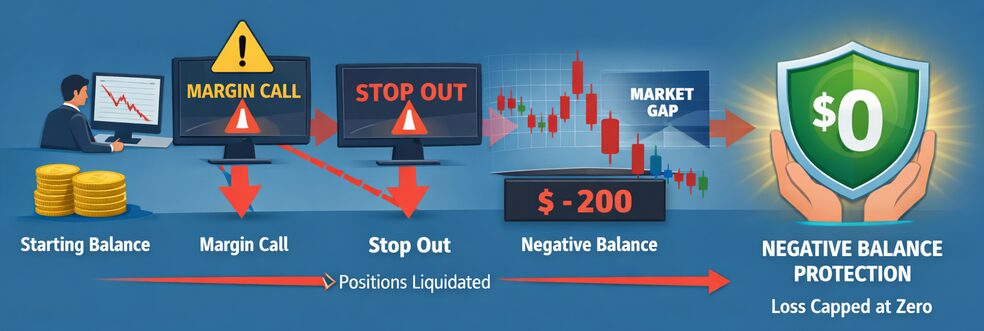
This visual should illustrate leverage caps vs. offshore leverage, margin close-out thresholds, and negative balance protection mechanics.
3. The MiCA Context: Europe’s Structured Crypto Framework
ESMA, established in 2011, plays a central role in supervising compliance under the EU’s Markets in Crypto-Assets (MiCA) regulation.
MiCA aims to create:
- Harmonized licensing
- Prudential standards
- Investor protection
- Market integrity rules
However, derivatives often fall into overlapping frameworks. While MiCA covers crypto-asset service providers, leveraged derivative products may trigger existing securities and derivatives laws.
ESMA has previously warned about:
- Volatile crypto promotion by financial influencers (“finfluencers”)
- Misleading retail marketing
- Governance failures in crypto firms
This latest notice signals that leverage is now squarely in regulatory focus.
4. Industry Reaction: Governance and Compliance Reassessment
Bill Hughes of Consensys noted publicly that European regulators are clearly monitoring leveraged crypto derivatives and that renaming products will not avoid regulatory classification.
His core message: firms offering leveraged crypto products to EU retail clients must re-evaluate:
- Product analysis
- Sales strategy
- Governance frameworks
- Conflict-of-interest controls
Failure to do so invites regulatory intervention.
For founders and operators, this means the compliance function can no longer be secondary to product velocity.
5. Timing Matters: Kraken’s Perpetual Launch Outside the EU
Coinciding with ESMA’s notice, Kraken announced new perpetual futures tied to tokenized versions of:
- Major stock indices
- Gold-linked ETFs
- Leading public companies
These products are available in more than 110 countries — but notably exclude EU customers at launch.
This strategic exclusion reflects regulatory awareness. Rather than risk misclassification or enforcement, the exchange chose jurisdictional segmentation.
This trend — geo-fencing high-leverage products — is likely to intensify.
6. Global Trends: Leverage Under Pressure
Beyond Europe, regulators worldwide are scrutinizing leverage in crypto markets.
- The U.S. Commodity Futures Trading Commission (CFTC) has tightened oversight of crypto derivatives platforms.
- Asian jurisdictions have imposed leverage caps for retail investors.
- Institutional trading venues are increasingly segregated from retail access.
The direction of travel is clear: high retail leverage is politically and regulatorily vulnerable.
Global Regulatory Tightening on Crypto Leverage
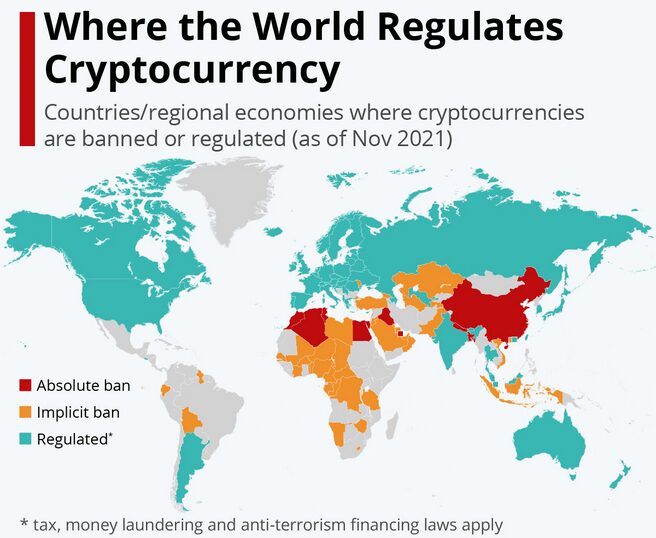
This graphic should show EU CFD leverage caps versus offshore leverage offerings and highlight global convergence toward tighter controls.
7. What This Means for Investors Seeking Alpha
For readers looking for:
- New crypto assets
- Next income streams
- Practical blockchain use cases
this regulatory development has layered implications.
A. Retail Leverage Arbitrage Shrinks
Short-term speculative gains through extreme leverage become harder in regulated markets.
Capital may flow to:
- Offshore exchanges
- DeFi perpetual protocols
- Structured yield products
B. Institutional-Grade Infrastructure Gains Value
Compliance-heavy markets favor:
- Strong governance
- Transparent margin engines
- Clear liquidation mechanisms
- On-chain risk transparency
Companies that embed regulatory resilience into architecture may gain long-term advantage.
C. DeFi May See Strategic Growth
If centralized platforms face leverage constraints, decentralized perpetual protocols may absorb speculative demand — although regulators are increasingly examining those as well.
8. Strategic Implications for Builders
For crypto entrepreneurs and blockchain developers, ESMA’s message carries practical lessons:
- Design with regulatory substance in mind, not labels.
- Model leverage economics under capped scenarios.
- Prepare governance documentation and conflict controls early.
- Segment markets jurisdictionally when necessary.
- Consider tokenized real-world asset derivatives under compliant frameworks.
Leverage is not disappearing. It is being formalized.
9. The Larger Structural Shift
The era of loosely regulated crypto derivatives in major economies is narrowing.
Europe is signaling:
- Regulatory clarity over ambiguity
- Investor protection over rapid innovation
- Substance over branding
For long-term investors, this may ultimately stabilize markets.
For short-term speculators, volatility shifts from price to regulatory uncertainty.
Conclusion: Regulation as a Competitive Filter
ESMA’s warning is more than a technical note. It is a boundary marker.
If crypto perpetual derivatives function like CFDs, they will be regulated as CFDs in Europe. The naming convention will not matter.
For investors, this means:
- Risk management becomes structurally enforced.
- Extreme leverage becomes harder to access in compliant markets.
- Jurisdictional awareness becomes part of strategy.
For builders, this means:
- Governance is infrastructure.
- Compliance is product design.
- Geographic segmentation is strategic architecture.
The crypto derivatives market is not shrinking — it is maturing.
In that maturation lies opportunity:
- For compliant innovation
- For institutional integration
- For structured yield strategies
- For tokenized real-world asset exposure
The winners will not be those who avoid regulation — but those who design intelligently within it.



