

Main Points :
- JPMorgan CEO Jamie Dimon warns that today’s market resembles 2005–2007 before the 2008 financial crisis.
- Asset prices and trading volumes are elevated, increasing systemic risk.
- Competitive pressure is driving some institutions toward riskier lending practices.
- JPMorgan is maintaining stricter risk discipline and avoiding aggressive leverage.
- AI-driven disruption may trigger stress in the software sector in the next downturn.
- For crypto investors and blockchain entrepreneurs, elevated asset prices create both risk and opportunity.
1. A Familiar Warning: Echoes of 2005–2007
Jamie Dimon, CEO of JPMorgan Chase, issued a stark warning during the firm’s annual investor “Company Update” in New York on February 24, 2026. According to multiple media reports, Dimon stated that current financial market conditions are “almost identical” to those seen in 2005, 2006, and 2007—just before the eruption of the 2008 global financial crisis.
Dimon reflected on that pre-crisis era:
“Unfortunately, I’m seeing exactly what we saw in 2005, ’06, ’07. The rising tide lifted all boats. Everyone was making money. Leverage was pushed to the limit. It felt like there was no limit.”
His remarks were not merely historical reflections; they were framed as a cautionary message to investors, bankers, and policymakers who may be lulled into complacency by today’s robust asset markets.
In 2007, global equity markets reached record highs, credit spreads were tight, and structured products such as mortgage-backed securities appeared safe. Within a year, the system collapsed. Dimon’s concern is that today’s environment—characterized by record equity valuations, heavy private credit issuance, and aggressive AI-driven optimism—may be building similar fragilities.
2. High Asset Prices, High Risk
Dimon emphasized that elevated asset prices do not reduce risk—they amplify it.
He warned that investors are becoming “too optimistic,” assuming that high prices and high trading volumes can continue indefinitely without consequences. Historically, such optimism often coincides with late-cycle market dynamics:
- Corporate leverage increases.
- Risk premiums compress.
- Investors chase yield in lower-quality assets.
- Risk management standards gradually loosen.
In 2026, U.S. equities are trading at historically elevated price-to-earnings multiples. Private credit markets have ballooned to over $1.5 trillion in size. Meanwhile, global crypto markets have rebounded sharply from the 2022–2023 downturn, with Bitcoin again trading near previous cycle highs and institutional capital flowing into spot ETFs.
From Dimon’s perspective, the mere fact that asset prices are high increases systemic fragility. When prices are stretched, even minor shocks—geopolitical events, regulatory changes, AI sector earnings disappointments, or liquidity stress—can trigger outsized corrections.
For crypto investors, this dynamic is particularly important. Digital assets often behave as high-beta instruments, amplifying both upside and downside volatility.
3. “Doing Dumb Things”: Competitive Pressure in Banking
Dimon criticized certain competitors for what he described as “doing dumb things” to boost Net Interest Income (NII). In plain terms, this suggests:
- Underpricing risk in loan portfolios.
- Extending credit to weaker borrowers.
- Accepting thinner collateral margins.
- Leveraging balance sheets aggressively.
In late-cycle environments, competition for yield intensifies. Financial institutions may feel pressured to expand into riskier segments simply to maintain profitability.
JPMorgan, according to Dimon, is resisting that temptation. The bank intends to maintain conservative underwriting standards and avoid excessive leverage, even if that means sacrificing short-term revenue growth.
This dynamic has parallels in crypto. During bull markets, exchanges may loosen listing standards, DeFi protocols may offer unsustainably high yields, and venture capital may fund speculative token projects with weak fundamentals. In downturns, these excesses are exposed.
4. AI as a Potential Shock Amplifier
Dimon added an intriguing forward-looking risk scenario: the next downturn could hit the software industry particularly hard due to the rapid impact of artificial intelligence.
The AI boom has driven enormous capital inflows into:
- Cloud infrastructure providers
- Semiconductor manufacturers
- AI startups
- Software-as-a-Service (SaaS) platforms integrating AI features
If revenue expectations fail to materialize—or if AI commoditizes faster than expected—valuations in the tech sector could contract sharply.
Crypto markets are deeply intertwined with this narrative. AI tokens, decentralized compute projects, and blockchain-based AI marketplaces have surged in popularity. A repricing in traditional tech could spill over into digital asset markets.
5. The Macro Context: 2026 Financial Conditions
To better understand Dimon’s warning, we need to consider broader macro trends:
- Interest rates remain higher than the ultra-low era of the 2010s.
- Sovereign debt levels in the U.S. and Europe are at record highs.
- Geopolitical tensions continue in multiple regions.
- Liquidity is unevenly distributed across markets.
Unlike 2007, banks today are better capitalized due to post-crisis reforms such as Basel III. However, risk has migrated:
- To private credit funds
- To shadow banking structures
- To fintech platforms
- To decentralized finance protocols
In crypto specifically, leverage has re-emerged through derivatives exchanges and on-chain perpetual futures markets. Although transparency has improved since 2022’s collapses, risk layering is again building.
6. What This Means for Crypto Investors
For readers searching for new crypto assets and revenue streams, Dimon’s warning should not be interpreted as a signal to exit markets entirely. Instead, it should prompt disciplined strategy.
Key considerations:
A. Avoid Excessive Leverage
In 2008, leverage amplified losses. In crypto, margin trading and perpetual futures can similarly destroy capital quickly.
B. Focus on Real Revenue Models
Projects generating actual cash flow—whether through transaction fees, infrastructure services, or enterprise blockchain integrations—are more resilient than purely narrative-driven tokens.
C. Diversify Across Asset Types
Consider diversification among:
- Layer 1 blockchains
- Real-world asset (RWA) tokenization platforms
- Stablecoin infrastructure
- Payment-focused networks
- Institutional custody providers
D. Monitor Liquidity Conditions
Liquidity contraction often precedes sharp crypto corrections. Watch central bank policy, credit spreads, and stablecoin issuance metrics.
7. Blockchain’s Practical Utility in a Riskier World
Ironically, periods of financial stress often accelerate blockchain adoption.
Following the 2008 crisis, distrust in traditional banking catalyzed the creation of Bitcoin. Today, blockchain applications are expanding in:
- Cross-border settlement
- Tokenized treasury products
- On-chain collateral management
- Automated compliance systems
If banking institutions become more risk-averse, decentralized infrastructure may absorb some transactional demand—especially in emerging markets.
However, institutional-grade compliance and risk controls will be crucial. The next growth wave will likely favor projects aligned with regulatory clarity and enterprise integration rather than speculative meme cycles.
8. Visual Overview: Market Risk Comparison
Graph 1 – Pre-2008 vs 2026 Market Indicators (Asset Prices, Leverage, Credit Growth)
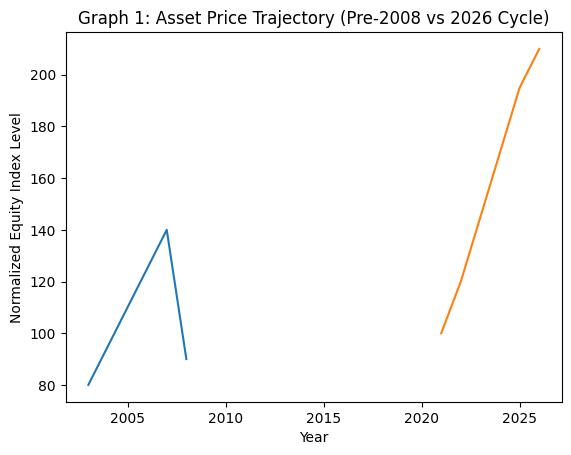
[Graph should compare: Equity Index Levels, Credit Expansion Rate, Average Leverage Ratios]
Graph 2 – Crypto Market Capitalization vs Global Liquidity Conditions
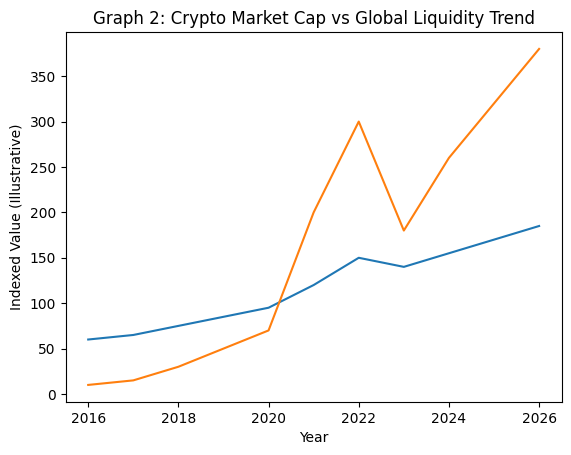
[Graph should show correlation between global M2 liquidity growth and total crypto market cap]
9. Strategic Outlook for 2026–2027
If Dimon’s assessment proves correct and the credit cycle turns, we may see:
- Equity correction of 20–35%
- Stress in private credit markets
- AI-sector repricing
- Temporary liquidity crunch in crypto markets
However, downturns historically create generational opportunities. The strongest crypto projects of the last cycle were built during bear markets.
Investors seeking the next revenue stream should ask:
- Does this protocol solve a real financial inefficiency?
- Is it integrated with institutional infrastructure?
- Does it generate sustainable fee revenue?
- Can it survive a 50% drawdown in asset prices?
Conclusion: Caution Without Paralysis
Jamie Dimon’s warning is not a prediction of imminent collapse but a reminder of cyclical reality. Elevated asset prices and rising leverage increase systemic vulnerability. Markets rarely crash when everyone expects them to—but they often crash when optimism becomes consensus.
For crypto investors and blockchain entrepreneurs, the lesson is clear:
Build and invest with discipline. Prioritize durability over hype. Use this late-cycle period to strengthen balance sheets, refine products, and identify fundamentally sound projects.
History does not repeat perfectly—but it often rhymes.
If 2005–2007 taught us anything, it is that confidence without risk awareness is dangerous. In 2026, the opportunity lies not in ignoring the warning—but in preparing intelligently for what may come next.



