

Main Points :
- Google searches for “Bitcoin to zero” in the United States surged to an all-time high in February 2026, even as BTC trades near $60,000 after peaking in October 2025.
- Outside the U.S., the same search term peaked months earlier, suggesting fear is geographically concentrated rather than global.
- Similar spikes in 2021 and 2022 coincided with local market bottoms, but sentiment indicators alone do not guarantee reversal.
- On-chain metrics, ETF flows, derivatives positioning, and macroeconomic conditions offer mixed bottoming signals.
- For investors seeking new crypto assets, income opportunities, and practical blockchain applications, volatility may create selective entry points—but risk management remains critical.
1. The Surge in “Bitcoin to Zero” Searches: A Psychological Stress Test
In February 2026, U.S.-based Google searches for the phrase “Bitcoin to zero” reached their highest recorded level. This spike occurred as Bitcoin (BTC) drifted toward $60,000 following its all-time high above $100,000 in October 2025. While $60,000 remains historically elevated compared to prior cycles, the psychological shift from euphoria to anxiety has been dramatic.
Google Trends measures relative interest on a 0–100 scale. A reading of 100 does not mean the majority of Americans believe Bitcoin will go to $0; rather, it means that searches for that term are at their highest relative intensity compared to previous periods. The data reflects rising retail anxiety.
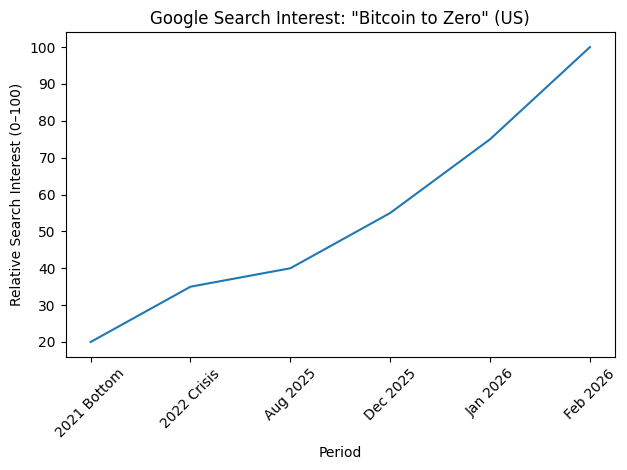
Historically, extreme negative search trends have sometimes coincided with capitulation phases. In 2021, during the China mining ban and post-peak selloff, similar spikes were observed near local bottoms around $30,000. In 2022, after major institutional failures and liquidity crises, fear-driven search behavior again aligned with market stabilization points.
However, correlation is not causation. Search trends measure emotion—not liquidity, not leverage, and not capital flows.
2. Geographic Concentration of Fear: Why the U.S. Matters
Interestingly, while the United States recorded its peak in February 2026, global data shows that “Bitcoin to zero” searches peaked in August 2025. This suggests that panic is currently concentrated in the U.S., rather than synchronized globally.
Why might this matter?
- The U.S. dominates institutional ETF flows.
- U.S. monetary policy strongly influences risk assets.
- Retail investor behavior in the U.S. often amplifies volatility through derivatives trading.
If fear is localized rather than global, it may reflect macro-specific stress—such as tighter financial conditions, regulatory uncertainty, or equity market weakness—rather than systemic blockchain risk.
From a contrarian perspective, localized panic can create asymmetrical setups if global capital remains constructive.
3. Price Action: From Euphoria Above $100,000 to Consolidation Near $60,000
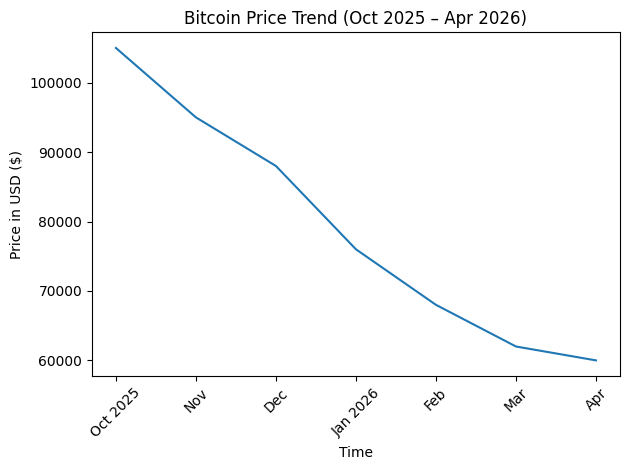
Bitcoin’s move from over $100,000 to around $60,000 represents a drawdown of roughly 40%. In traditional equities, that would qualify as a bear market. In crypto cycles, however, such pullbacks are not uncommon.
The key technical question is whether $60,000 represents:
- A macro higher low within a long-term bull cycle, or
- The beginning of a prolonged distribution phase.
Market structure analysis shows:
- Strong historical support in the $55,000–$60,000 range (prior breakout zone).
- Liquidity clusters in derivatives markets around $58,000.
- Heavy open interest in perpetual futures contracts, indicating leverage remains significant.
Leverage compression—not just fear—often marks durable bottoms.
4. On-Chain Metrics: Are Long-Term Holders Capitulating?
Beyond sentiment, on-chain indicators provide additional context:
- Long-term holder supply remains elevated.
- Exchange reserves have not surged dramatically.
- Miner selling pressure is stable but not extreme.
- Realized loss metrics show pain, but not panic liquidation levels comparable to 2022.
If “Bitcoin to zero” searches represent emotional stress without corresponding mass on-chain capitulation, the bottoming process may still be incomplete.
In prior cycles, durable bottoms occurred when both price and on-chain behavior aligned in capitulation.
5. ETF Flows and Institutional Accumulation
Spot Bitcoin ETFs in the United States have changed the market structure significantly. Unlike previous cycles dominated by offshore exchanges, capital flows now pass through regulated vehicles.
Recent data indicates mixed ETF flows:
- Some days show outflows amid equity weakness.
- Other sessions show accumulation during dips.
This suggests institutional participation is not uniformly bearish. In fact, certain asset managers appear to treat $60,000 as a strategic accumulation zone rather than an existential threat.
For readers interested in practical blockchain adoption, this institutional layer reduces the probability of Bitcoin collapsing to $0. Regulatory integration has structurally altered the asset class.
6. Derivatives and Funding Rates: Signs of Stress or Reset?
Funding rates across major exchanges have periodically turned negative, indicating short bias among traders. However, negative funding alone does not guarantee reversal.
What matters is:
- Liquidation cascades.
- Open interest flushes.
- Basis compression between futures and spot markets.
So far, derivatives markets show stress—but not systemic unwinding.
A full capitulation event typically includes:
- Sharp open interest decline.
- Volatility spike above 100% annualized.
- Panic selling across altcoins.
We have seen partial signs—but not full-cycle exhaustion.
7. Altcoin Spillover: Opportunity or Contagion?
When Bitcoin volatility rises, altcoins typically experience amplified drawdowns. Ethereum (ETH), Solana (SOL), and various Layer-2 ecosystems have retraced significantly from 2025 highs.
However, this environment often differentiates speculative tokens from infrastructure plays.
Investors seeking new revenue opportunities may consider:
- Staking yield in Ethereum-based protocols.
- Restaking and modular blockchain infrastructure.
- Real-world asset tokenization platforms.
- Stablecoin yield strategies within compliant frameworks.
Fear-driven corrections frequently reset valuations, allowing fundamentally strong projects to reprice attractively.
8. Macro Backdrop: Rates, Liquidity, and Risk Appetite
Bitcoin does not trade in isolation.
Current macro factors influencing volatility include:
- U.S. interest rate expectations.
- Equity market drawdowns.
- Dollar strength.
- Liquidity conditions in global markets.
If macro liquidity tightens further, crypto may struggle. If central banks pivot toward easing, risk assets could rebound sharply.
Historically, major crypto bottoms often align with macro liquidity inflection points.
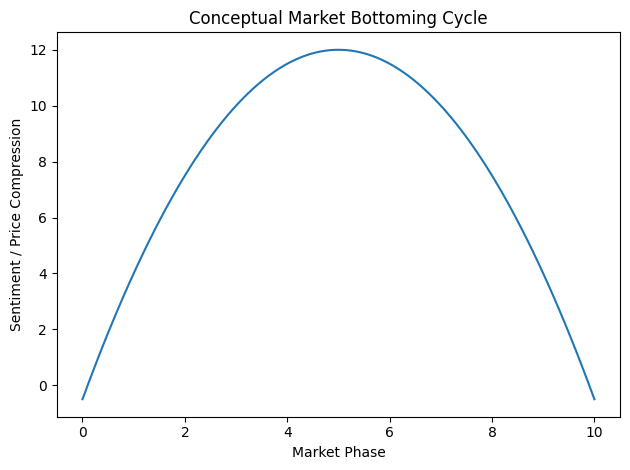
9. Does “Bitcoin to Zero” Actually Signal a Bottom?
Extreme fear is a necessary condition for bottoms—but not sufficient.
A durable bottom typically requires:
- Sentiment capitulation.
- Leverage reset.
- On-chain accumulation.
- Stabilizing macro conditions.
Currently:
- Sentiment: Extreme in the U.S.
- Leverage: Elevated but compressing.
- On-chain: Stable but not fully capitulated.
- Macro: Mixed.
This creates an ambiguous setup rather than a clear reversal signal.
10. Strategic Implications for Forward-Looking Investors
For readers focused on discovering new crypto assets, yield opportunities, and real blockchain utility, this environment demands strategic discipline:
- Avoid emotional reaction to search trend headlines.
- Evaluate structural adoption metrics.
- Diversify into infrastructure and revenue-generating protocols.
- Manage position sizing carefully.
Bitcoin going to $0 is statistically improbable given:
- Institutional custody infrastructure.
- Regulatory clarity.
- Corporate treasury integration.
- Mining network security.
But significant volatility remains inevitable.
Conclusion: Panic Is Loud, But Structure Matters
The spike in “Bitcoin to zero” searches in the United States is a powerful psychological signal. It reflects anxiety among retail participants as BTC trades near $60,000 after its euphoric 2025 peak.
History suggests that extreme fear often appears near local bottoms. However, sentiment alone does not confirm reversal. On-chain data, derivatives positioning, ETF flows, and macro liquidity conditions present a mixed picture.
For serious crypto participants—those seeking new assets, income strategies, and practical blockchain adoption—this phase should be viewed not as an existential collapse, but as a stress test.
Markets oscillate between greed and fear. Sustainable opportunity emerges when structural adoption continues despite emotional volatility.
Bitcoin may not be going to $0—but the path forward will likely test conviction.


