

Main Points :
- U.S. negotiations over the CLARITY Act remain stalled, with stablecoin yield regulation emerging as the key battleground.
- The U.S. SEC faces a February 26 procedural deadline on a multi-asset crypto ETF application from T. Rowe Price.
- Bitmine Immersion Technologies has reportedly accumulated over 4.3 million ETH, influencing market psychology.
- Bitcoin has corrected sharply from $97,000 to the $67,000 range year-to-date.
- Japanese listed firm Remixpoint has begun lending its Bitcoin holdings, signaling a corporate shift from passive holding to active yield generation.
- ETF flows, derivatives positioning, and macroeconomic concerns continue to define short-term volatility.
1. Regulatory Stalemate in Washington: The CLARITY Act and Stablecoin Yield Debate
The most consequential macro factor for crypto markets this week is regulatory uncertainty in the United States.
Negotiations surrounding the White House-led CLARITY Act—intended to define crypto market structure—remain ongoing. The most controversial issue: whether stablecoin issuers or affiliated platforms should be permitted to provide yield or rewards to holders.
Banking vs Crypto Industry
The divide is structural:
- The traditional banking lobby argues that yield-bearing stablecoins effectively compete with deposits, potentially weakening regional bank balance sheets.
- The crypto industry contends that restricting yield innovation would undermine U.S. competitiveness and drive capital offshore.
Reports suggest policymakers are exploring compromise structures—such as limited rewards under defined regulatory frameworks. However, this debate intersects with the already enacted GENIUS Act (stablecoin regulatory framework), which restricts direct interest payments by issuers but leaves interpretive space in implementation.
Political complexity adds another layer:
- Jurisdictional boundaries between the U.S. Securities and Exchange Commission and Commodity Futures Trading Commission remain unresolved.
- AML requirements in DeFi markets are under review.
- Conflict-of-interest and supervisory authority questions continue to delay consensus.
For investors seeking new crypto assets and revenue models, regulatory clarity around yield is critical. Stablecoins are foundational to DeFi lending, RWA tokenization, and on-chain treasury management. Any shift in U.S. policy could ripple globally.
2. February 26: SEC ETF Deadline and the Rise of Multi-Asset Crypto Funds
On February 26, the SEC reaches a procedural deadline to decide on a multi-asset, actively managed crypto ETF proposed by T. Rowe Price.
ETF Structure Overview
- Sponsor: T. Rowe Price
- Structure: Active multi-asset crypto ETF
- Assets: BTC, ETH, XRP, and potentially 5–15 tokens
- Strategy: Active portfolio allocation
This matters for three reasons:
- It expands beyond single-asset spot ETFs.
- It institutionalizes diversified crypto exposure.
- It potentially legitimizes select altcoins in regulated vehicles.
ETF flows remain mixed. Bitcoin and Ethereum ETFs have experienced intermittent outflows, reflecting cautious institutional positioning. Approval alone will not guarantee inflows; capital allocation post-approval will determine directional momentum.
3. Institutional ETH Accumulation: Bitmine’s Strategic Position
On-chain analysis and corporate disclosures indicate that Bitmine Immersion Technologies holds approximately 4.326 million ETH as of early February, with some observers estimating closer to 4.37 million ETH following additional purchases.
Why It Matters
- At ~$1,970 per ETH, 4.37 million ETH represents roughly $8.6 billion in exposure.
- Such scale influences liquidity and sentiment.
- Concentration risk increases volatility potential if liquidation pressure emerges.
Institutional accumulation does not equal guaranteed upside. It signals conviction—but also amplifies systemic importance.
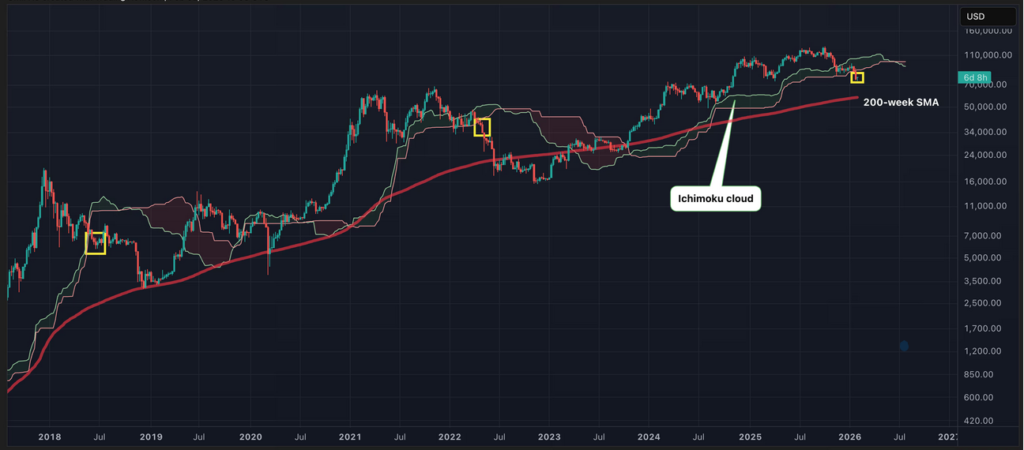
4. Bitcoin Correction: From $97,000 to $67,000
Bitcoin has retraced significantly in 2026:
- Early January: ~$97,000
- February 20: ~$67,000
Below is a visual representation of this correction:
[Bitcoin Price Correction YTD 2026]
Contributing Factors
- Leverage liquidation normalization
- Macro uncertainty (interest rates, fiscal risk)
- Institutional risk-off positioning
- Volatility compression post-ETF launch cycle
Technically, the 200-week moving average near $66,000 is seen as structural support. Derivatives markets show elevated put positioning, but volatility has declined, suggesting stabilization.
5. Corporate Shift: Remixpoint Moves from Holding to Lending
In Japan, Remixpoint announced it has begun lending approximately 1,411 BTC.
At $67,000 per BTC, that equates to roughly $94.5 million deployed into yield strategies.
Strategic Implications
- Corporate treasury optimization
- Increased counterparty exposure
- Balance-sheet yield enhancement
This marks a shift from passive reserve holding to active crypto treasury management—a model increasingly seen globally.
6. Market Snapshot (February 20, 9:00 AM)
- BTC: ~$67,000 (+1% 24h)
- ETH: ~$1,970 (+1% 24h)
- XRP: ~$1.48
- SOL: ~$153 (relatively strong weekly)
ETF flows:
- BTC spot ETFs: intermittent outflows
- ETH ETFs: mild outflows
- SOL-related exposure: relatively stable inflows reported
7. Altcoin Developments
Notable Strength:
- Axie Infinity (AXS): GameFi revival expectations
- Morpho (MORPHO): DeFi lending growth speculation
- Solana (SOL): ETF narrative and ecosystem traction
Weaker Tone:
- XRP
- Ethereum (trend divergence debate)
- Chainlink (range-bound)
8. Upcoming Catalysts
- February 21: BTC & ETH options expiry
- February 24: Japan Fintech Week
- February 26: SEC ETF decision deadline
Conclusion
The crypto market in mid-February 2026 is defined less by retail speculation and more by structural forces:
- Regulatory architecture
- Institutional asset allocation
- Corporate treasury behavior
- ETF capital flows
Short-term volatility remains high. However, for readers seeking new crypto assets, yield opportunities, and practical blockchain applications, the strategic question is no longer “Will crypto survive?” but rather “How will capital integrate with regulation?”
Clarity on stablecoin yield, ETF expansion, and institutional ETH positioning could determine whether this correction becomes consolidation—or the prelude to a new cycle.



