

Main Points :
- Crypto investment products recorded $173 million in weekly outflows, marking the fourth consecutive week of net redemptions.
- Cumulative four-week outflows reached approximately $3.8 billion, pushing total assets under management (AUM) down to around $133 billion, the lowest level since April 2025.
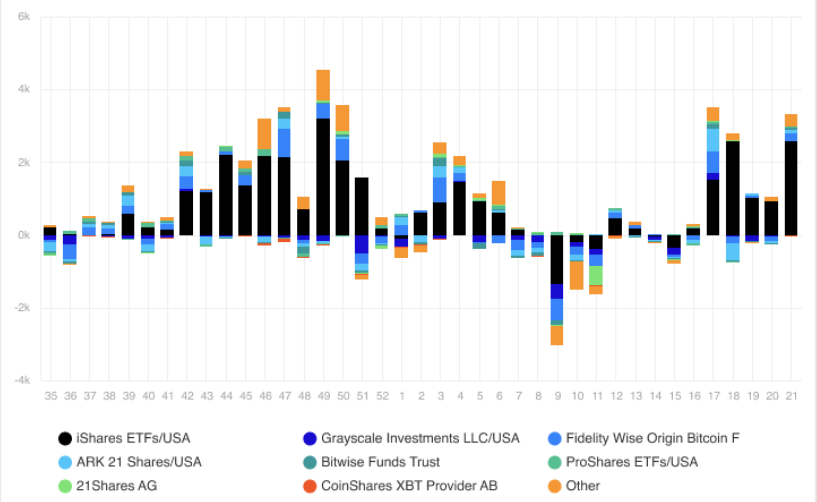
- Bitcoin ETPs led the losses with $133 million in outflows, while U.S. spot Bitcoin ETFs saw an even larger $360 million exit.
- Ethereum funds lost $85 million, although U.S. spot ETH ETFs saw a modest $10 million inflow.
- XRP and Solana defied the trend, attracting $33.4 million and $31 million respectively.
- The United States recorded $403 million in outflows, while Germany, Canada, and Switzerland posted strong inflows.
- Macro uncertainty and price weakness remain dominant forces, while some institutions continue selective accumulation.
1. Four Consecutive Weeks of Outflows Signal Structural Risk Shift
Crypto investment products have now recorded four consecutive weeks of capital outflows, according to data released by CoinShares. Last week alone saw approximately $173 million in net redemptions, following $187 million the week prior. While the most recent two weeks appear relatively modest compared to earlier liquidation waves, the broader picture reveals cumulative outflows of approximately $3.8 billion over the past month.
Total assets under management (AUM) across crypto ETPs have fallen to roughly $133 billion, the lowest level observed since April 2025. This decline reflects both capital flight and price depreciation, particularly in Bitcoin.
Bitcoin began the week near $70,000, but price pressure intensified mid-week, with BTC temporarily dipping to approximately $65,000. The failure to hold above the psychologically important $70,000 level appears to have reinforced risk-off positioning among institutional investors.
From a macro perspective, tightening liquidity conditions, elevated bond yields, and persistent geopolitical uncertainty continue to suppress risk appetite across digital assets. Crypto remains tightly correlated with broader risk markets, particularly U.S. tech equities.
2. Bitcoin Leads the Exodus While XRP and Solana Diverge
Bitcoin investment products accounted for the majority of last week’s outflows, losing approximately $133 million. AUM in Bitcoin-linked ETPs declined to roughly $106 billion.
More strikingly, U.S. spot Bitcoin ETFs saw approximately $360 million in outflows, indicating that American institutional investors are currently more defensive than their global counterparts.
Ethereum funds recorded $85 million in outflows, although U.S. spot Ethereum ETFs managed a small $10 million net inflow, suggesting selective positioning ahead of potential structural catalysts such as staking-related ETF enhancements.
In contrast, XRP and Solana emerged as relative outperformers:
- XRP ETPs: +$33.4 million inflows
- Solana ETPs: +$31 million inflows
This divergence suggests that investors may be rotating from large-cap “store-of-value” narratives toward networks positioned for payments, tokenization, and high-throughput use cases.
(Weekly Crypto ETP Flows by Asset – Visualized Bar Chart)
3. Geographic Divergence: U.S. Capitulation vs European Accumulation
A significant regional divergence is emerging.
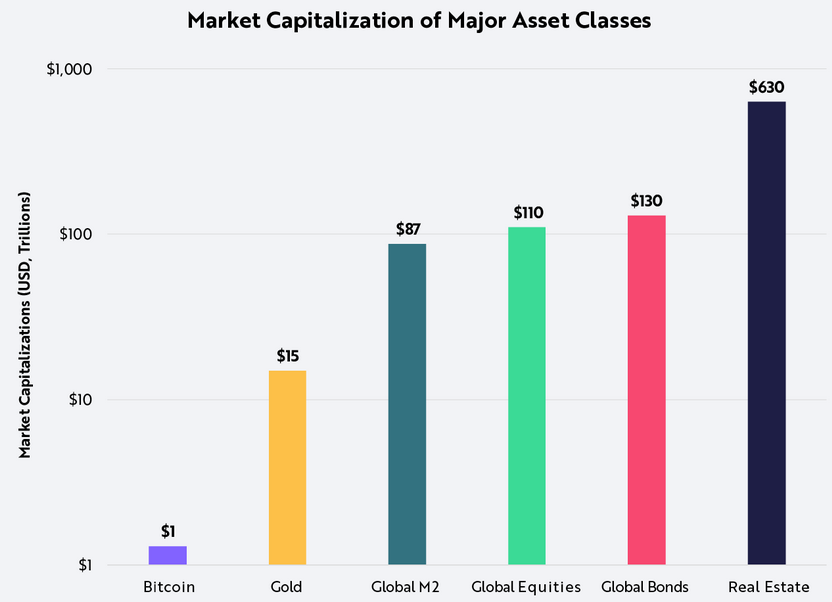
The United States recorded approximately $403 million in net outflows, whereas other regions collectively saw $230 million in inflows.
Top inflow countries:
- Germany: +$115 million
- Canada: +$46 million
- Switzerland: +$37 million
(Weekly Crypto ETP Flows by Country – Geographic Comparison Chart)
This divergence suggests structural differences in investor positioning. U.S. markets are highly sensitive to macro policy signals, especially Federal Reserve interest rate expectations. European investors, by contrast, may be viewing current price weakness as accumulation opportunities rather than exit signals.
4. Institutional Narrative Reset: From $150,000 to $100,000
Compounding bearish sentiment, Standard Chartered recently revised its 2026 Bitcoin price target from $150,000 down to $100,000, while suggesting the possibility of a decline toward $50,000 before any sustained recovery.
Such revisions carry psychological weight. Institutional targets often anchor market expectations, and downward revisions can trigger defensive portfolio rebalancing.
However, price-target cuts do not necessarily imply long-term structural weakness. Historically, Bitcoin has experienced 30–50% corrective phases even within broader bull cycles.
5. Is This Distribution or Rotation?
The key strategic question is whether the current environment represents:
- A cyclical top and distribution phase, or
- A sectoral rotation within crypto itself
Several observations suggest this may be more rotation than systemic collapse:
- Capital is not exiting crypto entirely; it is reallocating (e.g., XRP and SOL inflows).
- European institutional flows remain constructive.
- AUM at $133 billion is still historically elevated relative to prior cycles.
- On-chain data shows long-term holder supply remains near cycle highs.
Additionally, narratives are evolving toward:
- Tokenized real-world assets (RWA)
- Payment rails and cross-border settlement
- Stablecoin infrastructure
- High-performance L1 ecosystems
XRP’s inflows may reflect continued interest in cross-border liquidity infrastructure. Solana’s inflows may reflect growing activity in DeFi, consumer applications, and tokenization pilots.
6. Practical Implications for Investors and Builders
For readers seeking new crypto assets, yield opportunities, and blockchain applications, this environment requires disciplined strategy rather than emotional reaction.
Key considerations:
Risk Management
Volatility remains elevated. Position sizing and staggered entry strategies become essential below major psychological levels such as $70,000.
Asset Selection
Capital rotation suggests investors are evaluating networks based on utility and throughput, not solely digital gold narratives.
Institutional Tracking
ETF flows serve as real-time sentiment indicators. Sustained outflows may precede deeper corrections, while inflow stabilization often marks accumulation phases.
Strategic Patience
If macro liquidity conditions improve, crypto remains structurally positioned to benefit from global monetary easing cycles.
7. Conclusion: Weak Sentiment, Selective Opportunity
Four consecutive weeks of outflows totaling approximately $3.8 billion indicate meaningful short-term caution among institutional investors. Bitcoin’s drop below $70,000 reinforced defensive positioning, particularly in the United States.
Yet beneath the surface, capital is not abandoning crypto entirely. XRP and Solana inflows, European accumulation, and steady AUM levels suggest structural interest remains intact.
This phase may represent consolidation and capital rotation rather than systemic breakdown. For strategic investors and blockchain operators, downturns often provide asymmetric entry opportunities—provided risk is managed carefully.
The coming weeks will likely hinge on macro data, ETF flow stabilization, and Bitcoin’s ability to defend the $60,000–$65,000 region. Whether this period becomes a prelude to deeper correction or the foundation for the next structural rally will depend not only on price—but on liquidity, regulation, and capital confidence.


