
Main Points :
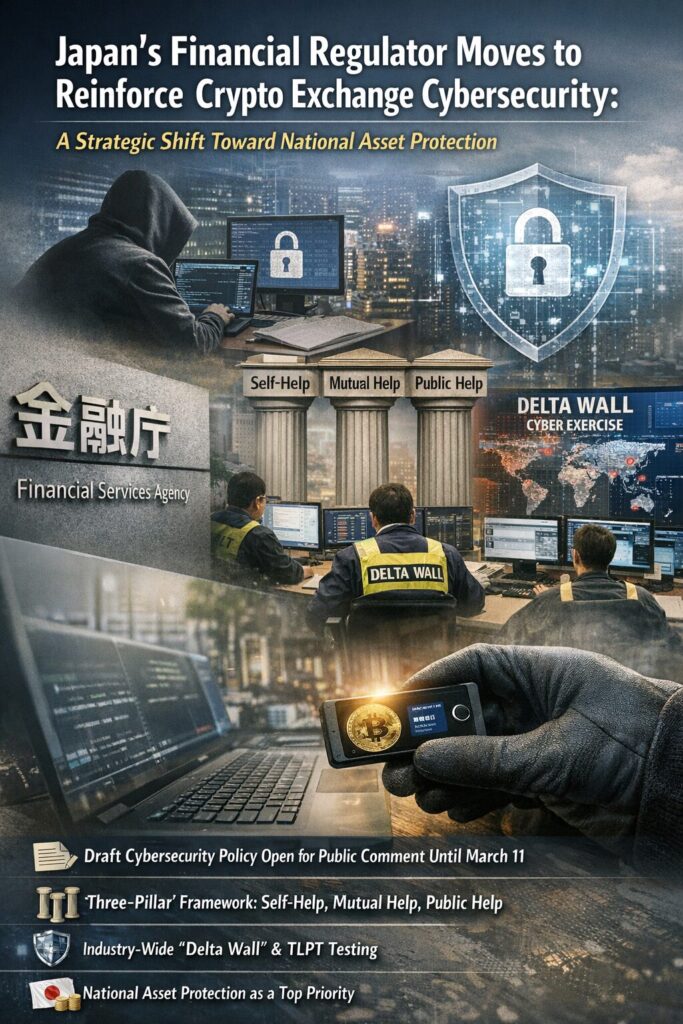
- Japan’s Financial Services Agency (FSA) has released a draft policy to strengthen cybersecurity for crypto exchanges, open for public comment until March 11.
- The policy responds to increasingly sophisticated global cyberattacks targeting exchanges, including indirect supply-chain and social engineering attacks.
- Cold wallet storage alone is no longer sufficient; comprehensive supply-chain security is now essential.
- A “Three-Pillar” framework is proposed: Self-Help, Mutual Help, and Public Help.
- Mandatory cybersecurity self-assessments (CSSA) will be introduced for all crypto exchanges starting FY2026.
- Participation in industry-wide exercises such as Delta Wall and threat-led penetration testing (TLPT) will expand.
- Crypto asset protection is increasingly positioned as a matter of national wealth preservation.
1. Why This Policy Matters Now: The Escalating Global Threat Landscape
Japan’s Financial Services Agency (FSA) has published a draft policy titled “Approach to Strengthening Cybersecurity in Crypto Asset Exchange Services.” The public comment period remains open until March 11 at 17:00 JST.
This proposal emerges amid a global surge in cyberattacks targeting crypto exchanges. Over the past several years, exchange hacks have evolved dramatically. Early incidents often involved private key compromise. However, recent breaches increasingly rely on social engineering, vendor infiltration, API exploitation, and lateral movement across outsourced IT environments.
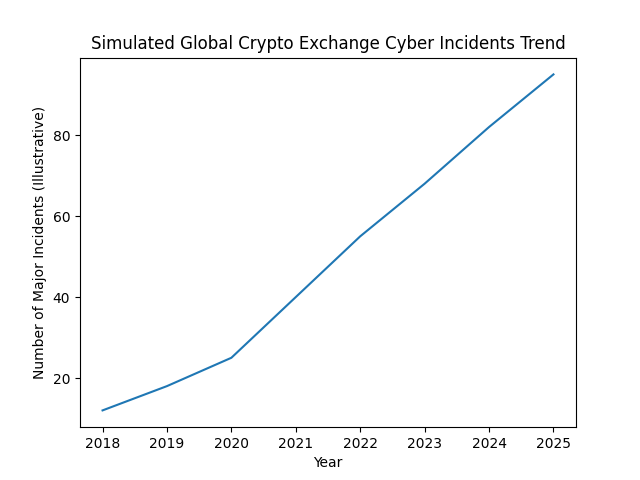
The upward trend in major exchange incidents globally reflects a structural change: attackers are no longer targeting only wallets. They are targeting ecosystems.
In multiple international cases since 2023, attackers gained access not by breaching cold storage directly, but by infiltrating:
- Managed service providers
- Cloud administrators
- DevOps pipelines
- Customer support interfaces
The FSA explicitly acknowledges this shift. It notes that cold wallet usage alone can no longer guarantee asset safety. Instead, the entire supply chain—including outsourced contractors—must be secured.
For investors and builders seeking the next revenue opportunity in crypto infrastructure, this signals a new thesis: cybersecurity is no longer a compliance cost. It is a core product differentiator.
2. Beyond Cold Wallets: The Death of Single-Layer Security
For years, exchanges marketed cold wallet ratios as proof of safety. “95% in cold storage” became a common slogan.
But attackers adapted.
Modern breaches often exploit:
- Internal key ceremony weaknesses
- Insider coercion
- SIM swapping and executive impersonation
- Third-party API credential theft
- CI/CD pipeline poisoning
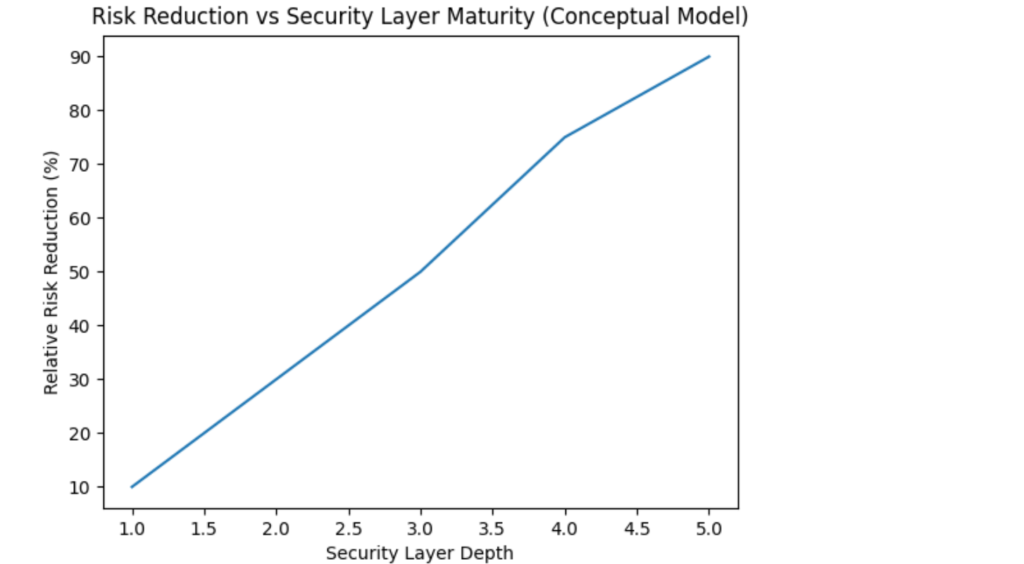
The conceptual risk model above illustrates a reality now recognized by regulators worldwide: security must be layered.
Layer 1: Cold storage
Layer 2: Network segmentation
Layer 3: Zero-trust identity
Layer 4: Vendor risk management
Layer 5: Threat-led testing and monitoring
Risk declines not because of a single mechanism, but because of cumulative resilience.
Japan’s FSA is aligning with global regulatory trends seen in:
- The EU’s Digital Operational Resilience Act (DORA)
- The U.S. SEC’s cybersecurity disclosure rules
- MAS Singapore’s technology risk management guidelines
This convergence indicates that operational resilience will shape exchange valuations over the next cycle.
3. The Three Pillars: Self-Help, Mutual Help, Public Help
The draft policy is structured around three principles:
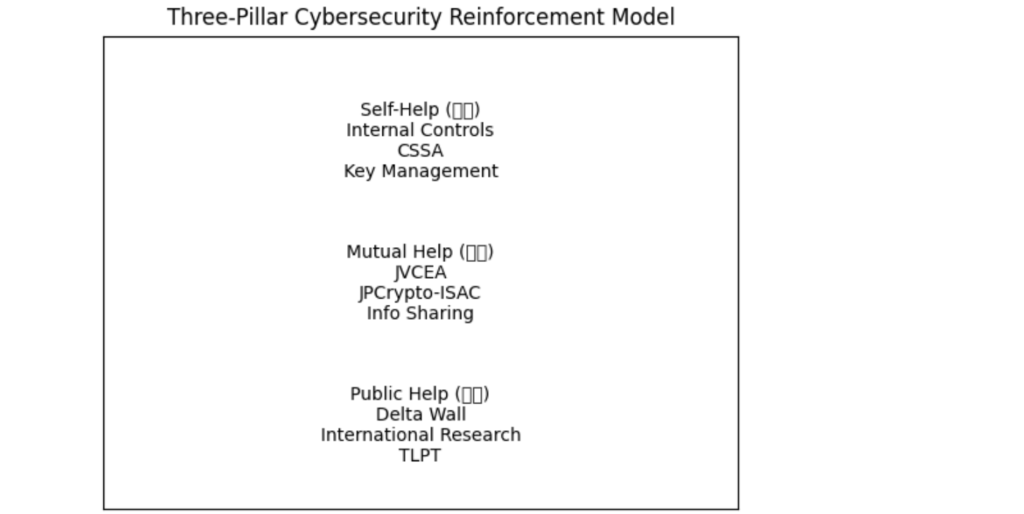
Self-Help (Internal Responsibility)
Beginning FY2026, all crypto exchanges in Japan will be required to conduct a Cybersecurity Self-Assessment (CSSA), similar to those required in other financial sectors.
This means:
- Formalized cybersecurity governance
- Defined CISO responsibilities
- Increased professional expertise requirements
- Enhanced staffing
- Review of external audit mechanisms
- Strengthened outsourcing oversight
This elevates cybersecurity from IT support to board-level accountability.
For exchanges seeking capital, this is significant. Institutional investors increasingly require SOC reports, penetration testing documentation, and formal risk matrices before allocating funds.
Self-help is not optional; it is existential.
Mutual Help (Industry Cooperation)
The FSA encourages strengthened functionality of the JVCEA Security Committee and greater participation in JPCrypto-ISAC.
Information-sharing bodies reduce attack dwell time across the ecosystem.
Globally, ISAC participation correlates with faster incident containment.
For smaller exchanges and new entrants, mutual defense mechanisms lower security barriers to entry.
This creates opportunity for:
- Managed security service providers (MSSPs)
- Threat intelligence analytics firms
- On-chain forensic monitoring platforms
The crypto security stack itself becomes an investable category.
Public Help (Government Support and Systemic Exercises)
The FSA will continue its international blockchain cybersecurity research initiative launched in FY2025.
It also aims within three years to have all exchanges participate in “Delta Wall,” a cross-sector cyber exercise.
Additionally, Threat-Led Penetration Testing (TLPT) will be piloted in 2026, with selected exchanges undergoing real-environment simulated attacks. Findings will be shared industry-wide.
This mirrors the Bank of England’s CBEST and similar frameworks in advanced financial systems.
For builders, this implies a coming market for:
- Red team simulation tools
- Adversary emulation platforms
- AI-driven threat modeling
4. National Wealth Protection: Crypto as Strategic Asset
Perhaps the most notable language in the draft is the reference to attacks potentially involving nation-state actors seeking foreign currency acquisition.
This reframes crypto security not merely as private risk management but as national wealth defense.
In macroeconomic terms, crypto assets held by Japanese exchanges represent capital reserves denominated in USD-equivalent value.
If $1 billion in digital assets were lost in a breach, the impact extends beyond shareholders. It affects:
- Retail investor confidence
- National balance of payments
- Innovation ecosystem reputation
This shift in narrative elevates crypto infrastructure into strategic national infrastructure.
For investors, this suggests that regulated exchanges may increasingly resemble systemically important financial institutions (SIFIs).
Compliance strength becomes valuation strength.
5. Implications for Investors and Builders
For readers searching for the next crypto revenue opportunity, several themes emerge:
1. Security-as-a-Service
Exchanges will outsource specialized testing and monitoring.
Startups providing:
- Multi-party computation (MPC)
- Hardware security modules (HSM)
- Zero-trust identity infrastructure
- AI anomaly detection
may see growing demand.
2. RegTech Expansion
Automated compliance dashboards integrating:
- CSSA reporting
- Audit logging
- Vendor risk scoring
represent high-growth infrastructure niches.
3. Exchange Differentiation
Security transparency may become a marketing feature.
Imagine dashboards showing:
- Real-time proof-of-reserves
- Live penetration test status
- Vendor exposure scores
The exchange of the future is transparent by design.
4. Insurance and Risk Pricing
Cyber insurance premiums for exchanges remain high.
Improved regulatory alignment may reduce premiums, unlocking capital efficiency.
Security maturity translates directly into lower risk-adjusted cost of capital.
6. Broader Global Trends
Globally, 2024 and 2025 saw:
- Expansion of on-chain analytics firms
- Integration of AI-driven transaction monitoring
- Rise of hardware-backed wallet custody solutions
- Increased stablecoin regulatory frameworks
Japan’s move fits into a broader pattern: crypto is becoming integrated into the traditional financial regulatory perimeter.
As institutional adoption grows, operational resilience becomes the bottleneck to scale.
Conclusion: Cybersecurity as the Next Crypto Bull Thesis
Japan’s draft cybersecurity reinforcement policy is not merely regulatory tightening.
It signals the maturation of crypto infrastructure.
The era of “move fast and break things” is ending.
The next phase of crypto growth will be defined by:
- Resilience
- Transparency
- Institutional trust
- Integrated defense ecosystems
For investors, this represents a shift:
Speculative tokens may deliver volatility-driven gains.
But infrastructure resilience may deliver structural returns.
Security is no longer background noise.
It is the new alpha.


