
Main Points :
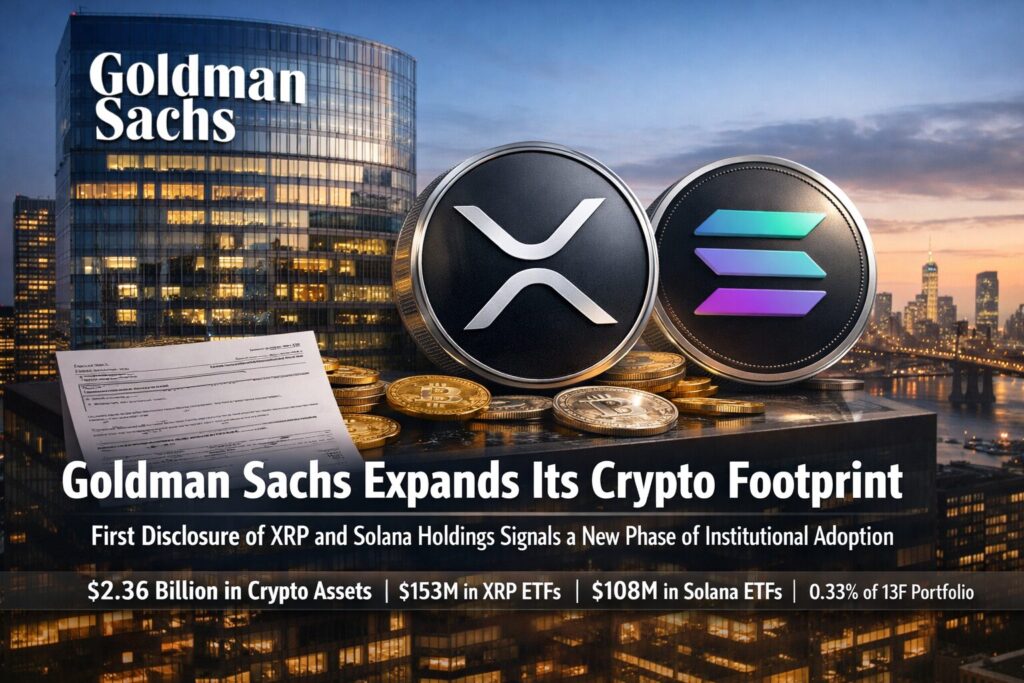
- Goldman Sachs disclosed $2.36 billion in crypto-related assets in its Q4 2025 Form 13F filing.
- Beyond Bitcoin and Ethereum, the firm held XRP- and Solana-related spot ETFs for the first time.
- XRP exposure totaled $153 million, while Solana exposure reached $108 million.
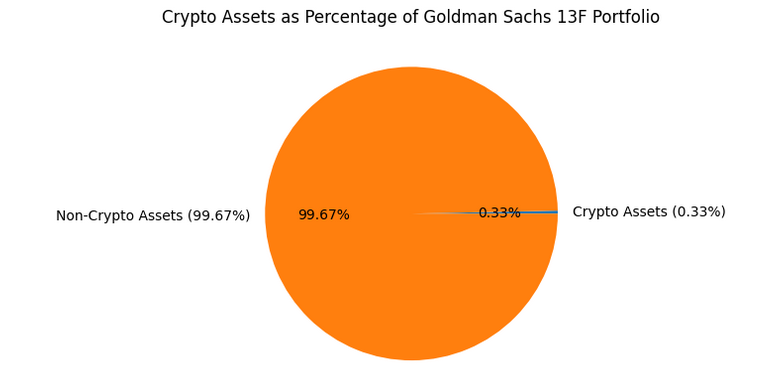
- Crypto assets now represent approximately 0.33% of Goldman’s reported 13F portfolio.
- The move reflects growing institutional confidence in altcoins with practical blockchain use cases.
- The disclosure aligns with broader trends: ETF normalization, regulatory clarity, and expanding real-world blockchain adoption.
1. Goldman Sachs’ Latest SEC Filing: A Snapshot of Institutional Crypto Exposure
On February 10, 2026, Goldman Sachs submitted its Form 13F to the U.S. Securities and Exchange Commission, revealing holdings for the fourth quarter of 2025 (October–December).
The filing showed that Goldman-managed assets included approximately $2.36 billion in cryptocurrency-related instruments, marking a 15% increase quarter-on-quarter.
Form 13F filings do not distinguish clearly between proprietary investments and assets held on behalf of clients. Nevertheless, they provide one of the clearest windows into how major financial institutions are allocating capital under U.S. regulatory frameworks.
What made this disclosure especially noteworthy was not the size alone, but the composition.
2. Bitcoin and Ethereum Remain the Core, but the Balance Is Shifting
Historically, institutional crypto exposure has been dominated by Bitcoin and Ethereum. Goldman’s Q4 filing confirms this pattern—while also hinting at change.
- Bitcoin-related ETFs and products accounted for approximately $1.1 billion.
- Ethereum-related exposure followed closely at around $1.0 billion.
Together, BTC and ETH still form the backbone of institutional crypto portfolios. Their liquidity, regulatory acceptance, and established derivatives markets make them natural first choices for banks operating under strict compliance regimes.
Yet for the first time, they are no longer the entire story.
3. First-Ever Disclosure of XRP Holdings: A Milestone for Payments-Focused Blockchains
XRP Exposure: $153 Million via Spot ETFs
Goldman’s filing revealed $153 million in XRP-related spot ETFs, including products issued by Bitwise and Franklin Templeton. In the previous quarter (Q3 2025), Goldman’s holdings in all XRP ETFs were zero, confirming that this was a brand-new position.
This timing is crucial. XRP spot ETFs began trading in the U.S. in early December 2025, making Q4 the first reporting period in which regulated institutions could meaningfully gain exposure.
For market participants focused on practical blockchain utility, XRP’s inclusion is highly symbolic. XRP is designed for cross-border settlement, liquidity bridging, and payment rails, positioning it differently from store-of-value narratives.
Why XRP Matters to Institutions
- Fast settlement and low transaction costs
- Strong alignment with regulated financial infrastructure
- Existing partnerships across remittance corridors
Goldman’s move suggests that payment-oriented blockchains are now investable at scale, at least through compliant ETF structures.
4. Solana Joins the Portfolio: Institutional Interest in High-Performance Blockchains
Solana Exposure: $108 Million via Spot ETFs
Alongside XRP, Goldman disclosed $108 million in spot ETFs linked to Solana. As with XRP, Goldman had no Solana ETF exposure in Q3 2025, making this another first-time disclosure.
Solana represents a different institutional thesis:
- High throughput and low latency
- Strong developer ecosystem
- Growing adoption in payments, DeFi, and tokenized assets
By adding Solana, Goldman is effectively diversifying beyond settlement networks into scalable smart-contract platforms that can support consumer-facing and enterprise-grade applications.
5. Portfolio Context: Small Percentage, Large Signal
Despite the headlines, crypto-related assets still represent only about 0.33% of Goldman Sachs’ total 13F-reported portfolio. From a risk perspective, this is conservative.
However, from a signal perspective, it is powerful.
Institutions of Goldman’s scale rarely move quickly or symbolically. Every disclosed position implies:
- Legal review
- Risk committee approval
- Custody and operational readiness
- Client demand or strategic positioning
In that context, even a sub-1% allocation to altcoins is a meaningful endorsement.
6. Market Reaction and Industry Commentary
The disclosure quickly circulated across crypto and traditional finance circles. Changpeng Zhao (CZ) commented publicly that banks are “quietly but steadily building positions.”
This reflects a broader trend:
- Volatility remains high
- Retail sentiment fluctuates
- Institutional accumulation continues regardless
In other words, large players appear to be treating crypto exposure as long-term infrastructure positioning, not short-term speculation.
7. Goldman Sachs’ Historical Stance on Crypto: From Skepticism to Structured Exposure
Goldman Sachs has not always been friendly to crypto. As recently as the late 2010s, executives publicly questioned Bitcoin’s value proposition.
Since 2020, however, the firm has:
- Reopened crypto derivatives trading desks
- Expanded prime brokerage services for digital assets
- Used ETFs as a compliant access route to spot exposure
The addition of XRP and Solana suggests that Goldman is now comfortable broadening its crypto universe, as long as exposure is structured, regulated, and operationally controlled.
8. Broader Industry Trends: Why This Matters Now
Several macro trends help explain the timing:
- ETF Normalization
Spot crypto ETFs have become the preferred institutional gateway, reducing custody and compliance friction. - Regulatory Clarification
While not perfect, regulatory frameworks around disclosure and custody are clearer than in previous cycles. - Shift Toward Utility
Institutions are increasingly interested in blockchains that do something—payments, settlement, tokenization—not just price appreciation. - Client Demand
Asset managers respond to what clients ask for, and client sophistication around crypto has increased markedly.
9. Implications for Investors and Builders
For readers seeking new crypto assets, revenue opportunities, or practical blockchain applications, this development carries several implications:
- Altcoins with clear use cases are becoming institutionally investable.
- Liquidity and compliance matter more than narratives alone.
- Infrastructure-focused projects may see growing demand from financial incumbents.
This does not mean indiscriminate altcoin adoption. Rather, it suggests a filtering process where only a handful of networks meet institutional standards.
10. Charts and Visuals
Goldman Sachs’ Crypto ETF Holdings by Asset (USD)
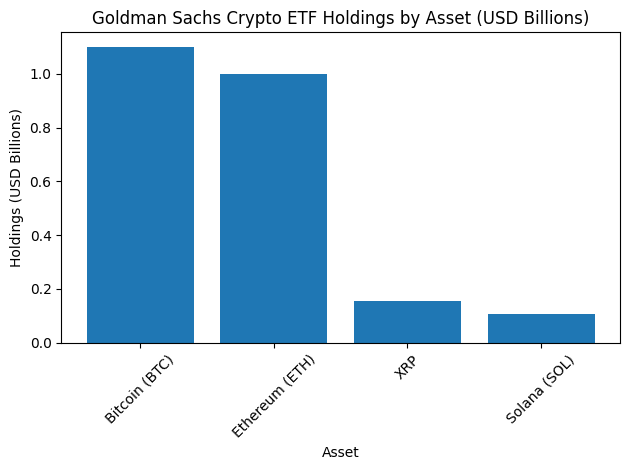
(BTC, ETH, XRP, SOL – bar chart
Crypto Assets as Percentage of Goldman Sachs 13F Portfolio
Conclusion: A Quiet but Meaningful Expansion
Goldman Sachs’ first-ever disclosure of XRP and Solana holdings marks a subtle but important shift in institutional crypto strategy. While Bitcoin and Ethereum remain dominant, the door is now open—carefully and selectively—to altcoins with real-world utility.
For the broader market, this signals a maturation phase:
- Crypto is no longer a single-asset experiment.
- Institutions are exploring functional diversity within blockchain ecosystems.
- The next wave of adoption may be driven less by hype, and more by infrastructure relevance.
For builders, investors, and operators focused on practical blockchain use, that may be the most important takeaway of all.


