
Key Takeaways :
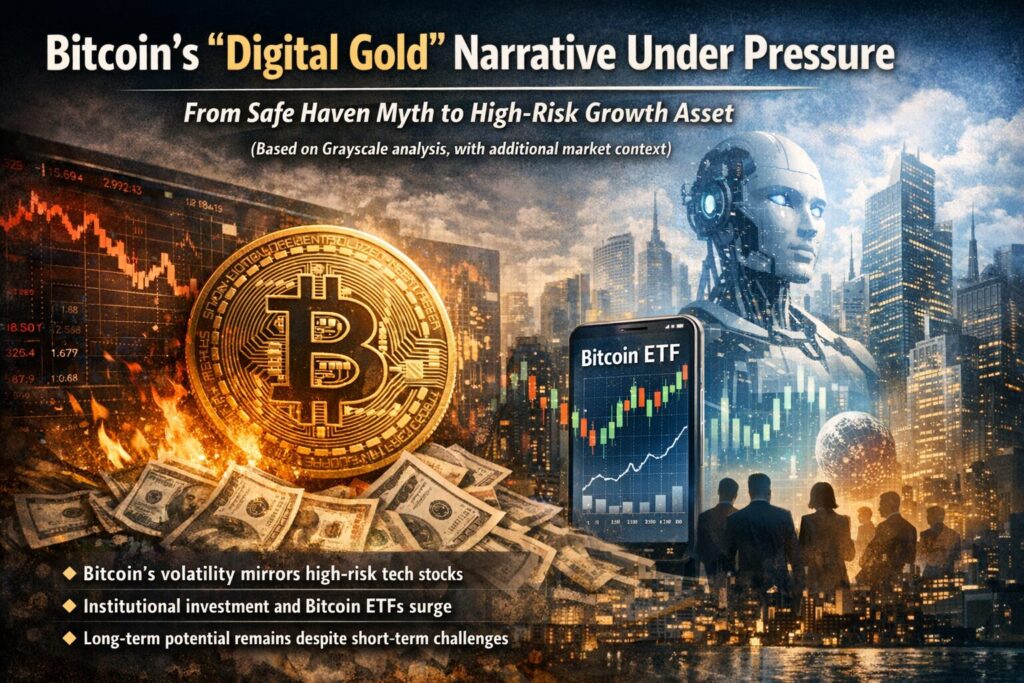
- Bitcoin’s long-standing narrative as “digital gold” is being challenged by its recent price behavior, which increasingly resembles that of high-risk growth assets rather than traditional safe havens.
- Grayscale argues that Bitcoin’s current sensitivity to equities—especially software and AI-related stocks—reflects deeper institutional integration rather than a fundamental failure.
- The expansion of Bitcoin ETFs, increased participation by institutional investors, and shifts in global risk appetite have tied Bitcoin more closely to traditional financial markets.
- Bitcoin’s sharp drawdown from its peak highlights short-term fragility, but Grayscale views this phase as part of a long-term evolutionary process.
- Over time, as the global economy becomes more digital through AI, autonomous agents, and tokenization, Bitcoin may still mature into a robust store of value.
Introduction: A Narrative at a Crossroads
For more than a decade, Bitcoin has been framed as “digital gold”—a scarce, censorship-resistant asset designed to hedge against inflation, monetary debasement, and systemic financial risk. Its fixed supply of 21 million coins and independence from central banks have been central pillars of this thesis.
However, recent market behavior has put this narrative under significant strain. Instead of moving in tandem with gold or other traditional safe-haven assets, Bitcoin has exhibited price dynamics more akin to high-risk growth equities. According to a recent report by Grayscale, Bitcoin’s short-term performance increasingly reflects the same forces driving technology and software stocks.
This shift has sparked renewed debate among investors: Is Bitcoin failing as digital gold, or is it simply undergoing a necessary transition as it becomes embedded within the global financial system?
Bitcoin vs. Gold: A Breakdown in Short-Term Correlation
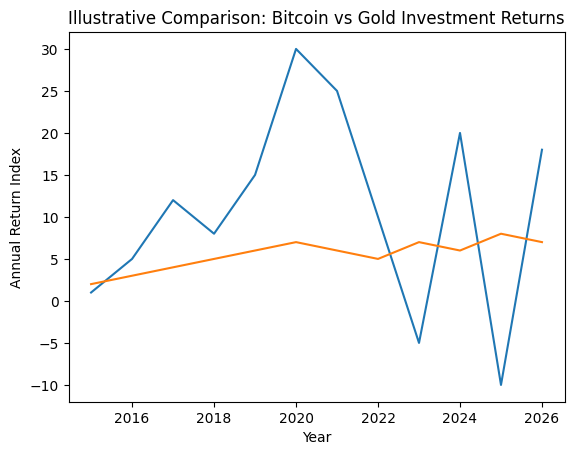
One of the most striking observations in Grayscale’s analysis is Bitcoin’s weak short-term correlation with gold and other precious metals.
While gold and silver prices have hovered near historical highs in recent periods, Bitcoin has failed to mirror this upward momentum. Zach Pandl of Grayscale notes that Bitcoin’s recent price fluctuations do not align with what investors would expect from a conventional safe-haven asset.
This divergence challenges a core assumption held by many Bitcoin advocates: that in times of uncertainty, Bitcoin should behave similarly to gold. Instead, Bitcoin has shown higher volatility and greater downside sensitivity during periods of risk-off sentiment.
[“Bitcoin vs Gold Investment Returns (Long-Term Comparison)”]
Rising Correlation with Software and AI-Driven Equities
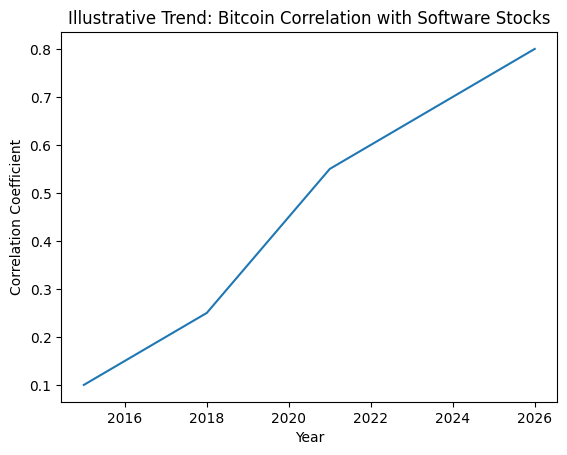
Perhaps more revealing is Bitcoin’s growing correlation with software stocks since early 2024. Grayscale’s data shows that Bitcoin’s price movements have increasingly tracked those of growth-oriented technology equities.
This trend coincides with heightened volatility in the software sector, driven by fears that artificial intelligence could disrupt or commoditize many existing software services. As investors reassessed growth valuations, selling pressure intensified across both software equities and Bitcoin.
[“Correlation Between Bitcoin and Software Stocks”]
For market participants, this behavior positions Bitcoin less as a defensive hedge and more as a speculative asset sensitive to macroeconomic expectations, liquidity conditions, and risk appetite.
Institutionalization and ETF Flows: A Double-Edged Sword
Grayscale attributes this shift in part to Bitcoin’s increasing institutionalization. The rise of spot Bitcoin ETFs has dramatically lowered the barrier to entry for traditional investors, integrating Bitcoin more deeply into mainstream portfolios.
While this development enhances liquidity and legitimacy, it also exposes Bitcoin to the same macro-driven flows that influence equities and other risk assets. When institutional investors de-risk, Bitcoin is often sold alongside stocks.
This dynamic represents a structural change. Bitcoin is no longer isolated from traditional finance; it is becoming part of it. As a result, its price behavior increasingly reflects broader market sentiment rather than purely crypto-native factors.
A Severe Drawdown: Stress Testing the Thesis
The narrative shift has unfolded against the backdrop of a significant price correction. Bitcoin has fallen nearly 50% from its peak of approximately $126,000 recorded in October 2025.
According to Grayscale, the decline occurred in multiple waves:
- An initial liquidation event in October 2025
- Renewed selling pressure in late November
- Another sell-off in late January 2026
Notably, Bitcoin prices on U.S.-based exchanges such as Coinbase have traded at persistent discounts, suggesting aggressive selling by U.S. investors.
For skeptics, this drawdown underscores Bitcoin’s vulnerability during periods of tightening financial conditions. For proponents, it represents a stress test that may ultimately strengthen Bitcoin’s market structure.
Evolution, Not Regression
Grayscale emphasizes that Bitcoin’s inability to consistently behave as a safe haven in the short term should not be interpreted as a failure. Instead, it should be viewed as part of a broader evolutionary process.
Pandl argues that expectations for Bitcoin to rapidly replace gold as a global monetary asset were always unrealistic. Gold has served as money and a store of value for thousands of years and played a central role in the international monetary system until the early 1970s.
By comparison, Bitcoin is barely more than a decade old.
Digitalization of the Global Economy: Bitcoin’s Long Game
Despite near-term challenges, Grayscale remains optimistic about Bitcoin’s long-term role. As artificial intelligence, autonomous agents, and tokenized financial markets accelerate the digital transformation of the global economy, demand for natively digital stores of value may increase.
In such a world, Bitcoin’s characteristics—programmability, portability, and resistance to monetary manipulation—could become increasingly valuable. Rather than replacing gold outright, Bitcoin may coexist as a complementary asset optimized for a digital-first economy.
This perspective resonates with investors interested not only in price appreciation, but in the practical integration of blockchain technology into financial infrastructure.
Capital Inflows as the Key Catalyst
In the near term, Bitcoin’s recovery is likely to depend on renewed capital inflows. Grayscale points to two critical sources:
- Re-entry of funds into Bitcoin ETFs
- A return of retail investor participation
Market makers such as Wintermute have observed that retail attention has recently shifted toward AI-related equities and other growth themes, temporarily suppressing demand for cryptocurrencies.
A reversal of this trend—potentially triggered by macro easing, renewed liquidity, or compelling on-chain innovations—could reignite interest in Bitcoin.
Implications for Investors Seeking New Opportunities
For readers seeking new crypto assets, revenue streams, or practical blockchain applications, this evolving narrative offers important lessons.
Bitcoin’s current behavior suggests it should be approached with the same risk management discipline applied to growth assets. At the same time, its long-term thesis remains intact for those with sufficient time horizons.
Moreover, Bitcoin’s integration into institutional finance may pave the way for broader adoption of blockchain-based financial products, including tokenized assets, decentralized settlement layers, and programmable money.
Conclusion: Digital Gold Reconsidered
Bitcoin’s “digital gold” myth is not dead—but it is being redefined. In the short term, Bitcoin behaves less like a safe haven and more like a high-beta growth asset deeply intertwined with global financial markets.
According to Grayscale, this is not a sign of weakness, but evidence of maturation. As Bitcoin continues to evolve within an increasingly digital economy, its role as a store of value may ultimately emerge in forms that differ from traditional expectations.
For forward-looking investors, the challenge is not to abandon the digital gold thesis, but to understand its timeline—and to position accordingly.


