

Key Takeaways :
- Ripple has significantly expanded its institutional custody platform by integrating staking services and enterprise-grade security modules.
- New partnerships with Securitize and Figment allow regulated financial institutions to offer staking without operating validators or key infrastructure in-house.
- Hardware Security Modules (HSMs), both on-premise and cloud-based, are now central to Ripple’s custody architecture.
- The move reflects a broader industry shift toward yield-generating crypto products for institutions, including both Proof-of-Stake assets and Bitcoin-based yield strategies.
- Ripple is positioning itself beyond payments, aiming to become a full-stack infrastructure provider for regulated digital asset finance.
Ripple’s Strategic Expansion Into Institutional Custody
Ripple announced on Monday that it has expanded its institutional crypto custody platform through new integrations with Securitize and Figment, two major infrastructure providers in the digital asset space. This move marks a decisive step in Ripple’s evolution from a payments-focused blockchain company into a broader institutional financial infrastructure provider.
At the core of this expansion is the introduction of integrated staking capabilities and enhanced security architecture. By incorporating Hardware Security Modules (HSMs), Ripple now enables banks, custodians, and regulated financial institutions to securely manage private keys and offer staking services without the operational burden of running validators or maintaining complex cryptographic key infrastructure internally.
This is a meaningful shift. Traditionally, institutional-grade staking required deep technical expertise, validator uptime management, and sophisticated key custody systems. Ripple’s approach abstracts these complexities away, allowing institutions to participate in staking economies while maintaining regulatory and operational clarity.
Security-First Custody: The Role of HSMs
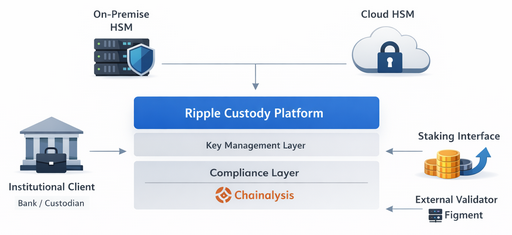
One of the most significant elements of Ripple’s announcement is the integration of both on-premise and cloud-based HSM solutions. HSMs are specialized hardware devices designed to generate, store, and manage cryptographic keys in a highly secure environment, resistant to both physical and digital attacks.
For regulated institutions, HSMs are not optional—they are often a compliance requirement. By embedding HSM support directly into its custody workflow, Ripple ensures that institutions can meet stringent security standards while retaining flexibility in deployment models. Financial institutions can choose on-premise HSMs for maximum control or cloud-based HSMs for scalability and operational efficiency.
This design aligns Ripple’s custody offering with the expectations of traditional financial institutions that are accustomed to enterprise-grade security frameworks rather than consumer-oriented wallet solutions.
Integrated Compliance and Operational Simplicity
Ripple’s custody platform enhancements also include native integration with compliance tools, following its recent acquisition of Metaco Palisade and the integration of Chainalysis compliance solutions. Compliance checks are now embedded directly into transaction and staking workflows, rather than being handled as external or manual processes.
For regulated entities, this is crucial. Anti-money laundering (AML), transaction monitoring, and regulatory reporting are no longer optional add-ons but core operational requirements. Ripple’s strategy is to make compliance an invisible yet integral layer of the custody experience, reducing operational friction while increasing auditability.
The result is a custody environment where institutions can launch crypto services faster, with fewer internal dependencies, and with greater confidence in regulatory alignment.
Supporting Institutional Staking Across Major Networks
With the new integrations, Ripple’s custody clients can now offer staking services on major Proof-of-Stake networks such as Ethereum (ETH) and Solana (SOL). This positions Ripple squarely within one of the fastest-growing segments of institutional crypto adoption: yield generation through staking.
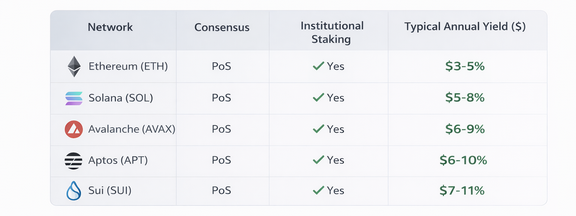
As Proof-of-Stake networks mature and regulatory clarity improves, institutional demand for staking has surged. Staking offers a familiar economic model for institutions—akin to interest or yield—while maintaining exposure to underlying digital assets.
By partnering with Figment, a leading staking infrastructure provider, Ripple ensures that validator operations are handled by specialized experts, reducing technical and operational risk for custody clients.
Institutional Staking Momentum Across the Industry
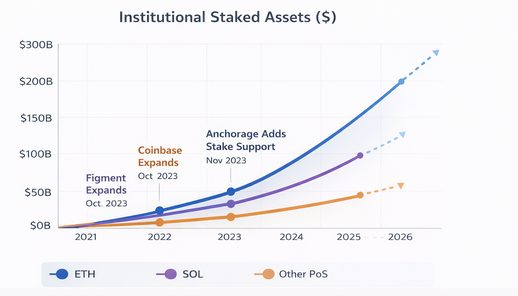
Ripple’s move mirrors a broader trend across the digital asset industry. In October, Figment expanded its integration with Coinbase, enabling Coinbase Custody and Prime clients to stake additional Proof-of-Stake assets beyond Ethereum. These include Solana (SOL), Sui (SUI), Aptos (APT), and Avalanche (AVAX), giving institutional investors diversified access to staking yields.
In November, Anchorage Digital added staking support for the Hyperliquid ecosystem, enabling HYPE token staking alongside its existing custody services. Validator operations for this offering are also supported by Figment, highlighting the emergence of specialized infrastructure providers as critical enablers of institutional staking.
These developments underscore a structural shift: staking is no longer a niche activity for crypto-native participants but a core yield strategy for regulated institutions.
Beyond Proof-of-Stake: Institutional Bitcoin Yield
While Proof-of-Stake assets naturally lend themselves to staking, institutions are also seeking yield opportunities from Bitcoin, which does not natively support staking. This has led to the rise of Bitcoin-based decentralized finance (DeFi) solutions designed to generate yield without compromising Bitcoin’s security model.
Earlier this month, Fireblocks announced an integration with Stacks, enabling institutional clients to access Bitcoin-backed lending and yield products. Stacks leverages a fast block time of approximately five seconds while settling transactions on the Bitcoin ledger, addressing latency issues that previously limited institutional participation in Bitcoin DeFi.
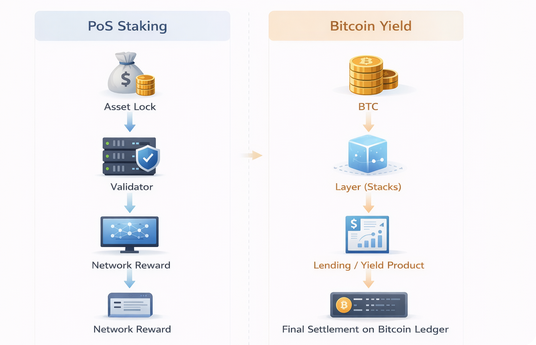
This parallel development highlights an important insight: institutions are no longer content with passive crypto exposure. Yield generation—whether through staking or structured products—is becoming a baseline expectation.
Ripple’s Broader Institutional Ambitions
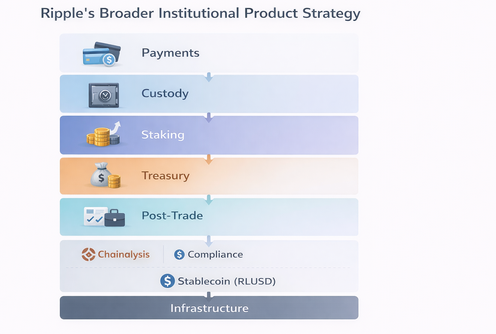
Ripple’s custody expansion follows closely on the heels of its announcement of a corporate treasury platform designed to bridge traditional cash management systems with digital asset infrastructure. Together, these initiatives reveal a coherent strategy: Ripple aims to become an end-to-end infrastructure provider for regulated digital finance.
Beyond custody and staking, Ripple is positioning itself in treasury management, post-trade services, and compliance-enabled asset flows. This strategy aligns with its broader product portfolio, which includes payment solutions, custody technology, and the issuance of XRP (XRP) as well as the USD-pegged stablecoin RLUSD, launched in December 2024.
Rather than competing directly with consumer exchanges, Ripple is focusing on the institutional backbone of the crypto economy—where regulatory clarity, security, and operational simplicity matter more than speculative trading.
Implications for Investors and Builders
For readers seeking new crypto assets, revenue opportunities, or practical blockchain applications, Ripple’s move is highly instructive. Infrastructure, not just tokens, is where long-term value is increasingly being created.
Institutional custody and staking platforms represent recurring revenue models, deep regulatory moats, and strong network effects. As more institutions enter the space, demand for compliant, secure, and scalable infrastructure will continue to grow.
For builders, the message is clear: abstraction, compliance-by-design, and enterprise-grade security are no longer optional. For investors, companies that successfully bridge traditional finance and blockchain infrastructure may offer more sustainable value than purely speculative assets.
Conclusion
Ripple’s expansion of its institutional custody platform through integrated staking and advanced security is more than a product update—it is a strategic repositioning. By reducing operational complexity, embedding compliance, and enabling yield generation, Ripple is aligning itself with the real needs of regulated financial institutions.
As institutional participation in crypto deepens, the winners are likely to be those who build the rails rather than chase short-term narratives. Ripple’s latest move suggests it intends to be one of those foundational players shaping the next phase of digital asset finance.


