
Main Points :
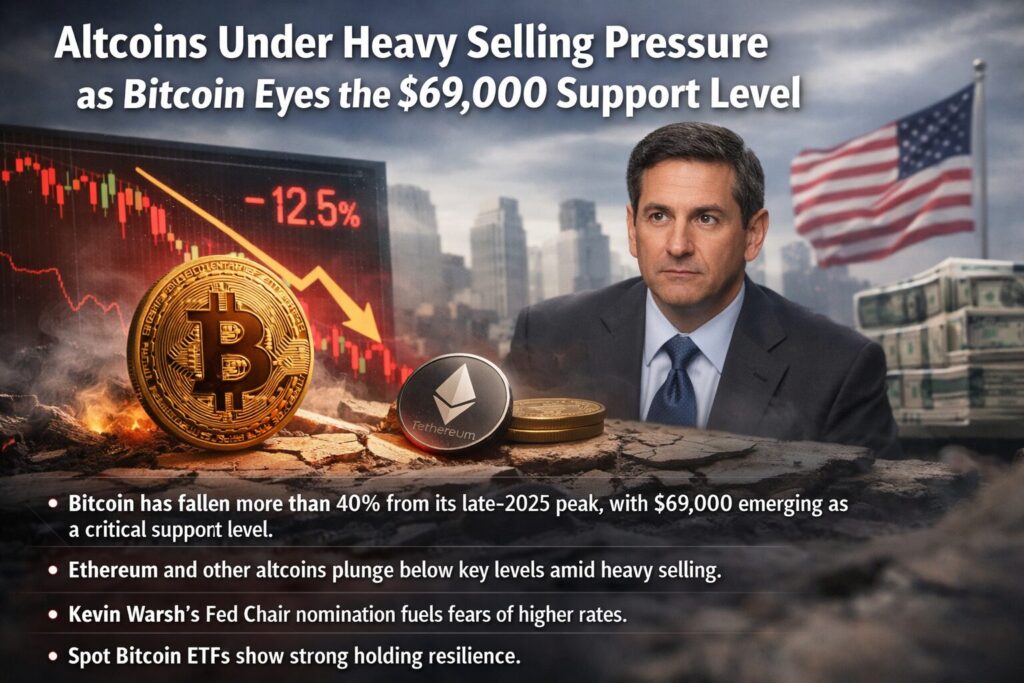
- Bitcoin has fallen more than 40% from its late-2025 peak, with $69,000 emerging as a critical psychological and technical support level.
- Altcoins, particularly Ethereum, are experiencing significantly stronger selling pressure than Bitcoin, with ETH trading below its realized price.
- The nomination of Kevin Warsh as the next Federal Reserve Chair has revived fears of prolonged high interest rates and tighter liquidity.
- Despite the sharp correction, spot Bitcoin ETFs show remarkable holding resilience, suggesting a structurally different investor base from past cycles.
- Market dynamics increasingly favor Bitcoin dominance, while altcoins face a prolonged phase of capital rotation and valuation reset.
1. Market Overview: Bitcoin Stabilizes While Altcoins Continue to Bleed
The cryptocurrency market entered February 2026 under intense selling pressure, with price action highlighting a clear divergence between Bitcoin and the broader altcoin complex. Bitcoin (BTC) is trading around $72,500, down approximately 4.5% day-on-day, while many major altcoins have posted weekly losses exceeding 20%.
This pattern reflects a familiar late-cycle behavior: when macro uncertainty rises and liquidity tightens, investors retreat first from higher-beta assets. Altcoins, which typically rely on speculative inflows and narrative-driven momentum, are disproportionately affected.
Bitcoin, while not immune, continues to function as the market’s core liquidity anchor. Its drawdown—over 40% from the late-2025 to early-2026 peak—is severe, yet structurally less destructive than what is currently unfolding in the altcoin space.
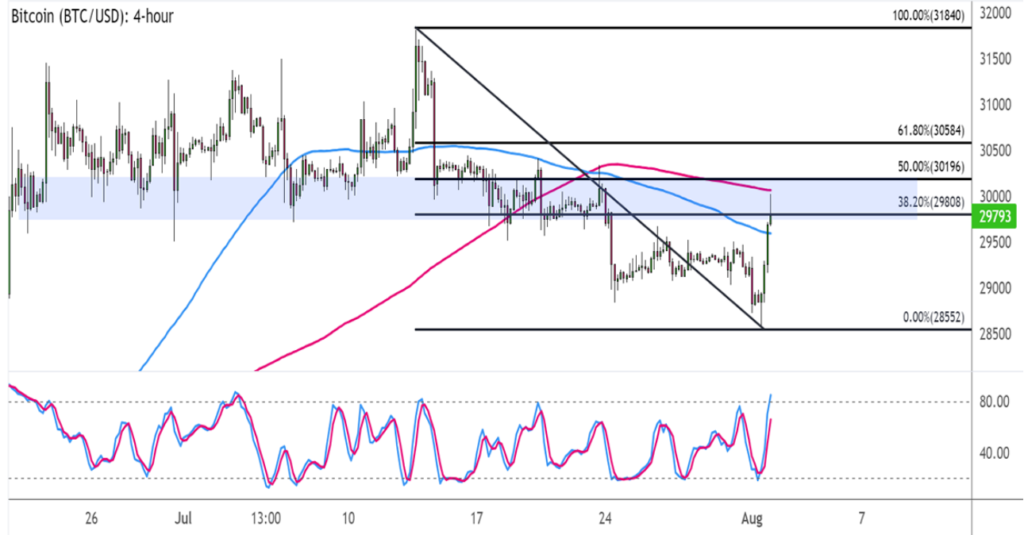
[BTC/USD Daily Price Chart – Key Support Zones Highlighted]
2. Macro Shock: Kevin Warsh’s Nomination and the Return of Hawkish Fears
The immediate catalyst for the recent sell-off was the announcement on January 30, 2026, that former Federal Reserve governor Kevin Warsh had been formally nominated as the next Fed Chair by President Trump.
While Warsh is known as a long-term Bitcoin-positive figure from an ideological standpoint, markets reacted not to his views on crypto, but to his monetary policy philosophy.
Warsh has consistently emphasized:
- Monetary discipline
- Skepticism toward prolonged quantitative easing (QE)
- Preference for maintaining positive real interest rates
This stance stands in sharp contrast to market expectations that a Trump administration would aggressively push for rapid rate cuts. Analysts such as Markus Thielen of 10x Research have argued that Warsh’s appointment signals a withdrawal of speculative excess rather than renewed liquidity expansion.
As a result, markets repriced:
- Higher-for-longer interest rates
- A stronger U.S. dollar
- Rising real yields
This repricing triggered a broad risk-off move, affecting not only cryptocurrencies but also traditional inflation hedges such as gold and silver.
3. Bitcoin’s $69,000 Level: Why It Matters More Than It Seems
The $69,000 price level has become the focal point of market attention—and not without reason.
This level represents:
- The all-time high from the previous bull cycle in November 2021
- The starting point of the so-called “Trump trade” that began around the November 2024 U.S. presidential election
- A long-term psychological reference point for both retail and institutional investors
From a market-structure perspective, reclaiming former cycle highs often transforms resistance into support. Holding above $69,000 would reinforce the narrative that Bitcoin has structurally matured into a macro-aligned asset rather than a purely speculative instrument.
Conversely, a sustained breakdown below this level could extend the bearish trend well into 2026, especially as geopolitical and political uncertainty builds ahead of the November 2026 U.S. midterm elections.
4. Ethereum Breaks Below Realized Price: A Dangerous Signal
While Bitcoin struggles, Ethereum (ETH) is facing a more acute crisis.
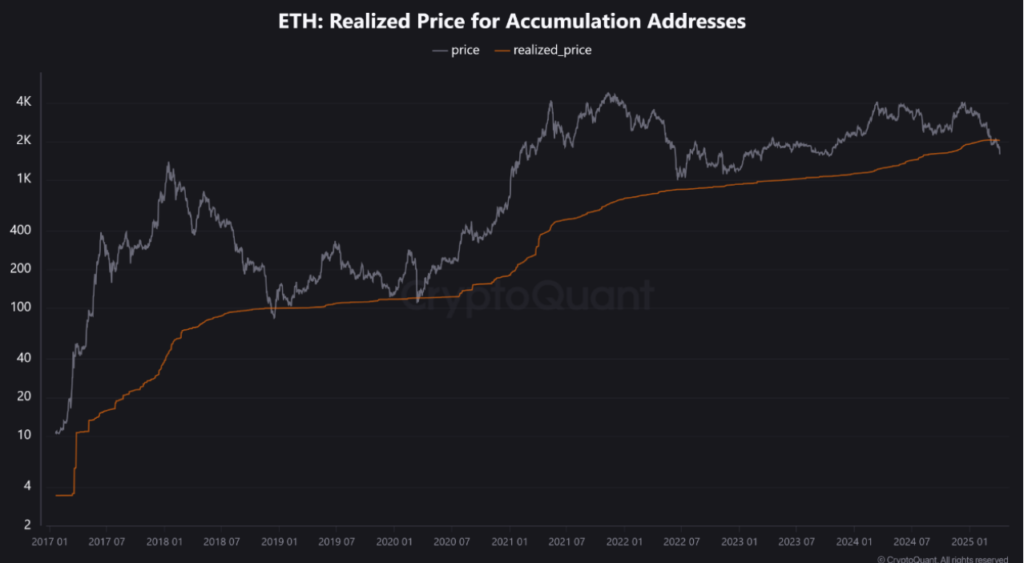
ETH has declined roughly 24.5% week-on-week, trading near $2,100, below its estimated realized price of $2,310. The realized price represents the average acquisition cost of all circulating ETH and has historically served as a strong support level during downturns.
Breaking below this threshold is significant because:
- It places the average holder in an unrealized loss
- It increases the probability of panic selling
- It weakens long-term holder confidence
On-chain data suggests that wallets holding between 100 and 10,000 ETH—often categorized as retail-to-mid-sized investors—have sold more than 600,000 ETH over the past seven days alone.
[ETH Price vs Realized Price]
5. Forced Narratives and the Bitmain Controversy
The stress in Ethereum markets has reignited debate around large corporate holders. Blockchain analytics firm Lookonchain reported that Bitmain holds approximately 4.28 million ETH, currently reflecting an estimated $7 billion in unrealized losses.
Some market participants speculate that such a large position could act as a structural ceiling on ETH prices if forced liquidation becomes necessary.
However, Bitmain Chairman Thomas Lee publicly rejected this framing, stating that unrealized losses are an expected feature of long-cycle exposure, not a failure. He compared ETH holdings to index ETFs, which often experience deep drawdowns during macro contractions.
This debate highlights a key shift in crypto markets: balance-sheet-driven actors now meaningfully influence price dynamics, much like in traditional finance.
6. Derivatives Stress: Liquidations Accelerate Downside
According to Coinglass data, Ethereum futures experienced approximately $228.5 million in liquidations over the past 24 hours, with $137.2 million coming from long positions.
This liquidation imbalance reinforces two critical observations:
- Many traders were positioned for a rebound that failed to materialize
- Leverage remains a primary amplifier of downside volatility
Historically, such liquidation events often precede short-term relief rallies. However, in a macro-tightening environment, these bounces tend to be shallow and short-lived.
7. Bitcoin Spot ETFs: A Structural Difference From Past Cycles
One of the most notable contrasts with previous bear phases is the behavior of spot Bitcoin ETF investors.
According to Bloomberg ETF analyst Eric Balchunas, assets under management for BlackRock’s iShares Bitcoin Trust (IBIT) declined from a peak of approximately $100 billion to around $60 billion. While the drawdown is significant, the retention rate is extraordinary.
Only about 6% of ETF capital has exited, meaning 94% of investors are holding their positions, despite Bitcoin’s roughly 40% decline.
This suggests:
- ETF investors are structurally longer-term oriented
- Bitcoin is increasingly treated as a strategic allocation rather than a trading instrument
- The market’s “weak hands” are now concentrated more heavily in altcoins
8. Implications for Investors Seeking the Next Opportunity
For readers interested in new crypto assets, revenue generation, and practical blockchain use, the current environment sends a clear message:
- Bitcoin remains the core asset for capital preservation in crypto markets
- Altcoins are entering a prolonged selection phase, not a broad rebound
- Projects with real cash flow, infrastructure relevance, or enterprise integration will increasingly outperform narrative-driven tokens
This period is less about chasing price momentum and more about identifying which protocols can survive under tighter financial conditions.
Conclusion: A Market Reset, Not the End of the Cycle
The ongoing correction across crypto markets represents a reset rather than a collapse. Bitcoin’s ability to retain institutional capital—even amid sharp drawdowns—signals structural maturation. At the same time, the severe stress in altcoins reflects overdue repricing after years of liquidity-driven expansion.
The $69,000 level for Bitcoin will likely define sentiment for the coming months. Holding it would reinforce Bitcoin’s role as a macro asset; losing it would extend the consolidation phase.
For investors and builders alike, the message is clear: the next phase of crypto growth will reward discipline, utility, and balance-sheet resilience—not leverage and hype.


