Key Takeaways :
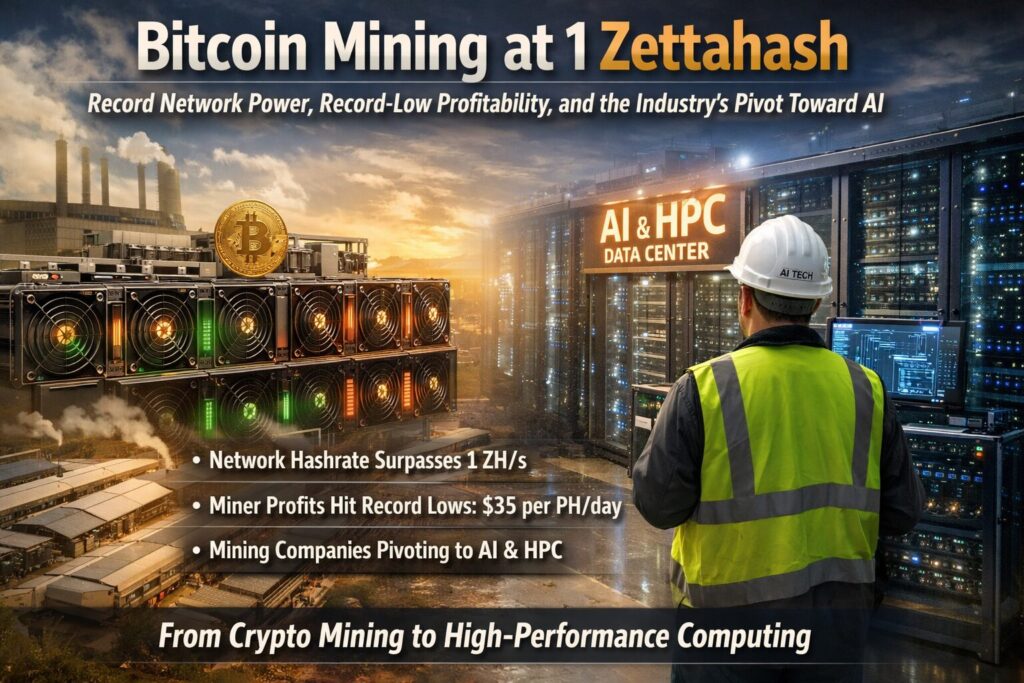
- Bitcoin’s network hash rate has exceeded 1 zettahash per second (1 ZH/s) for the first time in history, marking a structural shift toward industrial-scale mining.
- Despite this milestone, miner profitability has fallen to its lowest level on record, with hash price compressing to around $35 per PH per day.
- The April 2024 halving and persistently weak transaction fees have made miners increasingly dependent on Bitcoin price movements.
- In response, major mining companies are rapidly pivoting toward AI data center and high-performance computing (HPC) businesses, where margins and revenue stability are significantly higher.
- For investors and blockchain practitioners, the mining sector is evolving from a pure crypto play into a hybrid energy–compute infrastructure industry.
1. Crossing the Zettahash Threshold: A Historic Moment for Bitcoin Mining
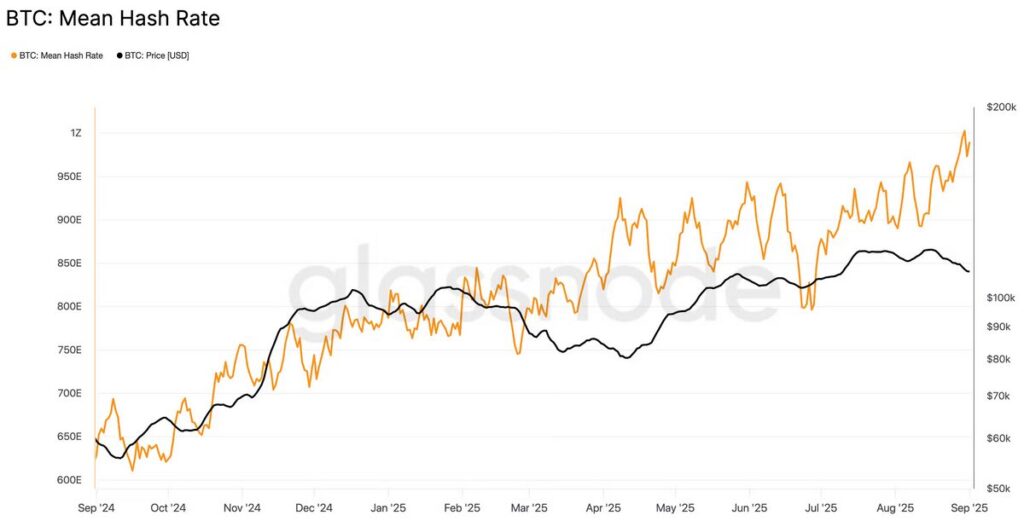
In late January 2025, a market review released by mining services firm GoMining confirmed that Bitcoin’s global network hash rate had surpassed 1 zettahash per second (ZH/s) on a seven-day moving average. This milestone represents a thousand exahashes, or one sextillion hashes computed every second, securing the Bitcoin network.
From a technological and operational standpoint, this is not merely a symbolic number. It signals that Bitcoin mining has fully transitioned into an industrial-scale energy and infrastructure business. The era of small, opportunistic mining operations is long gone. Today’s network security is underpinned by massive capital expenditure in ASIC hardware, long-term power purchase agreements, and purpose-built facilities resembling energy plants more than traditional IT operations.
This growth has been driven by aggressive hardware upgrades, especially the deployment of next-generation ASICs with improved joules-per-terahash efficiency, as well as the expansion of mining capacity in energy-rich regions. In many respects, Bitcoin mining is beginning to resemble other heavy industries: capital-intensive, margin-sensitive, and highly exposed to macroeconomic and energy-market dynamics.
[Bitcoin Network Hash Rate Growth to 1 ZH/s]
2. Hash Rate Up, Revenues Down: Understanding the Hash Price Collapse
While the network’s computational power has reached unprecedented levels, miner revenues have moved in the opposite direction. The key metric illustrating this contradiction is hash price, which measures daily mining revenue per unit of hash rate.
According to the same review, hash price fell to around $35 per petahash per day (PH/day) in November 2025, the lowest level ever recorded. For more than 18 months, hash price has remained structurally compressed, creating sustained pressure on miners’ operating margins.
This compression means that even highly efficient miners are struggling to generate meaningful cash flow unless they have access to exceptionally cheap electricity or alternative revenue streams. For smaller or higher-cost operators, profitability has effectively vanished, accelerating industry consolidation.
[Bitcoin Hash Price Trend]
3. The Halving Effect and the Fee Problem
The root causes of this profitability crisis are structural rather than cyclical. The April 2024 Bitcoin halving reduced the block subsidy from 6.25 BTC to 3.125 BTC, instantly cutting miners’ base revenue in half.
Under normal circumstances, transaction fees might compensate for this reduction. However, throughout most of 2025, transaction fees accounted for less than 1% of total block rewards. This stands in stark contrast to earlier periods of high on-chain activity, when fees provided a meaningful revenue buffer.
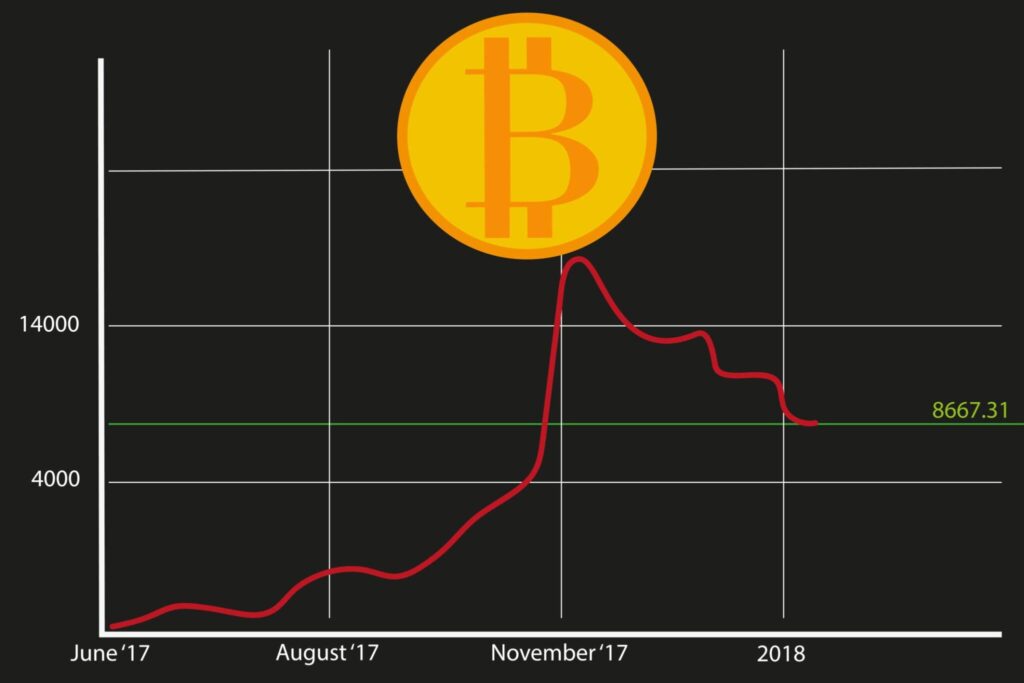
As a result, miners’ income has become almost entirely dependent on Bitcoin’s market price. When prices stagnate or decline, there is little structural protection for miner revenues. Analysts note that as hash rate continues to rise and fees remain subdued, price sensitivity becomes more acute, increasing systemic risk for the mining sector.
4. Scale as Both Strength and Vulnerability
The industrialization of mining has created a paradox. On one hand, scale brings efficiency, bargaining power with energy suppliers, and access to capital markets. On the other hand, it introduces fragility.
Large-scale miners operate on thin margins and rely on continuous uptime. When revenues fall, their fixed costs—power contracts, debt servicing, facility maintenance—do not adjust downward easily. This makes the sector highly sensitive to adverse price movements and regulatory or energy-market shocks.
Industry observers increasingly describe Bitcoin mining as a leveraged bet on Bitcoin price, rather than a neutral infrastructure business. This has forced management teams to reconsider their long-term strategies.
5. The Great Pivot: From Bitcoin Mining to AI Data Centers
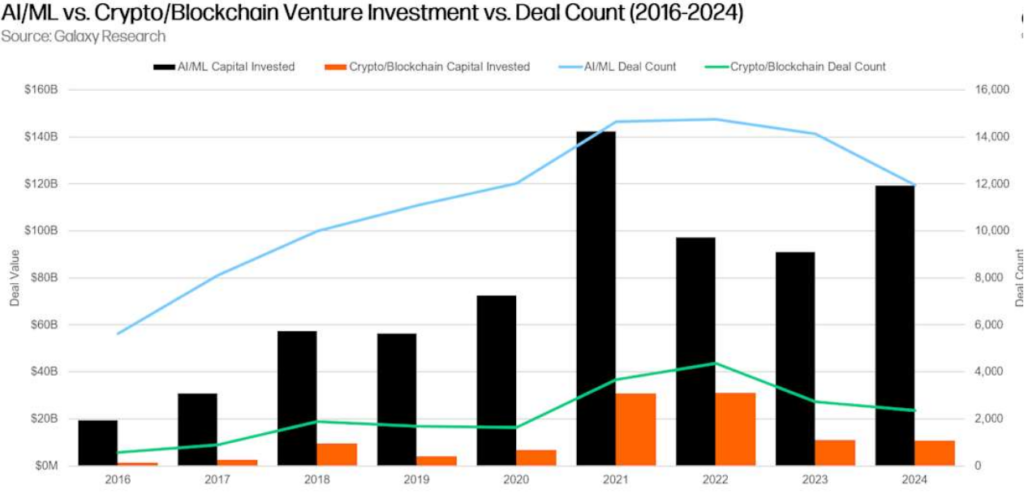
Against this backdrop, a rapid strategic shift is underway. Bitcoin mining companies are increasingly repurposing their infrastructure to serve AI data centers and high-performance computing (HPC) workloads.
Data from asset manager CoinShares indicates that in 2025 alone, publicly listed mining firms signed approximately $65 billion in AI and HPC contracts with major technology companies and cloud service providers.
Analysts project that for companies securing significant AI contracts, mining revenue will decline from roughly 85% of total revenue today to less than 20% by the end of 2026. In other words, Bitcoin mining is becoming a secondary business line.
6. Why AI Economics Are So Attractive
The appeal of AI data centers lies in their economics. Unlike mining, which is subject to protocol-driven reward reductions and price volatility, AI workloads typically operate under long-term, fixed-price contracts.
Industry estimates suggest operating margins of 80–90% for AI data centers, compared to the often single-digit margins in mining. Revenue per megawatt can be three times higher than mining, and revenue per kilowatt-hour can reach up to 25 times that of Bitcoin mining.
For mining companies struggling with compressed hash prices, these figures are transformative.
[Mining vs AI Data Center Economics]
7. Infrastructure Synergy: Why Miners Have an Edge
Bitcoin miners are uniquely positioned to make this transition. They already control many of the critical inputs required for AI data centers: large-scale power capacity, advanced cooling systems, and geographically strategic sites.
Perhaps most importantly, miners possess fully permitted and grid-connected facilities. In many regions, obtaining grid approval for a new data center can take several years. By converting existing mining sites, companies can bypass much of this delay and bring AI capacity online far faster than greenfield competitors.
8. Case Studies: Early Movers in the AI Transition
Several major players have already committed to this path. Hut 8 announced a $7 billion, 15-year AI infrastructure contract, signaling a decisive strategic shift. Firms such as Core Scientific and Cipher Mining have also disclosed partial or full transitions toward AI-focused operations.
These announcements suggest that the market increasingly values mining companies not for their hash rate, but for their energy and data-center optionality.
9. Not All Facilities Are Equal: The Limits of Conversion
Despite the enthusiasm, not every mining site is suitable for AI workloads. AI data centers require far more sophisticated networking, redundancy, and often liquid or immersion cooling systems tailored to GPU clusters.
Retrofitting older or remote mining facilities can require substantial capital investment. Industry experts caution that only companies with the right asset mix, technical expertise, and balance sheet strength will be able to generate outsized returns from this transition.
10. Implications for Investors and Blockchain Practitioners
For readers seeking new crypto assets, revenue opportunities, or practical blockchain applications, this evolution has profound implications.
Bitcoin mining is no longer just about securing a blockchain. It is becoming a gateway industry linking energy markets, digital infrastructure, and AI compute demand. Investment theses are shifting accordingly: from pure exposure to Bitcoin price toward hybrid models that combine crypto, energy, and cloud computing.
Conclusion: From Hash Power to Compute Power
The crossing of the 1 ZH/s threshold marks both a triumph and a warning for Bitcoin mining. Network security has never been stronger, but miner economics have rarely been weaker.
The industry’s pivot toward AI data centers is not a temporary hedge—it is a structural response to the realities of post-halving economics. For those watching the next phase of blockchain infrastructure, the most interesting opportunities may no longer lie in mining coins, but in repurposing the backbone of crypto mining into the compute layer of the AI economy.