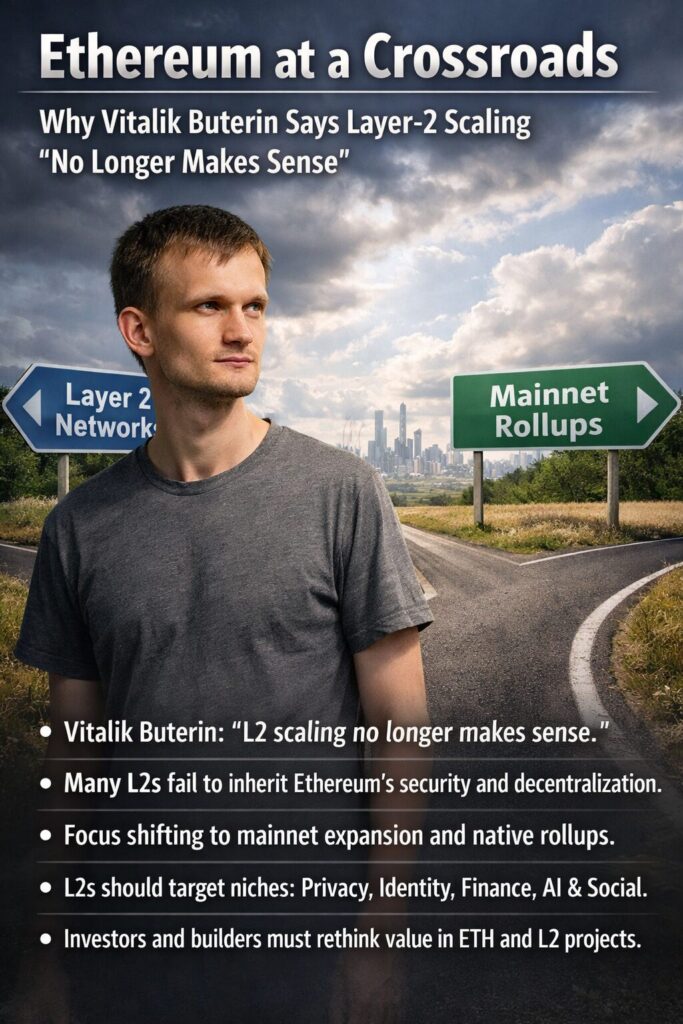
Key Takeaways :
- Ethereum co-founder Vitalik Buterin has publicly stated that the original vision of Layer-2 (L2) scaling “no longer makes sense.”
- Many existing L2 networks fail to fully inherit Ethereum’s security, decentralization, and censorship-resistance.
- Ethereum’s future scalability is increasingly centered on mainnet expansion and native rollups, not external L2s.
- Major L2s should pivot toward specialized niches such as privacy, identity, finance, social applications, and AI.
- For investors and builders, this shift reshapes how value accrues to ETH, L2 tokens, and infrastructure projects.
1. The Original Promise of Layer-2 Scaling
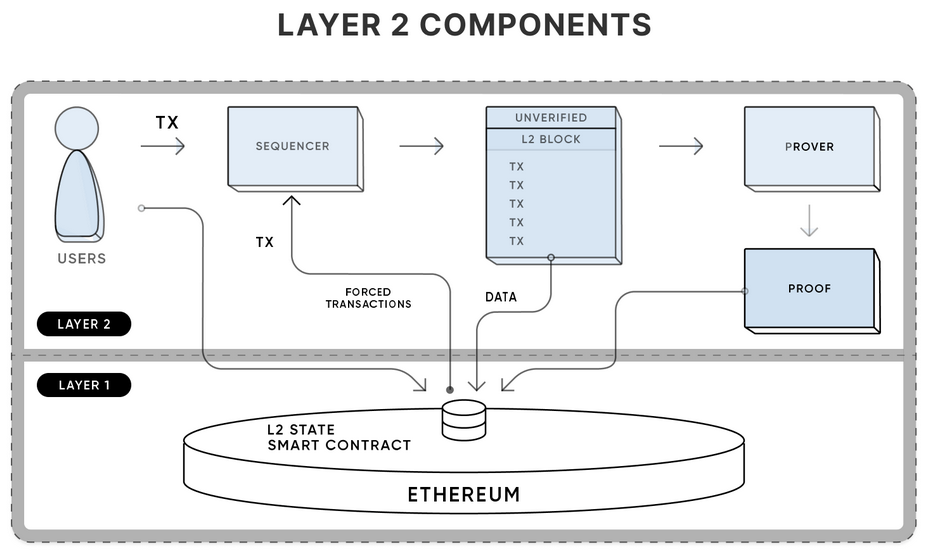
When Ethereum’s congestion and gas fee problems became acute during DeFi Summer and the NFT boom, Layer-2 scaling was positioned as the definitive solution. The idea was elegant: move most transactions off-chain, bundle them efficiently, and rely on Ethereum for final settlement and security.
In theory, L2s would process transactions faster and cheaper while remaining cryptographically anchored to Ethereum. This model promised a future where Ethereum could scale globally without sacrificing decentralization.
For years, this vision dominated Ethereum’s roadmap. Rollups were not optional—they were the plan.
2. Vitalik Buterin’s Break from the Past
That narrative shifted dramatically when Vitalik Buterin stated on X that the original L2 scaling vision “no longer makes sense.”
His reasoning rests on two uncomfortable realities.
First, many L2s have not achieved meaningful decentralization. Sequencers are often centralized. Upgrade keys are controlled by small teams. Emergency shutdowns and governance interventions are common.
Second, Ethereum itself is scaling better than expected. Gas limit increases, blob transactions, and upcoming protocol changes are expanding mainnet capacity faster than previously assumed.
Taken together, these facts undermine the original justification for L2s as Ethereum’s primary scaling path.
3. The Security Inheritance Problem
At the heart of Buterin’s critique is security inheritance.
An ideal L2 should produce blockspace that is:
- Fully protected by Ethereum validators
- Censorship-resistant
- Cryptographically final
- Permissionless and trust-minimized
In practice, many L2s fall short.
Centralized sequencers can reorder or censor transactions. Governance keys can override protocol rules. Users must often trust multisig committees rather than Ethereum itself.
This creates a subtle but critical distinction: L2s may settle on Ethereum, but they are not Ethereum-secured in the full sense.
4. Examples from Today’s L2 Ecosystem
Major networks such as Arbitrum, Optimism, Base, and Starknet have driven impressive adoption and developer activity.
However, Buterin argues they should no longer be viewed primarily as generic Ethereum scaling solutions.
Instead, he suggests these networks refocus on domain-specific strengths:
- Privacy-preserving computation
- Identity and reputation systems
- Financial primitives
- Social graphs
- AI-integrated applications
This reframes L2s not as extensions of Ethereum’s blockspace, but as application-specific environments.
5. Native Rollups: A Fundamental Shift
[“Traditional Rollups vs Native Rollups Architecture”]
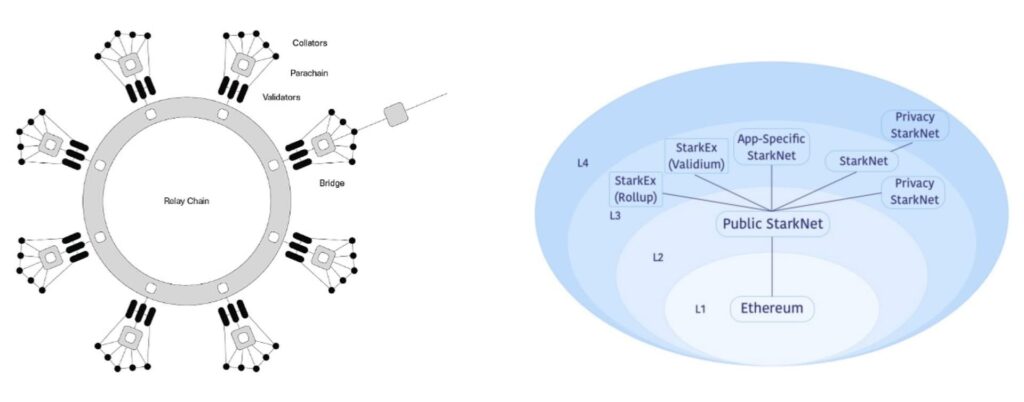
The most important alternative Buterin highlights is native rollups.
Unlike traditional rollups, which exist as external systems posting data to Ethereum, native rollups are embedded into Ethereum’s protocol. Transaction validity is verified directly by Ethereum validators.
Once zkEVM proofs are natively supported at the base layer, Ethereum itself becomes the rollup.
This collapses the distinction between L1 and L2 and restores a unified security model.
6. Gas Limit Increases and Mainnet Throughput
Ethereum developers have already taken concrete steps in this direction.
After a blob-parameter-focused hard fork in January, discussions emerged around raising the gas limit from roughly 60 million to as high as 80 million. Higher gas limits directly increase:
- Transactions per block
- Smart contract execution capacity
- Overall network throughput
While gas limit increases must be handled carefully to protect decentralization, they demonstrate a renewed confidence in L1-first scaling.
7. Ethereum’s Long-Term Throughput Vision
[“Ethereum TPS Growth: Present to 10-Year Target”]
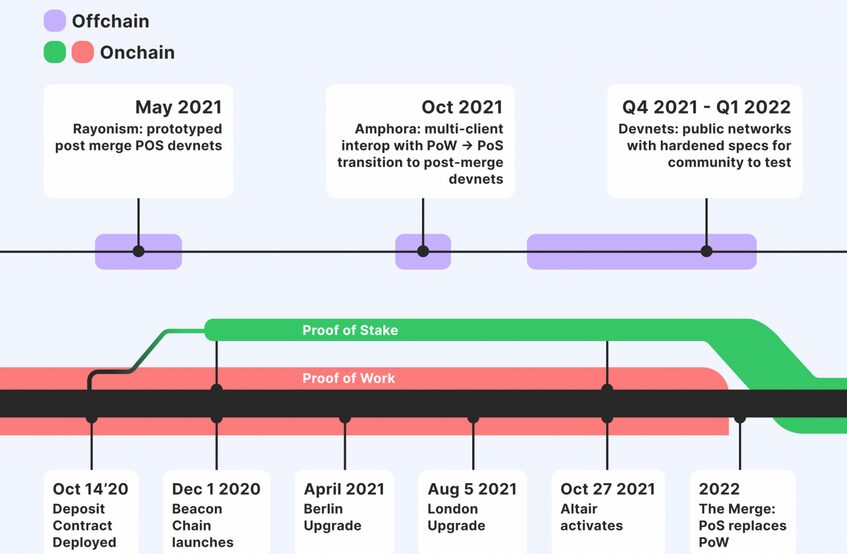
Ethereum researcher Justin Drake has outlined a long-term roadmap targeting 10,000 transactions per second on mainnet within roughly ten years.
This would represent a massive leap from today’s 15–30 TPS and would fundamentally change Ethereum’s competitive position relative to alternative L1s.
Crucially, this vision assumes that Ethereum itself, not external L2s, becomes the primary execution environment.
8. Developer Tensions and Ecosystem Politics
Not everyone has agreed with this direction.
Former Consensys researcher Max Resnick publicly argued that Ethereum should prioritize L1 scaling earlier. When this position failed to gain sufficient support, he eventually moved to the Solana ecosystem.
This highlights a recurring tension in Ethereum: balancing philosophical decentralization goals with pragmatic performance demands.
Buterin’s recent statements suggest the pendulum is swinging back toward the base layer.
9. Market and Community Reaction
The reaction across the Ethereum community has been significant.
Bankless co-founder Ryan Sean Adams described Buterin’s comments as a turning point, celebrating a renewed emphasis on a “strong ETH and strong L1.”
For ETH holders, this narrative reinforces ETH’s role as:
- The core settlement asset
- The primary source of economic security
- The central store of value in the Ethereum ecosystem
10. Implications for Investors and Builders
For investors seeking new crypto assets and revenue opportunities, this shift carries several implications:
- ETH value capture may strengthen as more activity remains on mainnet.
- Generic L2 tokens may face pressure unless they offer differentiated utility.
- Infrastructure projects aligned with native rollups, zk proofs, and validator services gain strategic importance.
- Application-specific chains may outperform generalized scaling solutions.
For builders, the message is clear: optimize for Ethereum alignment, not abstraction away from it.
11. Strategic Repositioning of Layer-2 Networks
[“Future Roles of L2s in the Ethereum Ecosystem”]
Layer-2 networks are not disappearing—but their role is evolving.
The future L2 may look less like “cheap Ethereum” and more like:
- A privacy enclave
- A financial compliance sandbox
- A social coordination layer
- An AI-execution environment
This specialization aligns better with their actual strengths.
Conclusion: Ethereum’s Return to First Principles
Vitalik Buterin’s statement that Layer-2 scaling “no longer makes sense” does not signal failure. It signals maturity.
Ethereum is no longer a fragile experiment forced to outsource scalability. It is a robust, evolving protocol capable of scaling itself while preserving its core values.
For those searching for the next generation of crypto assets, income streams, and real-world blockchain applications, this moment marks a critical inflection point.
Ethereum’s future is not fragmented—it is re-converging.