
Main Points :
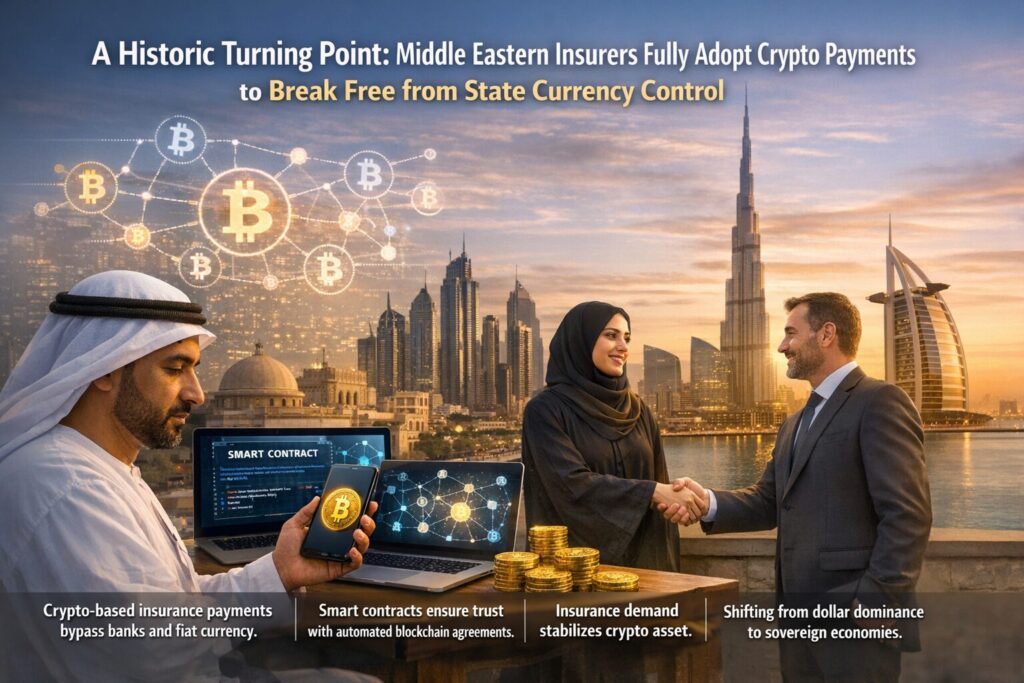
- Middle Eastern insurance companies are transitioning crypto assets from speculative instruments into real-world financial infrastructure.
- Fully crypto-based insurance payments eliminate reliance on fiat currencies, banks, and state-controlled monetary systems.
- Smart contracts are redefining trust in insurance by replacing discretionary human judgment with mathematical certainty.
- Large-scale real demand from insurance use cases stabilizes crypto asset value and reduces volatility over time.
- This movement signals a broader shift away from dollar dominance toward sovereign individuals and protocol-based economies.
1. From Speculation to Infrastructure: The Dawn of a New Payment Paradigm in the Middle East
What is unfolding today in Dubai is far more than the adoption of a new payment technology. It represents a civilizational inflection point—one that challenges centuries of assumptions about money, trust, and sovereignty.
The initiative announced by Dubai Insurance aims to fully detach core insurance processes—premium payments and claims disbursement—from fiat currencies. This is not a partial experiment, nor a marketing stunt. It is a deliberate attempt to rebuild insurance operations on crypto-native rails.
For years, digital assets were dismissed as toys for speculators chasing volatile price charts. That narrative is now collapsing. In Dubai, crypto is being redefined as economic infrastructure—the bloodstream of real-world services.
Insurance is not a niche sector. It is deeply embedded in daily life: health, vehicles, logistics, property, and enterprise risk. By moving this domain entirely onto crypto-based settlement, Middle Eastern insurers are constructing a financial sanctuary where traditional banks cannot intervene.
While retail traders obsess over short-term price movements, institutional actors in the Middle East are reclaiming sovereignty over value exchange—shifting it away from states and into the hands of individuals and protocols.
The choice of insurance is not accidental. Insurance is fundamentally about trust. Selecting crypto in this domain sends a clear message: mathematical verification is superior to bureaucratic discretion.
Historically, insurance payouts have been delayed or denied due to opaque internal decisions or regulatory friction. Crypto-based settlement eliminates this uncertainty entirely. What emerges is not merely a new payment method, but a survival-grade financial foundation—immune to fiscal collapse, capital controls, or arbitrary policy shifts.
As long as insurance services are delivered, the crypto assets powering them maintain intrinsic demand. This anchors value in physical reality rather than speculative sentiment.
Traditional financial institutions, long skeptical of crypto, will be forced to confront its utility—not through ideology, but through overwhelming operational efficiency. The debate phase is over. The competition for real-world financial leadership has already begun.
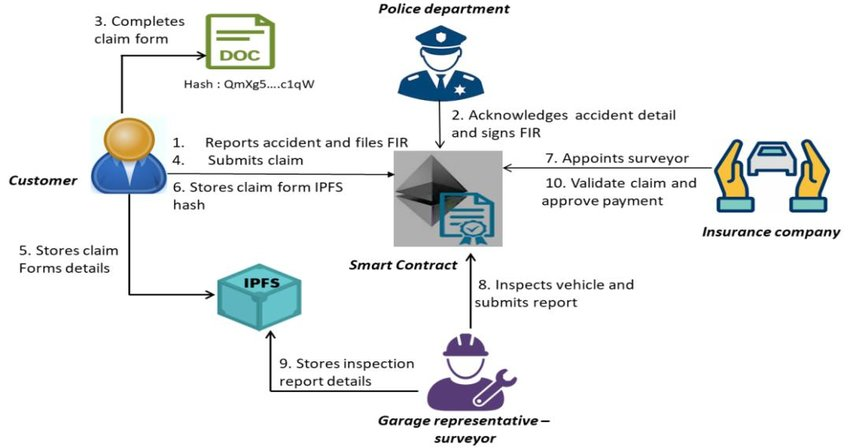
[Diagram of traditional insurance payment flow vs crypto-based insurance payment flow]
2. Smart Contracts and the Collapse of Legacy Insurance Power Structures
At the heart of this revolution lies the smart contract: programmable agreements that enforce fairness without human intervention.
The traditional insurance industry relies on massive office buildings, armies of employees, and labyrinthine policy documents. These structures exist not to deliver value, but to manufacture trust—at enormous cost passed on to consumers.
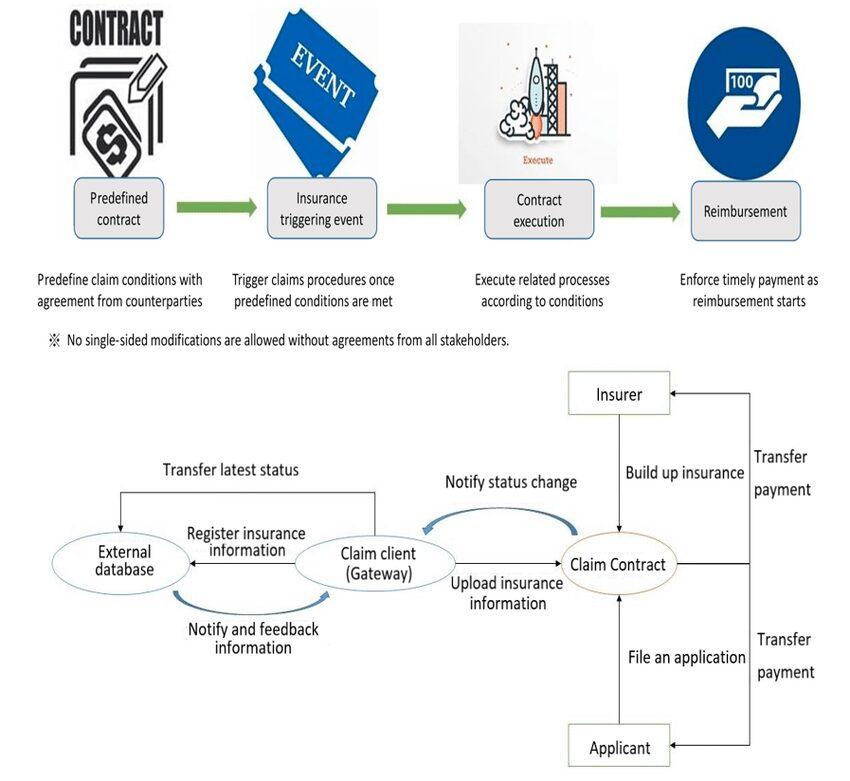
The emerging Middle Eastern model strips away these inefficiencies entirely. Smart contracts automate premium collection, risk validation, and claims payouts with deterministic logic.
By reducing the cost of trust toward zero, insurance becomes faster, cheaper, and more reliable.
Fraudulent claims, arbitrary denials, and administrative errors—hallmarks of human-managed systems—are neutralized by immutable distributed ledgers. Once conditions are met, payouts occur automatically.
This allows individuals and businesses across borders to share risk without ever meeting, trusting not institutions, but code.
What we are witnessing is the replacement of centrally managed social contracts with mathematical contracts. Society’s operating system is being upgraded.
The geopolitical implications are profound. By deploying next-generation financial infrastructure in a strategic region like the Middle East, global financial power maps are quietly being redrawn.
While Western regulators stall innovation under the banner of consumer protection, pragmatic actors are building systems that deliver tangible benefits today.
Instant, guaranteed insurance payouts create an experience so compelling that returning to legacy systems becomes unthinkable.
This is not just efficiency—it is the democratization of trust itself. A product once monopolized by powerful institutions is being opened to the public.
As digital assets begin shielding real-world risks, economic freedom ceases to be theoretical and becomes operational reality.
And insurance is only the beginning. Every contractual relationship stands on the brink of similar transformation.
[Smart contract lifecycle for insurance claims]
3. The End of Dollar Dominance and the Rise of Sovereign Individuals
Dubai’s move functions as a counterweight to a world excessively dependent on the U.S. dollar.
For decades, international settlements and large insurance contracts were forced through dollar-clearing systems—placing global commerce under indirect political control.
Protocol-based settlement changes everything. When transactions occur on neutral networks belonging to no nation, monetary sovereignty violations disappear.
As large-scale real demand accumulates—insurance premiums paid in crypto—volatility naturally declines. Stability is no longer imposed by policy, but constructed by usage.
Speculative price swings may continue on charts, but the volume of assets used for insurance follows service demand, not trader sentiment.
This restores the natural order of economics: value determines price, not the other way around.
When this model expands into energy settlements, real estate, and trade finance, central bank announcements will lose their power to dictate global outcomes.
We are entering an era where sovereign individuals—operating beyond national boundaries—exchange value using protocols they consciously choose.
This is the dawn of a borderless economic sphere.
The transformation spreading from Dubai will be recorded in history textbooks. In an age of instability, the only rational response is active participation in the infrastructure of the future.
Financial sanctuaries free from state arbitrariness are no longer hypothetical. They are running in production code today.
If this Middle Eastern experiment succeeds, legacy financial systems worldwide will be forced to redefine themselves.
Those who prepare now will be the first citizens of a new economic age.
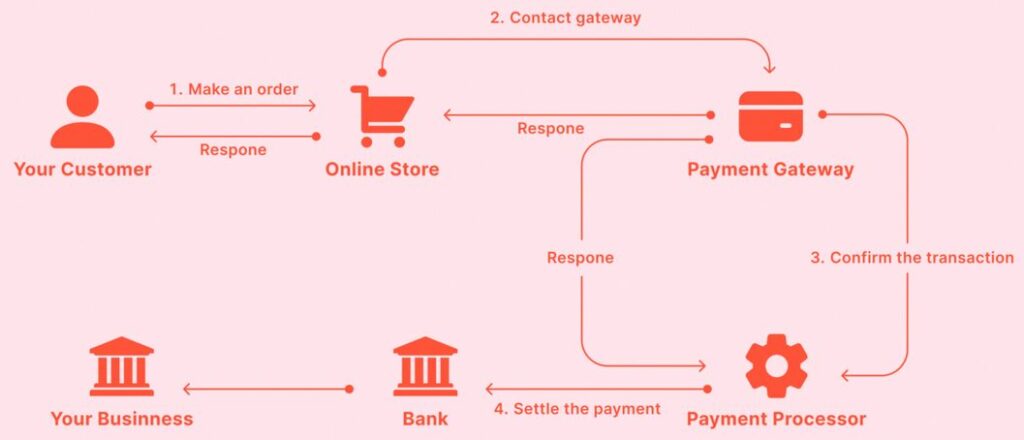
[Global map showing shift from fiat-based settlement to crypto-based settlement]
Conclusion
What began as a technological curiosity has matured into a full-scale economic alternative. The Middle East’s adoption of crypto-based insurance marks a decisive shift from speculative fascination to structural necessity.
Smart contracts are not merely tools—they are instruments of systemic liberation. Real-world demand stabilizes digital assets in ways no regulatory framework ever could.
As dollar dominance weakens and protocol economies strengthen, individuals gain unprecedented control over their financial destinies.
The future is not approaching. It is already operational.
Those who recognize this moment—and act accordingly—will define the next era of global finance.


