
Main Takeaways :
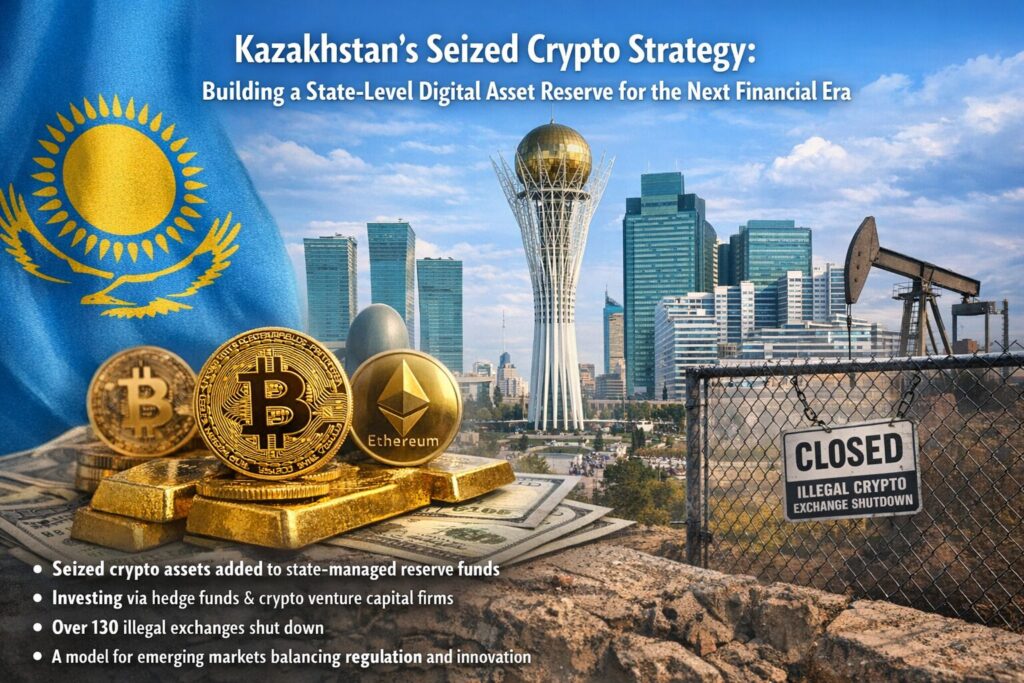
- Kazakhstan is formally integrating seized cryptocurrencies such as Bitcoin into a state-managed digital asset reserve.
- Rather than holding crypto directly, the country will invest indirectly via selected hedge funds and crypto-focused venture capital funds, reducing custody and volatility risks.
- The strategy runs in parallel with strict enforcement, including the shutdown of over 130 illegal crypto exchanges.
- This model positions crypto not as a speculative tool, but as a sovereign financial resource, alongside gold and foreign currency reserves.
- The approach may become a template for other emerging markets seeking to balance regulation, enforcement, and innovation.
1. From Criminal Seizures to Sovereign Strategy
Kazakhstan has taken a decisive and unconventional step in its national financial policy: transforming seized digital assets into a state-level cryptocurrency reserve. Assets confiscated from criminal activities—primarily Bitcoin and other major cryptocurrencies—will no longer sit idle or be liquidated immediately. Instead, they are being repurposed as part of a broader sovereign investment framework.
This initiative is being led by the investment arm of the National Bank of Kazakhstan, the National Investment Corporation (NIC). According to official statements, the objective is not merely asset preservation, but the strategic integration of digital assets into national reserves, placing them conceptually alongside gold and foreign currency holdings.
What makes Kazakhstan’s approach distinctive is its framing. Crypto is not treated as a speculative anomaly, nor as a threat to monetary sovereignty. Instead, it is recognized as a new financial primitive—one that can be regulated, managed, and leveraged for national benefit if handled prudently.
2. The Structure of Kazakhstan’s Crypto Reserve Model
At the initial stage, approximately $350 million worth of gold and foreign currency assets have already been allocated to a centralized reserve structure. Seized digital assets will be added to this framework under strict controls.
Crucially, Kazakhstan will not hold cryptocurrencies directly on its balance sheet. Instead, NIC will deploy capital—originating from both traditional reserves and seized digital assets—through a carefully selected group of external managers:
- A limited number of crypto-focused hedge funds
- Specialized blockchain and digital asset venture capital funds
Only five hedge funds are expected to manage this exposure, though their identities have not been disclosed. This structure allows the state to gain exposure to crypto-related upside while minimizing operational risks such as private key management, direct custody vulnerabilities, and extreme short-term volatility.
“Kazakhstan State Reserve Asset Allocation (Conceptual)”
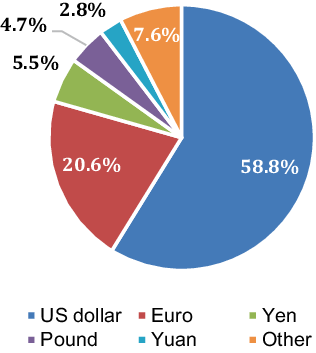
A pie chart showing gold, foreign currency, and indirect crypto exposure via funds.
3. Risk Management: Why Indirect Exposure Matters
For sovereign entities, crypto introduces risks that go far beyond price volatility. These include custody risks, cyber threats, governance challenges, and political accountability. Kazakhstan’s decision to avoid direct holding reflects a sophisticated understanding of these challenges.
By investing through regulated funds:
- Custody responsibility is transferred to professional managers.
- Compliance and reporting standards are clearer.
- Exposure can be adjusted dynamically without on-chain operational risks.
This mirrors how many pension funds and sovereign wealth funds globally have approached alternative assets such as private equity and commodities—exposure without operational entanglement.
4. Enforcement First: Shutting Down the Shadow Market
Kazakhstan’s crypto reserve initiative does not signal deregulation. On the contrary, it coincides with one of the country’s most aggressive enforcement campaigns against illegal crypto activity.
Authorities have shut down approximately 130 unlicensed cryptocurrency exchanges, which collectively processed an estimated $124 million in transactions. Several million dollars’ worth of digital assets were seized during these operations, with a portion earmarked for transfer into the national crypto reserve.
This dual-track approach—strict enforcement paired with strategic utilization—is central to Kazakhstan’s policy narrative.
5. Political Backing and Economic Security
President Kassym-Jomart Tokayev has repeatedly emphasized that illegal crypto transactions and money laundering pose direct threats to Kazakhstan’s economic security.
However, rather than rejecting crypto outright, the administration has opted for controlled absorption: eliminate illicit actors, reclaim value, and redeploy that value in a transparent, state-supervised framework.
This reflects a broader trend in emerging markets, where digital assets are increasingly viewed through the lens of economic resilience and diversification, rather than ideological alignment.
6. How Kazakhstan Compares Globally
Kazakhstan is not alone in experimenting with state-level crypto strategies, but its model is notably pragmatic.
- United States: Seized Bitcoin is typically auctioned off, converting crypto into USD.
- China: Crypto trading is banned, and seized assets are disposed of quietly.
- El Salvador: Bitcoin is held directly as a treasury asset, with high volatility exposure.
- Middle Eastern sovereign funds: Indirect exposure via blockchain equities and funds.
Kazakhstan’s approach sits between liquidation and maximalism—a regulated middle path.
7. Implications for Investors and Builders
For readers seeking new crypto assets, revenue opportunities, or practical blockchain applications, Kazakhstan’s move carries several implications:
- State validation matters: When governments treat crypto as a reserve-class asset, long-term legitimacy increases.
- Infrastructure over speculation: Funds, custody, compliance, and risk frameworks become more valuable than meme-driven narratives.
- Opportunities in compliance tech: AML, blockchain analytics, and custody solutions are likely beneficiaries.
- Emerging-market leadership: Innovation is no longer confined to the US or EU.
8. A Blueprint for the Next Phase of Crypto Adoption
Kazakhstan’s seized-asset reserve model may become a reference point for other jurisdictions facing similar challenges: illicit crypto activity, underutilized seized assets, and the need for diversification.
Rather than asking “Should states own crypto?”, the more relevant question becomes:
“How can states manage digital assets responsibly?”
Kazakhstan has offered one credible answer.
Conclusion: From Enforcement to Integration
Kazakhstan’s decision to convert seized cryptocurrencies into a national reserve mechanism marks a turning point in the evolution of state–crypto relations. It demonstrates that digital assets can move beyond speculation and enforcement narratives into the realm of structured sovereign finance.
For investors, builders, and policymakers alike, this signals a future where crypto is not just tolerated—but strategically embedded.


