
Key Takeaways :
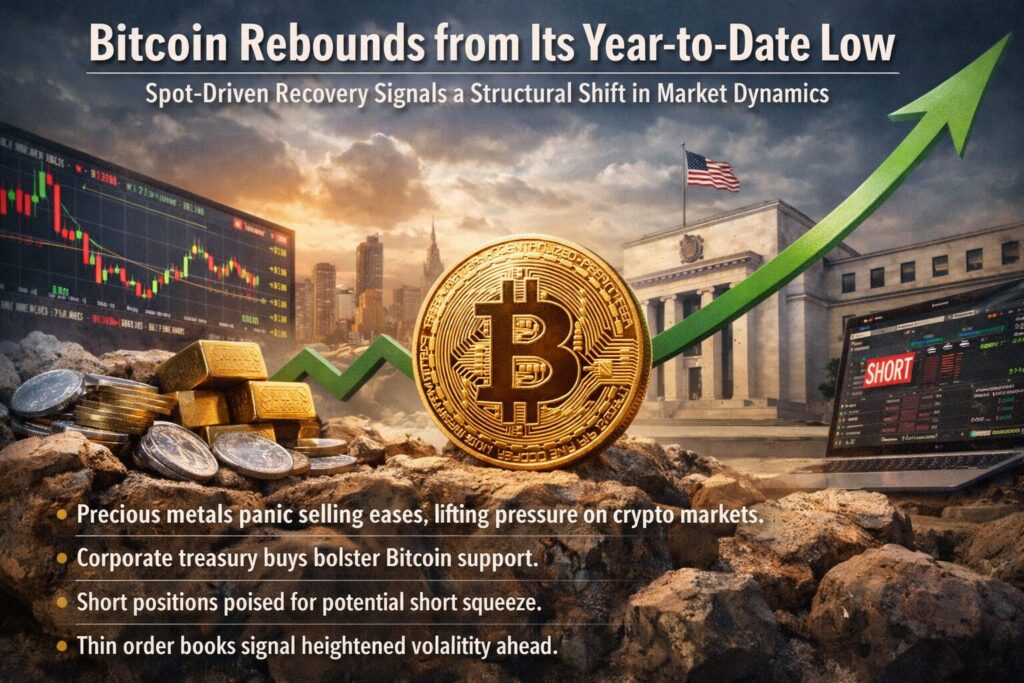
- Bitcoin rebounded from its 2026 year-to-date low, driven primarily by spot market buying rather than leveraged derivatives.
- Panic selling in precious metals markets subsided, easing macro-driven pressure on risk assets, including cryptocurrencies.
- Corporate treasury accumulation, highlighted by Strategy’s additional Bitcoin purchase, reinforced downside support.
- Derivatives positioning remains skewed toward shorts, increasing the likelihood of short-covering rallies.
- Thin order books suggest heightened volatility ahead, particularly around key U.S. macroeconomic events.
1. Market Overview: A Sharp Reversal from Year-to-Date Lows
Bitcoin (BTC) experienced a notable rebound between February 2 and February 3, 2026, after briefly marking its lowest price level of the year. The move came after a period of sustained downward pressure, during which macroeconomic uncertainty and cross-asset volatility weighed heavily on digital assets.
At its nadir, Bitcoin’s decline coincided with panic-driven selling in the precious metals market, where gold and silver saw abrupt liquidations. Historically, such episodes often spill over into cryptocurrencies, as traders reduce exposure across perceived “alternative asset” categories to raise liquidity.
However, as volatility in metals markets began to stabilize, Bitcoin found room to recover. Unlike prior rebounds driven by aggressive derivatives positioning, this recovery was led primarily by spot market demand, suggesting a more structurally resilient form of buying interest.
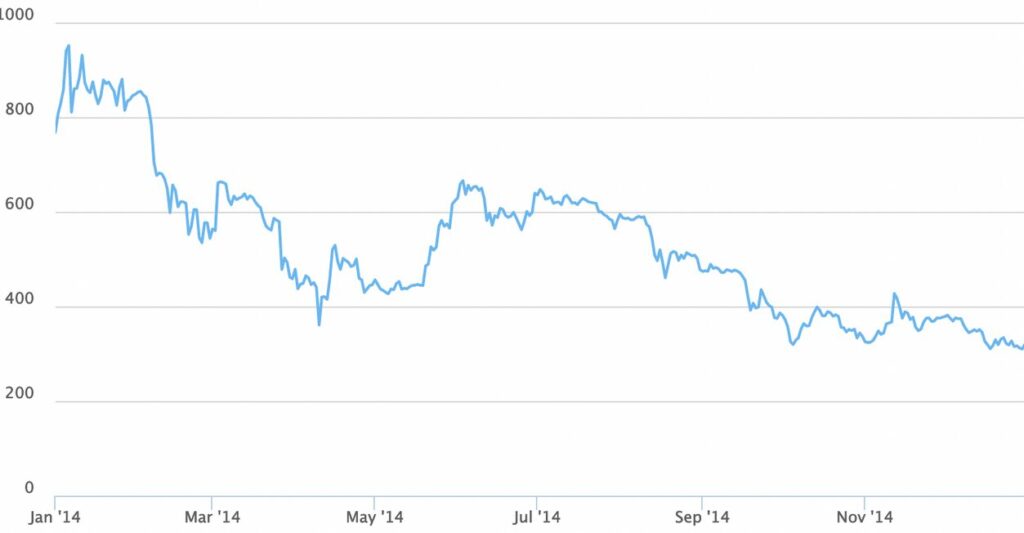
Bitcoin Price (USD) – Year-to-Date with February Reversal Highlighted
2. The Macro Backdrop: Precious Metals, Monetary Policy, and Risk Appetite
One of the central catalysts behind Bitcoin’s earlier decline was turbulence in the precious metals market. As gold prices fell sharply in USD terms, investors reassessed so-called “debasement trades” — positions predicated on sustained fiat currency dilution due to monetary easing.
This reassessment was intensified by renewed hawkish expectations surrounding U.S. monetary policy. The appointment of a more hawkish Federal Reserve chair prompted markets to price in a longer period of restrictive financial conditions, reversing earlier assumptions of imminent rate cuts.
Bitcoin, often positioned as a hedge against fiat debasement, suffered as these trades unwound. Importantly, while the immediate volatility in metals has eased, the underlying question of long-term monetary policy direction remains unresolved. This suggests that Bitcoin’s rebound, while technically constructive, still exists within a fragile macro equilibrium.
3. Spot Market Dominance: A Healthier Form of Demand
A defining feature of the recent rebound has been the dominance of spot market buying. Analysis of market order flow shows that aggressive buy orders were concentrated in spot exchanges rather than perpetual futures or options markets.
This distinction matters. Derivatives-led rallies are often vulnerable to sudden reversals when funding rates spike or leverage becomes overcrowded. In contrast, spot-driven recoveries tend to reflect genuine capital allocation decisions, often by longer-term holders.
Following the year-to-date low, spot buying absorbed sell-side liquidity efficiently, allowing prices to recover without a corresponding surge in open interest. This dynamic suggests that buyers were not relying heavily on borrowed capital, reducing systemic fragility.
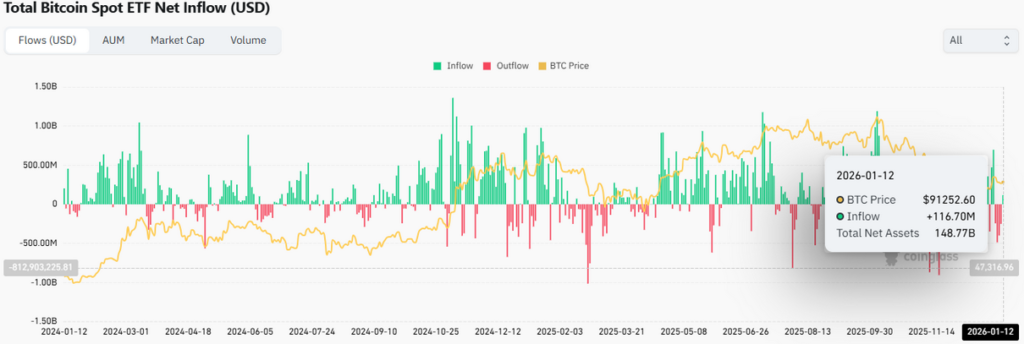
Spot vs Derivatives Volume (USD) – February 2–3, 2026
4. Derivatives Positioning: Shorts Dominate, Setting the Stage for Covering
Despite the price rebound, derivatives market data shows that active open interest remains relatively low compared to previous sell-offs. More notably, positioning is skewed toward short positions.
This imbalance creates a structurally supportive environment for price stabilization or further upside. When prices rise modestly in such conditions, short sellers may be forced to cover positions, adding incremental buy pressure.
However, the lack of heavy leverage also means that upside moves may be more gradual rather than explosive. The market appears to be transitioning from a speculative, leverage-heavy phase into a more cautious, allocation-driven regime.
5. Corporate Treasury Behavior: Strategy’s Signal to the Market
Adding to the positive sentiment was the announcement that Strategy, a prominent Bitcoin treasury company, purchased an additional 855 BTC. While the pace of accumulation has slowed relative to previous cycles, the symbolic importance of continued buying cannot be overstated.
Corporate treasury participation provides a psychological floor for the market. These entities typically operate with longer time horizons and are less sensitive to short-term volatility. Their activity signals confidence in Bitcoin’s long-term value proposition as a reserve asset.
For market participants seeking asymmetric risk-reward opportunities, monitoring corporate balance sheet behavior remains a critical analytical tool.
6. Liquidity Conditions: Thin Order Books and Rising Volatility Risk
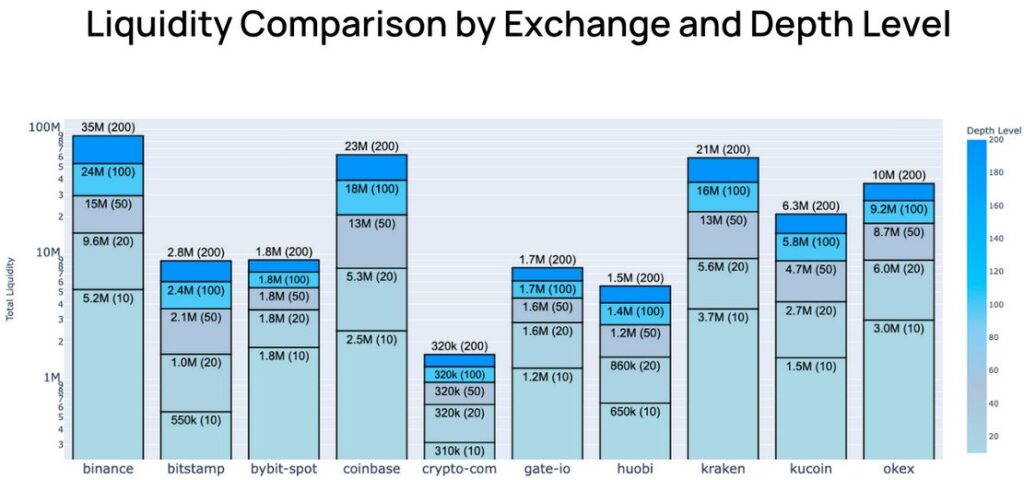
Order book analysis reveals that liquidity across major exchanges has thinned considerably. Bid and ask depth is shallow, meaning relatively modest orders can move prices significantly.
Such conditions increase volatility risk, especially around scheduled macroeconomic events. While thin liquidity can amplify upside moves during buying waves, it equally exacerbates downside risk if sentiment shifts abruptly.
For traders and investors alike, this environment rewards disciplined position sizing and careful risk management.
Bitcoin Order Book Depth (USD) – Major Exchanges
7. Near-Term Catalysts: What the Market Is Watching
Several upcoming events could meaningfully influence Bitcoin’s short-term trajectory:
- February 3: U.S. ISM Manufacturing Index
- February 6: U.S. Employment Report
- February 10–12: Consensus Hong Kong 2026
Macroeconomic data that reinforces a restrictive monetary outlook could reintroduce headwinds, while signs of economic cooling may revive expectations of policy easing — a scenario historically favorable for Bitcoin.
Meanwhile, industry events such as Consensus Hong Kong often serve as narrative catalysts, shaping investor perception around innovation, adoption, and capital inflows.
8. Implications for Investors and Builders
For investors searching for the next source of yield or capital appreciation, the current environment underscores the importance of structural analysis over short-term speculation. Spot-led accumulation, corporate treasury participation, and reduced leverage collectively point toward a market attempting to establish a more sustainable base.
For builders and operators focused on blockchain’s practical applications, periods of consolidation often provide the best conditions for development. Reduced speculative noise allows capital and attention to shift toward infrastructure, payments, tokenization, and real-world use cases.
Conclusion: A Cautious but Constructive Turning Point
Bitcoin’s rebound from its year-to-date low represents more than a technical bounce. The dominance of spot buying, subdued leverage, and continued corporate accumulation suggest a subtle but meaningful shift in market structure.
That said, unresolved macroeconomic uncertainties and thin liquidity warrant caution. Rather than signaling the start of an aggressive bull run, the current phase appears to mark a transition — from fear-driven liquidation toward selective, conviction-based accumulation.
For those seeking long-term opportunities in digital assets and blockchain ecosystems, this environment may prove less exciting, but ultimately more fertile.


