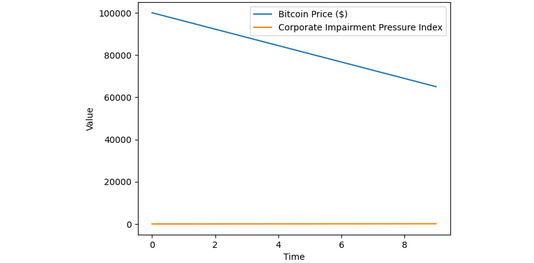
The collapse of the $80,000 psychological support level in Bitcoin triggered not only market panic but also deep structural stress across corporate balance sheets.
Impairment risks faced by Bitcoin-holding companies exposed the fragility of the “institutional safe haven” narrative.
While Western markets were trapped in fear and forced liquidation, the Middle East quietly advanced real-world Bitcoin adoption, led by Dubai’s insurance sector.
The decision by Dubai Insurance to complete insurance payments entirely in Bitcoin marked a fundamental shift from speculation to financial utility.
Extreme overselling in futures markets, combined with massive capital flight into gold and silver, signaled a breakdown in price discovery mechanisms.
The contradiction between collapsing prices and accelerating real-world usage defined the paradoxical core of the 2026 crypto market.
Long-term value may emerge not from charts, but from jurisdictions where Bitcoin is already embedded into daily financial infrastructure.
1. The Collapse of the $80,000 Line: Panic, Impairment Risk, and the Shaking of Corporate Balance Sheets
The moment Bitcoin decisively broke below the $80,000 psychological defense line, the market entered a state that went far beyond ordinary correction. What unfolded was not merely volatility, but a collective crisis of confidence. Investors were no longer debating timing or entry points; they were questioning the structural integrity of the entire bullish thesis that had dominated institutional narratives for years.
Updating year-to-date lows reinforced the fear that this was not a temporary drawdown, but potentially the beginning of a deeper regime shift. For many market participants, the price action suggested that long-term trends themselves were decaying beneath the surface.
This fear was particularly acute for corporations that had adopted Bitcoin as a treasury reserve asset. Companies that once celebrated balance sheet resilience suddenly faced the prospect of massive impairment losses. Accounting rules forced unrealized losses to become painfully visible, transforming what had been a strategic asset into a liability under shareholder scrutiny.
The collapse of the $80,000 level symbolized more than a broken chart pattern; it marked the implosion of the institutional “safe asset” narrative. Boardrooms that once praised Bitcoin’s role as digital gold now confronted the irony of extreme volatility destabilizing corporate governance.
As impairment charges mounted, the risk of forced selling increased. Each sale added further downward pressure, creating a self-reinforcing liquidation spiral. Panic selling bred more panic, systematically eliminating rational buyers from the market.
Bitcoin, once heralded as a hedge against systemic fragility, appeared instead to amplify it. The image of corporate management being dragged around by market volatility was a stark reminder that innovation without adequate risk frameworks can become destructive.
The market of 2026 proved unforgiving. It became a selection mechanism that stripped assets from those unprepared for prolonged instability. Whether this destruction was a terminal collapse or a necessary purge remained unclear—but the noise surrounding price movements obscured deeper institutional risks that demanded urgent examination.
2. Dubai Insurance and the Quiet Revolution: Bitcoin as a Fully Functional Financial Medium
While global markets were gripped by fear, a very different story was unfolding in the Middle East. In Dubai, innovation did not pause for price volatility. Instead, it accelerated.
The announcement by Dubai Insurance to provide native crypto wallets was not a marketing stunt. It was a radical integration of Bitcoin into one of society’s most traditional financial infrastructures: insurance.
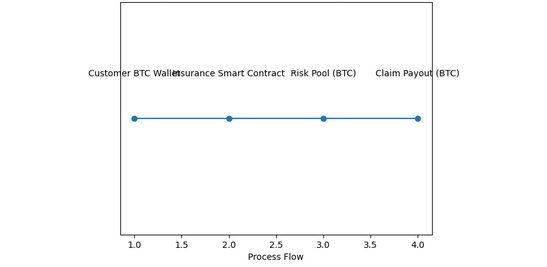
By enabling insurance premiums and payouts to be settled entirely in Bitcoin—without touching fiat currency—Dubai Insurance effectively challenged the sovereignty of state-issued money. This was not speculation. It was functional, operational finance.
The significance of this move cannot be overstated. Insurance is inherently long-term. By choosing Bitcoin for such contracts, Dubai signaled that it views Bitcoin not as a volatile asset, but as a durable monetary layer in its future economy.
This decision reframed Bitcoin from a speculative instrument into a settlement rail. Smart contracts promise automated, transparent payouts that reduce fraud and administrative overhead, drastically lowering the cost of trust.
While regulators in Western economies continued to debate frameworks, Dubai moved ahead with implementation. The result is the emergence of a de facto standard, built through practice rather than policy.
Even if Bitcoin prices fluctuate violently, its utility as a medium of exchange remains intact as long as real services depend on it. In fact, periods of price chaos may strengthen such systems by shifting focus away from charts toward functionality.
This quiet revolution, originating in the Middle East, threatens to erode dollar dominance not through confrontation, but through obsolescence. Individuals empowered with settlement freedom can now interact beyond national monetary borders.
[Diagram of insurance premium and payout flows completed entirely in Bitcoin via smart contracts]
3. Futures Market Dysfunction: Extreme Overselling and the Flight to Gold and Silver
The third pillar of the 2026 paradox lies in derivatives markets. Bitcoin futures reached historically extreme oversold conditions. Prices detached from theoretical fair value, suggesting that price discovery mechanisms had broken down.
Short positions accumulated aggressively, pushing indicators far beyond rational thresholds. This was not a balanced market—it was a pressure chamber.
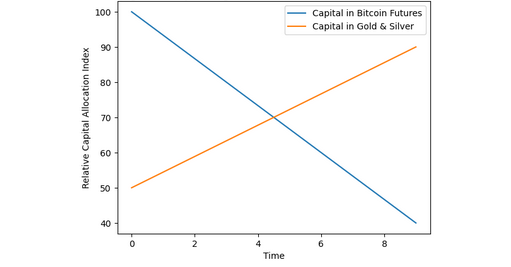
Simultaneously, capital poured into gold and silver. Investors abandoned the most liquid digital asset in favor of physical metals, signaling a deeper loss of trust in financial systems themselves.
This regression toward traditional safe havens exposed systemic fear. The derivatives market, rather than stabilizing price signals, amplified distortion. Paper leverage overwhelmed spot fundamentals.
At such extremes, outcomes become binary: either a violent short squeeze or a deeper collapse of confidence. Both scenarios carry systemic risk.
Ironically, this excessive pessimism may also be storing energy for the next reversal. Markets stretched to their limits resemble a bow pulled to its maximum tension—quietly vibrating before release.
When systems fail, only assets with tangible utility endure. Whether Bitcoin will be judged as such in 2026 depends not on futures charts, but on its embedded role in real economic processes.
[Comparative flow diagram showing capital migration from Bitcoin futures into gold and silver]
Conclusion: The Paradox That Defines 2026
The defining feature of the 2026 crypto landscape is contradiction. Prices collapse while adoption deepens. Institutions panic while infrastructure matures. Markets scream fear while real-world usage grows quietly stronger.
For those searching for the next digital asset or sustainable revenue stream, the lesson is clear: charts alone are insufficient. True value emerges where blockchain integrates into everyday financial life.
The future may not belong to the loudest markets, but to the jurisdictions building silently—one transaction, one contract, one insurance policy at a time.
About Us and Media
Blockchain and cryptocurrency media covering and exposing the practical application development on the blockchain industry and undiscovered coins.
Click edit button to change this text. Lorem ipsum dolor sit amet, consectetur adipiscing elit
Manage Consent
To provide the best experiences, we use technologies like cookies to store and/or access device information. Consenting to these technologies will allow us to process data such as browsing behavior or unique IDs on this site. Not consenting or withdrawing consent, may adversely affect certain features and functions.
Functional
Always active
The technical storage or access is strictly necessary for the legitimate purpose of enabling the use of a specific service explicitly requested by the subscriber or user, or for the sole purpose of carrying out the transmission of a communication over an electronic communications network.
Preferences
The technical storage or access is necessary for the legitimate purpose of storing preferences that are not requested by the subscriber or user.
Statistics
The technical storage or access that is used exclusively for statistical purposes.The technical storage or access that is used exclusively for anonymous statistical purposes. Without a subpoena, voluntary compliance on the part of your Internet Service Provider, or additional records from a third party, information stored or retrieved for this purpose alone cannot usually be used to identify you.
Marketing
The technical storage or access is required to create user profiles to send advertising, or to track the user on a website or across several websites for similar marketing purposes.