Main Points :
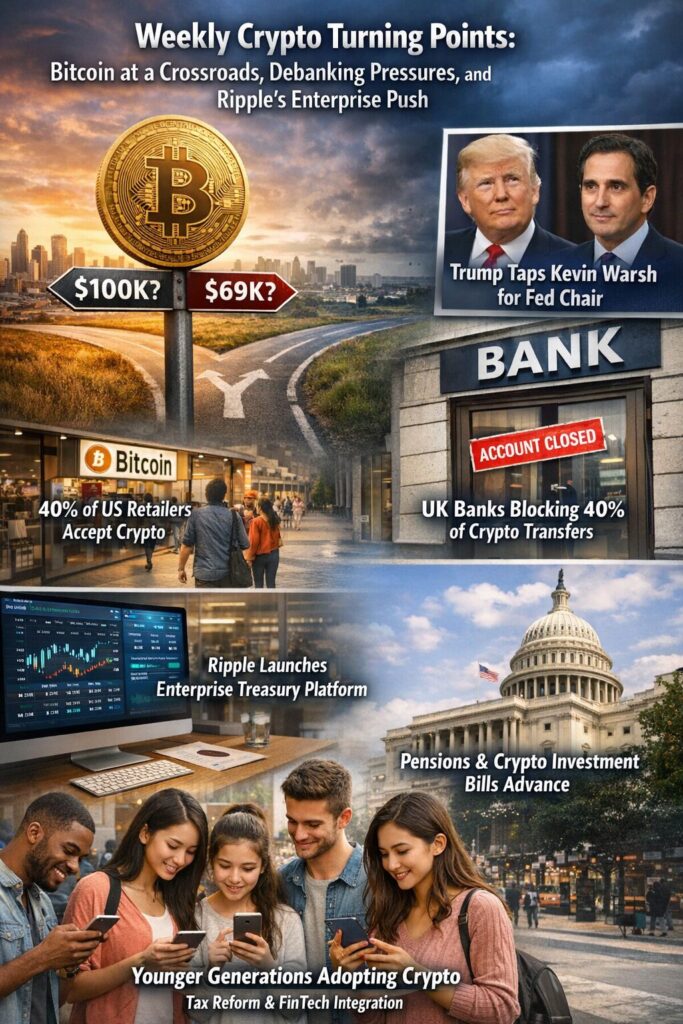
- Bitcoin faces a critical inflection point, with prediction markets split between a return to $100,000 and a decline toward $69,000.
- US monetary leadership may shift toward a Bitcoin-friendly stance, as Donald Trump nominates Kevin Warsh as the next Federal Reserve Chair.
- Crypto payments are rapidly entering everyday commerce, with 40% of US retailers already accepting digital assets.
- Debanking intensifies in the UK, where banks reportedly block or delay 40% of crypto-related transfers.
- Ripple expands beyond payments, launching an enterprise treasury platform that integrates digital assets into corporate finance.
- Regulatory sentiment in the US shows a structural shift, as crypto investment for pensions and market clarity bills move forward.
- Younger generations continue to adopt crypto, supported by tax reforms and tighter integration with financial apps.
Bitcoin at a Crossroads: $69,000 or $100,000?
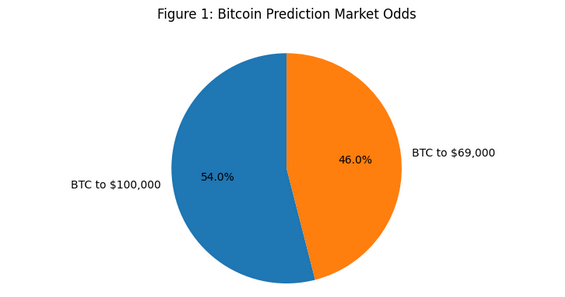
Bitcoin is once again approaching a decisive moment. On the decentralized prediction market Myriad, traders are actively betting on whether Bitcoin (BTC) will recover to $100,000 or fall back to $69,000. At the time of writing, the total capital committed to this binary outcome exceeds $140,000, with probabilities split almost evenly: approximately 54% favor a rebound to $100,000, while 46% anticipate a decline to $69,000.
This division reflects broader market uncertainty. After surpassing $100,000 for the first time in late 2024, Bitcoin entered a corrective phase driven by tightening US monetary expectations, geopolitical tensions, and regulatory overhangs. Rather than a simple technical retracement, the current range-bound behavior suggests a deeper reassessment of Bitcoin’s role in global portfolios.
What makes this prediction market notable is not its size, but its symbolism. It captures a psychological fork in the road: Bitcoin as a volatile risk asset vulnerable to macro shocks, or Bitcoin as a resilient monetary alternative capable of reclaiming six-figure valuations even under political and policy stress.
[Binary Prediction Market Odds – BTC $69,000 vs $100,000]
A Bitcoin-Supportive Federal Reserve? Trump’s Nomination of Kevin Warsh
On January 31, former US President Donald Trump announced via his social media platform Truth Social that he intends to nominate Kevin Warsh as the next Chair of the Federal Reserve. Warsh is widely known for his comparatively open stance toward Bitcoin, having previously described it as “a new form of gold for younger generations.”
While the nomination still requires Senate approval, the timing is significant. Current Fed Chair Jerome Powell’s term is set to expire in May 2026, making this announcement an early signal of potential monetary policy realignment. For crypto markets, leadership at the Federal Reserve is not merely symbolic; it directly influences liquidity conditions, interest rate expectations, and regulatory coordination.
A Warsh-led Fed would not necessarily mean overt Bitcoin endorsement. However, it could imply a reduced hostility toward digital assets and a greater willingness to treat them as macro-relevant instruments rather than fringe speculation. For long-term investors and infrastructure builders, this possibility alters strategic assumptions about the US financial environment over the next decade.
Crypto Payments Enter the Mainstream: 40% of US Retailers Onboard
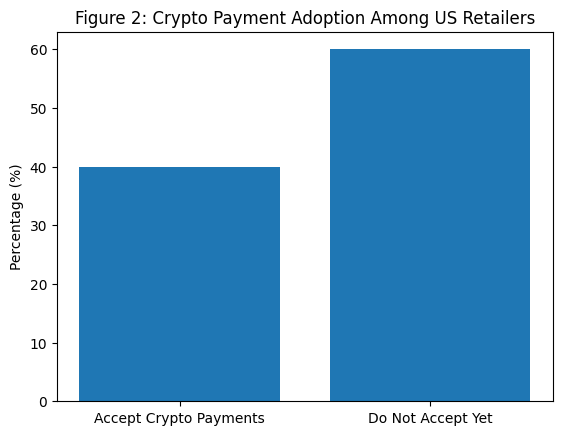
A joint survey released on January 27 by PayPal and the National Cryptocurrency Association (NCA) reveals a striking trend: approximately 40% of US retailers, both online and physical, now accept cryptocurrency payments. Even more telling, 88% of surveyed merchants reported receiving customer inquiries about paying with crypto, and 84% believe that digital assets will become a standard payment method within the next five years.
This is no longer a story about ideological adoption. Retailers are responding to consumer demand, lower cross-border friction, and improvements in payment UX. Stablecoins, in particular, are playing a quiet but transformative role by reducing volatility concerns while preserving blockchain settlement advantages.
For builders and investors, the implication is clear: payment-layer infrastructure is becoming less speculative and more operational. Revenue opportunities are shifting from token appreciation to transaction fees, merchant services, compliance tooling, and treasury optimization.
[Crypto Payment Adoption Among US Retailers (%)]
Debanking in the UK: Structural Risk to Innovation
While adoption accelerates in the US, the UK presents a contrasting narrative. According to a report by the UK Cryptoasset Business Council (UKCBC), British banks are rejecting or delaying approximately 40% of transfers to crypto exchanges. Furthermore, 80% of industry participants report an increase in banking-related obstacles over the past 12 months, and 70% describe their relationships with banks as increasingly adversarial.
The consequences extend beyond inconvenience. Around 70% of surveyed firms stated that they are postponing investment or hiring plans in the UK due to stricter transfer limitations. This highlights a paradox: regulatory clarity may exist on paper, but operational access to banking rails remains constrained.
Debanking is emerging as a silent form of regulation—one that shapes markets without legislative debate. For global crypto businesses, this reinforces the need for multi-jurisdictional treasury strategies and alternative settlement rails that reduce dependence on any single banking system.
Ripple Treasury: Enterprise Finance Meets Digital Assets
Ripple has taken a decisive step toward enterprise integration with the launch of Ripple Treasury, a corporate treasury management platform announced on January 28 in partnership with GTreasury. The platform consolidates liquidity management, cash forecasting, risk management, reconciliation, and settlement into a single system, offering unified visibility across fiat and digital assets.
This move signals Ripple’s evolution beyond cross-border payments into broader financial infrastructure. By positioning XRP and its upcoming stablecoin RLUSD as tools within corporate treasury operations, Ripple is targeting CFOs rather than traders.
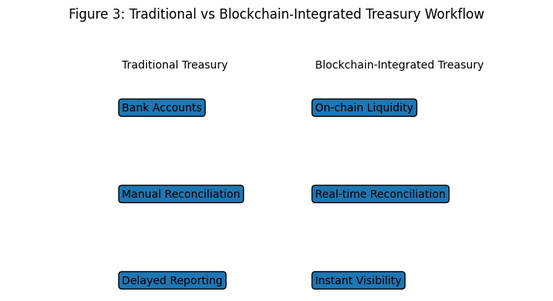
For enterprises, the appeal lies in efficiency and transparency. Blockchain-based settlement reduces reconciliation delays, while real-time liquidity visibility improves capital efficiency. If successful, Ripple Treasury could serve as a blueprint for how blockchain integrates into corporate finance without requiring ideological commitment to decentralization.
[Traditional Treasury vs Blockchain-Integrated Treasury Workflow]
US Regulation: From Enforcement to Enablement
Regulatory tone in the US is undergoing a subtle but important shift. On January 30, SEC Chair Paul Atkins stated that the time has come to allow cryptocurrency investments within 401(k) pension plans, provided they are implemented under strict professional management and risk controls. Speaking alongside CFTC Chair Mike Selig on CNBC, Atkins emphasized the need to balance innovation with long-term asset protection for retirees.
In parallel, the US Senate Agriculture Committee has advanced the CLARITY Act, a bill aimed at defining jurisdictional boundaries and regulatory frameworks for crypto markets. Meanwhile, the White House has scheduled a high-level meeting between crypto industry leaders and major banks on February 2 to address legislative gridlock.
Taken together, these developments suggest a transition from reactive enforcement toward structured integration. For institutional players, this reduces regulatory ambiguity and opens the door to larger pools of capital entering the market.
Generation Z and the Policy Tailwind
Adoption at the grassroots level continues to expand. A January 26 report by Money Insight Lab found that 9.5% of Generation Z in Japan already hold crypto assets. This trend is supported by policy initiatives such as the new NISA investment framework and discussions around introducing a flat 20.315% separate tax regime for crypto gains.
Equally important is the role of financial apps. Seamless integration between banking apps and crypto platforms is lowering the barrier to entry, transforming digital assets from speculative instruments into everyday financial tools.
Conclusion: A Market Shaped by Infrastructure, Not Hype
This week’s developments illustrate a market in transition. Bitcoin’s price uncertainty reflects macro tension, but beneath the surface, adoption, infrastructure, and policy alignment continue to advance. From enterprise treasury platforms to retail payments and pension integration, crypto is embedding itself into financial systems rather than existing at their edges.
For those seeking new assets, revenue streams, or practical blockchain applications, the signal is clear: the next phase of crypto growth will be driven less by speculation and more by execution. Understanding where infrastructure, regulation, and real-world use converge will be the key to sustainable opportunity.