Main Points :
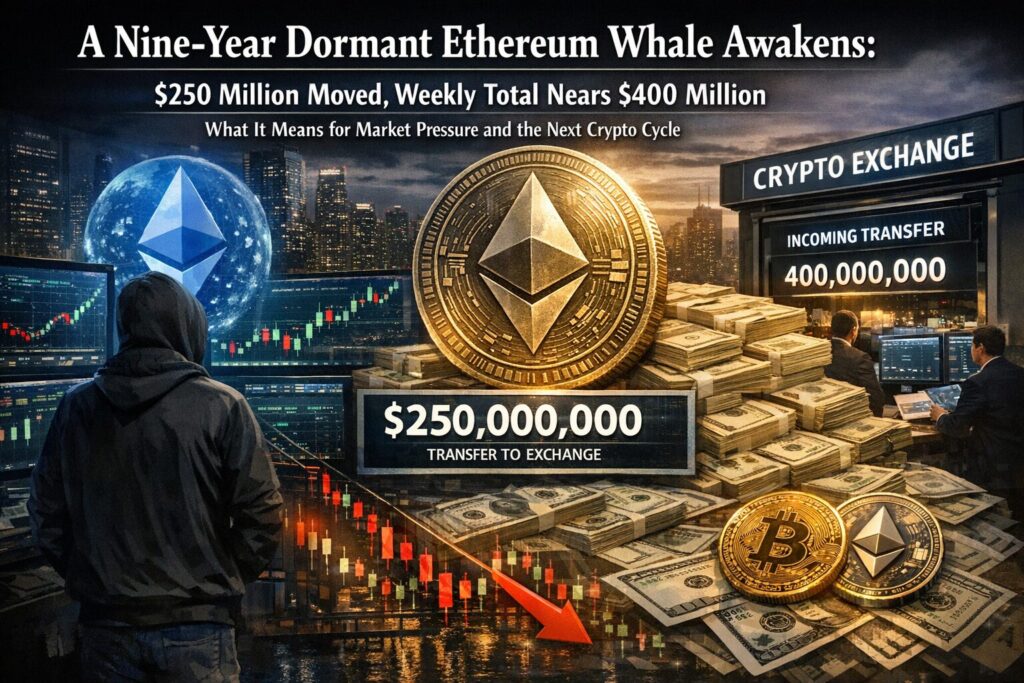
- A long-dormant Ethereum whale wallet moved approximately $250 million worth of ETH to an exchange, bringing its weekly total transfers close to $400 million.
- The wallet accumulated ETH in 2017 at around $90 per ETH, implying hundreds of millions of dollars in unrealized profit.
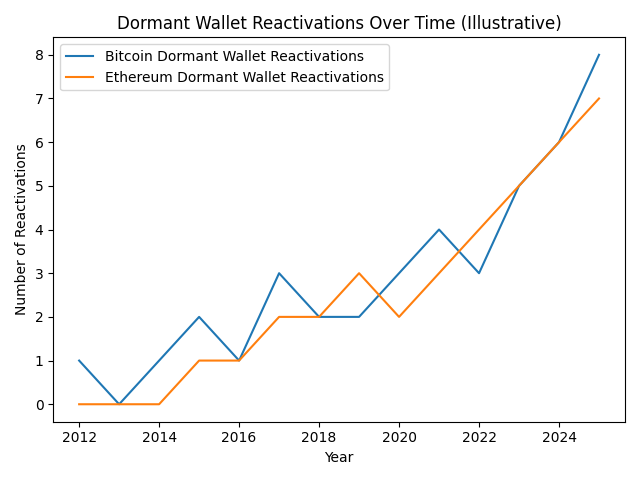
- Similar movements are being observed across Bitcoin and Ethereum, including reactivation of wallets dormant for over a decade.
- Analysts are increasingly cautious, noting that large exchange inflows often precede selling pressure or volatility.
- These movements offer critical signals for investors seeking new crypto assets, yield opportunities, and practical blockchain use cases.
1. The Return of a Silent Giant: What Happened On-Chain
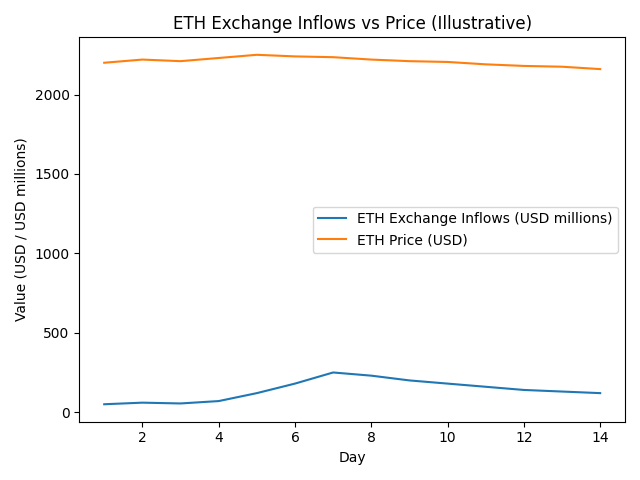
According to on-chain intelligence platform Arkham Intelligence, an Ethereum wallet that had shown no outbound activity for approximately nine years suddenly became active on January 27. The wallet transferred 85,283 ETH, valued at roughly $250 million, to deposit addresses associated with the crypto exchange Gemini.
Earlier in the same week, the same wallet had already transferred 50,001 ETH, bringing the weekly total to 135,284 ETH, or approximately $397 million at prevailing market prices. This means the wallet effectively moved its entire ETH balance within days — a pattern that almost always draws market attention.
From a purely technical standpoint, such a transfer does not automatically confirm a sale. However, moving funds to an exchange rather than a cold wallet significantly raises the probability of liquidation, hedging, or collateral usage.
2. The Cost Basis: A Decade of Patience Pays Off
On-chain analysts estimate that this whale originally acquired its ETH in 2017, purchasing through Bitfinex at an average price of approximately $90 per ETH.
At today’s valuations, that implies:
- Initial investment: roughly $12 million
- Current value transferred: approximately $397 million
- Estimated unrealized profit: around $385 million
This scale of return highlights a fundamental dynamic of crypto markets: early adoption plus extreme patience can produce asymmetric outcomes. It also explains why such wallets can afford to wait nearly a decade before acting — and why, when they finally do, markets listen.
3. Why Exchange Transfers Matter: Reading Whale Intentions
In crypto market structure, exchange inflows are one of the most closely watched metrics. While not all exchange deposits lead to immediate selling, historically they correlate with:
- Profit-taking
- Portfolio rebalancing
- Collateral posting for derivatives
- Preparation for large OTC or spot sales
Analysts at CryptoQuant have repeatedly emphasized that sudden spikes in whale exchange inflows often precede periods of volatility.
In this case, the complete transfer of the wallet’s ETH holdings — rather than a partial test transaction — strengthens the interpretation that a strategic shift is underway.
4. A Broader Pattern: Dormant Wallets Across Chains Are Waking Up
This Ethereum event is not isolated.
Just one week earlier, a Bitcoin wallet dormant for approximately 13 years suddenly transferred 909 BTC, worth about $81 million, to a newly created address. While those BTC were not immediately sent to an exchange, the psychological impact was similar: ancient supply is moving.
Historically, the reactivation of very old wallets tends to cluster around:
- Late-stage bull markets
- Major macroeconomic or regulatory shifts
- Periods of heightened institutional participation
Whether this signals the end of a cycle or merely a temporary distribution phase remains debated — but the pattern itself is undeniable.
5. Derivatives, Whales, and Selling Pressure Signals
On January 22, CryptoQuant-registered analyst Amr Taha highlighted another concerning trend: increasing whale activity combined with elevated derivatives positioning on Binance.
According to his analysis:
- Whale wallets deposited over $400 million worth of Bitcoin into spot exchanges on January 20.
- At the same time, derivatives markets showed rising open interest and leverage.
This combination — spot inflows plus leveraged derivatives — often creates conditions for:
- Long liquidations
- Sharp downside wicks
- Short-term panic selling followed by recovery
For traders, this environment rewards caution. For builders and long-term investors, it reinforces the importance of structural fundamentals over short-term price action.
6. Implications for Ethereum: Sell-Off or Strategic Rotation?
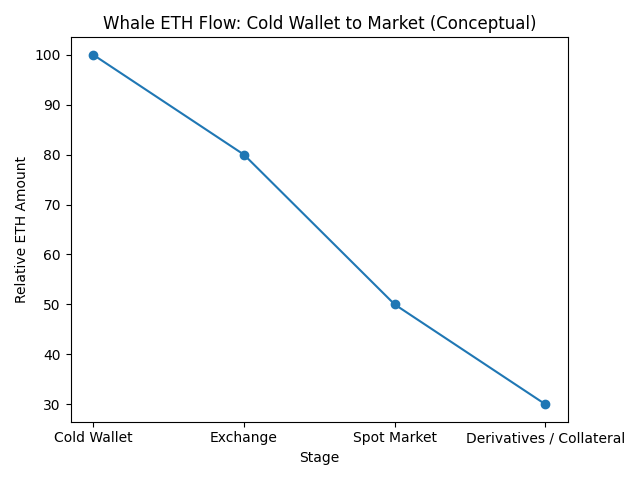
The key question is whether this ETH will be:
- Sold directly on the spot market
- Used as collateral for derivatives or structured products
- Lent out or rehypothecated via institutional platforms
If a substantial portion is sold outright, short-term ETH price pressure is likely, especially if mirrored by other whales. However, if used as collateral, the impact may be more muted — though still contributing to broader market risk.
From a network perspective, it is also worth noting that Ethereum’s on-chain utility continues to expand, including:
- Restaking protocols
- Layer 2 scaling solutions
- Tokenization of real-world assets
- Institutional-grade DeFi infrastructure
These structural trends mean that large holders can monetize ETH in more ways than ever before, not just by selling.
7. What This Means for Readers Seeking New Opportunities
For readers interested in new crypto assets, yield strategies, and practical blockchain applications, several takeaways stand out:
- Whale activity is not inherently bearish, but it changes the risk landscape.
- Monitoring on-chain data is now essential, not optional.
- Value is increasingly shifting from “holding the base asset” to building yield and utility on top of it.
- Periods of whale-driven volatility often create entry points for fundamentally strong projects.
Rather than reacting emotionally, sophisticated participants use these signals to:
- Rebalance portfolios
- Reduce excessive leverage
- Identify undervalued infrastructure plays
8. Where to Insert Visuals
- Chart 1 (Insert after Section 1): ETH exchange inflows vs. price (7-day rolling)
- Chart 2 (Insert after Section 4): Dormant wallet reactivations over time (BTC & ETH)
- Diagram 1 (Insert after Section 6): Whale ETH flows: cold wallet → exchange → spot/derivatives
(Images should be created as clean, neutral charts with USD-denominated values.)
Conclusion: A Signal, Not a Verdict
The awakening of a nine-year dormant Ethereum whale and the movement of nearly $400 million in ETH is not just a headline — it is a signal.
It signals maturity in crypto markets, where early participants are now transitioning from pure holders to sophisticated capital managers. It signals rising complexity, where selling is only one of many possible outcomes. And it signals a market environment where data, not narratives, should guide decisions.
For investors, builders, and operators alike, the lesson is clear: watch the whales, but think beyond them. The next phase of crypto growth will not be defined solely by who sells — but by who builds sustainable value when volatility returns.