

Main Points :
- A prominent crypto investor has identified clear Bitcoin support levels that may define the next accumulation phase.
- Rather than predicting a single outcome, the strategy emphasizes preparedness for both upside continuation and downside accumulation.
- Key support zones range from $80,000 down to below $50,000, each with distinct technical and psychological significance.
- Long-term indicators such as the 200-week moving average and realized price remain critical anchors.
- For investors seeking new crypto opportunities, yield strategies, and practical blockchain use, this framework highlights how professionals manage volatility rather than react emotionally.
Introduction: Bitcoin Volatility Is Not a Bug — It’s the Feature
Bitcoin’s price action in early 2026 once again reminds investors of a fundamental truth: volatility is intrinsic to the asset. Headlines oscillate between optimism and despair, with familiar narratives such as “Bitcoin is dead” resurfacing whenever prices decline sharply. Yet, behind the noise, seasoned investors approach these moments not with panic, but with preparation.
On January 25, 2026, Chris Burniske, co-founder of Placeholder, shared a detailed breakdown of Bitcoin’s major support levels. While he emphasized that he is “not a buyer yet,” his analysis offers a structured roadmap for how disciplined capital thinks about risk, opportunity, and timing.
This article expands on Burniske’s framework, integrates broader market context, and explains why such analysis matters for readers searching for new crypto assets, sustainable revenue sources, and real-world blockchain applications.
The Investor Behind the Analysis: Chris Burniske
Burniske is widely recognized as one of the most analytical voices in crypto investing. Before co-founding Placeholder in 2017, he led blockchain research at ARK Invest, where he helped shape institutional understanding of cryptoassets.
Placeholder has since backed over 75 early-stage blockchain projects, including Cosmos, Solana, and Avalanche. Burniske is also co-author of Cryptoassets, a foundational text for crypto investors, and regularly publishes market insights to an audience of over 330,000 followers.
This background matters: his analysis is not driven by short-term trading, but by portfolio construction across cycles.
Bitcoin’s Key Support Levels: A Layered Map of Risk and Opportunity
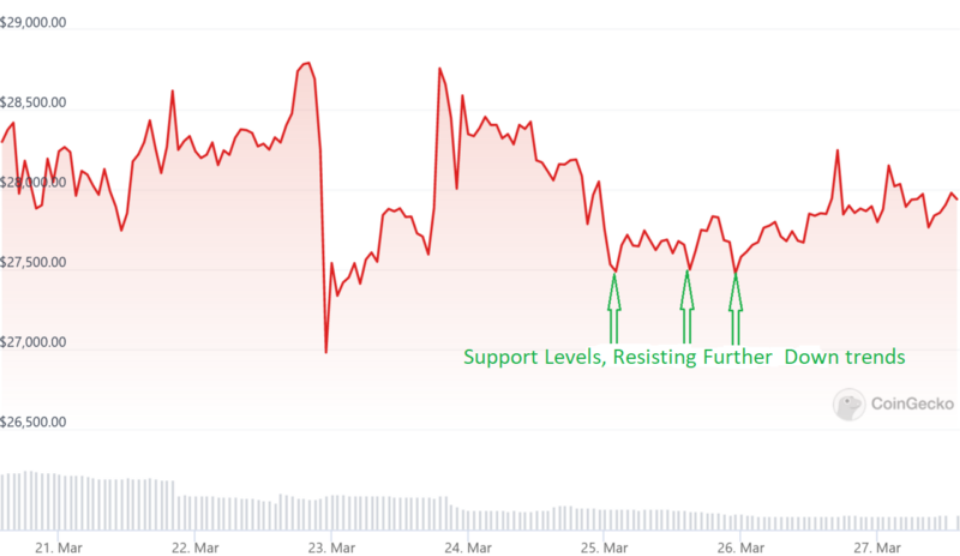
1. Around $80,000 — Local Cycle Support
This level corresponds to the November 2025 low and represents the most immediate support in the current correction. From a market-structure perspective, it is where short-term momentum traders previously re-entered.
A successful defense here would signal continued bullish structure. A failure, however, opens the door to deeper retracements.
[Bitcoin Daily Chart with $80,000 Highlighted Support Zone]
2. Around $74,000 — Structural and Institutional Reference Point
The $74,000 region aligns with the April 2025 low during the tariff-driven macro shock. Importantly, it sits just below the estimated average acquisition price of MicroStrategy, around $76,000.
This zone is significant because institutional behavior often clusters around known cost bases. A dip slightly below such levels can trigger both fear-driven selling and opportunistic accumulation.
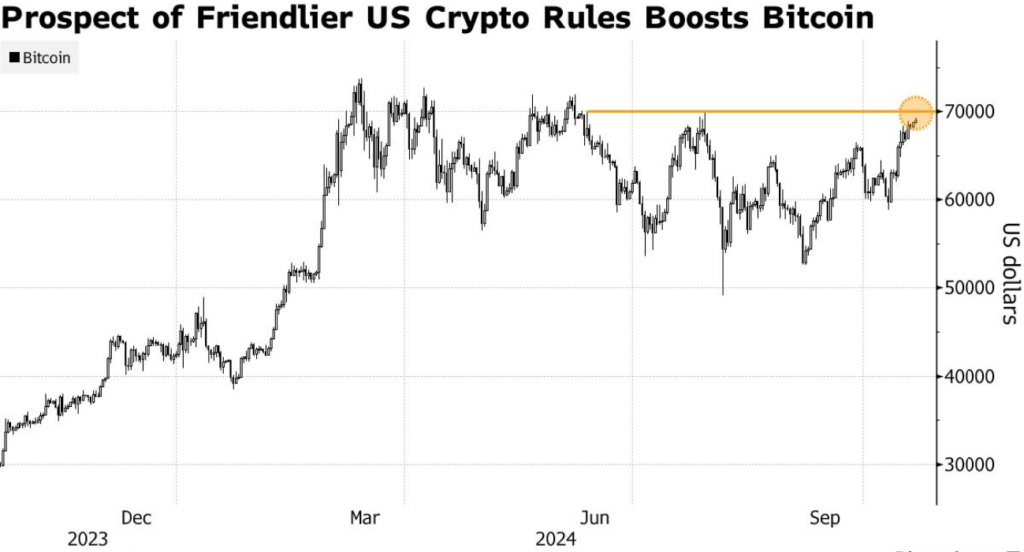
3. Around $70,000 — Historical Breakout Zone
This level marks the upper boundary of the long-term $50,000–$70,000 range that capped Bitcoin for years after the 2021 peak. Former resistance often becomes support, and markets tend to retest these zones during corrections.
Psychologically, $70,000 also represents a round-number anchor that many investors track instinctively.
[Weekly Bitcoin Chart Showing 2021 High and $70,000 Retest]
4. Around $58,000 — Long-Term Mean Reversion Zone
Here lies one of the most important technical confluences: the 200-week moving average and the on-chain realized price, currently estimated around $56,000.
Historically, Bitcoin rarely trades below this band for extended periods without triggering significant long-term accumulation. For multi-year investors, this zone has repeatedly marked generational buying opportunities.
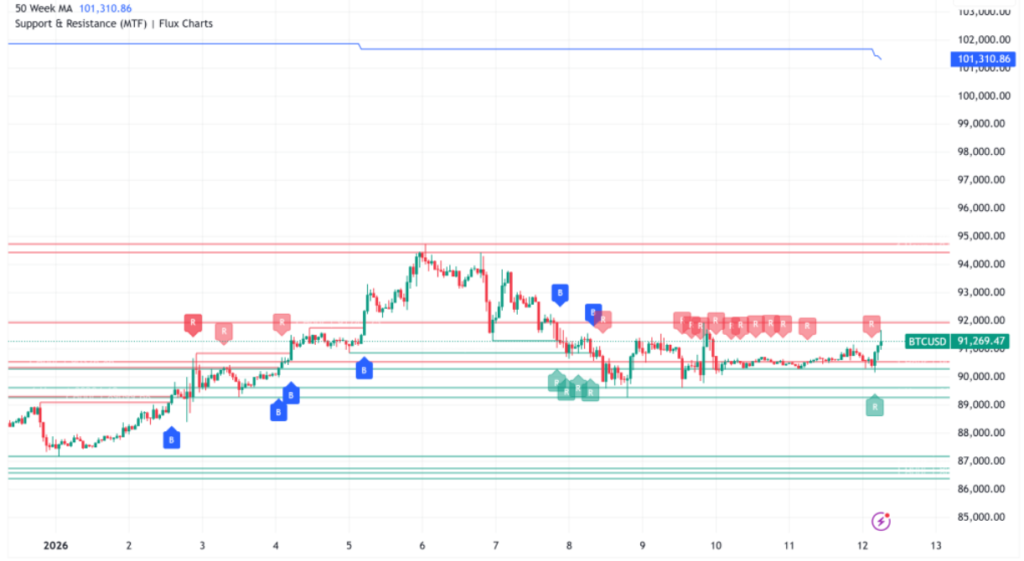
5. Below $50,000 — Psychological Capitulation Territory
If Bitcoin were to fall below $50,000, Burniske notes that declarations of “Bitcoin’s death” would likely resurface. This level represents the bottom of the broader weekly range and a powerful psychological threshold.
Ironically, such moments of widespread pessimism have often coincided with the strongest long-term entries.
[Bitcoin Long-Term Log Chart with $50,000 Psychological Line]
A Portfolio Strategy for Any Outcome
Burniske’s most important point is not the exact price levels, but the mindset behind them. He outlines a two-path strategy:
- If prices rise: maintain existing positions, rebalance, and diversify into select cryptoassets.
- If prices fall: incrementally accumulate Bitcoin and a small basket of high-conviction altcoins.
This approach avoids binary thinking. Instead of betting on a single forecast, it builds resilience into portfolio design.
Broader Market Context: Why This Matters in 2026
Several macro and industry trends amplify the relevance of this framework:
- Institutional adoption continues through ETFs, corporate treasuries, and custody infrastructure.
- Governments are moving toward clearer regulatory regimes, reducing existential risk.
- On-chain data shows long-term holders remain largely inactive, suggesting conviction rather than distribution.
- Capital is increasingly rotating into practical blockchain applications, including payments, tokenized assets, and settlement layers.
For investors seeking new revenue models, Bitcoin remains the liquidity anchor of the entire crypto ecosystem.
Conclusion: Preparation Beats Prediction
Bitcoin’s future will not unfold in a straight line. Sharp drawdowns, emotional headlines, and cyclical fear are not anomalies — they are constants. What differentiates professional investors is not foresight, but preparation.
By mapping support levels, understanding historical context, and maintaining flexibility, investors can transform volatility from a threat into a strategic advantage. Whether Bitcoin holds $80,000 or revisits far lower levels, the opportunity lies in having a plan before the market forces a decision.
For those exploring the next generation of crypto assets, yield strategies, and blockchain-driven business models, this disciplined approach offers a valuable lesson: in crypto, survival and success belong to those who stay rational when others lose conviction.


