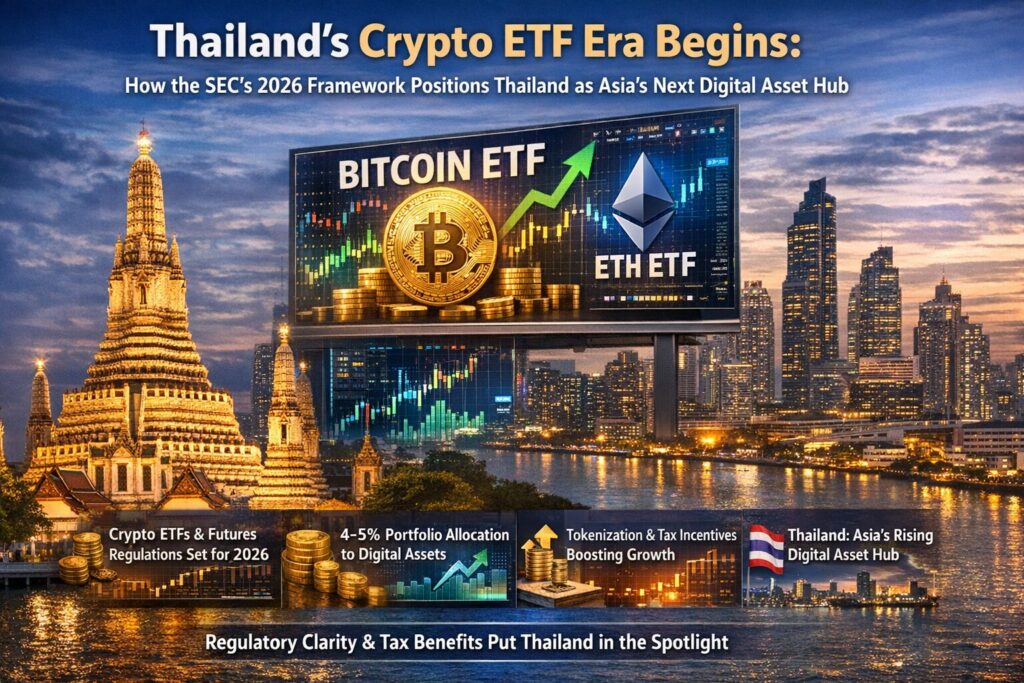
Key Takeaways :
- Thailand’s Securities and Exchange Commission is finalizing formal regulations for cryptocurrency ETFs and futures, targeting full implementation in 2026.
- Bitcoin-focused ETFs are the first step, with Ethereum and diversified digital asset products expected to follow.
- Investors may allocate up to 4–5% of diversified portfolios to digital assets under the new framework, signaling institutional normalization.
- Tokenization of real-world assets (RWA), tax incentives, and sandbox programs are accelerating Thailand’s broader digital asset strategy.
- Combined regulatory clarity and tax exemptions position Thailand as a competitive Asian hub alongside Hong Kong and Singapore.
1. Thailand SEC’s Strategic Shift Toward Crypto ETFs
Thailand is entering a decisive phase in its digital asset policy. The Thailand Securities and Exchange Commission has confirmed that formal regulations governing cryptocurrency exchange-traded funds (ETFs) and crypto-related futures are approaching finalization, with operational rollout targeted for 2026.
According to Deputy Secretary-General Jomkwan Kongsakul, ETF guidelines are expected to be issued in early 2026. While the SEC has already granted principle-based approval, the current phase focuses on operational details—custody arrangements, liquidity mechanisms, and coordination between asset managers and licensed exchanges.
This marks a transition from conceptual approval to infrastructure readiness. Rather than rushing products to market, Thai regulators are prioritizing investor protection while embedding digital assets into the traditional capital market structure.
2. Why ETFs Matter: Accessibility Without Wallet Risk
One of the SEC’s core arguments for ETFs is accessibility. Direct crypto ownership requires wallets, private key management, and exposure to hacking or operational errors. ETFs abstract these risks.
For mainstream investors, crypto ETFs function like any other listed security. Exposure to Bitcoin or Ethereum becomes possible through standard brokerage accounts—no wallets, no seed phrases, no on-chain transaction management.
This structure is particularly attractive to:
- Institutional investors restricted from holding spot crypto
- Retail investors wary of custody risks
- Pension funds and insurers seeking regulated exposure
Thailand’s approach mirrors the logic behind U.S. spot Bitcoin ETFs approved in 2024, but with tighter portfolio allocation controls and stronger emphasis on market stability.
3. Liquidity, Market Makers, and Exchange Cooperation
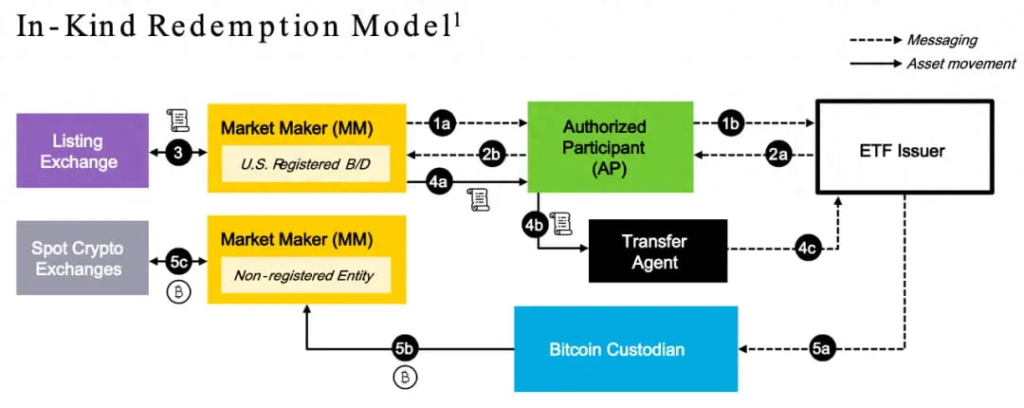
A central challenge for crypto ETFs is liquidity. The Thai SEC is considering appointing:
- Licensed financial institutions
- Approved digital asset exchanges
- Specialized market makers
These entities would ensure continuous bid-ask depth and orderly pricing. This cooperative model aligns exchanges, custodians, and asset managers under a unified regulatory perimeter.
【ETF Ecosystem Structure】
4. Crypto Futures and TFEX Integration
Beyond ETFs, Thailand is preparing to list cryptocurrency futures on the Thailand Futures Exchange (TFEX). To enable this, digital assets are being formally classified as underlying assets under derivatives law.
This is a critical regulatory step. Futures markets enable:
- Institutional hedging
- Risk transfer
- Price discovery
Without futures, ETFs remain exposed to spot market volatility. With them, Thailand can support a full-stack crypto market comparable to mature financial centers.
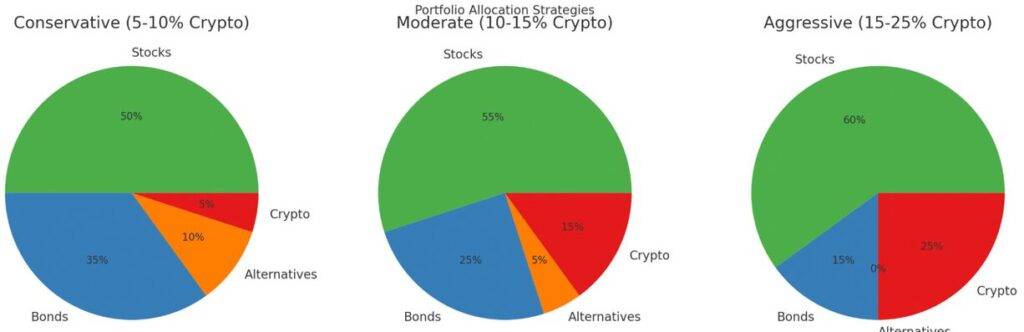
5. Portfolio Allocation Rules: 4–5% as a Policy Signal
Under the new framework, diversified portfolios may allocate up to 4–5% to digital assets. This limit is not arbitrary—it reflects global risk-management norms.
At this allocation level:
- Portfolio volatility remains manageable
- Upside exposure to high-growth assets is preserved
- Institutional fiduciary standards are respected
This rule sends a strong signal: crypto is no longer speculative fringe—it is a recognized alternative asset class.
【Portfolio Allocation Comparison】
6. Tokenization and the RWA Strategy
Thailand’s ambitions extend beyond ETFs. The SEC, in collaboration with the Bank of Thailand, is launching a tokenization sandbox targeting real-world assets (RWA).
This includes:
- Tokenized bonds
- Structured products
- Potentially real estate-linked securities
Notably, KuCoin has been selected as the first platform for a government-supported tokenized bond initiative.
Tokenization enables fractional ownership, faster settlement, and programmable compliance—features particularly valuable for emerging-market capital formation.
7. Tax Incentives and Capital Attraction
To accelerate adoption, Thailand has implemented a five-year capital gains tax exemption on cryptocurrency transactions. This policy directly enhances after-tax returns for investors and traders.
Combined with ETF accessibility, this creates a powerful incentive stack:
- Regulated exposure
- Reduced operational risk
- Tax-efficient returns
The government also plans to integrate crypto into tourism-related payment infrastructure, modernizing one of Thailand’s most important economic sectors.
8. Regional Context: Thailand vs. Asia’s Crypto Hubs
Thailand’s strategy places it in direct comparison with:
- Hong Kong: Aggressive ETF approvals and institutional focus
- Singapore: Strong custody and compliance, but conservative retail access
Thailand differentiates itself through:
- Tax incentives
- Retail-friendly ETF access
- Strong emphasis on RWA tokenization
This balanced approach may prove attractive to both investors and builders seeking regulatory clarity without excessive restrictions.
9. Implications for Investors and Builders
For investors, Thailand’s framework lowers entry barriers while maintaining institutional-grade safeguards.
For builders and fintech firms, opportunities emerge in:
- ETF structuring and management
- Custody and compliance technology
- Tokenization platforms
- Market-making and liquidity provision
The regulatory roadmap from 2026 to 2028 suggests long-term commitment, not a short-lived policy experiment.
Conclusion: Thailand’s Quiet but Decisive Crypto Pivot
Thailand’s forthcoming crypto ETF regulations represent more than a product launch—they signal a structural redefinition of the country’s capital markets.
By combining ETFs, futures, tokenization, and tax incentives within a coherent regulatory framework, Thailand is positioning itself as a credible digital asset hub in Asia. For investors seeking regulated exposure and for innovators building the next generation of financial infrastructure, Thailand’s 2026 framework deserves close attention.