
Key Takeaways :
- Ripple CEO Brad Garlinghouse expects the crypto market to reach a new all-time high in 2026, driven by regulatory clarity and institutional adoption.
- The GENIUS Act has introduced concrete rules for stablecoins and crypto businesses in the United States, reducing regulatory uncertainty.
- The end of the SEC lawsuit against Ripple marks a structural turning point for XRP and the broader crypto industry.
- Institutional investors are beginning to influence price discovery, liquidity, and market stability.
- Over the next 5–10 years, crypto is shifting from speculative expectations to real economic demand and operational use cases.
1. Garlinghouse’s 2026 All-Time High Prediction
Brad Garlinghouse, the CEO of Ripple, stated in a CNBC interview at the World Economic Forum in Davos on January 22, 2026, that he is highly confident the cryptocurrency market will reach a new all-time high in 2026.
According to Garlinghouse, short-term price corrections should not distract investors from the larger structural transformation underway. While Bitcoin peaked at approximately $126,000 in October 2025 and later corrected to around $90,000, he emphasized that such volatility is normal in a maturing asset class.
What matters more, he argued, is the rapid evolution of regulatory frameworks, institutional participation, and real-world adoption—factors that historically underpin sustained long-term growth rather than short-lived speculative rallies.
2. From Speculation to Real Demand: A Structural Market Shift
Garlinghouse framed 2026 as a turning point where crypto markets move “from expectations to actual demand.” This narrative aligns with recent commentary from major exchanges such as Coinbase, which has noted that institutional and enterprise use cases are increasingly driving transaction volumes.
Unlike previous cycles dominated by retail speculation, meme tokens, and leverage-driven bubbles, the next phase appears anchored in payments, settlement, tokenized assets, and enterprise-grade blockchain infrastructure.
For market participants seeking new revenue opportunities, this transition implies that value creation will increasingly favor projects with sustainable cash flows, compliance readiness, and integration into existing financial systems.
3. The GENIUS Act and the New Regulatory Baseline
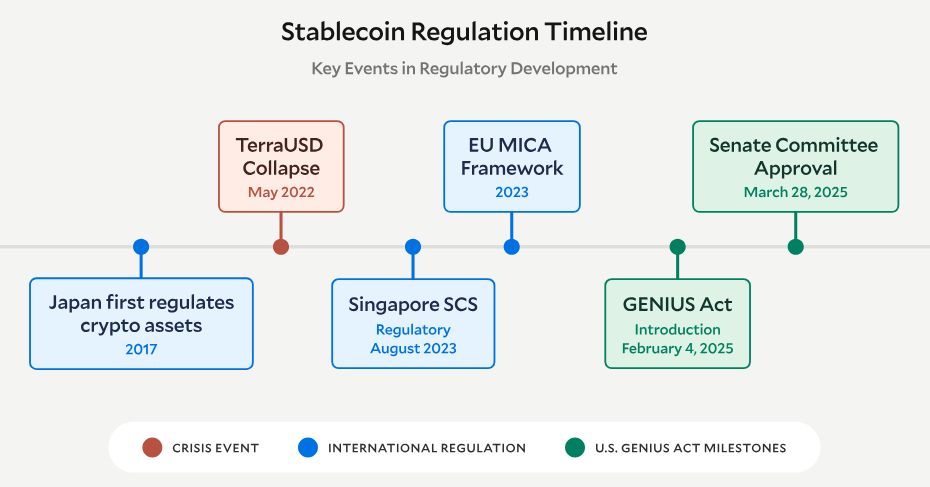
A central pillar of Garlinghouse’s optimism is the passage of the U.S. GENIUS Act. This legislation establishes explicit requirements for stablecoin issuers and crypto-related businesses, including full reserve backing and mandatory monthly audits.
By introducing “clear guardrails,” the law has reduced one of the largest historical risks in the crypto industry: regulatory ambiguity. For years, companies operated in a gray zone, unsure whether innovation would later be punished retroactively by enforcement actions.
With the GENIUS Act in place, Garlinghouse argues that “a lot of activity has been unlocked.” Entrepreneurs can now design products with regulatory certainty, while financial institutions can participate without fear of sudden legal reversals.
[Regulatory framework under the GENIUS Act—stablecoin reserves and compliance structure]
4. The End of the SEC Lawsuit: A Defining Moment for Ripple
Another major catalyst is the conclusion of the long-running lawsuit between Ripple and the U.S. Securities and Exchange Commission. Filed in late 2020, the case alleged that Ripple raised approximately $1.3 billion through unregistered securities sales of XRP.
After nearly four years of litigation and roughly $150 million in legal expenses, the SEC formally dropped the case in March 2025. Ripple’s Chief Legal Officer, Stuart Alderoty, described the outcome as a victory on key legal principles that extend beyond XRP itself.
For the broader industry, the lawsuit’s conclusion set an important precedent: not all crypto assets automatically qualify as securities. This clarification has already influenced how exchanges, custodians, and issuers structure their offerings.
5. Institutional Investors and the Changing Nature of Price Discovery
Garlinghouse emphasized that institutional participation represents a “massive shift” that is still not fully priced into the market. Traditional financial institutions—banks, asset managers, and payment processors—are increasingly exploring crypto exposure through spot holdings, ETFs, custody services, and blockchain-based settlement systems.
Unlike retail-driven cycles, institutional capital tends to be longer-term, risk-managed, and liquidity-oriented. This fundamentally alters price discovery mechanisms, reducing extreme volatility while deepening order books.
For investors seeking alpha, this shift suggests that future gains may come less from short-term hype and more from identifying infrastructure layers that benefit from sustained institutional flows.
6. XRP’s Position in the Evolving Ecosystem
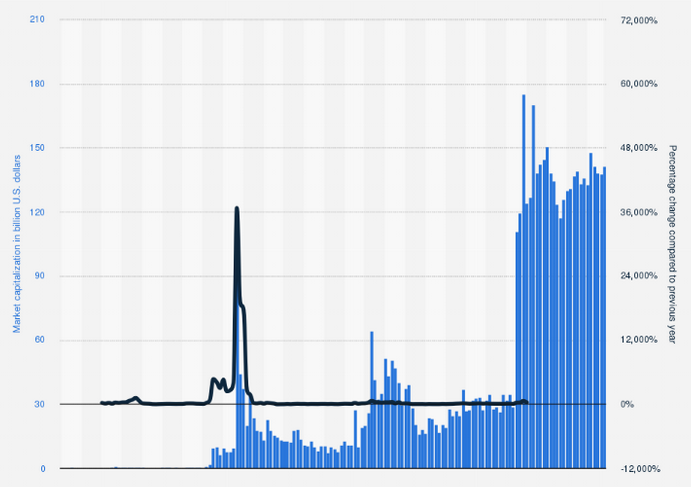
At the time of writing, XRP is trading around $1.94. While Garlinghouse refrained from making specific price predictions, he expressed confidence that the XRP ecosystem will continue to expand over the next 5–10 years.
Analysts at Standard Chartered have projected that XRP could reach $12.50 by 2028, citing its role in cross-border settlement and liquidity provisioning. Whether or not such targets materialize, XRP’s regulatory clarity now positions it as one of the few large-cap tokens with reduced legal overhang.
[XRP price history and institutional adoption trends (USD)]
7. Stablecoins, Payroll, and Enterprise Adoption
Garlinghouse also highlighted the transformative role of stablecoins under the GENIUS Act. With compliance requirements clearly defined, stablecoins are increasingly being integrated into payroll systems, treasury management, and cross-border business operations.
For enterprises, the appeal lies in faster settlement, lower transaction costs, and reduced reliance on correspondent banking networks. Over the next decade, these efficiencies could reshape how companies manage working capital on a global scale.
This development is particularly relevant for fintech operators, remittance providers, and VASPs seeking practical blockchain applications rather than purely speculative products.
8. CLARITY Act and the Next Decade of Growth
Looking ahead, Garlinghouse referenced the proposed CLARITY Act, which aims to comprehensively define the regulatory treatment of digital assets in the U.S. He described it as “closer to passing than ever before.”
If enacted, the CLARITY Act would further reduce fragmentation across federal agencies and create a coherent framework for crypto innovation. Combined with the GENIUS Act, it could establish the regulatory foundation for a decade-long growth cycle.
Conclusion: Why 2026 May Be a Defining Year
Taken together, Garlinghouse’s comments reflect more than bullish sentiment—they outline a structural thesis. Regulatory clarity, institutional capital, and real-world use cases are converging in a way the crypto market has never experienced before.
For investors and builders seeking the next wave of opportunity, the implication is clear: the era of regulatory arbitrage and pure speculation is giving way to one defined by compliance, infrastructure, and economic utility.
If these trends continue, 2026 may indeed be remembered as the year crypto reached a new all-time high—not just in price, but in maturity.