Main Points :
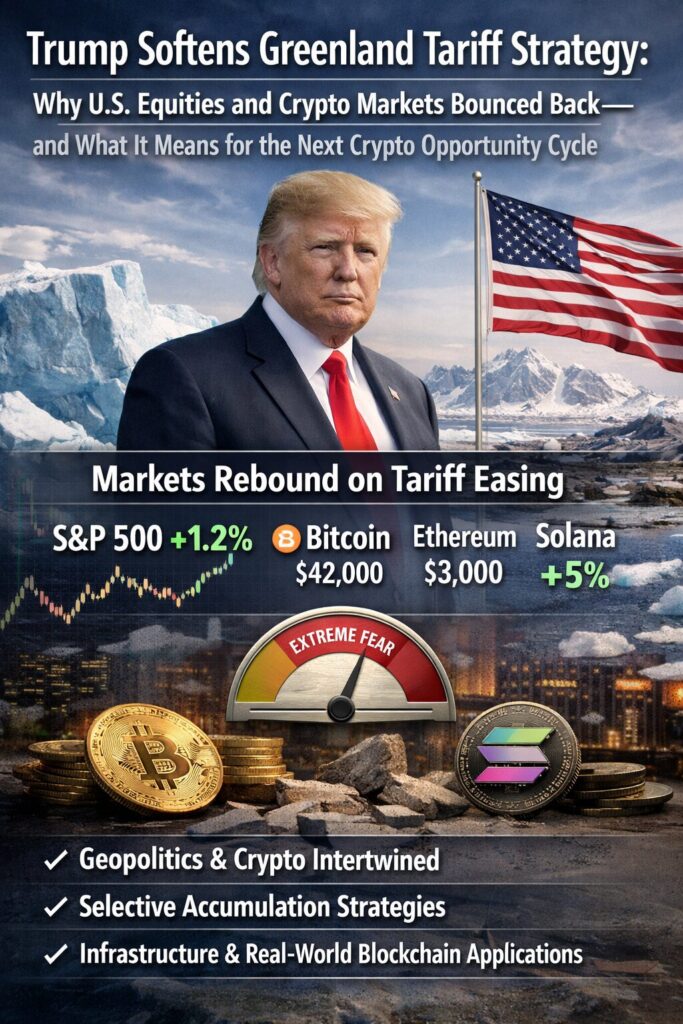
- President Donald Trump’s decision to soften and effectively withdraw proposed tariffs linked to Greenland negotiations triggered a rebound in U.S. equity markets and major cryptocurrencies.
- The S&P 500 rose over 1%, while Bitcoin, Ethereum, and Solana posted moderate gains, reflecting short-term relief in global risk sentiment.
- Despite price recovery, crypto market psychology remains fragile, with the Fear & Greed Index falling deeper into “Extreme Fear.”
- The episode highlights how geopolitics, trade policy, and crypto markets are increasingly intertwined, shaping new investment and blockchain-use narratives.
- For investors and builders, the current environment favors selective accumulation, infrastructure-focused crypto projects, and real-world blockchain applications rather than pure speculation.
1. A Sudden Policy Shift: Trump, Greenland, and Global Markets
In a development that surprised both traditional and digital asset markets, Donald Trump signaled a clear softening of his administration’s stance on tariffs that had been under consideration in connection with negotiations over Greenland and broader Arctic cooperation.
The initial proposal reportedly involved imposing tariffs on eight European nations—Denmark, Norway, Sweden, the United Kingdom, France, Germany, the Netherlands, and Finland. These countries were viewed as strategically linked to Greenland and Arctic governance through NATO frameworks and regional security arrangements.
However, following discussions with Mark Rutte, Trump posted on Truth Social that the meeting had been “very productive” and emphasized the construction of a future-oriented framework for cooperation in Greenland and the Arctic region as a whole. Crucially, he added that the previously discussed tariff measures scheduled for February 1 would not proceed.
This reversal mattered not only because it reduced immediate trade friction, but because it removed a potential escalation point in transatlantic relations at a time when markets are already sensitive to inflation, interest rates, and geopolitical uncertainty.
2. U.S. Equities React: Risk Appetite Briefly Returns
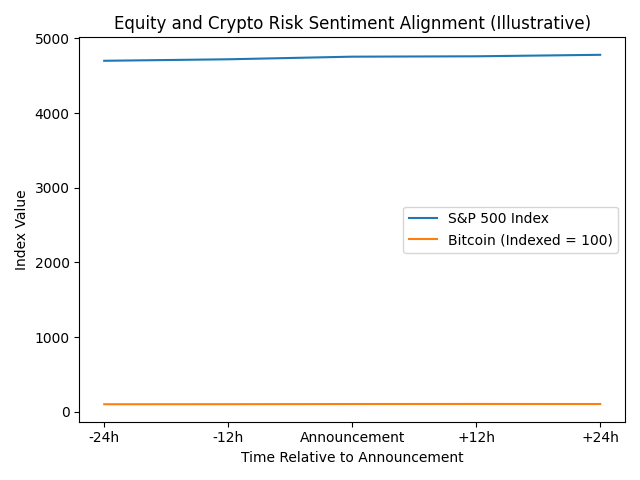
Financial markets reacted swiftly. The S&P 500 closed Wednesday’s session up 1.16%, signaling a return of risk appetite among investors who had been bracing for renewed trade tensions.
From a macro perspective, tariffs are widely understood as inflationary tools. Any credible threat of new tariffs raises expectations of higher consumer prices, supply chain disruptions, and more restrictive monetary policy. By stepping back, the Trump administration temporarily eased these fears.
This relief rally in equities set the tone for digital assets as well, reinforcing the increasingly strong correlation between U.S. equities and major cryptocurrencies during periods of macro stress.
3. Crypto-Related Stocks: A Mixed but Telling Picture
While broader equity indices rose, crypto-related equities painted a more nuanced picture.
- Strategy (MSTR), led by Michael Saylor, gained 2.23%, reflecting continued market confidence in Bitcoin-centric treasury strategies.
- Coinbase (COIN), however, slipped 0.35%, underscoring ongoing concerns about regulatory pressure, fee compression, and trading volume volatility.
- Among mining firms, Riot Platforms fell 4.70%, while MARA Holdings rose 1.83%, highlighting how miner performance remains sensitive to energy costs, hash rate competition, and capital structure rather than macro news alone.
These divergences suggest that the market is no longer treating “crypto exposure” as a single narrative. Investors are increasingly discriminating between balance-sheet strength, operational efficiency, and long-term strategic positioning.
4. Major Cryptocurrencies Edge Higher
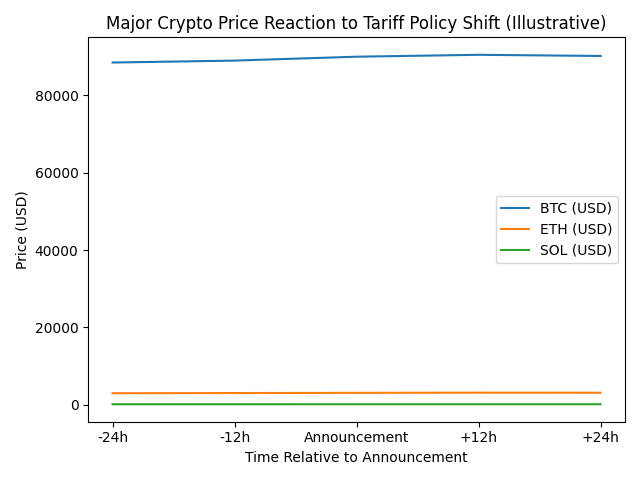
Following Trump’s announcement, major cryptocurrencies posted modest gains:
- Bitcoin rose 1.64% to approximately $90,010
- Ethereum gained 3.03%
- Solana increased 2.36%
These price movements were confirmed by market data aggregators such as CoinMarketCap, and they reflect a familiar pattern: crypto assets acting as high-beta instruments that amplify shifts in global risk sentiment.【Image Insert 1】
Location: Immediately after this section
Content: Line chart showing BTC, ETH, and SOL price movements (24–48 hours around Trump’s announcement)
File Name Example: crypto_price_rebound_usd.png
5. The Psychological Disconnect: Prices Up, Fear Deepens
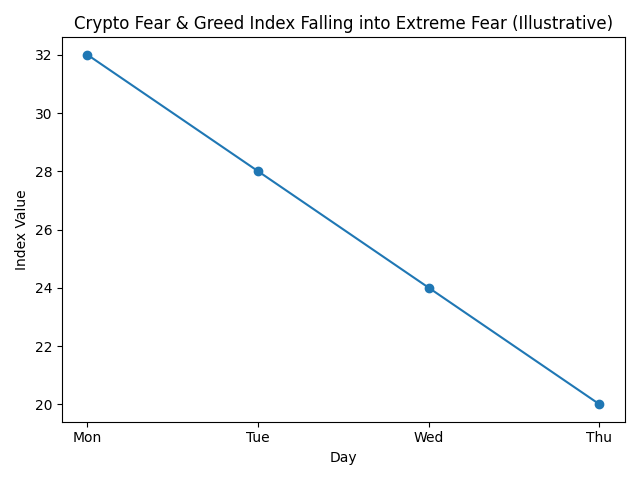
Despite the price rebound, underlying market psychology told a very different story. The widely followed Crypto Fear & Greed Index dropped to 20, firmly in the “Extreme Fear” zone, down four points from the previous day.
This divergence—prices rising while fear intensifies—often appears during bear-market rallies or late-stage corrections. Investors may be buying tactically, but conviction remains low. Many participants continue to worry about macro tightening, regulatory uncertainty, and geopolitical shocks.
For seasoned investors, such environments are paradoxically where long-term opportunities often emerge—but only for those willing to separate structural trends from short-term noise.
6. Greenland, Geopolitics, and Why Crypto Cares
At first glance, Greenland-related tariffs might seem far removed from blockchain or digital assets. In reality, the connection is becoming clearer.
Greenland occupies a strategic position in Arctic shipping routes, rare earth mineral supply chains, and military logistics. Any policy that affects these domains can ripple through global trade, energy markets, and currency systems.
Cryptocurrencies increasingly function as a parallel financial layer—reacting not only to interest rates but also to geopolitical risk. Bitcoin, in particular, is often framed as a hedge against sovereign uncertainty, while Ethereum and other smart contract platforms are viewed as infrastructure for cross-border economic coordination.
7. Implications for Investors Seeking the “Next Opportunity”
For readers searching for new crypto assets or revenue sources, the lesson is not simply to chase price rebounds. Instead, the current environment favors:
- Infrastructure-first projects: Blockchains, Layer-2 solutions, and interoperability protocols that benefit from long-term adoption rather than speculative hype.
- Real-world asset (RWA) tokenization: As trade and geopolitics fragment, demand grows for efficient, transparent settlement layers.
- Treasury and risk-management use cases: Bitcoin and stablecoins used as collateral, liquidity buffers, or cross-border settlement tools.
- Selective accumulation during fear: Historically, periods of extreme fear have preceded some of the strongest long-term returns.
8. A Market in Transition, Not in Crisis
What this episode ultimately demonstrates is that crypto markets are no longer isolated. They are deeply embedded in global macro and political narratives.
Trump’s softening on tariffs did not create a new bull market overnight—but it removed a short-term risk factor and reminded investors how quickly sentiment can shift. For builders, it underscores the importance of designing blockchain systems that can operate across jurisdictions and political cycles.
Conclusion: Reading Between the Lines of a Modest Rebound
The rebound in U.S. equities and cryptocurrencies following Trump’s Greenland tariff pivot is best understood as a pause in pressure, not a definitive turning point. Prices moved higher, but fear remains elevated, signaling caution rather than confidence.
For those interested in discovering new crypto assets, revenue opportunities, and practical blockchain applications, this is a moment for strategic positioning—not speculation. Markets are recalibrating, narratives are evolving, and the next cycle is likely to reward substance over speed.