
Main Points :
- Bitcoin fell below $90,000 as global markets entered a renewed risk-off phase driven by tariff escalation concerns.
- Political uncertainty surrounding U.S.–EU trade relations has rapidly deteriorated investor sentiment across crypto markets.
- Options data shows a sharp increase in downside hedging, signaling short-term fear rather than structural collapse.
- Spot-driven selling, not derivatives liquidations, suggests capital preservation behavior by large holders.
- Historically, similar tariff-driven drawdowns have reversed once geopolitical tensions eased.
- Upcoming macro events (Davos, U.S. PCE, central bank meetings) may act as sentiment inflection points.
- For long-term builders and operators, this environment highlights Bitcoin’s dual nature as both risk asset and crisis hedge.
1. Market Overview: Why Bitcoin Broke Below $90,000
Bitcoin’s decline below the psychologically critical $90,000 level marks one of the sharpest sentiment reversals of early 2026. The move was not isolated to crypto markets. Instead, it coincided with a broad sell-off in U.S. equities, triggered by renewed geopolitical and trade-related uncertainty.
The immediate catalyst was U.S. President Donald Trump’s statement regarding the potential acquisition of Greenland, paired with a threat to impose additional tariffs on imports from eight European countries until negotiations conclude. This unexpected escalation rattled global markets, reviving fears of a prolonged transatlantic trade conflict.
Compounding the situation, reports emerged on January 20 that the European Parliament may delay approval of a previously agreed EU–U.S. trade framework. This added another layer of uncertainty, reinforcing a global shift toward risk aversion.
For Bitcoin, which has increasingly traded in correlation with macro risk assets during periods of financial stress, the impact was swift and severe.
2. Options Market Signals: Fear Is Rising, Not Capitulation
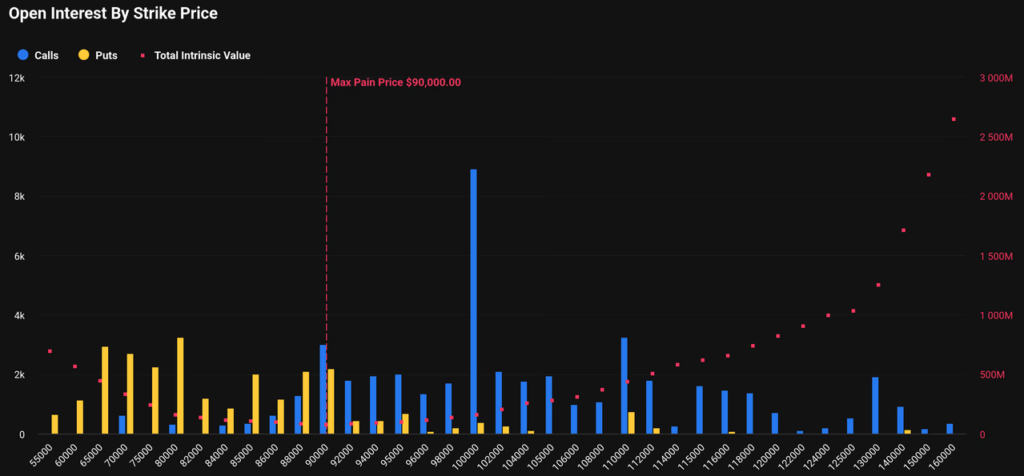
Options market data provides critical insight into investor psychology. During January 20–21, the Put-Call Ratio (PCR) rose sharply, reflecting a surge in downside protection demand.
While the largest open interest remains concentrated at the $100,000 strike—indicating that long-term bullish positioning is still intact—there has been a noticeable increase in put positions below $90,000. This suggests that investors are hedging near-term downside risk rather than abandoning their long-term outlook.
Such behavior typically characterizes fear-driven adjustment, not structural market breakdown. In previous cycles, similar spikes in PCR often preceded stabilization phases once macro uncertainty diminished.
3. Crypto Fear & Greed Index: Back to Tariff-War Lows
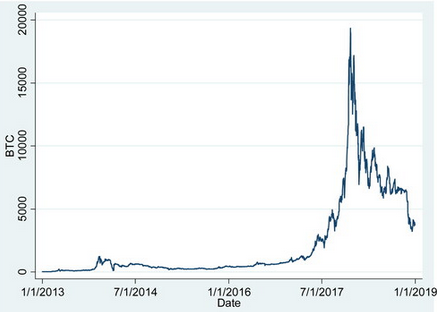
The Crypto Fear & Greed Index has fallen to levels last observed during the April 2024 tariff escalation. This rapid deterioration underscores how sensitive crypto markets remain to geopolitical narratives.
Importantly, this decline occurred without a major crypto-native shock such as exchange failures or protocol exploits. Instead, sentiment collapsed purely due to macro uncertainty—highlighting Bitcoin’s current role as a macro-sensitive asset.
4. Spot Selling Dominates: A Critical Structural Detail
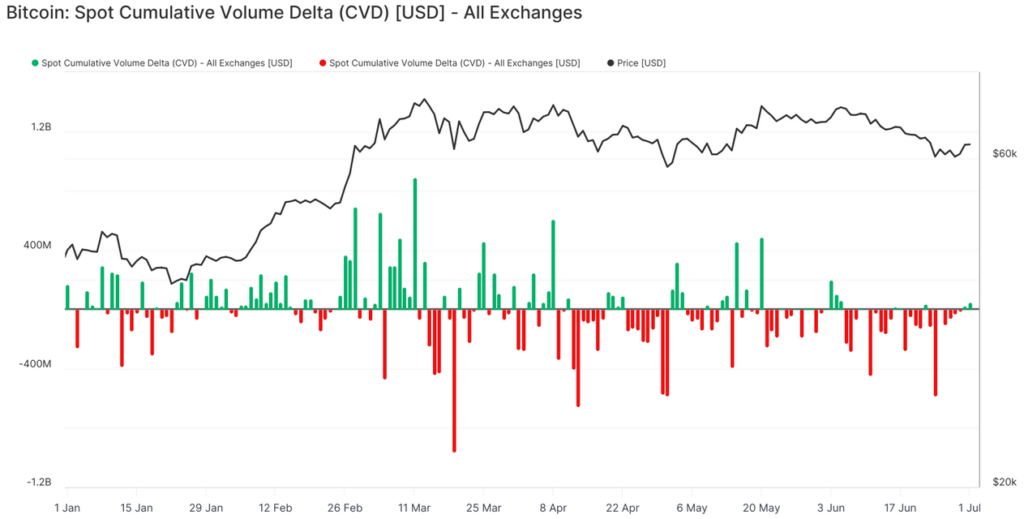
One of the most significant aspects of this downturn is where the selling pressure originates. Data shows repeated large spot sell orders, indicating that actual Bitcoin holdings are being reduced.
This contrasts sharply with derivative-driven crashes, where forced liquidations amplify volatility. Instead, this sell-off reflects deliberate capital reallocation—likely by institutions and high-net-worth participants reducing exposure amid uncertainty.
This distinction matters. Spot-driven declines often stabilize faster once macro clarity returns, as there is no overhang of leveraged positions requiring forced unwinding.
5. Bitcoin’s Dual Identity: Safe Haven or Risk Asset?
Bitcoin’s behavior in this episode reinforces its dual identity.
In scenarios involving physical or sovereign crises—such as war, capital controls, or banking freezes—Bitcoin often functions as a portable, censorship-resistant store of value. Its liquidity and borderless nature make it attractive under such conditions.
However, in economic crises driven by financial policy, such as synchronized equity sell-offs or tariff wars, Bitcoin is frequently treated as a high-volatility risk asset. Investors seeking immediate capital preservation often liquidate crypto holdings first.
This pattern was also observed during the 2024 tariff tensions, where Bitcoin initially sold off before recovering sharply as diplomatic signals improved.
6. Historical Context: What Happened Last Time?
During the April 2024 tariff escalation, Bitcoin experienced a rapid drawdown, followed by a strong rebound once negotiations eased. Investors who interpreted the initial drop as a permanent trend reversal missed subsequent upside.
The current situation bears striking similarities:
- Sudden political announcements
- Rising protectionism rhetoric
- Sharp but orderly market declines
- Increased hedging rather than panic liquidation
This historical precedent does not guarantee repetition, but it provides valuable context for interpreting today’s price action.
7. Upcoming Macro Catalysts: Where Sentiment May Turn
Several near-term events could materially influence market psychology:
- January 19–23: World Economic Forum (Davos)
Diplomatic dialogue between U.S. and European leaders could reduce uncertainty. - January 22: U.S. PCE Price Index
Inflation data will shape expectations for Federal Reserve policy. - January 23: Bank of Japan Policy Meeting
Any shift in yield curve control or forward guidance may impact global liquidity. - January 23: U.S. PMI Data
A key indicator of economic momentum and recession risk.
These events collectively form a high-impact macro window where sentiment could either deteriorate further or begin stabilizing.
8. Practical Implications for Crypto Investors and Builders
For investors seeking new crypto assets or yield opportunities, this environment demands discipline rather than reaction.
Volatility-driven drawdowns often create asymmetric opportunities in:
- Infrastructure tokens
- Payment-related protocols
- Asset-backed or cash-flow-generating crypto models
For builders and operators, the lesson is structural: crypto businesses must design treasury, liquidity, and risk frameworks that assume periodic macro-driven drawdowns, even in fundamentally strong markets.
Conclusion: Risk-Off Is a Phase, Not a Verdict
Bitcoin’s drop below $90,000 reflects a temporary dominance of macro uncertainty over crypto-specific fundamentals. While sentiment has deteriorated rapidly, structural indicators suggest fear-driven repositioning rather than systemic collapse.
For long-term participants, this phase reinforces Bitcoin’s evolving role in the global financial system: not yet a pure safe haven, but no longer a niche speculative asset either.
As history has shown, when geopolitical fog lifts, markets recalibrate. The coming weeks may determine whether this episode becomes another example of short-term fear—or a defining moment for Bitcoin’s maturity as a global asset.