
Main Points :
- Strategy, led by Michael Saylor, has surpassed 700,000 BTC in total Bitcoin holdings after a $2.13 billion purchase.
- The company now controls more than 3.3% of Bitcoin’s maximum supply, reinforcing its dominance as a public Bitcoin treasury company.
- This move signals renewed confidence in Bitcoin after skepticism toward Digital Asset Treasury (DAT) models in mid-2025.
- Institutional frameworks, index inclusion, and disciplined treasury operations are becoming decisive factors for survival.
- The case offers concrete lessons for companies, funds, and builders seeking sustainable crypto-native balance-sheet strategies.
1. A Historic Accumulation: Strategy Crosses 700,000 BTC
Strategy, the company led by Michael Saylor, has once again reshaped the institutional Bitcoin landscape. According to a filing submitted to the U.S. Securities and Exchange Commission on Monday, the company acquired an additional 22,305 BTC for approximately $2.13 billion, at an average price of $95,284 per BTC.
This single transaction pushed Strategy’s total Bitcoin holdings to 709,715 BTC, a level that no other publicly listed company has ever approached. The total acquisition cost now stands at roughly $53.92 billion, with an average purchase price of $75,979 per BTC across all holdings.
At the time of reporting, Bitcoin was trading above $97,000, according to data from CoinGecko, placing Strategy’s position firmly in unrealized profit territory
【Strategy’s Bitcoin Accumulation Over Time (2020–2026)】
A cumulative BTC holdings chart showing major purchase milestones.

2. The Scale of Ownership: A Material Share of Bitcoin Supply
With Bitcoin’s hard cap fixed at 21 million coins, Strategy’s 709,715 BTC now represents approximately:
- 3.37% of Bitcoin’s maximum supply
- 3.55% of current circulating supply (≈19.98 million BTC)
This concentration is unprecedented for a publicly traded firm. In practical terms, Strategy is no longer just a corporate holder—it has become a structural participant in Bitcoin’s supply dynamics.
For market participants seeking new crypto assets or yield strategies, this level of concentration matters. Large treasury holders influence liquidity, volatility, lending markets, and even derivatives pricing.
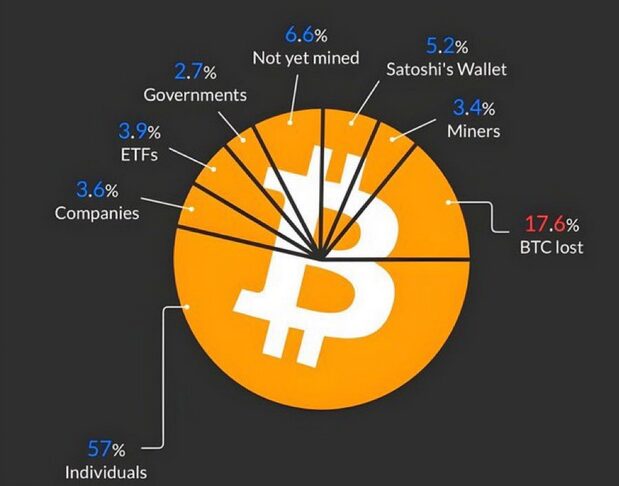
【Bitcoin Supply Breakdown】
Pie chart showing Strategy’s share vs. remaining circulating supply.
3. The Largest Purchase Since Early 2024: Timing Matters
This acquisition marks Strategy’s largest Bitcoin purchase since February 2024, when it bought approximately 20,356 BTC for around $2.0 billion. It also represents a sharp acceleration compared with most of 2025, a year characterized by skepticism toward aggressive Bitcoin treasury strategies.
Earlier in January, Strategy had already purchased 13,627 BTC for roughly $1.3 billion—the largest acquisition since mid-2024. Together, these purchases signal a deliberate shift from cautious accumulation back to conviction buying.
Importantly, the timing coincided with renewed upward momentum in both Bitcoin and Strategy’s own stock price (MSTR), which briefly exceeded $185 per share.
4. Market Context: From “DAT Bubble” to Discipline
During the summer of 2025, Digital Asset Treasury (DAT) companies faced harsh scrutiny. Many market commentators labeled the sector a “bubble,” arguing that:
- Treasury strategies lacked operational discipline
- Some firms relied excessively on equity dilution
- Risk management frameworks were unclear
However, Strategy’s continued accumulation through both bullish and skeptical phases has distinguished it from weaker imitators.
According to James Butterfill of CoinShares, the market has entered a new evaluation phase—one focused on survivability rather than hype.
“The future of DAT models lies in disciplined treasury management, credible business models, and realistic expectations for the role of digital assets on corporate balance sheets.”
This shift favors firms that treat Bitcoin not as a speculative trade, but as a long-duration monetary asset.
5. Index Inclusion and Institutional Legitimacy
Another critical development came earlier this year when MSCI announced that it would not exclude digital asset treasury companies from its market indices.
This decision has major implications:
- Passive funds tracking MSCI indices can continue holding Strategy shares
- Institutional allocators face fewer compliance barriers
- Bitcoin-centric balance sheets gain indirect exposure through equities
For investors and builders alike, this highlights a practical route for integrating Bitcoin into regulated financial structures without direct custody.
6. Strategy’s Model vs. Imitators: Why It Still Works
What separates Strategy from dozens of failed or struggling DAT experiments?
- Consistency: Continuous accumulation over multiple market cycles
- Transparency: Clear disclosure via SEC filings
- Capital Strategy: Structured use of equity and debt rather than reactive financing
- Narrative Discipline: Bitcoin as a treasury reserve, not a side bet
This model provides a blueprint for other firms exploring crypto-native balance sheets, particularly in jurisdictions where direct crypto custody remains complex.
7. Practical Implications for Builders and Investors
For readers interested in new crypto assets, revenue opportunities, or real-world blockchain applications, several lessons stand out:
- Bitcoin can function as a strategic reserve asset, not merely a trade
- Treasury design matters more than timing
- Regulatory alignment (indices, disclosures, audits) is a competitive advantage
- Scale attracts liquidity, financing options, and market trust
This has direct relevance for VASPs, fintechs, and even traditional corporates exploring tokenization, stablecoins, or on-chain treasury operations.
8. Conclusion: Bitcoin Treasury Strategy Enters Its Institutional Era
Strategy’s move past 700,000 BTC is more than a headline—it is a signal that Bitcoin treasury strategies are evolving from speculative experiments into institutional frameworks.
While not every company can—or should—replicate Strategy’s scale, the underlying principles are increasingly relevant: discipline, transparency, and long-term alignment with Bitcoin’s monetary properties.
As the market continues to separate durable models from fleeting trends, Strategy stands as the clearest example of how corporate balance sheets and Bitcoin can converge in a sustainable way.