
Key Takeaways :
- Bitcoin is defending the critical $90,000 support zone amid rising geopolitical tension between the U.S. and the EU.
- Gold has surged to an all-time high of $4,750 per ounce, signaling an aggressive global flight to hard assets.
- Equity markets are under pressure, while crypto traders remain cautiously bullish.
- If structural support holds, multiple traders still expect Bitcoin to revisit and exceed the $100,000 level.
- The divergence between gold and Bitcoin highlights an evolving role for crypto in macro portfolios.
Bitcoin Holds the Line as Markets React to a New Geopolitical Shock
As U.S. markets opened this week, global investors were confronted with a new layer of uncertainty. Concerns over a potential trade conflict between the United States and the European Union—sparked by escalating rhetoric surrounding Greenland—sent ripples through equities, commodities, and digital assets alike.
Bitcoin (BTC), often described as “digital gold,” managed to narrowly avoid a sharp sell-off during the opening hours of Wall Street trading. According to TradingView data, BTC hovered around the psychologically critical $90,000 level, a price zone that has rapidly become the focal point for both bulls and bears.
U.S. equities reacted more decisively. The S&P 500 and Nasdaq Composite both opened approximately 1.5% lower, reflecting investor unease about geopolitical escalation and its potential impact on global trade and growth expectations.
In contrast, traditional safe-haven assets surged.
Gold and Silver Enter a Historic Bull Market
[Gold (XAU/USD) and Silver price surge – 1H / 1D timeframe]
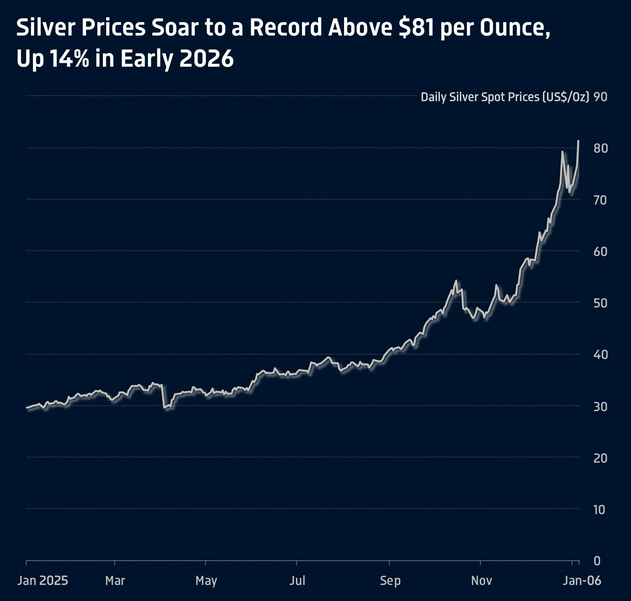
Gold prices climbed to an unprecedented $4,750 per ounce, marking a historic milestone for precious metals. Silver followed closely, approaching $96 per ounce—levels few analysts had projected even a year ago.
This explosive move reflects more than short-term fear. It signals a broader reassessment of monetary stability, sovereign risk, and the long-term credibility of fiat systems. Central banks, sovereign wealth funds, and institutional allocators appear to be accelerating diversification into hard assets amid growing political fragmentation.
For crypto investors, this matters deeply. Gold’s breakout sets a macro backdrop that often precedes renewed interest in Bitcoin—not immediately, but structurally.
Political Escalation: Why Greenland Suddenly Matters to Markets
Donald Trump added fuel to the fire with a series of provocative posts on Truth Social, including images implying Greenland and Venezuela as strategic U.S. interests. These posts followed reports of private communications between Trump and European leaders, intensifying speculation of a looming diplomatic clash.
Trump later stated that he had held a “very good call” with NATO Secretary General Mark Rutte regarding Greenland and confirmed plans for discussions at the World Economic Forum in Davos.
Markets took note—not because Greenland itself drives earnings, but because it symbolizes a deeper fracture in transatlantic relations at a time when global supply chains, defense spending, and energy security are already under strain.
Bitcoin’s Technical Battlefield: $90,000 as Structural Support
[BTC/USD weekly chart with bullish support band and moving averages]
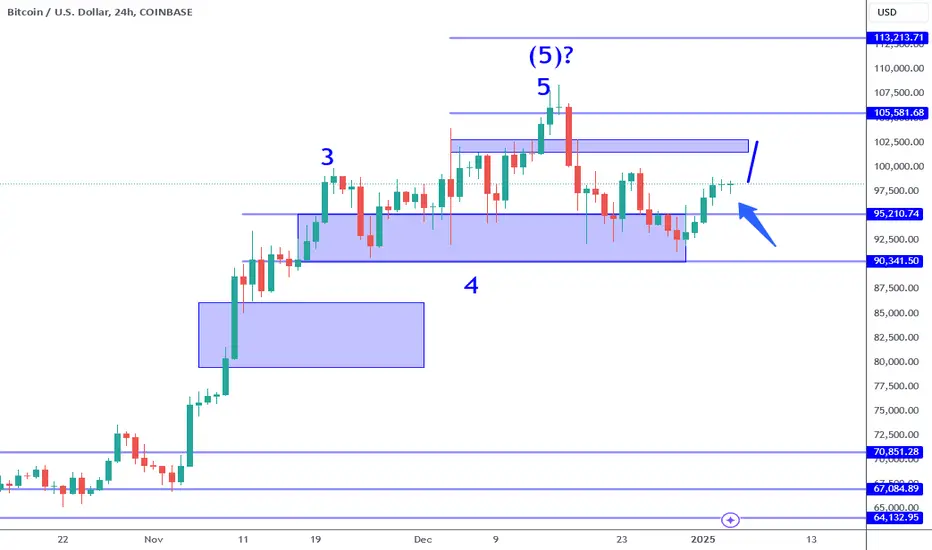
From a technical perspective, Bitcoin is at a crossroads.
Popular trader BitBull noted that BTC was recently rejected from the weekly bullish market support band, defined by two long-term moving averages. This pattern has already occurred twice in Q1 2025, and in both instances, Bitcoin eventually reclaimed the zone and pushed to new all-time highs.
According to BitBull:
“As long as BTC holds above $88,500, the broader uptrend remains intact.”
This framing has become widely accepted among technically oriented traders. The $88,500–$90,000 range is now viewed as a structural pivot rather than a short-term trading level.
Diverging Views: $60,000 Doom vs. $100,000 Breakout
Not all analysts agree.
Veteran trader Peter Brandt has warned that Bitcoin could retrace as low as $60,000—or even lower—following a recent rejection near $98,000. Brandt argues that BTC is currently trapped in a diagonal structure unsuitable for high-confidence trades.
On the other side of the spectrum, trader Il Capo of Crypto—previously known for bearish calls—has shifted to a cautiously optimistic stance. On a two-day timeframe, he identifies the current range as a decisive support zone.
[BTC/USD 2-day chart highlighting support zone and $100k target]
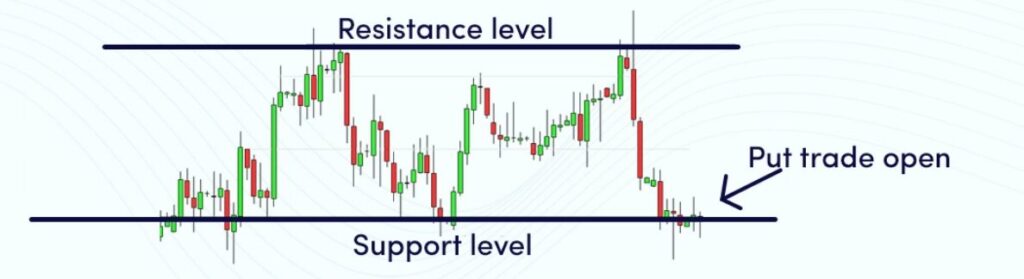
“If this area holds,” Il Capo stated, “the next stop is $100,000. This could become a higher low for the entire crypto market before a strong bullish continuation.”
Gold vs. Bitcoin: Competition or Confirmation?
One of the most important narratives emerging from this episode is the apparent divergence between gold and Bitcoin.
Gold is doing what it has always done in times of geopolitical stress—rallying aggressively. Bitcoin, meanwhile, is consolidating rather than exploding upward.
For short-term traders, this may appear disappointing. But for long-term allocators, it may actually be constructive.
Bitcoin’s ability to not collapse while capital floods into gold suggests growing maturity. Rather than acting as a pure risk asset, BTC is increasingly behaving like a hybrid: part growth asset, part monetary hedge.
This transition is critical for Bitcoin’s role in institutional portfolios.
Implications for Crypto Investors and Builders
For readers searching for new crypto assets, revenue opportunities, or practical blockchain applications, several implications stand out:
- Macro awareness is no longer optional. Crypto markets are now deeply intertwined with geopolitics, commodities, and global liquidity.
- Volatility creates opportunity—but only with structure. Projects with real cash flow, infrastructure relevance, or compliance readiness are better positioned.
- Bitcoin remains the benchmark. Regardless of altcoin narratives, BTC’s behavior around $90,000–$100,000 will shape capital flows across the ecosystem.
- Hard-asset narratives are converging. Gold, Bitcoin, and even tokenized commodities are increasingly part of the same conversation.
Conclusion: A Market at the Edge of Repricing
The surge in gold to $4,750 per ounce is not just a headline—it is a warning signal. It reflects deep-seated concerns about political stability, monetary credibility, and the future architecture of global finance.
Bitcoin, holding firm near $90,000 despite these shocks, is quietly making its own statement.
If this support zone holds, the long-discussed $100,000 target may no longer be a speculative dream, but a structural milestone. Whether Bitcoin ultimately follows gold higher or charts its own path, one thing is clear: digital assets are no longer operating in isolation.
For investors, builders, and institutions alike, the next phase will reward those who understand both the charts—and the world behind them.