
Main Points :
- K33 has launched a crypto-collateralized lending service using Bitcoin (BTC) and Ethereum (ETH).
- The service allows clients to borrow stablecoins such as USDC without selling their digital assets.
- Crypto-backed lending remains underdeveloped in the Nordic region, positioning K33 as an early mover.
- The launch is tightly linked to K33’s long-term Bitcoin treasury strategy.
- The service is designed to enhance customer engagement, expand K33’s product suite, and create new yield use cases for Bitcoin holdings.
- This development reflects a broader global trend: the institutionalization of crypto-backed finance.
1. Introduction: Crypto-Backed Lending Enters the Nordic Institutional Market
In January 2026, K33, a Norway-based digital asset services firm, announced the launch of a new crypto-collateralized lending service. The product allows clients to use Bitcoin (BTC) and Ethereum (ETH) as collateral to borrow liquidity, primarily in stablecoins such as USDC.
While crypto-backed lending is already familiar in markets such as the United States and parts of Asia, it has not yet reached widespread adoption in the Nordic region. K33’s announcement therefore represents more than a simple product expansion: it marks a strategic attempt to establish institutional-grade crypto lending infrastructure in a region historically cautious about digital assets.
K33 is listed on the Nasdaq First North Growth Market, a marketplace designed for growth companies, and positions itself as a hybrid firm combining crypto brokerage, research, and treasury management.
2. What Is Crypto-Collateralized Lending—and Why It Matters Now
Crypto-collateralized lending allows asset holders to unlock liquidity without selling their underlying holdings. Instead of liquidating BTC or ETH and triggering potential tax events or losing long-term exposure, clients pledge these assets as collateral and receive loans—typically denominated in stablecoins or fiat-equivalent instruments.
Why This Matters in 2026
Several structural factors make this model increasingly attractive:
- Long-term Bitcoin conviction
Institutional and high-net-worth investors increasingly treat Bitcoin as a strategic reserve asset rather than a speculative trade. - Volatility-aware capital management
Selling assets during unfavorable market conditions can permanently impair portfolio performance. - Operational liquidity needs
Traders, funds, and corporates often need short-term liquidity for operations, hedging, or reinvestment.
Crypto-backed lending directly addresses these constraints by separating liquidity access from asset disposal.
3. Service Structure: How K33’s Lending Product Works
K33’s newly announced service allows eligible clients to:
- Deposit BTC or ETH as collateral
- Borrow stablecoins such as USDC
- Retain full price exposure to the underlying crypto assets
- Repay loans and reclaim collateral once obligations are met
The company clarified that the service will initially be offered only to a limited subset of qualified clients. Applicants must meet eligibility criteria and explicitly agree to loan terms, including collateral ratios, margin requirements, and liquidation thresholds.
This phased rollout reflects both regulatory prudence and operational discipline—key considerations for crypto services operating in Europe.
4. Exposure Explained: Risk Without Selling
In its announcement, K33 emphasized the concept of “exposure”—a critical idea in both traditional finance and crypto markets.
Exposure refers to the portion of assets directly subject to:
- Market price fluctuations
- Counterparty risk
- Liquidity constraints
By using BTC or ETH as collateral rather than selling them, clients preserve market exposure while simultaneously improving cash-flow flexibility. This duality is particularly attractive for long-term holders who remain bullish but need short-term liquidity.
5. Strategic Context: K33’s Bitcoin Treasury Strategy
K33 explicitly linked the lending launch to its broader Bitcoin treasury strategy. Unlike companies that simply hold BTC as a passive reserve, K33 aims to deploy Bitcoin in a “disciplined” manner to generate yield and enhance services.
The company has previously announced significant Bitcoin purchases—amounting to several million dollars at prevailing prices—as part of a long-term balance-sheet strategy.
By integrating lending, trading, and treasury operations, K33 positions itself not merely as a broker, but as a full-stack digital asset financial institution.
6. Three Core Objectives Behind the Lending Launch
According to K33, the lending service was designed to achieve three interrelated goals:
1. Strengthening Customer Engagement
By offering capital-efficient liquidity solutions, K33 deepens its relationship with clients beyond simple trading.
2. Expanding the Service Portfolio
Crypto-backed lending adds a new revenue and functionality layer, complementing brokerage and research offerings.
3. Creating Yield Use Cases for Bitcoin Treasury
Rather than holding BTC idle, K33 can integrate it into structured financial services that generate returns while maintaining exposure.
7. CEO Perspective: Bitcoin as a Working Asset
K33 CEO Torbjørn Bull Jenssen framed the lending launch as a natural evolution of the firm’s strategy:
“Launching a crypto-backed lending service is a natural step for us. It allows clients to access liquidity without selling assets they believe in long-term. At the same time, it clearly demonstrates that our Bitcoin strategy goes beyond simply holding BTC—we are designing systems where Bitcoin works productively.”
This statement underscores a broader shift in institutional crypto thinking: Bitcoin is no longer just “digital gold,” but programmable financial collateral.
8. Nordic Market Significance: First-Mover Advantage
K33 argues that crypto-backed lending remains underdeveloped in the Nordic region. This creates an opportunity to establish standards, client trust, and regulatory dialogue early.
Compared to DeFi-native platforms, K33’s model emphasizes:
- Regulated access
- Corporate governance
- Balance-sheet backing
- Client suitability screening
This hybrid approach may appeal particularly to family offices, SMEs, and professional traders seeking crypto exposure without DeFi operational risk.
9. Global Context: The Institutionalization of Crypto Lending
Globally, crypto-backed lending is undergoing a second phase of evolution. After the failures of over-leveraged platforms in the early 2020s, the market has shifted toward:
- Lower leverage ratios
- Transparent collateral management
- Regulated custodial structures
- Integration with corporate treasuries
K33’s timing aligns with this maturation cycle, suggesting a move from speculative lending toward infrastructure-grade financial services.
10. Diagram 1: Crypto-Backed Lending Flow
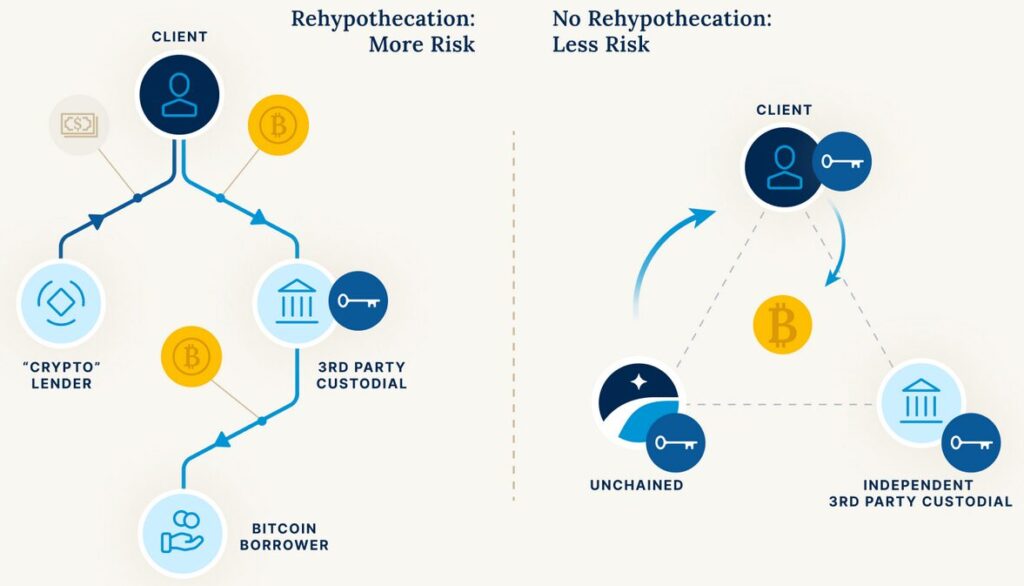
This diagram illustrates the basic structure: clients deposit BTC/ETH as collateral, receive USDC liquidity, and reclaim assets upon repayment.
11. Diagram 2: Comparing Selling vs. Borrowing Against Bitcoin
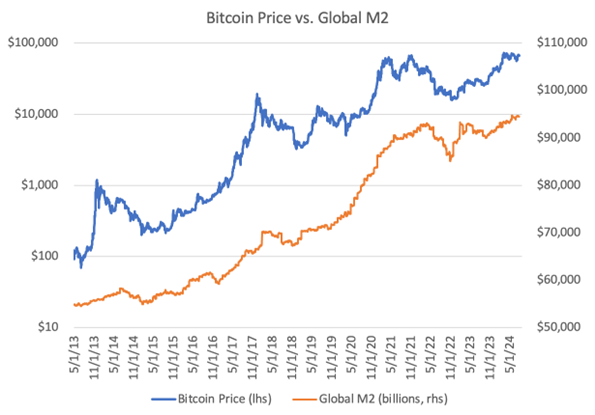
This chart contrasts permanent exposure loss through selling versus maintained exposure through collateralized borrowing.
12. Risks and Considerations
Despite its advantages, crypto-backed lending carries inherent risks:
- Margin calls during sharp market drawdowns
- Liquidation risk if collateral values fall rapidly
- Counterparty and operational risks
K33’s controlled rollout and emphasis on qualified clients suggest awareness of these dynamics.
13. Conclusion: Bitcoin as Financial Infrastructure
K33’s crypto-backed lending launch reflects a deeper transformation in how digital assets are used. Bitcoin and Ethereum are no longer merely speculative instruments—they are becoming financial infrastructure.
By enabling liquidity without forced asset sales, K33 aligns long-term conviction with short-term financial flexibility. For investors and institutions seeking new yield sources and practical blockchain use cases, this model represents a meaningful step toward mature crypto finance.