Main Points :
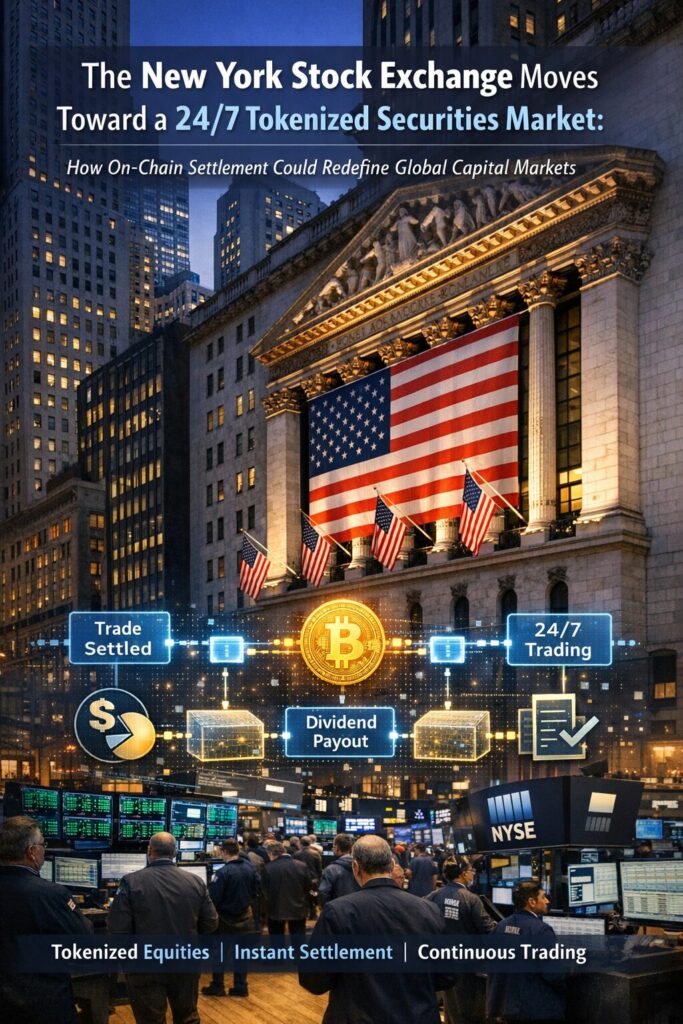
- The New York Stock Exchange (NYSE) has announced the development of a 24/7 tokenized securities trading platform with on-chain settlement.
- The platform aims to combine NYSE’s institutional-grade matching engine with blockchain-based post-trade infrastructure.
- Tokenized equities will preserve traditional shareholder rights, including dividends and governance.
- The initiative aligns with broader industry trends toward stablecoin settlement, instant clearing, and continuous markets.
- This development could reshape how capital markets operate globally, opening new revenue and infrastructure opportunities for crypto-native and traditional players alike
1. Introduction: NYSE Enters the Tokenized Era
On January 19, the New York Stock Exchange announced that it is developing a new digital platform designed specifically for the trading of tokenized securities and on-chain settlement. This announcement represents one of the most decisive moves yet by a traditional financial exchange toward integrating blockchain infrastructure directly into core market operations.
Unlike previous experiments limited to pilot programs or private markets, the NYSE’s proposed platform is designed to operate 24 hours a day, 365 days a year, offering instant settlement, dollar-denominated order sizes, and stablecoin-based funding. If approved by regulators, the platform will operate as a new NYSE venue, capable of supporting both tokenized versions of traditionally issued securities and natively issued digital securities.

This initiative reflects a growing convergence between traditional capital markets and crypto-native infrastructure—one that could fundamentally alter how liquidity, settlement, and market access function on a global scale.
2. Platform Architecture: Bridging Legacy Markets and Blockchain
The NYSE’s design combines two distinct but complementary systems:
- NYSE Pillar Matching Engine – the same institutional-grade engine currently used across NYSE equity and options markets.
- Blockchain-based post-trade systems – responsible for clearing, settlement, and custody.
The platform will support multiple blockchains for settlement and asset custody, allowing flexibility as the digital asset ecosystem evolves. Importantly, trades will settle on-chain, significantly reducing settlement times compared to traditional T+1 or T+2 models.
Comparison of Traditional Securities Settlement vs. On-Chain Settlement
(A flow diagram showing T+1/T+2 settlement versus instant on-chain settlement.)

3. Tokenized Equities: Rights, Dividends, and Governance
One of the most critical aspects of the announcement is that tokenized shareholders will retain the same economic and governance rights as traditional shareholders. This includes:
- Dividend entitlements
- Voting rights
- Corporate action participation
This design choice directly addresses one of the major concerns institutional investors have historically had about tokenized assets: legal and economic equivalence.
From a regulatory and fiduciary standpoint, this makes tokenized equities far more viable for pension funds, asset managers, and regulated intermediaries.
4. Regulatory Alignment and Market Access
The platform will be made available to all qualified broker-dealers on a non-discriminatory basis, adhering to established principles of market structure and fairness.
However, full deployment remains subject to regulatory approval, particularly from U.S. securities regulators. The NYSE has emphasized that the platform is being built with “unmatched protections and high regulatory standards,” signaling a strong focus on compliance rather than disruption for its own sake.
5. ICE’s Broader Digital Strategy
This initiative forms part of a broader digital strategy by NYSE’s parent company, Intercontinental Exchange (ICE).
ICE is currently:
- Preparing clearing infrastructure for 24/7 markets
- Exploring the integration of tokenized collateral
- Working with major banks such as BNY and Citigroup to support tokenized deposits across ICE clearing houses
This suggests a future in which not only securities, but also cash and collateral, exist in tokenized, programmable forms.
6. Stablecoins and Instant Funding
The platform will support stablecoin-based funding, aligning closely with recent industry moves toward regulated, dollar-backed digital money. In related developments, several major financial institutions have already begun supporting instant trading funded by stablecoin deposits such as USD Coin.
This could significantly reduce:
- Capital lock-up
- Counterparty risk
- Operational costs
For traders and institutions, this opens the door to more efficient balance-sheet management and intraday liquidity strategies.
7. Market Context: The Push Toward 24/7 Trading
In April 2024, NYSE reportedly surveyed market participants about the feasibility of extended or continuous trading hours. This reflects increasing pressure from crypto markets, which have normalized always-on trading.
Trading Hours Comparison — Traditional Exchanges vs. Crypto Markets
(A bar chart comparing NYSE hours vs. 24/7 crypto exchanges.)

The success of crypto markets has demonstrated that continuous trading is not only feasible but often preferred by global participants operating across time zones.
8. Implications for Crypto and Blockchain Builders
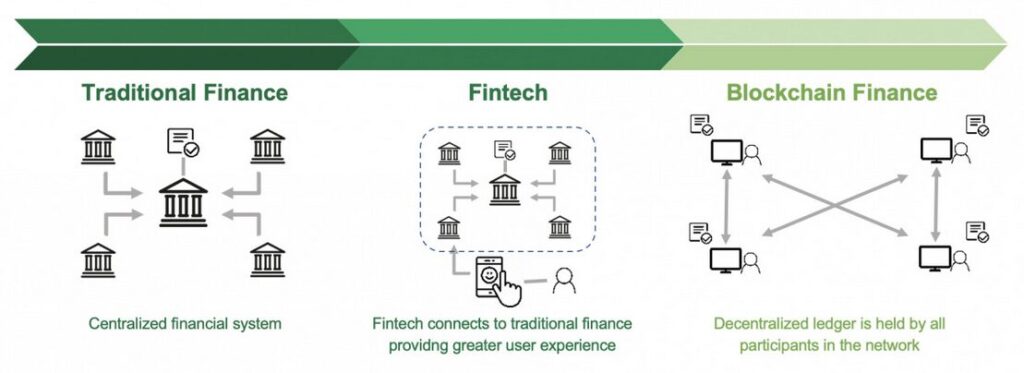
For readers interested in new crypto assets, revenue models, and practical blockchain use, this development is highly significant.
Potential opportunities include:
- Infrastructure for token issuance and compliance
- Custody and key-management services
- Cross-chain settlement middleware
- Analytics and risk-management tools for tokenized securities
The NYSE’s move effectively legitimizes tokenization as a core financial infrastructure, not merely an experimental asset class.
9. Competitive and Strategic Signals
The announcement also follows ICE’s strategic investment in prediction market Polymarket, whose CEO has hinted at the possibility of issuing a native token. Together, these moves suggest ICE is positioning itself at the intersection of traditional finance, crypto markets, and on-chain data.

10. Conclusion: A Structural Shift, Not a Trend
The NYSE’s tokenized securities platform should not be viewed as a short-term experiment. It represents a structural shift in how capital markets may operate over the coming decades.
By combining:
- Institutional-grade market infrastructure
- Blockchain-based settlement
- Stablecoin liquidity
- Regulatory alignment
the NYSE is effectively acknowledging that the future of markets will be on-chain, continuous, and programmable.
For investors, builders, and financial institutions alike, this is not merely news—it is a roadmap.