Main Points :
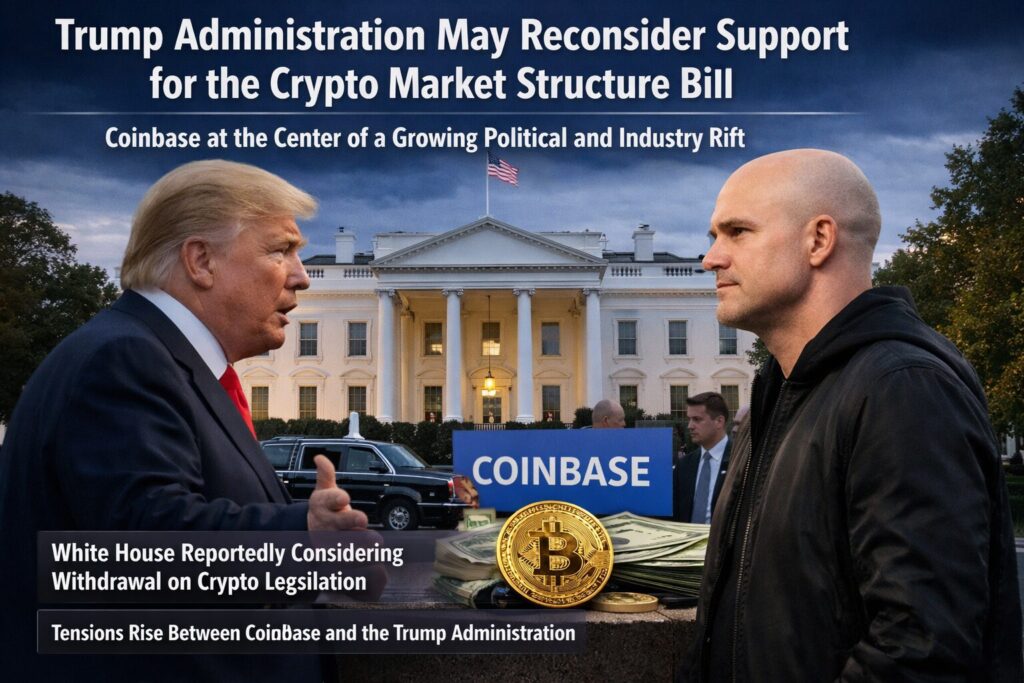
- The White House is reportedly considering a full withdrawal of support for the U.S. crypto market structure bill following Coinbase’s unilateral decision to revoke its backing.
- The Trump administration is said to be demanding concessions from Coinbase, particularly regarding yield-bearing stablecoins, to bring banks and lawmakers back into consensus.
- This dispute highlights a deep structural tension between crypto-native business models and traditional financial institutions.
- The outcome of this standoff could significantly shape future U.S. crypto regulation, influencing global market behavior and capital flows.
- For investors and operators, the situation underscores the importance of regulatory risk management and adaptive business models.
Introduction: A Political Shockwave Through the Crypto Industry
In mid-January 2026, the U.S. cryptocurrency industry was jolted by reports that the Trump administration might reconsider—if not entirely withdraw—its support for the long-anticipated crypto market structure bill. According to sources close to the White House, the trigger was Coinbase’s sudden and unilateral decision to revoke its endorsement of the legislation, citing concerns over stablecoin yields and expanded regulatory authority for the Securities and Exchange Commission (SEC).
What might have been an internal policy disagreement quickly escalated into a broader political and industry confrontation. The White House reportedly expressed strong dissatisfaction with Coinbase’s move, viewing it as an act that undermined months of negotiation and cross-industry coordination. More importantly, officials emphasized that no single company represents the entire crypto industry, regardless of its size or influence.
This episode is not merely about one bill or one exchange. It reflects a deeper struggle over how digital assets should be integrated into the U.S. financial system—and who gets to define the rules.
The White House’s Frustration With Coinbase
According to former Fox Business reporter Eleanor Terrett, citing sources close to the Trump administration, the White House is openly frustrated with Coinbase’s actions on January 15. The administration reportedly viewed the withdrawal of support as a “ladder-pulling” maneuver—an abrupt reversal that left policymakers and industry stakeholders blindsided.
Officials stressed that the crypto market structure bill is not “Brian Armstrong’s bill,” referring to Coinbase’s CEO, but rather a presidential initiative aimed at establishing regulatory clarity while balancing innovation, consumer protection, and financial stability.
Behind the scenes, the White House is said to be pushing Coinbase to return to the negotiating table with concrete concessions, particularly on the treatment of yield-bearing stablecoins. Banks, according to the same sources, remain deeply concerned that such products blur the line between deposits and securities, potentially destabilizing the traditional financial system.
[Political Tension and Crypto Regulation]
The Core Dispute: Stablecoin Yields and Regulatory Authority
At the heart of the conflict lies the question of yield—specifically, whether stablecoin issuers and platforms should be allowed to offer interest-like returns to users.
From Coinbase’s perspective, yield-bearing stablecoins are a natural evolution of blockchain-based finance. They enable capital efficiency, attract global liquidity, and provide users with alternatives to traditional savings products—often denominated in USD-pegged tokens and accessible worldwide.
From the perspective of regulators and banks, however, these products resemble unregulated deposit accounts. If allowed to scale without strict oversight, they could divert billions of dollars away from insured banks, weaken monetary transmission mechanisms, and introduce systemic risks.
Coinbase’s withdrawal of support reportedly stemmed from two concerns:
- The bill’s restrictive stance on stablecoin yields.
- What Coinbase viewed as excessive discretion granted to the SEC.
These objections resonated with some lawmakers but alarmed others, particularly within the Senate Banking Committee.
Legislative Fallout: Hearings Delayed, Uncertainty Grows
The immediate consequence of Coinbase’s decision was the postponement of a scheduled Senate Banking Committee hearing. Chairman Tim Scott announced the delay shortly after Coinbase’s statement, though no new date has been set.
Even before this incident, the bill faced resistance from both Democratic and Republican lawmakers. Some Democrats expressed concerns about consumer protection and financial stability, while certain Republicans warned against overregulation that could stifle innovation and push crypto businesses offshore.
Multiple U.S. media outlets reported that discussions between crypto industry representatives and Senate Democrats are expected to resume, but the legislative path forward remains uncertain.
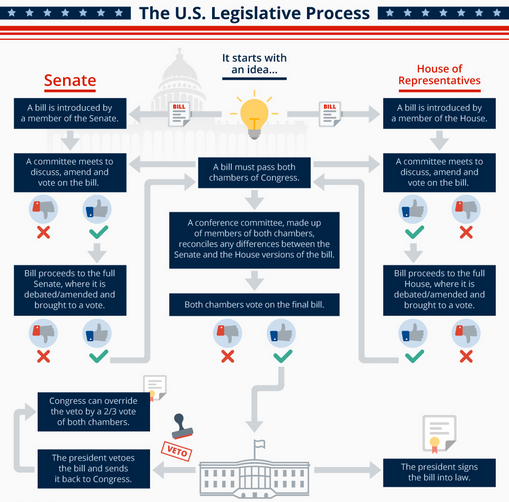
[Legislative Process Flow]
Broader Market Implications: Why This Matters Beyond the U.S.
Although the dispute is centered in Washington, its implications extend far beyond U.S. borders. The United States remains a key jurisdiction for crypto liquidity, institutional capital, and regulatory signaling. A clear, supportive framework could reinforce the dollar’s role in digital finance. Conversely, prolonged uncertainty could accelerate capital flight to more accommodating jurisdictions.
For global investors, the episode serves as a reminder that regulatory risk is market risk. Token valuations, stablecoin adoption, and even blockchain infrastructure investment decisions are increasingly shaped by political dynamics.
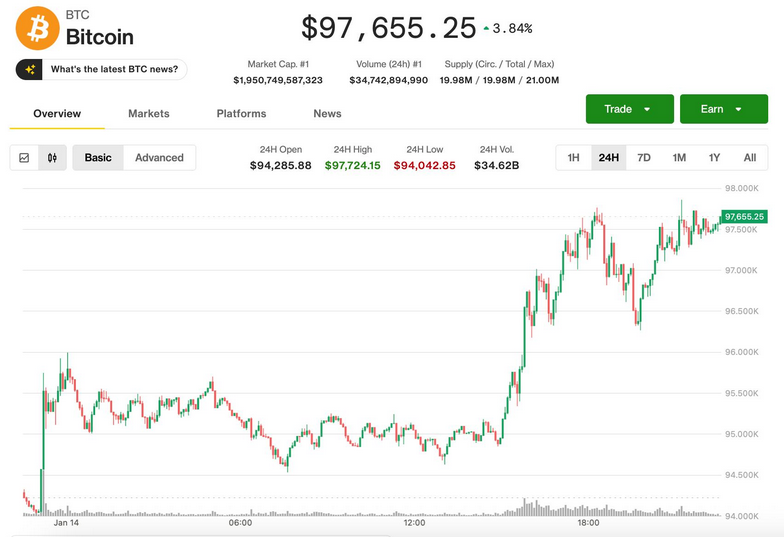
In USD terms, global crypto market capitalization—hovering in the multi-trillion-dollar range—can swing by hundreds of billions based on regulatory sentiment alone.
[Global Crypto Market Impact Chart]
Strategic Lessons for Investors and Builders
For readers seeking new crypto assets, revenue opportunities, or practical blockchain use cases, several lessons stand out:
- Regulatory alignment matters: Projects that proactively engage with regulators may enjoy longer-term stability.
- Yield is powerful—but sensitive: Any business model relying on yield must account for political and banking-sector reactions.
- Diversification of jurisdiction: Relying solely on U.S. regulatory outcomes is increasingly risky.
- Infrastructure over hype: Practical blockchain applications with clear compliance pathways are more likely to survive policy shocks.
Conclusion: A Defining Moment for U.S. Crypto Policy
The standoff between the Trump administration and Coinbase represents more than a temporary disagreement. It is a defining moment in the evolution of U.S. crypto policy—a test of whether industry leaders and policymakers can find common ground without undermining innovation or financial stability.
Whether the White House ultimately withdraws support for the market structure bill or secures new concessions from Coinbase, the message is clear: crypto has entered the realm of high politics. For investors, operators, and builders alike, understanding this reality is no longer optional—it is essential.