Main Points :
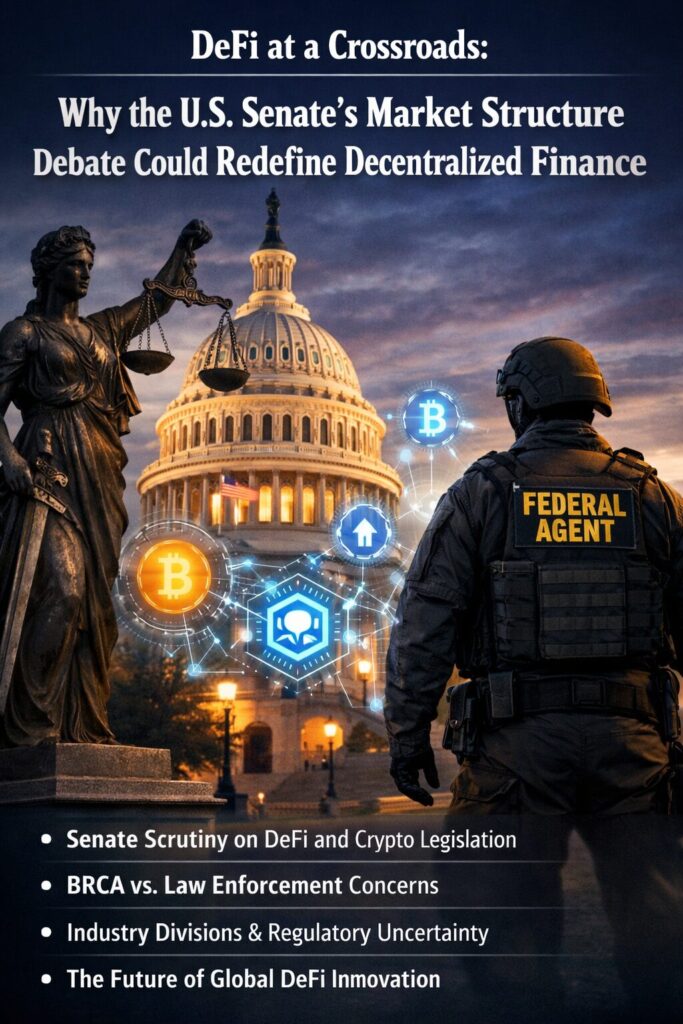
- The U.S. Senate Judiciary Committee has raised serious concerns over DeFi-related provisions in the proposed crypto market structure bill.
- The Blockchain Regulatory Certainty Act (BRCA) aims to protect non-custodial DeFi developers but faces resistance from law enforcement–focused lawmakers.
- The dispute highlights a deeper conflict between financial crime enforcement and innovation policy.
- Industry reactions, including those from Coinbase and policy institutes, reveal growing fragmentation within the crypto sector.
- The outcome may shape where DeFi innovation, capital, and talent concentrate globally.
1. Introduction: A Pivotal Moment for DeFi Regulation
The debate unfolding in the United States Senate over crypto market structure legislation marks one of the most consequential moments in the history of decentralized finance (DeFi). What appears on the surface to be a technical disagreement over legislative procedure is, in reality, a fundamental clash of philosophies: whether decentralized software developers should be treated like financial intermediaries, and whether innovation should be constrained in the name of enforcement certainty.
In January 2026, members of the U.S. Senate Judiciary Committee formally expressed concerns regarding the inclusion of DeFi-related provisions—specifically the Blockchain Regulatory Certainty Act (BRCA)—within the broader crypto market structure bill under review by the Senate Banking Committee. This intervention has introduced new uncertainty into a legislative process already strained by partisan divisions and industry skepticism.
For investors, developers, and institutions searching for new digital assets, revenue streams, and practical blockchain use cases, this debate is not abstract. It directly affects where projects are built, how capital flows, and whether DeFi can evolve into a mature financial infrastructure or remains legally marginalized.
2. The Blockchain Regulatory Certainty Act Explained
The Blockchain Regulatory Certainty Act (BRCA) is designed to clarify a narrow but critical question: should developers of non-custodial blockchain software be classified as money transmitters under U.S. law?
Under the BRCA framework, developers who do not custody user funds, do not control transactions, and merely publish or maintain open-source software would be explicitly excluded from money transmission regulations. This protection would extend to DeFi developers, node operators, and certain service providers who lack discretionary control over assets.
Supporters argue that without such clarity, developers face legal uncertainty that discourages innovation. The risk is not theoretical. Past enforcement actions and ambiguous guidance from U.S. regulators have already pushed some projects offshore, particularly to jurisdictions in Asia, the Middle East, and parts of Europe.
Opponents, however, warn that such exemptions may weaken law enforcement’s ability to track illicit finance, particularly when decentralized protocols are used for money laundering or sanctions evasion.
3. Judiciary Committee Concerns and Legislative Friction
In a letter addressed to Senate Banking Committee Chair Tim Scott and Senator Elizabeth Warren, Judiciary Committee members Chuck Grassley and Dick Durbin expressed bipartisan concern.
They argued that the BRCA provisions were introduced without adequate consultation with the Judiciary Committee, which oversees the Department of Justice, the Federal Bureau of Investigation, and the Department of Homeland Security. According to the letter, this procedural omission deprived the committee of the opportunity to evaluate how the bill might affect criminal investigations.
More substantively, the senators warned that exempting certain DeFi actors from FinCEN registration requirements could create “blind spots” for state and local law enforcement. These agencies often rely on registration data to investigate crimes involving terrorism financing, drug trafficking, and human trafficking.
This objection highlights a recurring pattern in U.S. crypto regulation: financial oversight committees focus on market structure and innovation, while judiciary and law enforcement bodies prioritize traceability and enforcement.
4. Why DeFi Developers Are at the Center of the Debate
DeFi’s defining characteristic—automation without intermediaries—is precisely what makes it difficult to regulate using traditional financial frameworks. Smart contracts execute deterministically, and developers often relinquish control once code is deployed.
From the perspective of developers, holding them liable as money transmitters is akin to holding internet protocol engineers responsible for online fraud. This analogy has been repeatedly invoked by industry advocates and policy think tanks.
The Solana Policy Institute, for example, submitted a letter to the Securities and Exchange Commission urging regulators to explicitly exclude non-custodial software and smart contracts from exchange-like regulation. Their argument is that applying legacy securities laws to decentralized systems risks exporting innovation abroad while failing to meaningfully reduce crime.
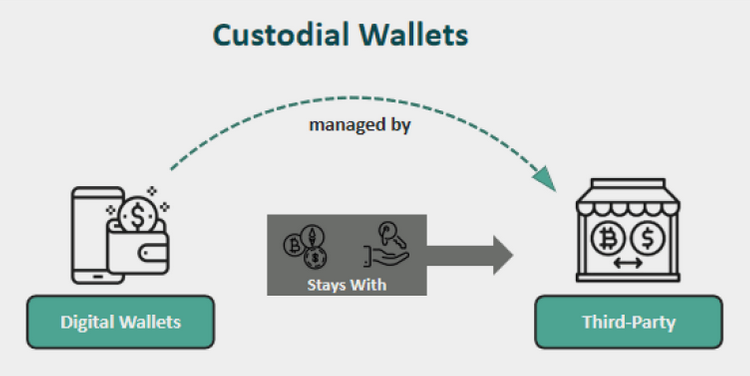
[Conceptual diagram comparing custodial exchanges vs. non-custodial DeFi protocols]
5. Industry Response and the Coinbase Factor
The legislative uncertainty has already triggered visible reactions from major industry players. On January 15, Coinbase CEO Brian Armstrong publicly withdrew his support for the market structure bill, citing unresolved concerns over DeFi treatment and regulatory overreach.
This move was significant. Coinbase has historically positioned itself as a compliant, regulation-friendly exchange. Its decision to step back underscores how deeply divisive the current proposal has become—even among firms that typically support legislative engagement.
Following Armstrong’s withdrawal, Senate Banking Committee deliberations were reportedly delayed, with renewed talks scheduled between lawmakers and industry representatives on January 17.
6. Market Structure, Power Allocation, and DeFi Disclosure Rules
Beyond BRCA, the revised 270-page market structure bill seeks to redefine jurisdictional boundaries between the Securities and Exchange Commission and the Commodity Futures Trading Commission. It also introduces new disclosure requirements for certain digital asset activities, including aspects of DeFi.
While greater clarity is generally welcomed, some industry participants argue that imposing disclosure obligations on decentralized systems misunderstands how these protocols operate. Unlike corporations, DeFi protocols often lack centralized management, making compliance both technically and legally complex.
This tension raises a critical question: can decentralized finance be regulated incrementally, or does it require an entirely new regulatory paradigm?
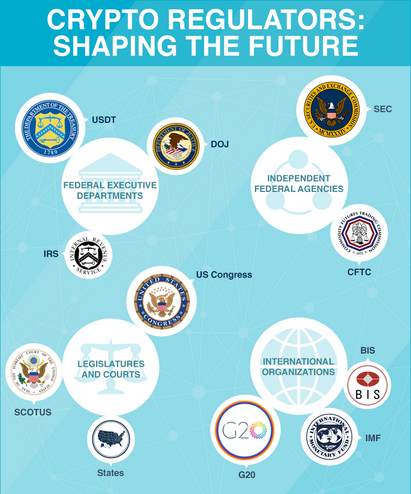
[Flowchart of proposed U.S. crypto regulatory oversight]
7. Implications for Investors and Builders
For investors searching for new crypto assets and revenue opportunities, regulatory clarity—or the lack thereof—has direct financial implications. Projects that anticipate hostile regulatory environments may limit U.S. exposure, reduce transparency, or relocate entirely.
For builders, the stakes are even higher. Legal uncertainty increases development costs, discourages open-source contributions, and raises personal liability risks. In contrast, jurisdictions that provide clearer safe harbors may attract disproportionate talent and capital inflows.
From a macro perspective, the outcome of the BRCA debate may determine whether the U.S. remains a center of blockchain innovation or cedes leadership to more adaptive regulatory environments.
8. Conclusion: A Defining Test for DeFi’s Future
The U.S. Senate’s debate over DeFi provisions in the crypto market structure bill is more than a legislative skirmish. It is a defining test of how decentralized technologies will be treated within existing legal systems.
Balancing innovation with enforcement is undeniably complex. Yet history suggests that overregulation of foundational technologies often leads not to safety, but to stagnation and offshore migration. For DeFi to mature into a resilient financial layer, regulators may need to accept that not all risk can be eliminated—and that software neutrality is a principle worth preserving.
For now, DeFi stands at a crossroads. The decisions made in Washington over the coming months will echo far beyond U.S. borders, shaping the global trajectory of decentralized finance for years to come.