
Main Points :
- Bitcoin underperformed gold and technology stocks in 2025, but this weakness does not invalidate its long-term thesis.
- According to Arthur Hayes, Bitcoin’s next major rally depends primarily on the expansion of US dollar liquidity.
- Structural drivers such as Federal Reserve balance sheet expansion, declining mortgage rates, and government-backed industrial lending may converge in 2026.
- Bitcoin should be understood as a form of financial technology whose value scales with the debasement of fiat currency.
- Short-term underperformance often precedes powerful liquidity-driven repricing cycles in crypto markets.
1. Bitcoin’s Weak Year and the Question Investors Are Asking
In 2025, Bitcoin disappointed many investors. While gold surged and US technology stocks continued their ascent, Bitcoin delivered negative returns. For participants searching for new crypto assets or yield opportunities, this divergence raised a fundamental question: Has Bitcoin lost its macro relevance, or is the market simply early?
This question sits at the heart of the latest commentary from Arthur Hayes, co-founder of BitMEX and one of the most influential macro thinkers in the crypto industry. Hayes argues that Bitcoin’s relative weakness is not a failure of its monetary design, but rather a temporary reflection of global liquidity conditions.
In other words, Bitcoin did not fall because it stopped working. It fell because liquidity did.
2. Liquidity as the Master Variable in Crypto Markets
Hayes’ core thesis is simple but powerful: Bitcoin is a liquidity-sensitive asset first and foremost.
Unlike equities, which can benefit from earnings growth, subsidies, or policy favoritism, Bitcoin’s price responds most directly to changes in the availability and cost of money—particularly US dollars. When dollar liquidity expands, Bitcoin thrives. When liquidity contracts, Bitcoin struggles.
In his recent commentary, Hayes stated that Bitcoin’s recovery to new all-time highs requires one condition above all others: a renewed expansion of dollar liquidity.
This framing places Bitcoin closer to macro instruments like long-duration bonds or emerging market risk assets than to traditional “tech stocks.” It also explains why Bitcoin can lag during periods when capital is being directed elsewhere by policy intervention.
3. Why 2026 Could Be the Turning Point
Hayes identifies 2026 as a critical inflection year. According to his analysis, multiple forces are likely to converge to significantly increase dollar liquidity:
3.1 Federal Reserve Balance Sheet Expansion
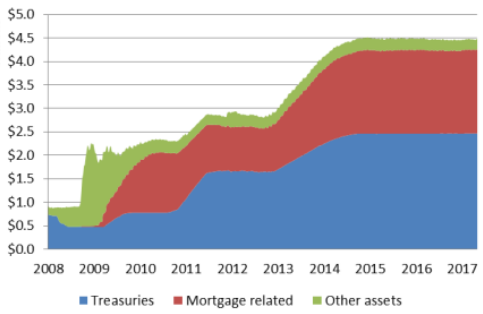
Historically, major Bitcoin bull markets have coincided with periods when the Federal Reserve expanded its balance sheet. While the Fed spent recent years fighting inflation, the long-term political and economic reality points toward renewed monetary accommodation.
Rising debt servicing costs and slowing economic growth make sustained tight monetary policy difficult to maintain. When pressure mounts, liquidity tends to return.
Chart illustrating Fed balance sheet expansion vs. Bitcoin price cycles
3.2 Declining Mortgage Rates and Financial Conditions
As liquidity conditions ease, mortgage rates typically decline. Lower rates free up household cash flow, stimulate asset markets, and increase speculative capital. This dynamic indirectly benefits Bitcoin by increasing overall risk appetite.
Crypto does not need to be the direct beneficiary of policy easing; it only needs excess capital to exist. Once traditional markets become saturated, capital seeks asymmetric upside—and Bitcoin remains one of the purest expressions of that trade.
3.3 Bank Lending to Strategic Industries
Another factor Hayes highlights is the expansion of bank lending to government-supported strategic sectors. Industrial policy in the US increasingly prioritizes areas such as artificial intelligence, semiconductors, and energy infrastructure.
While this capital initially flows into specific sectors, it ultimately increases system-wide liquidity. Once deployed, capital rarely stays contained. It leaks—into equities, real estate, and eventually alternative assets like crypto.
4. Why Bitcoin Lagged While AI Stocks Soared in 2025
A key puzzle in 2025 was Bitcoin’s divergence from the S&P 500, particularly its technology-heavy components.
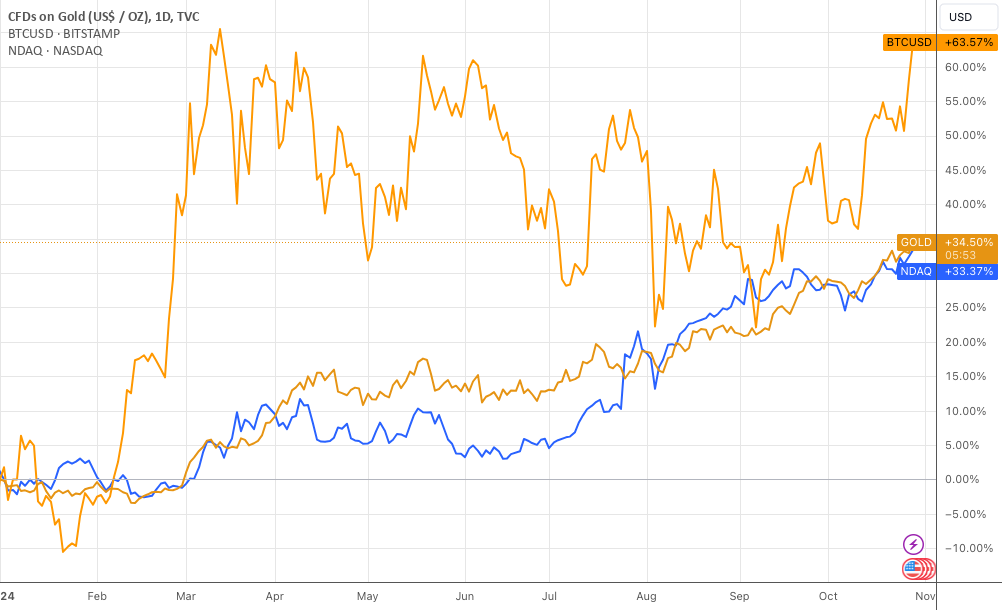
Technology stocks delivered returns of approximately 24.6%, outperforming the broader index by a wide margin. Bitcoin, by contrast, declined by roughly 14.4%, while gold surged over 44%.
Hayes attributes this divergence not to a failure of Bitcoin, but to policy distortion.
He argues that artificial intelligence has become a strategic priority for both the United States and China. As a result, capital allocation into AI has been driven less by market signals and more by executive orders, subsidies, and geopolitical considerations.
In such an environment, Bitcoin—an apolitical, decentralized asset—was temporarily sidelined.
Comparative performance chart of Bitcoin, gold, and technology stocks
5. Bitcoin as Financial Technology, Not a Narrative Trade
One of Hayes’ most important conceptual contributions is his framing of Bitcoin as financial technology rather than a speculative narrative.
Bitcoin does not need growth stories, product launches, or user adoption curves in the traditional sense. Its fundamental value proposition is simpler: it protects purchasing power against fiat debasement.
As long as fiat currencies continue to lose value over time due to inflation and monetary expansion, Bitcoin’s value remains structurally supported above zero.
However, Hayes emphasizes that reaching price levels near $100,000 and beyond requires persistent and visible fiat debasement, not just ideological belief.
6. Lessons for Investors Seeking the Next Opportunity
For investors searching for new crypto assets or yield opportunities, Hayes’ analysis offers several practical lessons:
- Liquidity matters more than narratives.
- Underperformance often precedes repricing.
- Policy-driven markets create distortions that eventually unwind.
Bitcoin’s role in a portfolio is not to outperform every year. It is to reprice violently when liquidity conditions shift.
This makes Bitcoin less suitable for short-term benchmarking and more appropriate as a strategic macro allocation.
7. Beyond Bitcoin: Implications for the Broader Crypto Ecosystem
When Bitcoin moves, the rest of the crypto market follows. A liquidity-driven Bitcoin rally in 2026 would likely:
- Increase risk tolerance across altcoins
- Revive on-chain activity and DeFi volumes
- Improve funding conditions for blockchain infrastructure projects
- Create renewed interest in yield-generating protocols
For builders and operators focused on practical blockchain use cases, liquidity expansion often marks the transition from survival mode to innovation mode.
Conclusion: Liquidity Writes the Final Chapter
Bitcoin’s disappointing performance in 2025 should not be mistaken for obsolescence. As Arthur Hayes argues, it was not a failure of Bitcoin, but a reflection of constrained dollar liquidity.
If the forces he outlines—monetary easing, balance sheet expansion, and strategic credit growth—materialize in 2026, Bitcoin may once again demonstrate why it remains central to the global crypto ecosystem.
For those searching not just for price appreciation, but for a deeper understanding of how crypto fits into the evolving financial system, the message is clear:
Watch liquidity. Bitcoin will follow.