
Main Points :
- Bitcoin has reclaimed levels above $97,000, driven by renewed institutional inflows into U.S. spot Bitcoin ETFs.
- More than $1.5 billion in net ETF inflows year-to-date suggests a shift from speculative to structurally anchored demand.
- Unlike past cycles dominated by retail speculation, the current rally is shaped by balance-sheet allocation, ETFs, and corporate accumulation.
- Market makers such as Wintermute argue that Bitcoin alone is not enough; broader digital asset performance will determine whether a sustained bull phase emerges.
- The traditional four-year halving cycle may be evolving under the influence of institutional capital and financial infrastructure.
1. Bitcoin’s Return Above $97,000: A Market Reawakening
Bitcoin has once again climbed above the $97,000 level this week, reigniting discussions about a renewed attempt to break through the psychologically significant $100,000 threshold. While short-term price movements often dominate headlines, the more consequential story lies beneath the surface: the structure of demand itself appears to be changing.
According to market data and commentary from industry analysts, capital has been steadily returning to U.S.-listed spot Bitcoin exchange-traded funds (ETFs). After several months of range-bound trading and declining enthusiasm toward the end of 2025, this reversal signals that large investors may be reassessing Bitcoin’s role within diversified portfolios.
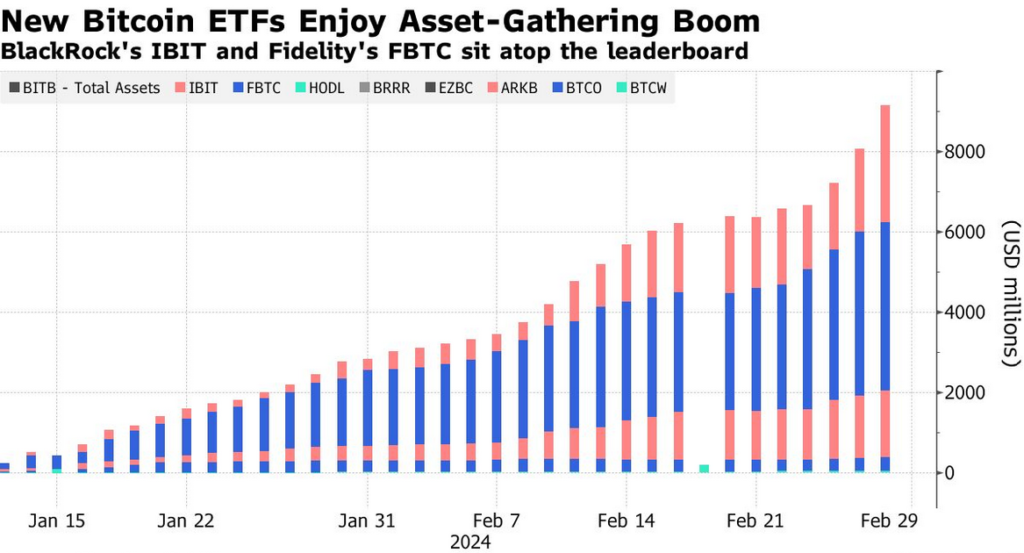
Since the beginning of the year, U.S. spot Bitcoin ETFs have recorded approximately $1.5 billion in net inflows. This figure, cited by Bloomberg ETF analyst Eric Balchunas, represents a notable turnaround from late 2025, when ETF flows stagnated and risk appetite weakened. Crucially, these inflows have not been isolated events but rather part of a multi-day trend, suggesting more than short-term positioning.
Balchunas commented on social media that the pattern of ETF demand “suggests buyers may have exhausted sellers,” referring to Bitcoin’s prolonged consolidation around the $88,000 range. This interpretation implies that a structural floor may have formed, allowing price discovery to resume upward.
[Bitcoin price recovery above $97,000 and ETF inflow trend]
2. ETF Inflows as a Structural Signal, Not a Speculative Spike
On a single Wednesday, net inflows into Bitcoin ETFs reached approximately $843.6 million, pushing the weekly total above $1.07 billion and lifting the year-to-date figure significantly. While such headline numbers attract attention, the more important insight lies in the composition and behavior of these flows.
ETF inflows differ fundamentally from spot exchange speculation. They are often driven by pension funds, asset managers, family offices, and corporate treasuries operating under longer time horizons and stricter risk frameworks. This capital is typically “stickier,” less sensitive to short-term volatility, and more aligned with strategic allocation decisions.
After a period of capital rotation within commodity-linked ETFs, Bitcoin appears to be re-emerging as a preferred vehicle for macro-oriented investors seeking exposure to scarce, non-sovereign assets. The renewed demand suggests that Bitcoin is increasingly viewed not merely as a high-beta speculative asset, but as a long-term portfolio component akin to digital gold.
This shift also reflects maturation in market infrastructure. With regulated ETF products available, institutions no longer need to navigate custody, compliance, and operational hurdles directly. As a result, Bitcoin exposure can now be scaled in a manner consistent with traditional asset management practices.
3. Are Institutions Rewriting Bitcoin’s Market Narrative?
Historically, Bitcoin has often entered challenging seasonal periods with price strength, only to encounter volatility as macro conditions tighten. Analysts frequently reference the four-year halving cycle, which loosely correlates supply reductions with price peaks occurring 12 to 18 months later. Under this framework, some argue that the market may already have passed its cyclical high.
However, the four-year cycle has never been a deterministic law. It emerged from a market dominated by retail speculation, limited derivatives, and fragmented liquidity. Today’s environment is markedly different. Institutional participation, ETFs, corporate treasuries, and increasingly sophisticated derivatives markets may be altering the rhythm of Bitcoin’s cycles.
The recent rebound follows a mixed performance throughout 2025. While Bitcoin reached new all-time highs during the year, the broader crypto market struggled to maintain momentum. Notably, a sustained “altcoin season” failed to materialize, leaving many investors disappointed and capital concentrated primarily in Bitcoin.
This divergence reinforces the idea that Bitcoin is increasingly decoupling from the rest of the crypto market, behaving less like a speculative tech proxy and more like a macro asset influenced by liquidity, interest rates, and institutional flows.
4. Why Retail Failed to Follow in 2025
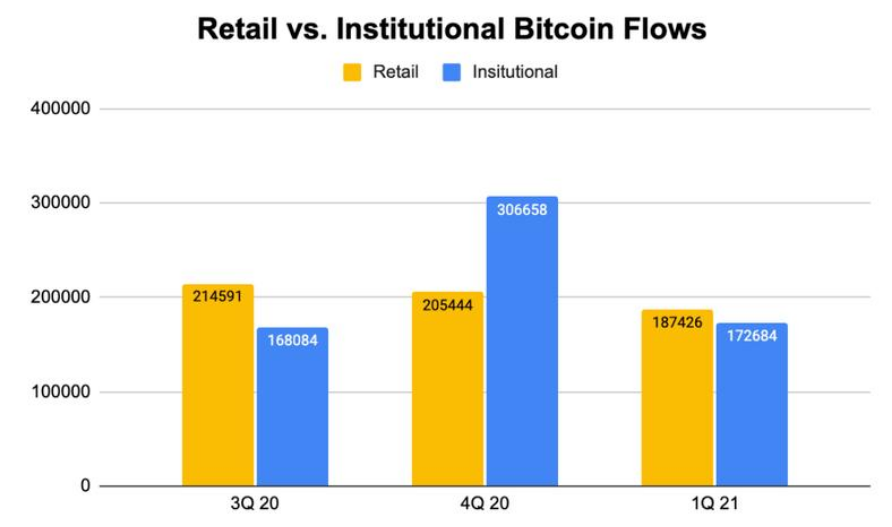
One of the defining features of 2025 was the absence of sustained retail inflows into Bitcoin. According to market maker Wintermute, retail investors largely shifted their attention to alternative growth narratives, including artificial intelligence, robotics, and space-related equities.
These themes offered clearer revenue models, visible adoption curves, and familiarity within traditional equity markets. In contrast, Bitcoin’s narrative during this period was more subdued, focused on consolidation rather than explosive growth.
As a result, Bitcoin’s price appreciation lacked the reflexive feedback loop often driven by retail enthusiasm. While this dampened volatility, it also limited upside momentum. Paradoxically, this environment may have laid the groundwork for a healthier market structure, reducing leverage excesses and speculative froth.
[Bitcoin performance relative to AI and tech equities in 2025]
5. Wintermute’s View: Bitcoin Alone Is Not Enough
Looking ahead to 2026, Wintermute argues that a broader recovery in digital asset markets will require more than Bitcoin’s strength alone. In its recent outlook, the firm suggests that sustained upside depends on a combination of factors: continued ETF inflows, ongoing accumulation by corporations holding digital assets on their balance sheets, and renewed interest in non-Bitcoin digital assets.
From this perspective, Bitcoin serves as the foundation rather than the entirety of the ecosystem. For a meaningful “wealth effect” to emerge—one that attracts retail capital and fuels innovation—major cryptocurrencies beyond Bitcoin must also demonstrate consistent performance.
This insight is particularly relevant for investors seeking new crypto assets and revenue opportunities. While Bitcoin may lead, diversification across infrastructure, settlement, and application-layer assets could define the next phase of market expansion.
6. Toward $100,000: Symbolism Versus Substance
The $100,000 price level carries enormous symbolic weight. It represents validation, psychological momentum, and media attention. Yet from an institutional standpoint, the number itself matters less than the conditions underpinning it.
If Bitcoin approaches or surpasses $100,000 driven by ETF inflows and balance-sheet allocations, it would mark a fundamentally different milestone than a retail-driven speculative spike. Such a move would suggest that Bitcoin’s valuation is increasingly anchored in long-term capital allocation decisions rather than cyclical exuberance.
In this sense, the current rally may not be about speed, but about durability.
7. Conclusion: A Structural Transition in Progress
Bitcoin’s renewed ascent toward $100,000 is best understood not as a simple price rally, but as evidence of a structural transition underway. The return of institutional demand via ETFs, the absence of excessive retail leverage, and the growing integration of Bitcoin into traditional financial systems all point to a market evolving beyond its early speculative roots.
Whether this shift ultimately rewrites Bitcoin’s historical cycles remains uncertain. However, for investors interested in practical blockchain applications, long-term revenue models, and resilient digital assets, the current environment offers a clearer, more mature framework for participation.
Bitcoin may no longer need explosive narratives to justify its place in portfolios. Instead, its appeal increasingly lies in its role as a financial primitive—scarce, neutral, and now institutionally accessible.