
Main Points :
- Over the past six months, corporate Bitcoin holdings increased by approximately 260,000 BTC, far exceeding new supply from mining.
- Corporate purchases are running at more than three times the pace of newly mined Bitcoin, creating a persistent supply–demand gap.
- Bitcoin treasury strategies have evolved from experimental allocations into formal balance-sheet policies supported by capital markets.
- A small number of corporations now dominate total corporate holdings, with one firm alone accounting for roughly 60% of all corporate Bitcoin.
- If the current imbalance continues, structural pressure on Bitcoin’s market price is likely to intensify.
1. A Structural Shift in Bitcoin Supply and Demand
According to on-chain analytics shared by Glassnode, corporate Bitcoin holdings have increased dramatically over the past six months. Total holdings rose from approximately 854,000 BTC to 1.11 million BTC, representing a net increase of around 260,000 BTC.
During the same period, Bitcoin mining added only about 82,000 BTC to circulating supply. On a monthly basis, corporations acquired an average of roughly 43,000 BTC, while miners produced only about 13,700 BTC. This means that corporate demand alone has been absorbing more than three times the amount of Bitcoin newly created by the network.
This imbalance is not a short-term anomaly. Instead, it reflects a deeper structural change in how Bitcoin supply is being consumed. Unlike retail investors or short-term traders, corporations tend to hold Bitcoin for strategic reasons, often with multi-year horizons. As a result, the Bitcoin they acquire is effectively removed from active circulation, tightening available liquidity.
2. From Experiment to Policy: The Evolution of Corporate Bitcoin Strategy
Corporate Bitcoin accumulation accelerated sharply in 2025. What began in 2020 as a bold and controversial move by a single company has now become a recognizable financial strategy adopted by a growing number of firms.
The original model—using corporate balance sheets to accumulate Bitcoin via bond issuance or equity financing—has proven replicable. Companies issue low-cost debt or raise capital through equity markets, then convert those funds into Bitcoin as a long-term treasury reserve asset.
This evolution marks a transition from “experimental exposure” to “institutionalized asset strategy.” Bitcoin is no longer treated as a speculative side bet. Instead, it is increasingly viewed as a hedge against currency debasement, a non-sovereign store of value, and, in some cases, a core pillar of corporate financial identity.
3. Concentration Risk: Who Holds the Bitcoin?
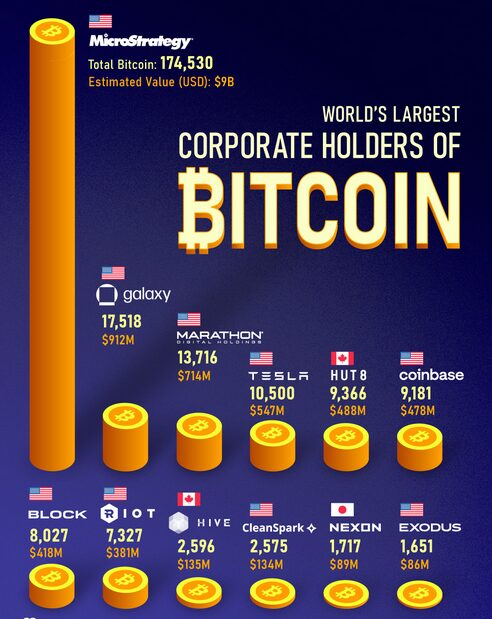
Corporate Bitcoin holdings are highly concentrated. At the center of this trend is Strategy, which currently holds approximately 687,410 BTC, accounting for nearly 60% of all Bitcoin held by corporations globally.
Following at a considerable distance are:
- MARA Holdings with about 53,250 BTC
- Twenty One Capital with roughly 43,514 BTC
- Metaplanet, which holds approximately 35,102 BTC, ranking fourth globally and making it the largest corporate Bitcoin holder in Japan
This concentration raises important questions. On one hand, large holders provide market stability by signaling long-term conviction. On the other hand, such concentration introduces potential systemic risks should any major holder significantly alter its strategy.
4. Accounting, Custody, and Market Infrastructure Catch Up
The rapid adoption of Bitcoin as a treasury asset has forced parallel development in accounting standards, custody solutions, and liquidity infrastructure.
Companies are now implementing:
- Institutional-grade custody with multi-signature wallets, segregated cold storage, and insurance coverage
- Improved accounting treatment, aligning Bitcoin holdings with evolving financial reporting standards
- Liquidity planning, including access to OTC desks and derivative markets to manage risk
These developments are crucial. Without them, large-scale corporate participation would remain impractical. Their existence today underscores how seriously Bitcoin is being integrated into traditional financial systems.
5. The Persistent Supply Gap and Its Market Implications
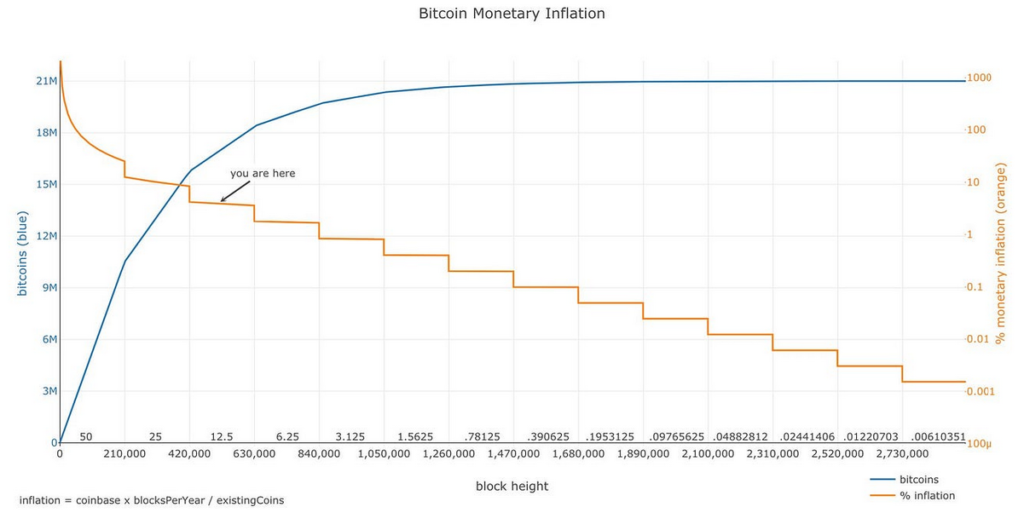
The most significant takeaway from the data is not merely the size of corporate purchases, but their persistence. As long as corporations continue acquiring Bitcoin at current rates, the market faces a structural shortage.
Bitcoin’s supply is fixed by protocol rules. No matter how high demand rises, production cannot accelerate beyond the predetermined issuance schedule. When demand persistently exceeds new supply, the adjustment mechanism is price.
Market observers increasingly argue that this structural imbalance may lead to:
- Sustained upward price pressure
- Reduced liquidity during market stress
- Greater volatility as available supply tightens
Unlike speculative bubbles driven by leverage or hype, this demand is funded by corporate balance sheets and capital markets, making it potentially more durable.
6. Broader Trends: Why Corporations Are Choosing Bitcoin
Beyond the raw numbers, several macro and strategic factors help explain why corporations are embracing Bitcoin:
First, currency risk management has become more complex in a world of persistent inflation and expanding sovereign debt. Bitcoin offers an alternative reserve asset not tied to any single government.
Second, capital market efficiency allows companies with strong equity valuations or credit access to convert financial capital into a scarce digital asset.
Third, brand differentiation plays a role. For some firms, Bitcoin adoption is part of a broader narrative about technological leadership and financial innovation.
These motivations suggest that corporate Bitcoin adoption is not merely cyclical, but aligned with longer-term shifts in how value is stored and communicated.
7. What This Means for Investors and Builders
For investors searching for new digital assets or revenue opportunities, corporate Bitcoin accumulation changes the landscape. It reduces available supply, alters liquidity dynamics, and potentially increases the importance of timing and risk management.
For builders and operators, especially those focused on blockchain infrastructure, payments, custody, and compliance, this trend highlights growing demand for:
- Secure custody solutions
- Treasury management tools
- Regulatory-grade reporting systems
Bitcoin is no longer only a trading asset. It is becoming financial infrastructure.
Conclusion: A Market Being Quietly Rewritten
The past six months reveal a market undergoing a fundamental transition. Corporate Bitcoin accumulation is no longer a headline-driven curiosity; it is a structural force reshaping supply and demand.
With corporations acquiring Bitcoin at more than three times the pace of mining issuance, the resulting imbalance has profound implications. If this trend persists, Bitcoin’s scarcity will become increasingly visible not only in theory, but in market behavior.
For those seeking to understand the future of digital assets—not just as investments, but as tools for real-world financial strategy—corporate Bitcoin adoption may prove to be one of the defining developments of this cycle.